
Lisa Westberg Peters
Author of When the Fly Flew In . . .
About the Author
Image credit: Courtesy of Lisa Westberg Peters
Works by Lisa Westberg Peters
When the Fly Flew In 1 copy
This way home 1 copy
Tagged
Common Knowledge
- Gender
- female
Members
Discussions
Childrens Book: A fly flies into a room full of pets - room gets cleaned in Name that Book (August 2012)
Reviews
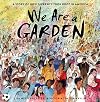
I will not read this. I excerpt points from a review in progress, posted to a newsletter today, and I trust this reviewer:
---
Reviewer: Debbie Reese
Review Status: Not Recommended
To understand this critique of We Are A Garden: A Story of How Diversity Took Root in America you must begin with, and hold fast to, the fact that Native peoples were nations of peoples before the U.S. was a nation. Our status as nations is why Europeans and (later) leaders of the U.S. made treaties with leaders of show more Native Nations. If Native Nations were not seen as nations with leaders who could enter into diplomatic negotiations, treaties with us would not exist. But they do exist and they do matter, today. We are sovereign nations. None of that is in We Are A Garden. ...
With this book, Peters and Tentler-Krylov encourage the growth of a feel-good story that hides the truths of the United States and its history.
The back cover says:
'The wind blows in newcomers from all directions.' "They" become "we," and we become a garden.
Gosh. The wind did all that? Come on! Was it the wind that invaded and stole Native homelands? No. Was it the wind that captured and enslaved Africans? No!
Look at the subtitle: "A Story of how Diversity Took Root in America." It suggests that there was a place called America and that this book will tell you how it became diverse. Seems ok, but it isn't. Before "America" was known by that name, it was known by other names by the people who were there before those who called it "America."
This is, unfortunately, a problem I see a lot. There are children's books with "First Americans" in their title/subtitle.... not ok! Native peoples had names for our respective nations (yes, we were nations before the U.S. was a nation) that pre-date "the United States of America." That fact should be common knowledge. ...
August 2021 show less
---
Reviewer: Debbie Reese
Review Status: Not Recommended
To understand this critique of We Are A Garden: A Story of How Diversity Took Root in America you must begin with, and hold fast to, the fact that Native peoples were nations of peoples before the U.S. was a nation. Our status as nations is why Europeans and (later) leaders of the U.S. made treaties with leaders of show more Native Nations. If Native Nations were not seen as nations with leaders who could enter into diplomatic negotiations, treaties with us would not exist. But they do exist and they do matter, today. We are sovereign nations. None of that is in We Are A Garden. ...
With this book, Peters and Tentler-Krylov encourage the growth of a feel-good story that hides the truths of the United States and its history.
The back cover says:
'The wind blows in newcomers from all directions.' "They" become "we," and we become a garden.
Gosh. The wind did all that? Come on! Was it the wind that invaded and stole Native homelands? No. Was it the wind that captured and enslaved Africans? No!
Look at the subtitle: "A Story of how Diversity Took Root in America." It suggests that there was a place called America and that this book will tell you how it became diverse. Seems ok, but it isn't. Before "America" was known by that name, it was known by other names by the people who were there before those who called it "America."
This is, unfortunately, a problem I see a lot. There are children's books with "First Americans" in their title/subtitle.... not ok! Native peoples had names for our respective nations (yes, we were nations before the U.S. was a nation) that pre-date "the United States of America." That fact should be common knowledge. ...
August 2021 show less
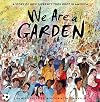
From the first humans in North America to the immigrants and refugees of today, the story of America’s diversity is the story of migration.
Poetic text and stunning watercolors outline the history of how peoples from all over the globe arrived in what is now the United States of America. Peters likens migrants to seeds that are carried on the wind, taking root in the new soil, creating a “garden of Americans who turn to face the wind.” The book begins with spreads featuring different show more groups of arrivals, chosen for their numbers, contributions, or impact. Native Americans, English settlers, enslaved Africans, Chinese railroad workers, and migrant field workers are among those featured, and each is accompanied by a few sentences that do not explicitly mention country names but cut to the core of their significance with pointed honesty. “The brutal leader” of a group of “colonists” depicted as conquistadors, for instance, is recorded as having “slaughtered the tribe that was living” where they settled. After the Statue of Liberty’s famous welcoming poem appears in its entirety, more modern immigration is represented. These pages feature individuals here and now: a mother who works long cleaning shifts, a 13-year-old refugee who wears a head scarf, a boy who loves soccer. And finally, a city block exuberantly depicting residents of many skin tones under a celebratory sky of fireworks. The beautiful text celebrates America’s difficult immigrant history with honesty and respect while simultaneously maintaining a feeling of pride and optimism in its present and future. Extremely informative notes round out this outstanding book. (This book was reviewed digitally with 10.5-by-21-inch double-page spreads viewed at 53.1% of actual size.)
Enlightening, visually gorgeous, and emotionally moving. (glossary, note, sources) (Informational picture book. 6-10)
-Kirkus Review show less
Poetic text and stunning watercolors outline the history of how peoples from all over the globe arrived in what is now the United States of America. Peters likens migrants to seeds that are carried on the wind, taking root in the new soil, creating a “garden of Americans who turn to face the wind.” The book begins with spreads featuring different show more groups of arrivals, chosen for their numbers, contributions, or impact. Native Americans, English settlers, enslaved Africans, Chinese railroad workers, and migrant field workers are among those featured, and each is accompanied by a few sentences that do not explicitly mention country names but cut to the core of their significance with pointed honesty. “The brutal leader” of a group of “colonists” depicted as conquistadors, for instance, is recorded as having “slaughtered the tribe that was living” where they settled. After the Statue of Liberty’s famous welcoming poem appears in its entirety, more modern immigration is represented. These pages feature individuals here and now: a mother who works long cleaning shifts, a 13-year-old refugee who wears a head scarf, a boy who loves soccer. And finally, a city block exuberantly depicting residents of many skin tones under a celebratory sky of fireworks. The beautiful text celebrates America’s difficult immigrant history with honesty and respect while simultaneously maintaining a feeling of pride and optimism in its present and future. Extremely informative notes round out this outstanding book. (This book was reviewed digitally with 10.5-by-21-inch double-page spreads viewed at 53.1% of actual size.)
Enlightening, visually gorgeous, and emotionally moving. (glossary, note, sources) (Informational picture book. 6-10)
-Kirkus Review show less

From single-celled organisms in the sea, life on earth has evolved over hundreds of millions of years. This picture book with its colorful, simple illustrations covers some fairly complex ideas: DNA, Pangea, evolution of traits in response to climate change. At the end of the book is a couple of pages with more details and a timeline. Very well-done for the early elementary set.
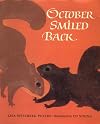
I didn't know what I was picking up; I grabbed it from the library display for the neat title and the promise of Ed Young's art. He does magnificent work here and in everything else I've seen. After reading this poem twice through, then reading the blurb, then reading it again, I 'get' it.
But even the first time, reading it cold and interpreting it from my own personal pov, I enjoyed it very much. This is one of those simple but profound books that can be enjoyed just for fun and can be show more read over and over again (we parents know that children get attached to ritual) for richer meanings each time. That is to say, I think the book shares even more than the blurb reveals.
One thing I would like to do with a 4-5 year-old is start thinking about what each month says to *us.* This book is from the northern temperate climate which is home to Peters and Young - but what about folks from California, or Georgia, or Brazil, or Australia? And it's not just the climate that would be different, but one's idiosyncratic perceptions could vary, too. show less
But even the first time, reading it cold and interpreting it from my own personal pov, I enjoyed it very much. This is one of those simple but profound books that can be enjoyed just for fun and can be show more read over and over again (we parents know that children get attached to ritual) for richer meanings each time. That is to say, I think the book shares even more than the blurb reveals.
One thing I would like to do with a 4-5 year-old is start thinking about what each month says to *us.* This book is from the northern temperate climate which is home to Peters and Young - but what about folks from California, or Georgia, or Brazil, or Australia? And it's not just the climate that would be different, but one's idiosyncratic perceptions could vary, too. show less
Lists
Awards


You May Also Like


Associated Authors
Statistics
- Works
- 24
- Members
- 3,159
- Popularity
- #8,085
- Rating
- 3.8
- Reviews
- 77
- ISBNs
- 63
- Languages
- 2
- Favorited
- 1