

John D. Rateliff
Author of The History of The Hobbit Part One: Mr. Baggins
About the Author
John D. Rateliff is a published scholar. He acquired his Ph.D. at Marquette University. Rateliff has authored titles on the works of J. R. R. Tolkien. His "The History of The Hobbit' won the 2009 Mythopoeic Scholarship Award in Inklings Studies. John is the author or co-author of many other books show more and role-playing games including The Lord of the Rings Roleplaying Game (2002), EverQuest Player's Handbook (2002), Egypt-Children of the World (1992), and Hero Builder's Guidebook - Dungeons & Dragons (2000). Rateliff has worked for TSR Inc., Wizards of the Coast, and Hasbro contributing to a large number of products in the Dungeons and Dragons line. In addition he has freelanced for Decipher Inc., Green Ronin, White Wolf, Guardians of Order, and Chaosium. (Bowker Author Biography) show less
Image credit: Middle-earth and J.R.R. Tolkien News & Articles
Series
Works by John D. Rateliff
Associated Works
Dungeon Master's Guide: Core Rulebook II (3.5) (2003) — Editor, some editions — 1,084 copies, 3 reviews
Forgotten Realms Campaign Setting (3rd Edition) (2001) — Editor, some editions — 699 copies, 3 reviews
Tolkien's Legendarium: Essays on The History of Middle-Earth (2000) — Contributor — 65 copies, 1 review
Perilous and Fair: Women in the Works and Life of J. R. R. Tolkien (2015) — Contributor — 56 copies, 2 reviews
Player's Guide - Rulebook IV (Dungeons & Dragons: Kingdoms of Kalamar) (2002) — Contributor — 46 copies, 1 review
The Lord of the Rings 1954-2004: Scholarship in Honor of Richard E. Blackwelder (2006) — Contributor — 38 copies
Picturing Tolkien: Essays on Peter Jackson's the Lord of the Rings Film Trilogy (2011) — Contributor — 33 copies
The Hobbit in Tolkien's Mythology: Essays on Revisions and Influences (2014) — Contributor — 25 copies
Tagged
Common Knowledge
- Other names
- Rateliff, John
- Birthdate
- 1958
- Gender
- male
- Education
- Marquette University (Ph.D)
- Short biography
- Possibly the only Tolkien scholar to hail from Magnolia, Arkansas, John D. Rateliff moved to Wisconsin in 1981 in order to work with the Tolkien manuscripts at Marquette University, where he received his Ph.D. with a dissertation on Lord Dunsany. He has been active in Tolkien scholarship for many years, helping to organize two major Tolkien conferences and delivering papers on Tolkien, Dunsany, Eddison, the Inklings, and other fantasy writers. While at Marquette, he assisted in the collation of their holdings with those that Christopher Tolkien was editing for volumes VI to IX of the History of Middle-earth series. In addition to writing a column on "Classics of Fantasy", he has contributed to such volumes as Tolkien's Legendarium and Blackwelder festschrift The Lord of the Rings: 1954-2004. A professional editor, he lives in the Seattle area with his wife and three cats, only one of whom is named after a Tolkien character.
- Nationality
- USA
- Birthplace
- Magnolia, Arkansas, USA
- Places of residence
- Seattle, Washington, USA
Wisconsin, USA - Associated Place (for map)
- USA
Members
Reviews
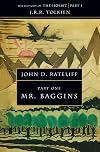
http://nwhyte.livejournal.com/2157381.html
It is actually rather good - as well as following through the manuscript changes (of which the most unsettling is that Gandalf was originally the name of the dwarf leader we know as Thorin Oakenshield; the wizard of early drafts was Bladorthin), Rateliff has taken the time to chase down the history of various elements of the story of The Hobbit; he argues, for instance, that Tolkien's trolls appear to have been the first in literature who were turned show more to stone by the rising sun, and that while invisibility-conferring rings were not completely new, many aspects of the Ring found by Bilbo are indeed original. He also shows how the writing of The Hobbit was affected by and in turn affected the other writing Tolkien was engaged in at the time, some of which became The Silmarillion and some of which only saw light in The History of Middle Earth. Note also that Laketown is the only culture in Middle Earth which is clearly rooted in the Western European medieval period which was Tolkien's own specialisation, and its Master is the only speaking character in the entire corpus who has won an election. show less
It is actually rather good - as well as following through the manuscript changes (of which the most unsettling is that Gandalf was originally the name of the dwarf leader we know as Thorin Oakenshield; the wizard of early drafts was Bladorthin), Rateliff has taken the time to chase down the history of various elements of the story of The Hobbit; he argues, for instance, that Tolkien's trolls appear to have been the first in literature who were turned show more to stone by the rising sun, and that while invisibility-conferring rings were not completely new, many aspects of the Ring found by Bilbo are indeed original. He also shows how the writing of The Hobbit was affected by and in turn affected the other writing Tolkien was engaged in at the time, some of which became The Silmarillion and some of which only saw light in The History of Middle Earth. Note also that Laketown is the only culture in Middle Earth which is clearly rooted in the Western European medieval period which was Tolkien's own specialisation, and its Master is the only speaking character in the entire corpus who has won an election. show less
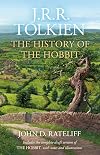
First, a disclaimer. This book is not for the feint of heart.
After having devoured Christopher Tolkien's twelve-volume History of Middle Earth, I was left (as many no doubt were) with a profound sense of incompletion. Where was the Hobbit? The official explanation was that the Hobbit, at the time of its writing, did not truly take part in the rest of the legendarium, and therefore did not warrant inclusion.
Rateliff goes to great pains to show where this viewpoint was in error. Although its show more exact place in the legendarium was not decided for some time, the ties were striking and immediate. Was the Elvenking Thranduil originally going to be Thingol? Had Gondolin fallen only a few years before? Was the Arkenstone a Silmaril? As it later transpired, this was not the case, but as this book illustrates, not only did the earlier concepts influence the Hobbit, but the flow of information went both ways.
For the casual reader, it is possible simply to read the earliest drafts of the Hobbit, to read the initial scene with Gollum which was supplanted in later revisions, and generally get a glimpse of a master at his craft. For the more intense and engaged reader, there is sufficient scholarship to satisfy any appetite. The structure is much like that of Christopher Tolkien's work, with end notes to the drafts, long discourses on various subjects pertaining to the drafts, end notes to those discourses, and occasionally, footnotes to the end notes to the discourses to the text. The result is a great depth of information, but presented in a way that allows the reader to go as deep as he or she wishes.
This book is recommended most highly for stalwart fans of Tolkien, but despite its great size, I can't help but think that it could be enjoyed by more casual readers as well. show less
After having devoured Christopher Tolkien's twelve-volume History of Middle Earth, I was left (as many no doubt were) with a profound sense of incompletion. Where was the Hobbit? The official explanation was that the Hobbit, at the time of its writing, did not truly take part in the rest of the legendarium, and therefore did not warrant inclusion.
Rateliff goes to great pains to show where this viewpoint was in error. Although its show more exact place in the legendarium was not decided for some time, the ties were striking and immediate. Was the Elvenking Thranduil originally going to be Thingol? Had Gondolin fallen only a few years before? Was the Arkenstone a Silmaril? As it later transpired, this was not the case, but as this book illustrates, not only did the earlier concepts influence the Hobbit, but the flow of information went both ways.
For the casual reader, it is possible simply to read the earliest drafts of the Hobbit, to read the initial scene with Gollum which was supplanted in later revisions, and generally get a glimpse of a master at his craft. For the more intense and engaged reader, there is sufficient scholarship to satisfy any appetite. The structure is much like that of Christopher Tolkien's work, with end notes to the drafts, long discourses on various subjects pertaining to the drafts, end notes to those discourses, and occasionally, footnotes to the end notes to the discourses to the text. The result is a great depth of information, but presented in a way that allows the reader to go as deep as he or she wishes.
This book is recommended most highly for stalwart fans of Tolkien, but despite its great size, I can't help but think that it could be enjoyed by more casual readers as well. show less
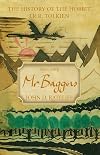
Mr. Baggins is a scholarly book and one more suited to the die-hard Tolkien enthusiast than the casual reader. That's not to say that it's dry or boring; quite the reverse, in fact.
This is a book about a book, or more precisely a book about part of a book, as it covers about 2/3s of the action of The Hobbit. Rateliff has taken a number of fragments and drafts of The Hobbit and presents them to us with copious notes and commentaries. Although the main plot is essentially the same as Tolkien's show more published story, there were many differences in detail and it's fascinating to see how the accumulation of such modifications affected the work as a whole.
The book is divided into the chapters of the published story that we're familiar with, although the draft version had no such divisions. Tolkien's text is annotated to highlight the variations. Each chapter is then followed by Rateliff's commentaries on what we've just read, providing fascinating insight into Tolkien's sources, inspirations and useful background information.
Thus we learn about Tolkien's fascination with "eagles-to-the-rescue"; the development of elves from Norse and Celtic folklore, through the Middle-ages and into the late Victorian and Edwardian era; Tolkien's likely source for Beorn the werebear; neolithic lake towns, etc.
That the commentaries are annotated, and frequently refer back to Tolkien's own invented mythology, makes the book wonderfully convoluted and recursive. And some nice illustrated plates are thrown in for good measure.
Next time I read The Hobbit, it will certainly be with this book, and the companion volume, [b:The History of the Hobbit, Volume 2|978772|The History of the Hobbit, Volume 2|John D. Rateliff|http://photo.goodreads.com/books/1192843931s/978772.jpg|963660], by my side. show less
This is a book about a book, or more precisely a book about part of a book, as it covers about 2/3s of the action of The Hobbit. Rateliff has taken a number of fragments and drafts of The Hobbit and presents them to us with copious notes and commentaries. Although the main plot is essentially the same as Tolkien's show more published story, there were many differences in detail and it's fascinating to see how the accumulation of such modifications affected the work as a whole.
The book is divided into the chapters of the published story that we're familiar with, although the draft version had no such divisions. Tolkien's text is annotated to highlight the variations. Each chapter is then followed by Rateliff's commentaries on what we've just read, providing fascinating insight into Tolkien's sources, inspirations and useful background information.
Thus we learn about Tolkien's fascination with "eagles-to-the-rescue"; the development of elves from Norse and Celtic folklore, through the Middle-ages and into the late Victorian and Edwardian era; Tolkien's likely source for Beorn the werebear; neolithic lake towns, etc.
That the commentaries are annotated, and frequently refer back to Tolkien's own invented mythology, makes the book wonderfully convoluted and recursive. And some nice illustrated plates are thrown in for good measure.
Next time I read The Hobbit, it will certainly be with this book, and the companion volume, [b:The History of the Hobbit, Volume 2|978772|The History of the Hobbit, Volume 2|John D. Rateliff|http://photo.goodreads.com/books/1192843931s/978772.jpg|963660], by my side. show less

On the twenty-fifth anniversary of the publication of B2: The Keep on the Borderlands, Wizards of the Coast published Return to the Keep on the Borderlands, an updated adventure scenario set twenty years after the events of the original. Unlike the original, this module is designed for the 2nd edition AD&D rule set, and is firmly set in Greyhawk (although it would be relatively easy to convert to another setting). It is also is simply better designed and thought out than the original.
The show more first difference one notices is that the NPCs all have names and many have actual personalities. Even the villains have names, personalities, and goals, all of which are quite useful for a DM trying to decide what particular actions, deals, and plots would or would not interest the various actors. The Keep is also given a name (Kendall Keep) and a brief history that ties together many of the ambitions of the various NPCs.
A quick outline of the background: The Keep has fallen on hard times. Macsen Wledig, the original builder of the Keep, left many years before with the bulk of his fighting forces to fight in a war raging far away where he and his retainers were all killed. The remaining inhabitants of the Keep decided to stay and tough things out, electing Devereau, one of their former Lord's henchmen (who stayed behind because he was crippled), to lead them. Without Macsen's influence to help bring in money and supplies, the community inside the Keep has struggled, and many of the areas inside the fort have been given over to trade crafts, farming activities, and otherwise being used to house, feed, and clothe the residents. A functional, if relatively impoverished local economy is described, various NPCs are given jobs, personalities, and families, several NPCs are detailed who might throw in their lot with the PCs and become adventuring companions or henchmen, and so on.
But an adventure module is not an adventure module without a cast of villains, and Return to the Keep on the Borderlands has an extensive, well-developed cast of bad guys. Interestingly, not all the bad guys are on the same side as one another, and even those that are may only be working together out of mutual convenience. The overall villains are The Hidden Temple, villainous evil priests of a cult of two death gods who have recruited a collection of bandits to their cause and have been systematically eliminating the humanoid residents of the Caves of Chaos (by exterminating them, or pushing them out), and using the resulting bodies to bolster their undead army. They have installed their allies in place of several humanoid groups, and the remaining humanoid residents nervously wait for the Hidden Temple to turn its eye towards them. Ultimately, once they have consolidated their power, the Hidden Temple plans to attack Kendall Keep, and kill or enslave the residents there.
Towards this end, the Hidden Temple has various agents in and about the Keep who all have plot hooks that will trigger the PCs to investigate and eventually travel to the Caves to confront these villains. For example, unlike in the original Keep on the Borderlands, the bandit inhabitants of the Caves are described as engaging in commerce raiding, which can easily be used as a hook to engage the PCs. Some villainous NPCs will kidnap those living in the Keep, or blackmail them, or assassinate them, all of which can be used to trigger further adventures. In fact, I consider many of the Keep-based plots to be among the best designed parts of the module, as they are the most interesting.
Once the PCs are out and about, they have the opportunity to make allies. Some are reliable, others not so much. As the goals of the various groups are set out for the DM, the kinds of overtures that will dispose them favorably to the PCs are quite apparent, as are the kinds of activities the various NPCs will agree to engage in. Most importantly, the DM is given guidance on how far particular NPCs will go in working with the PCs, and under what conditions they might abandon or betray them. There are so many plot hooks, and so many different groups to engage with that a decent DM should have no trouble launching any number of extended campaigns off of the information provided.
The only negative I think the module has, and the only thing that keeps it from getting a higher rating from me is that some of the opposition seems to be a bit overwhelming for the character levels the adventure is supposedly aimed at. The adventure is designed for novice adventurers (as was the original) ranging in level from 1st to 3rd. However, most of the leading opponents are substantially more powerful. For example, one Keep-based subplot involves an assassin and his wizard accomplice who show up between the PCs second and third visit to the Keep and who want to kill all the inhabitants of the town. The assassin is 7th-level, while the wizard is 6th-level. This is pretty stiff opposition for a group of presumably 1st- or 2nd-level PCs. The rest of the opposition has been upgraded too: instead of an ogre, the Caves house a (much more dangerous) troll. Instead of one minotaur, the Caves now boast five. The Hidden Temple can call upon a 5th-level Necromancer and is led by a 6th-level high priestess and a 5th-level priest backed by two 5th-level fighters and an extensive army of underpriests and undead (at least 30 skeletons, 30 zombies, and 5 shadows). Unless the DM tones down the opposition, throws a bunch of side quests into the adventure to build up the PCs' levels, or does a lot of fudging, it seems almost impossible for the PCs to succeed.
However, with that caveat, there is a lot to like in this adventure. Just within the pages presented there should be hours of action, and there are so many jumping off points to expand what is in the text to an entire campaign or even multiple campaigns. The only thing that seems to have held this adventure back is that it was released in the waning days of the 2nd edition AD&D era, and thus (if you want to play it using 3rd or 4th edition D&D) the DM must convert the statistics. That said, I would consider this adventure to be well-worth the effort needed to make that conversion. show less
The show more first difference one notices is that the NPCs all have names and many have actual personalities. Even the villains have names, personalities, and goals, all of which are quite useful for a DM trying to decide what particular actions, deals, and plots would or would not interest the various actors. The Keep is also given a name (Kendall Keep) and a brief history that ties together many of the ambitions of the various NPCs.
A quick outline of the background: The Keep has fallen on hard times. Macsen Wledig, the original builder of the Keep, left many years before with the bulk of his fighting forces to fight in a war raging far away where he and his retainers were all killed. The remaining inhabitants of the Keep decided to stay and tough things out, electing Devereau, one of their former Lord's henchmen (who stayed behind because he was crippled), to lead them. Without Macsen's influence to help bring in money and supplies, the community inside the Keep has struggled, and many of the areas inside the fort have been given over to trade crafts, farming activities, and otherwise being used to house, feed, and clothe the residents. A functional, if relatively impoverished local economy is described, various NPCs are given jobs, personalities, and families, several NPCs are detailed who might throw in their lot with the PCs and become adventuring companions or henchmen, and so on.
But an adventure module is not an adventure module without a cast of villains, and Return to the Keep on the Borderlands has an extensive, well-developed cast of bad guys. Interestingly, not all the bad guys are on the same side as one another, and even those that are may only be working together out of mutual convenience. The overall villains are The Hidden Temple, villainous evil priests of a cult of two death gods who have recruited a collection of bandits to their cause and have been systematically eliminating the humanoid residents of the Caves of Chaos (by exterminating them, or pushing them out), and using the resulting bodies to bolster their undead army. They have installed their allies in place of several humanoid groups, and the remaining humanoid residents nervously wait for the Hidden Temple to turn its eye towards them. Ultimately, once they have consolidated their power, the Hidden Temple plans to attack Kendall Keep, and kill or enslave the residents there.
Towards this end, the Hidden Temple has various agents in and about the Keep who all have plot hooks that will trigger the PCs to investigate and eventually travel to the Caves to confront these villains. For example, unlike in the original Keep on the Borderlands, the bandit inhabitants of the Caves are described as engaging in commerce raiding, which can easily be used as a hook to engage the PCs. Some villainous NPCs will kidnap those living in the Keep, or blackmail them, or assassinate them, all of which can be used to trigger further adventures. In fact, I consider many of the Keep-based plots to be among the best designed parts of the module, as they are the most interesting.
Once the PCs are out and about, they have the opportunity to make allies. Some are reliable, others not so much. As the goals of the various groups are set out for the DM, the kinds of overtures that will dispose them favorably to the PCs are quite apparent, as are the kinds of activities the various NPCs will agree to engage in. Most importantly, the DM is given guidance on how far particular NPCs will go in working with the PCs, and under what conditions they might abandon or betray them. There are so many plot hooks, and so many different groups to engage with that a decent DM should have no trouble launching any number of extended campaigns off of the information provided.
The only negative I think the module has, and the only thing that keeps it from getting a higher rating from me is that some of the opposition seems to be a bit overwhelming for the character levels the adventure is supposedly aimed at. The adventure is designed for novice adventurers (as was the original) ranging in level from 1st to 3rd. However, most of the leading opponents are substantially more powerful. For example, one Keep-based subplot involves an assassin and his wizard accomplice who show up between the PCs second and third visit to the Keep and who want to kill all the inhabitants of the town. The assassin is 7th-level, while the wizard is 6th-level. This is pretty stiff opposition for a group of presumably 1st- or 2nd-level PCs. The rest of the opposition has been upgraded too: instead of an ogre, the Caves house a (much more dangerous) troll. Instead of one minotaur, the Caves now boast five. The Hidden Temple can call upon a 5th-level Necromancer and is led by a 6th-level high priestess and a 5th-level priest backed by two 5th-level fighters and an extensive army of underpriests and undead (at least 30 skeletons, 30 zombies, and 5 shadows). Unless the DM tones down the opposition, throws a bunch of side quests into the adventure to build up the PCs' levels, or does a lot of fudging, it seems almost impossible for the PCs to succeed.
However, with that caveat, there is a lot to like in this adventure. Just within the pages presented there should be hours of action, and there are so many jumping off points to expand what is in the text to an entire campaign or even multiple campaigns. The only thing that seems to have held this adventure back is that it was released in the waning days of the 2nd edition AD&D era, and thus (if you want to play it using 3rd or 4th edition D&D) the DM must convert the statistics. That said, I would consider this adventure to be well-worth the effort needed to make that conversion. show less
Lists
Awards

You May Also Like


Associated Authors
Statistics
- Works
- 21
- Also by
- 21
- Members
- 1,807
- Popularity
- #14,237
- Rating
- 4.0
- Reviews
- 15
- ISBNs
- 32
- Languages
- 1
- Favorited
- 2