
William Wise
Author of Ten Sly Piranhas
About the Author
Works by William Wise
Leaders, Laws, and Citizens: The Story of Democracy and Government (A Stepping-Stone Book) (1973) 13 copies
Secret Mission to the Philippines: The Story of "Spyron" & the American-Filipino Guerrillas of World War II (2001) 12 copies, 1 review
The House With the Red Roof 2 copies
Man with a Raincoat 2 copies
Citizen of the World 1 copy
Indonesia's War on Terror 1 copy
The Terrible Trumpet 1 copy
Charles A Lindbergh 1 copy
Monsters of North America 1 copy
Associated Works
Tagged
Common Knowledge
- Canonical name
- William Wise
- Birthdate
- 1923
- Gender
- male
- Education
- Yale University
- Occupations
- writer
- Agent
- Curtis Brown, Ltd.
- Nationality
- USA (birth)
- Places of residence
- New York, New York, USA
- Associated Place (for map)
- New York, USA
Members
Reviews

A recent reprint of a book first published in 1968, this is interesting for a couple of reasons:
First, in a world where we are continually deluged with reports of environmental doom - acrolein in french fries, drowning polar bears, feminized alligators, tumor-inducing cell phones, and obesifying trans-fats - the London smog of December 1952 was a legitimate, bone fide, no-doubt-about-it human-caused pollution disaster.
Second, 1968 was before most of the US environmental laws - CAA, CWA, show more RCRA, FIFIRA, CERCLA, TSCA, SARA, SDWA and all the other wonderful acronyms - were passed. Thus the book is a kind of a window into environmental attitudes of the time. (I was there but I was paying more attention to hormones at the time. And not in the water, either.) It also provides some insight (though the author’s filter) of environmental attitudes of 1952.
The author, William Wise, is not a professional scientist; he’s published in a variety of areas, mostly “young adult” and children’s books (his best-selling work seems to be Ten Sly Piranhas). Authors of this sort are sometimes called “hacks” but that seems very unfair in the current case; the book is adequately documented and well-written. Mr. Wise just seems to be interested in a lot of different things. However, since he’s not a scientist, this is not a technical work; one map, no charts or tables, numbers interspersed with text when present at all (it’s hard to make “0.9 parts per million sulfur dioxide” flow smoothly into a gripping narrative). Thus we have more or less the standard disaster story: first, historical background (Edward I Longshanks had someone beheaded for using coal instead of wood in his furnace, Bleak House has a passage describing an out-of-towner imagining something is on fire upon first encountering London fog, and the “pea-soupers” of the Sherlock Holmes stories are famous). Then we have the cast of characters: middle-aged housewife with bronchitis, retired doctor with a heart condition, teenage girl rebelling against her parents who won’t let her take her hair out of braids, American newspaperman expecting a visit from his sister-in-law, young couple with an asthmatic newborn, dedicated neighborhood doctor, groundskeeper for a soccer team, public health official, etc. You may now place your bets on who dies. (All of the characters are fictional but “based on” real people). Next, the action starts. A temperature inversion forms over London on December 4th, 1952 and remained in place until December 7th. It remained cold enough for everyone to keep their comfortable home coal fires burning, and witnesses reported the astonishing sight of smoke rising a short distance out of chimneys then flowing downward back to the ground. The smog quickly became so thick that visibility diminished from yards to feet to zero; buses had to have conductors carrying flares walk in front to find their routes, and drivers simply abandoned their cars. (In one nice little human-interest touch, after becoming lost on his way to a patient and walking in a circle back to his own door, the dedicated neighborhood doctor mentioned above recruited a blind patient to lead him on his rounds). The darkness, of course, put extra demand on the city’s coal-fired power stations. And people started to die. Nowadays, “excess deaths” from air pollution are usually “calculated” by increasingly dubious statistical methods, but despite the unsophisticated numerical techniques of 1952 the public health officials quickly determined that something unpleasant was going on. Deaths in London - and that’s just immediate deaths during the smog period with no allowance for long-term effects - were four times what they were during the previous week. The absolute death numbers were greater than the worst period of the 19th century cholera epidemic, and were only exceeded by the worst week of the 1918 influenza pandemic.
The last quarter of the book discusses the aftermath. I was pleasantly surprised at the author’s even-handedness here. Any more recent book would be quick to point the finger at evil multinational corporations, but while Mr. Wise doesn’t let them off the hook, a major part of the blame is assigned to the government, media, and private citizens. It’s not just the government being “in the pocket of corporations”, either; in 1952 England the government, to an extent, was the corporations - the power stations that were a large contributor were all nationalized. The problem of different bureaucracies working at cross purposes that I’m so familiar with was also evident - although the smog problem had been getting worse for centuries, government departments charged with keeping coal mines working forbid private industries from switching to low-sulfur coal, and national health agencies prohibited local health department from making their own pollution control regulations. Although health agencies were aware of previous smog disasters in the Meuse Valley in the 1930s and Pennsylvania in the 1940s, temperature inversions were thought to be an extremely rare phenomenon and the meteorological agencies did not issue a warning of potential problems. Although the BBC interviewed the chief medical officer, who stated a severe crisis was underway and volunteered to be quoted, the interview was never aired, and most media reports were concerned about a fictional crime wave during the smog (there was actually a sharp decrease in crime - the crooks couldn’t see where they were going, either. Lastly, the citizens of London were just very fond of open grate coal fires. No raindrop ever thinks it’s responsible for the flood.
I think I’ll give this one four stars. Of course, there’s a lot more technical information I’d like to see - for one thing, how was sulfur dioxide measured in 1952? (I suspect some sort of chemical test which probably wasn’t very sensitive). I’d also love to see an estimate of exactly what was in London air other than smoke, with some attempts to estimate concentrations. However, for the kind of book this is a good one. If you’re interested in more details, see if you can find a copy of The Big Smoke, now unfortunately out of print. This has a much more detailed account of the atmospheric conditions during the 1952 event. show less
First, in a world where we are continually deluged with reports of environmental doom - acrolein in french fries, drowning polar bears, feminized alligators, tumor-inducing cell phones, and obesifying trans-fats - the London smog of December 1952 was a legitimate, bone fide, no-doubt-about-it human-caused pollution disaster.
Second, 1968 was before most of the US environmental laws - CAA, CWA, show more RCRA, FIFIRA, CERCLA, TSCA, SARA, SDWA and all the other wonderful acronyms - were passed. Thus the book is a kind of a window into environmental attitudes of the time. (I was there but I was paying more attention to hormones at the time. And not in the water, either.) It also provides some insight (though the author’s filter) of environmental attitudes of 1952.
The author, William Wise, is not a professional scientist; he’s published in a variety of areas, mostly “young adult” and children’s books (his best-selling work seems to be Ten Sly Piranhas). Authors of this sort are sometimes called “hacks” but that seems very unfair in the current case; the book is adequately documented and well-written. Mr. Wise just seems to be interested in a lot of different things. However, since he’s not a scientist, this is not a technical work; one map, no charts or tables, numbers interspersed with text when present at all (it’s hard to make “0.9 parts per million sulfur dioxide” flow smoothly into a gripping narrative). Thus we have more or less the standard disaster story: first, historical background (Edward I Longshanks had someone beheaded for using coal instead of wood in his furnace, Bleak House has a passage describing an out-of-towner imagining something is on fire upon first encountering London fog, and the “pea-soupers” of the Sherlock Holmes stories are famous). Then we have the cast of characters: middle-aged housewife with bronchitis, retired doctor with a heart condition, teenage girl rebelling against her parents who won’t let her take her hair out of braids, American newspaperman expecting a visit from his sister-in-law, young couple with an asthmatic newborn, dedicated neighborhood doctor, groundskeeper for a soccer team, public health official, etc. You may now place your bets on who dies. (All of the characters are fictional but “based on” real people). Next, the action starts. A temperature inversion forms over London on December 4th, 1952 and remained in place until December 7th. It remained cold enough for everyone to keep their comfortable home coal fires burning, and witnesses reported the astonishing sight of smoke rising a short distance out of chimneys then flowing downward back to the ground. The smog quickly became so thick that visibility diminished from yards to feet to zero; buses had to have conductors carrying flares walk in front to find their routes, and drivers simply abandoned their cars. (In one nice little human-interest touch, after becoming lost on his way to a patient and walking in a circle back to his own door, the dedicated neighborhood doctor mentioned above recruited a blind patient to lead him on his rounds). The darkness, of course, put extra demand on the city’s coal-fired power stations. And people started to die. Nowadays, “excess deaths” from air pollution are usually “calculated” by increasingly dubious statistical methods, but despite the unsophisticated numerical techniques of 1952 the public health officials quickly determined that something unpleasant was going on. Deaths in London - and that’s just immediate deaths during the smog period with no allowance for long-term effects - were four times what they were during the previous week. The absolute death numbers were greater than the worst period of the 19th century cholera epidemic, and were only exceeded by the worst week of the 1918 influenza pandemic.
The last quarter of the book discusses the aftermath. I was pleasantly surprised at the author’s even-handedness here. Any more recent book would be quick to point the finger at evil multinational corporations, but while Mr. Wise doesn’t let them off the hook, a major part of the blame is assigned to the government, media, and private citizens. It’s not just the government being “in the pocket of corporations”, either; in 1952 England the government, to an extent, was the corporations - the power stations that were a large contributor were all nationalized. The problem of different bureaucracies working at cross purposes that I’m so familiar with was also evident - although the smog problem had been getting worse for centuries, government departments charged with keeping coal mines working forbid private industries from switching to low-sulfur coal, and national health agencies prohibited local health department from making their own pollution control regulations. Although health agencies were aware of previous smog disasters in the Meuse Valley in the 1930s and Pennsylvania in the 1940s, temperature inversions were thought to be an extremely rare phenomenon and the meteorological agencies did not issue a warning of potential problems. Although the BBC interviewed the chief medical officer, who stated a severe crisis was underway and volunteered to be quoted, the interview was never aired, and most media reports were concerned about a fictional crime wave during the smog (there was actually a sharp decrease in crime - the crooks couldn’t see where they were going, either. Lastly, the citizens of London were just very fond of open grate coal fires. No raindrop ever thinks it’s responsible for the flood.
I think I’ll give this one four stars. Of course, there’s a lot more technical information I’d like to see - for one thing, how was sulfur dioxide measured in 1952? (I suspect some sort of chemical test which probably wasn’t very sensitive). I’d also love to see an estimate of exactly what was in London air other than smoke, with some attempts to estimate concentrations. However, for the kind of book this is a good one. If you’re interested in more details, see if you can find a copy of The Big Smoke, now unfortunately out of print. This has a much more detailed account of the atmospheric conditions during the 1952 event. show less
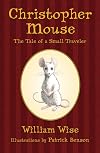
Though his life begins "in a commonplace way," Christopher Mouse is not the least bit common. Born in an ordinary wire cage, he endures various young owners who range from bad to worse before narrowly escaping death by taxidermy. His adventures continue in the Metropolitan Museum of Art as he encounters a large cat in the Egyptian room. Throughout his journeys, Christopher proves an adventurer of the most intrepid sort-and a budding poet as well. With the delightful feel of a lost (and show more found) classic, this is the story of an extraordinary mouse who, through strong will and good luck, finds his own small way in a very large world. show less
Christopher Mouse: The Tale Of A Small Traveler (Turtleback School & Library Binding Edition) by William Wise
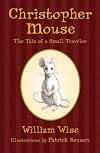
Another book for my Juvenile shelf.
Christopher Mouse is just a regular white mouse to the average eye. His life and the paths it goes down are not.
Born in a wire cage to a caring mother, he is educated by her and by her teaching her children to read the newsprint that lines their cage floor. Though both sources Christopher acquires quite a store of knowledge of things happening in life. He is also a budding poet and finds ideas for his original poems.
These particular mice are raised for show more possible work in laboratories or, hopefully better, a life in a pet shop where they may go home with a kind and caring new owner.
Over time Christopher and his sister Anna are the last two of the litter and both hope to stay together and go to a pet shop. Instead, they both go to a pet shop but are parted to different owners. This is where Christopher's life adventure starts.
A kind and caring owner, a mean and harsh owner, winding up in the Egyptian room at the Metropolitan Museum of Art, encounters with a couple of large cats (natural enemies of mice). How Christopher deals with all these challenges and the final out comes makes for an enjoyable tale. Read to yourself or shared out loud. A classic story. show less
Christopher Mouse is just a regular white mouse to the average eye. His life and the paths it goes down are not.
Born in a wire cage to a caring mother, he is educated by her and by her teaching her children to read the newsprint that lines their cage floor. Though both sources Christopher acquires quite a store of knowledge of things happening in life. He is also a budding poet and finds ideas for his original poems.
These particular mice are raised for show more possible work in laboratories or, hopefully better, a life in a pet shop where they may go home with a kind and caring new owner.
Over time Christopher and his sister Anna are the last two of the litter and both hope to stay together and go to a pet shop. Instead, they both go to a pet shop but are parted to different owners. This is where Christopher's life adventure starts.
A kind and caring owner, a mean and harsh owner, winding up in the Egyptian room at the Metropolitan Museum of Art, encounters with a couple of large cats (natural enemies of mice). How Christopher deals with all these challenges and the final out comes makes for an enjoyable tale. Read to yourself or shared out loud. A classic story. show less
Secret Mission to the Philippines: The Story of "Spyron" & the American-Filipino Guerrillas of World War II by William Wise
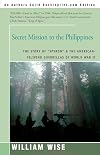
A rather old book (1968) that came to my attention via the Amazon recommendation engine. Amazon occasionally gets it right. Rather a fun, easy book; I'd say it was written at about the high school level, certainly for a popular rather than a scholarly audience.
This is basically the story of "Chick" Parsons, of whose many admirable attributes the greatest was probably that he was incredibly lucky. Parsons worked his passage to the Philippines as a 19-year-old after studying Spanish in high show more school; he also studied stenography, and managed to wrangle a position as secretary of of the Woods-Forbes Investigating Commission. This took him all over the Philippines and was the beginning of his integration into an impressive old boys' network that covered both the American community and the Filipino elite. Along the way he learned enough of two native dialects to communicate (if not flawlessly), married the daughter of an American Army retiree and had three sons, became successful in the local shipping business, and acquired a reserve Navy commission and went on active duty at every opportunity.
Following the attack on Pearl Harbor, Parsons was called to active duty and spent most of it directing the Manila docks. When Manila was evacuated, he carried out the demolition, then headed home to await capture, burning all his uniforms and throwing his military brass in the Pasig River so that he could pass as a civilian and not be separated from his family in internment. Almost on impulse, he decided as the last minute to try to pass himself off as a Panamanian diplomat: As a legal fiction, to aid reflagging of Danish merchantment, he had been registered as the Panamanian consul, complete with passport and seals of office. He dug these out, found a Panamanian flag to post in front of his house, and the Japanese bought it. He was, after all, registered as a diplomat in the official Filipino government archives, as the Japanese soon discovered, and he was short and dark enough to pass himself off as a Latin American. He used his freedom of movement while awaiting repatriation to gather substantial intelligence. However, the Japanese got nasty after the Doolittle raid, and all Europeans in Manila, diplomats or otherwise, were rounded up and questioned; Parsons actually had the fingernails pulled out of his right hand, but somehow had the presence of mind to maintain his cover, and was eventually released.
In October 1942 Parsons and his family were exchanged for Japanese civilians in Latin America. Told their luggage would be searched, and any documents of intelligence value would result in summary execution, Parsons tried to get rid of his intelligence folder but a misunderstanding with his wife left the folder hidden among the baby's diapers. It was only by quick thinking and incredible luck that Parsons smuggled the documents out of the Philippines.
Once back in the States, Parsons was thoroughly debriefed, then his services were requested by MacArthur. Parsons was put in charge of "Spyron" (a play on Naval jargon for a type squadron) and returned to the Philippines by submarine to coordinate the guerrilla movements on the island. He made several such trips, which eventually included supply missions using obsolete minelaying submarines that had unusually great cargo capacity. It was Parsons who brought William Dyess and two other escaped POWs out to MacArthur with the first reports of the Bataan Death March.
Supplies had tremendous propaganda value in addition to their military value. They included a considerable amount of non-military trinkets, such as toys and matchbooks, all stamped "I Shall Return" with MacArthur's picture or signature, which were distributed to civilians. Not to discount the military value: The guerrillas were reduced to making their own black powder, digging up Japanese mines for explosives, and using picric acid from naval mines to treat jungle ulcers. They were also brewing their own vehicle fuel from the local sugar crop, but then, so were the Japanese by late 1944.
Parsons is also credited with arranging the evacuation of civilians from invasion areas on Leyte prior to the prelanding bombardment. The Japanese had some inkling what was going on, apparently; they evacuated most of their men from Tacloban but forced the civilians to remain. Parsons got word out and Tacloban was spared the prelanding bombardment.
All this came at significant personal cost: Parsons' mother-in-law remained behind when the rest of the family was repatriated, because her son was in a POW camp and she refused to leave the islands while he was there. Her son eventually escaped and joined Parsons, but the mother-in-law was eventually beheaded by the Japanese, ostensibly for involvement in guerrilla activities, but in reality as retaliation for Parsons' activities.
An enjoyable three hours' read. show less
This is basically the story of "Chick" Parsons, of whose many admirable attributes the greatest was probably that he was incredibly lucky. Parsons worked his passage to the Philippines as a 19-year-old after studying Spanish in high show more school; he also studied stenography, and managed to wrangle a position as secretary of of the Woods-Forbes Investigating Commission. This took him all over the Philippines and was the beginning of his integration into an impressive old boys' network that covered both the American community and the Filipino elite. Along the way he learned enough of two native dialects to communicate (if not flawlessly), married the daughter of an American Army retiree and had three sons, became successful in the local shipping business, and acquired a reserve Navy commission and went on active duty at every opportunity.
Following the attack on Pearl Harbor, Parsons was called to active duty and spent most of it directing the Manila docks. When Manila was evacuated, he carried out the demolition, then headed home to await capture, burning all his uniforms and throwing his military brass in the Pasig River so that he could pass as a civilian and not be separated from his family in internment. Almost on impulse, he decided as the last minute to try to pass himself off as a Panamanian diplomat: As a legal fiction, to aid reflagging of Danish merchantment, he had been registered as the Panamanian consul, complete with passport and seals of office. He dug these out, found a Panamanian flag to post in front of his house, and the Japanese bought it. He was, after all, registered as a diplomat in the official Filipino government archives, as the Japanese soon discovered, and he was short and dark enough to pass himself off as a Latin American. He used his freedom of movement while awaiting repatriation to gather substantial intelligence. However, the Japanese got nasty after the Doolittle raid, and all Europeans in Manila, diplomats or otherwise, were rounded up and questioned; Parsons actually had the fingernails pulled out of his right hand, but somehow had the presence of mind to maintain his cover, and was eventually released.
In October 1942 Parsons and his family were exchanged for Japanese civilians in Latin America. Told their luggage would be searched, and any documents of intelligence value would result in summary execution, Parsons tried to get rid of his intelligence folder but a misunderstanding with his wife left the folder hidden among the baby's diapers. It was only by quick thinking and incredible luck that Parsons smuggled the documents out of the Philippines.
Once back in the States, Parsons was thoroughly debriefed, then his services were requested by MacArthur. Parsons was put in charge of "Spyron" (a play on Naval jargon for a type squadron) and returned to the Philippines by submarine to coordinate the guerrilla movements on the island. He made several such trips, which eventually included supply missions using obsolete minelaying submarines that had unusually great cargo capacity. It was Parsons who brought William Dyess and two other escaped POWs out to MacArthur with the first reports of the Bataan Death March.
Supplies had tremendous propaganda value in addition to their military value. They included a considerable amount of non-military trinkets, such as toys and matchbooks, all stamped "I Shall Return" with MacArthur's picture or signature, which were distributed to civilians. Not to discount the military value: The guerrillas were reduced to making their own black powder, digging up Japanese mines for explosives, and using picric acid from naval mines to treat jungle ulcers. They were also brewing their own vehicle fuel from the local sugar crop, but then, so were the Japanese by late 1944.
Parsons is also credited with arranging the evacuation of civilians from invasion areas on Leyte prior to the prelanding bombardment. The Japanese had some inkling what was going on, apparently; they evacuated most of their men from Tacloban but forced the civilians to remain. Parsons got word out and Tacloban was spared the prelanding bombardment.
All this came at significant personal cost: Parsons' mother-in-law remained behind when the rest of the family was repatriated, because her son was in a POW camp and she refused to leave the islands while he was there. Her son eventually escaped and joined Parsons, but the mother-in-law was eventually beheaded by the Japanese, ostensibly for involvement in guerrilla activities, but in reality as retaliation for Parsons' activities.
An enjoyable three hours' read. show less
Lists
Awards


You May Also Like


Associated Authors
Statistics
- Works
- 65
- Also by
- 1
- Members
- 2,119
- Popularity
- #12,147
- Rating
- 3.7
- Reviews
- 34
- ISBNs
- 82
- Languages
- 2