
Jean H. Baker
Author of Mary Todd Lincoln: A Biography
About the Author
Jean H. Baker is the author of Sisters: The Lives of America's Suffragists (Hill and Wang, 2005) and many other books on American history. She is a professor of history at Goucher College in Baltimore, Maryland.
Works by Jean H. Baker
Affairs of Party: The Political Culture of Northern Democrats in the Mid–Nineteenth Century. (The North's Civil War) (1983) 28 copies
The Politics of Continuity: Maryland Political Parties from 1858 to 1870 (The Goucher College Series) (1973) 11 copies
"Not much of me": Abraham Lincoln as a typical American (Annual R. Gerald McMurtry lecture) (1988) 4 copies
Associated Works
Forgotten Heroes: Inspiring American Portraits from Our Leading Historians (1999) — Contributor — 125 copies, 1 review
"We Cannot Escape History": Lincoln and the Last Best Hope of Earth (1995) — Contributor — 37 copies
Tagged
Common Knowledge
- Legal name
- Baker, Jean Hogarth Harvey
- Birthdate
- 1933-02-09
- Gender
- female
- Education
- Johns Hopkins University
Goucher College - Occupations
- historian
professor - Organizations
- Goucher College
- Nationality
- USA
- Places of residence
- Baltimore, Maryland, USA
- Associated Place (for map)
- Maryland, USA
Members
Reviews
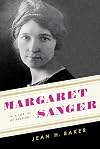
Undoubtedly the most influential advocate for birth control even before the term existed, Margaret Sanger ignited a movement that has shaped our society to this day. Her views on reproductive rights have made her a frequent target of conservatives and so-called family values activists. Yet lately even progressives have shied away from her, citing socialist leanings and a purported belief in eugenics as a blight on her accomplishments. In this captivating new biography, the renowned feminist show more historian Jean H. Baker rescues Sanger from such critiques and restores her to the vaunted place in history she once held.
Trained as a nurse and midwife in the gritty tenements of New York’s Lower East Side, Sanger grew increasingly aware of the dangers of unplanned pregnancy—both physical and psychological. A botched abortion resulting in the death of a poor young mother catalyzed Sanger, and she quickly became one of the loudest voices in favor of sex education and contraception. The movement she started spread across the country, eventually becoming a vast international organization with her as its spokeswoman.
Sanger’s staunch advocacy for women’s privacy and freedom extended to her personal life as well. After becoming a wife and mother at a relatively early age, she abandoned the trappings of home and family for a globe-trotting life as a women’s rights activist. Notorious for the sheer number of her romantic entanglements, Sanger epitomized the type of “free love” that would become mainstream only at the very end of her life. That she lived long enough to see the creation of the birth control pill—which finally made planned pregnancy a reality—is only fitting. show less
Trained as a nurse and midwife in the gritty tenements of New York’s Lower East Side, Sanger grew increasingly aware of the dangers of unplanned pregnancy—both physical and psychological. A botched abortion resulting in the death of a poor young mother catalyzed Sanger, and she quickly became one of the loudest voices in favor of sex education and contraception. The movement she started spread across the country, eventually becoming a vast international organization with her as its spokeswoman.
Sanger’s staunch advocacy for women’s privacy and freedom extended to her personal life as well. After becoming a wife and mother at a relatively early age, she abandoned the trappings of home and family for a globe-trotting life as a women’s rights activist. Notorious for the sheer number of her romantic entanglements, Sanger epitomized the type of “free love” that would become mainstream only at the very end of her life. That she lived long enough to see the creation of the birth control pill—which finally made planned pregnancy a reality—is only fitting. show less
Another good entry in this series of short presidential biographies, this one on the much maligned James Buchanan. There's a tendency to view Buchanan as a doddering, indecisive Jimmy Carter figure but this book argues that this was not the case, that Buchanan's actions (his blinding devotion to the South, doing nothing to stop the Confederacy prepare for treason, etc) actively set the stage for the Civil War. Worse than Nixon!
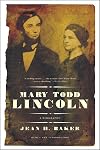
I took a very long time to get to this excellent biography of one of the most fascinating First Ladies in history. Mary Todd Lincoln was very intelligent, well educated, extremely interested in politics, and incredibly adept at playing the political game for her husband. She was also her own worst enemy, though she never realized that. She was badly mistreated by her own family, experienced many great tragedies, and was virtually friendless near the end of her life. She loved her husband show more deeply, but often mistreated the poor man, usually in public. Jean Baker is very respectful of her and does an excellent job of explaining why she things other historians have misunderstood her, but she is not blind to her faults and hides none of her mistakes from the reader. This was an excellend look into the life and times of a very complex woman. show less
An interesting look at one of American history's most controversial first ladies. Mary Lincoln's life was a tragic story. She lost her mother at a young age, she had an extremely strained relationship with her stepmother, she lost three of her four sons, and she endured the assassination of one of America's most beloved presidents. This book gives us a good view of Mary's life, one where she was consumed by the tragedies that seemed to haunt her.
Lists
The Presidents (1)
You May Also Like


Associated Authors
Statistics
- Works
- 16
- Also by
- 2
- Members
- 1,118
- Popularity
- #22,978
- Rating
- 3.6
- Reviews
- 23
- ISBNs
- 35
- Favorited
- 1