
Helen Edom
Author of The Usborne Book of Science Activities, Vol. 2
About the Author
Series
Works by Helen Edom
Tagged
Common Knowledge
- Gender
- female
Members
Reviews
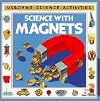
This lively book is packed with exciting science activities designed to help young children explore the intriguing properties of magnetism.

skimmed Jan. 2021
Far too little white space and organization to appeal or to be easy to use, but I did find a few bits that I would use with children. I particularly liked New Plants from Old, in which carrot tops are planted in a saucer, etc. (You can plant them directly in dirt, too, in a houseplant planter.)
Far too little white space and organization to appeal or to be easy to use, but I did find a few bits that I would use with children. I particularly liked New Plants from Old, in which carrot tops are planted in a saucer, etc. (You can plant them directly in dirt, too, in a houseplant planter.)
Far too dense to appeal to children or be easy to use for parents or other educators... no white space or organization. I'd choose several other books before trying to work through this. What experiments I did see looked very familiar from other books, after all.
skimmed Jan 2021
skimmed Jan 2021
Everything that sticks to a magnet is made of metal, but not all metals stick to magnets. Magnets make things move with an invisible pull, called magnetic force. A magnet is strongest at it's poles. Like poles repel each other and unlike poles attract each other. A compass always points to the north pole. A rock called magnetite is a natural magnet. Magnetic force words above, below, and on the sides of a magnet.
I liked this book because a teacher could read this book and do most of the show more activities with second through fifth grade. Fourth or fifth grade students could learn a lot of information about magnetism by reading the book independently and doing the activities.
After doing the activity on p. 4, tell students that a strong magnet can affect an object at a greater distance than a weaker one because it has a stronger magnetic field. After doing the activity and p. 9, tell students that every magnet has a north and south pole. After reading p. 15, tell students that the earths magnetic field has a south pole in the Arctic. This attracts the north poles of all magnets.
Have students explain the concepts in the book, including what happens when they do the experiments and why. Students can also build their researching skills by recalling their experiences, taking notes, and categorizing the information. show less
I liked this book because a teacher could read this book and do most of the show more activities with second through fifth grade. Fourth or fifth grade students could learn a lot of information about magnetism by reading the book independently and doing the activities.
After doing the activity on p. 4, tell students that a strong magnet can affect an object at a greater distance than a weaker one because it has a stronger magnetic field. After doing the activity and p. 9, tell students that every magnet has a north and south pole. After reading p. 15, tell students that the earths magnetic field has a south pole in the Arctic. This attracts the north poles of all magnets.
Have students explain the concepts in the book, including what happens when they do the experiments and why. Students can also build their researching skills by recalling their experiences, taking notes, and categorizing the information. show less
Lists
Sonlight Books (1)
You May Also Like


Statistics
- Works
- 28
- Members
- 4,531
- Popularity
- #5,541
- Rating
- 4.2
- Reviews
- 20
- ISBNs
- 114
- Languages
- 7