
Heinz Heger (1917–1994)
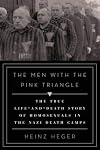
Author of The Men with the Pink Triangle: The True Life-and-Death Story of Homosexuals in the Nazi Death Camps
About the Author
Works by Heinz Heger
The Men with the Pink Triangle: The True Life-and-Death Story of Homosexuals in the Nazi Death Camps (1972) 719 copies, 12 reviews
Tagged
Common Knowledge
- Canonical name
- Heger, Heinz
- Legal name
- Kohout, Josef
- Birthdate
- 1917-01-24
- Date of death
- 1994-03-15
- Gender
- male
- Nationality
- Austria
- Birthplace
- Vienna, Austria
- Places of residence
- Vienna, Austria
Sachsenhausen concentration camp - Place of death
- Vienna, Austria
- Associated Place (for map)
- Vienna, Austria
Members
Reviews

To find yourself in a Nazi concentration camp would be a distressing experience to say the least, but to find yourself in such a situation when even your fellow prisoners despise you is quite unimaginable. But this was the experience of many thousands of 'degenerate' homosexuals during Nazi Germany, one of whom eventually picked up the pen to tell the world of his experience. The result is The Men with the Pink Triangle – a short yet tremendously valuable memoir documenting a show more rarely-discussed facet of the Third Reich's arbitrary hatred, as well as the absurd maltreatment of homosexuals (considered criminals) in post-war Germany. It is disturbing, enlightening, and essential reading for those interested in either Nazi Germany or homosexual history. show less
The Men with the Pink Triangle: The True Life-and-Death Story of Homosexuals in the Nazi Death Camps by Heinz Heger
Sometimes there are books that as you read them that you can't stop yourself from crying because they are a truth that one can't fathom within themselves. This was one of those books. A gay survivor of a concentration camp tells his story to Heinz Heger, but only under the pretenses that he remains anonymous. Through this story we discover the life of a pink triangle (gay male) in the concentration camp. We are drawn into this story in a profound way because we see the survival techniques show more that the man had to use to survive throughout his years in the camps. He had to resort to things that he never thought he would have to do in his life, but he did them because life was that important to him (which it is for almost everyone).
While there is one graphic scene (involving a camp guard getting pleasure from the whipping of prisoners) the majority of the book opens up the doors of the workings of the concentration camps. You learn the chain of command and the inner workings in a way that many other books about the Holocaust simply do not do. It also shows you the world that these men with the pink triangle found themselves in and how they were treated worse than many of the other people because of their homosexuality. This book has so much that one can take from it that it is a bit overwhelming, but when you close the book you will be better off for doing so. It can help you understand why hatred for this particular group still exists even in our modern society, but why we need to learn not to be so hateful. show less
While there is one graphic scene (involving a camp guard getting pleasure from the whipping of prisoners) the majority of the book opens up the doors of the workings of the concentration camps. You learn the chain of command and the inner workings in a way that many other books about the Holocaust simply do not do. It also shows you the world that these men with the pink triangle found themselves in and how they were treated worse than many of the other people because of their homosexuality. This book has so much that one can take from it that it is a bit overwhelming, but when you close the book you will be better off for doing so. It can help you understand why hatred for this particular group still exists even in our modern society, but why we need to learn not to be so hateful. show less
The Men with the Pink Triangle: The True Life-and-Death Story of Homosexuals in the Nazi Death Camps by Heinz Heger
This was a long-awaited read for me. It was a read I had to prepare myself for, before I could actually read it. I’m a scholar of WW2 and Holocaust literature and have a large collection of material, but for a topic dealing even more closely with myself and being, I had to take time to ground myself.
Whether you are just a passing person who might wish to learn about what homosexuals suffered in concentration camps (and there were fewer comparatively and earlier in the Nazi regime show more directly), or someone who is looking for a wider view of all inmates who were interred or murdered, this memoir can provide views into life in the camps, especially for certain populations. What is does beyond that is provide a glimpse into the ugly aspects of “male” life, and the unique, sexual brutality so-called “straight” men have perpetrated against homosexuals who’ve expressed or more openly or innocently (depending on your perspective) their attraction and love of those of their own gender.
I don’t even know quite how to express it, but I literally was brought to the floor, unable to move, weeping, remembering how one can be forced to do things just to survive, and knowing the ones who forced you to debase yourself so horribly were so-called “straight” men who went/go home to their wives or girlfriends, who don’t think twice about using someone. That is the perspective Heinz Heger lived and endured on top of the diabolical, sickly human mechanisms of the Nazis and those who benefited from their regime.
I wanted to know more of his personal feelings when he described seeing thousands of prisoners of all kinds not just be “liquidated”, but when he directly saw the evidence: the coursing of blood from trenches full of recently shot bodies instead of his only stating how the villagers near the camp complained of the local streams being tainted with blood, but I understand why his account involved only that. Sometimes you can only recount abstracts like that, because looking too directly into the memory will take you back, and you know, in your present life that you couldn’t endure that.
Not a “speciality” book. Not just for gays or other LTIIQ people. If you are going to read Holocaust books, include this one as well. Be aware and outraged that homosexuals were targeted and murdered just like other groups, just because they believed and lived a certain way….BUT the vast majority were NEVER compensated as were other survivors. They were pushed aside and discriminated against, and even had officials discount their memories, an even more debilitating experience than survivors whose stories were commiserated with. So in effect, these men were violated over and over, not just by perpetrators, but by those who supposedly were there to liberate and help them as they did other concentration camp inmates. They were discriminated against JUST like what continues against gays today in a variety of countries across the world.
Original posted on my review site Flying With Red Haircrow, along with the article by Kurt Krickler. show less
Whether you are just a passing person who might wish to learn about what homosexuals suffered in concentration camps (and there were fewer comparatively and earlier in the Nazi regime show more directly), or someone who is looking for a wider view of all inmates who were interred or murdered, this memoir can provide views into life in the camps, especially for certain populations. What is does beyond that is provide a glimpse into the ugly aspects of “male” life, and the unique, sexual brutality so-called “straight” men have perpetrated against homosexuals who’ve expressed or more openly or innocently (depending on your perspective) their attraction and love of those of their own gender.
I don’t even know quite how to express it, but I literally was brought to the floor, unable to move, weeping, remembering how one can be forced to do things just to survive, and knowing the ones who forced you to debase yourself so horribly were so-called “straight” men who went/go home to their wives or girlfriends, who don’t think twice about using someone. That is the perspective Heinz Heger lived and endured on top of the diabolical, sickly human mechanisms of the Nazis and those who benefited from their regime.
I wanted to know more of his personal feelings when he described seeing thousands of prisoners of all kinds not just be “liquidated”, but when he directly saw the evidence: the coursing of blood from trenches full of recently shot bodies instead of his only stating how the villagers near the camp complained of the local streams being tainted with blood, but I understand why his account involved only that. Sometimes you can only recount abstracts like that, because looking too directly into the memory will take you back, and you know, in your present life that you couldn’t endure that.
Not a “speciality” book. Not just for gays or other LTIIQ people. If you are going to read Holocaust books, include this one as well. Be aware and outraged that homosexuals were targeted and murdered just like other groups, just because they believed and lived a certain way….BUT the vast majority were NEVER compensated as were other survivors. They were pushed aside and discriminated against, and even had officials discount their memories, an even more debilitating experience than survivors whose stories were commiserated with. So in effect, these men were violated over and over, not just by perpetrators, but by those who supposedly were there to liberate and help them as they did other concentration camp inmates. They were discriminated against JUST like what continues against gays today in a variety of countries across the world.
Original posted on my review site Flying With Red Haircrow, along with the article by Kurt Krickler. show less
This memoir of a man who was imprisoned in concentration camps simply because of his sexual orientation may be slim - only about 120 pages - but it packs a punch. The man's tale, first told in 1971 to Heinz Heger, is straightforward and to the point, addressing a forgotten group of people who were persecuted by the Nazis - and later, by those who rose to power after the Nazis were defeated.
This is a fascinating look into a group that has so often been ignored by Holocaust historians. There show more are so few books that address the experiences of the homosexual concentration camp victims, and yet there were thousands of these "pink triangle" men in the camps. This is the only memoir I've ever read dealing with that group, and I found it mesmerizing.
The "pink triangle" men were despised by their fellow prisoners; even the murderers and thieves viewed themselves as "morally superior" to the "degenerates" who had violated Paragraph 175 (the law against homosexuality). The man was repeatedly insulted and abused for his orientation (at one point being sexually assaulted by fellow prisoners on the way to a concentration camp). And this memoir adds a new dimension to concentration camp life, addressing sexuality and its fluidity in trying circumstances (many of the capos and other prisoners in positions in authority had male lovers, although they'd vehemently deny that they were gay).
Of course, the man's struggle for equality didn't end once liberation came. He was still haunted by what he had witnessed and endured. His father had committed suicide in despair after his arrest. His promising career in academia had been permanently stalled by the six years he spent imprisoned. And, of course, gays were still acceptable targets to hate after the war; homosexuality wasn't even legal until 1971 in the man's native Austria.
At the time this book was published, the man (who chose to remain anonymous here) still had received no remuneration from the German government by being imprisoned during the Holocaust. And why? Because he was homosexual, a "criminal" prisoner, and therefore entitled to nothing. Wow. I wonder if any gay prisoners received monetary payments for the suffering that they endured.
I'd recommend this book to anyone who is interested in the Holocaust and/or gay history. It's a really remarkable slice of history, and it's a shame that there are so few memoirs available from "non-traditional" Holocaust victims. show less
This is a fascinating look into a group that has so often been ignored by Holocaust historians. There show more are so few books that address the experiences of the homosexual concentration camp victims, and yet there were thousands of these "pink triangle" men in the camps. This is the only memoir I've ever read dealing with that group, and I found it mesmerizing.
The "pink triangle" men were despised by their fellow prisoners; even the murderers and thieves viewed themselves as "morally superior" to the "degenerates" who had violated Paragraph 175 (the law against homosexuality). The man was repeatedly insulted and abused for his orientation (at one point being sexually assaulted by fellow prisoners on the way to a concentration camp). And this memoir adds a new dimension to concentration camp life, addressing sexuality and its fluidity in trying circumstances (many of the capos and other prisoners in positions in authority had male lovers, although they'd vehemently deny that they were gay).
Of course, the man's struggle for equality didn't end once liberation came. He was still haunted by what he had witnessed and endured. His father had committed suicide in despair after his arrest. His promising career in academia had been permanently stalled by the six years he spent imprisoned. And, of course, gays were still acceptable targets to hate after the war; homosexuality wasn't even legal until 1971 in the man's native Austria.
At the time this book was published, the man (who chose to remain anonymous here) still had received no remuneration from the German government by being imprisoned during the Holocaust. And why? Because he was homosexual, a "criminal" prisoner, and therefore entitled to nothing. Wow. I wonder if any gay prisoners received monetary payments for the suffering that they endured.
I'd recommend this book to anyone who is interested in the Holocaust and/or gay history. It's a really remarkable slice of history, and it's a shame that there are so few memoirs available from "non-traditional" Holocaust victims. show less
Lists
You May Also Like


Associated Authors
Statistics
- Works
- 1
- Members
- 719
- Popularity
- #35,294
- Rating
- 4.3
- Reviews
- 12
- ISBNs
- 26
- Languages
- 10
- Favorited
- 1