
John Mark Hicks
Author of Come to the Table: Revisioning the Lord's Supper
About the Author
John Mark Hicks is a professor of theology at Lipscomb University and has taught in higher education among Churches of Christ for over thirty-five years. He has published several works on Stone-Campbell history and theology, including Kingdom Come: Embracing the Spiritual Legacy of David Lipscomb show more and James Harding. show less
Works by John Mark Hicks
Down in the River to Pray: Revisioning Baptism as God's Transforming Work (2004) 102 copies, 1 review
Kingdom Come: Embracing the Spiritual Legacy of David Lipscomb and James Harding (2006) 62 copies, 2 reviews
Enter the Water, Come to the Table: Baptism and Lord's Supper in the Bible's Story of New Creation (2014) 37 copies
Woman's role in the church 5 copies
Down in the River to Pray, pts. 1-3 3 copies
Journaling Through Anchors for the Soul: A Guide to Help Individuals Process Loss and Grief (2019) 2 copies
2007 Moser Ministry Conference Remembering the Life and Legacy of a Preaching & Teaching Pioneer 1 copy
Woman's role in the church 1 copy
Tagged
Common Knowledge
- Birthdate
- 1957-07-15
- Gender
- male
Members
Reviews
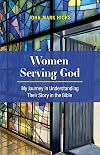
I always love reading John Mark Hicks because its like he's in my head, sharing that same Bible-centered church of Christ background. Whether I agree with his conclusions or not, he's always speaking in my language and helping me think through the issues in a God-honoring, Scripture-honoring way. As far as conclusions go, Hicks has embraced the "full participation" view of women is worship and seems to also nod toward women in the eldership, and we ultimately differed on interpretation of 1 show more Tim 2, though he made some great points. I appreciated his walk through CoC history and the suggestion that our current position is a reactionary position formed in the early 20th century. I appreciated his walk through the "balance of the Bible," and the idea that our treatment of women ought to line up with the ideal of New Creation, which is now breaking in through the Church. I wasn't crazy about his first two responses from women, but Lauren Smelser White was fire; I'd like to hear more from her. Honestly, I wouldn't be surprised if I find myself revisiting his arguments over the next decade or so, but for now, I'm just not sold on the sitz im leben he's suggested for Timothy's Ephesian church, and I don't think his suggestion is well-founded that God created no authority specifically for males in the beginning. Regardless, I think this is a solid contribution to a growing conversation, offered in the right attitude, and it won't be the last we talk about it. show less
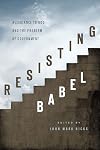
A series of essays regarding the political philosophy of David Lipscomb: its antecedents, its influence, its collapse among churches of Christ, and what ought to be its legacy.
Richard Hughes begins by anchoring Lipscomb in the "apocalyptic" tradition from Barton Stone and through Tolbert Fanning. John Mark Hicks, over two essays, details the nature of Lipscomb's political philosophy and uses his views on slavery and segregation as a case study. Richard Goode argues that Lipscomb fits into show more the tradition of the Christian pilgrim more than the Christian anarchist. Joshua Jeffery explained how the pacifist position of Lipscomb came under withering political persecution during World War I and how the view collapsed in churches of Christ. Lee Camp concluded with an assessment of Lipscomb's political ideology and its points of application and consideration for Christians today. The book also includes a chronological bibliography for Lipscomb and his political ideology.
The work does well at anchoring Lipscomb in the radical pacifist tradition, finding no real value in earthly government, finding it impossible to profess allegiance to a nation-state, considering voting an endorsement of whatever the candidate will eventually do, nonviolent in posture, yet in his apocalyptic stance certainly having a word to speak about the political issues of the day and seeking to identify with those with whom Jesus would have identified.
A lot of Camp's recommendations are very good, although Lipscomb can be faulted for not maintaining the tension about government in Scripture sufficiently. Romans 13 and Revelation 13 are both true at the same time: God empowers government for good, and those in it are corrupted by the Evil One and the powers and principalities for their own ends. Yes, God gave Israel a king in His wrath, and yet God's expected government of His people would feature King Jesus. Good can be accomplished through the coercive power of the nation-state, but it will not be the ultimate good which is accomplished in Jesus. There is a word of life which is to be spoken to those in government, but the Kingdom of God ought to remain transcendent of nation-states and their petty nationalisms, patriotisms, and partisanships.
A good resource for considering Lipscomb's political legacy, and all the more as the embrace of partisan politics is more and more exposed for the compromise and idolatry it is.
**--galley received as part of early review program show less
Richard Hughes begins by anchoring Lipscomb in the "apocalyptic" tradition from Barton Stone and through Tolbert Fanning. John Mark Hicks, over two essays, details the nature of Lipscomb's political philosophy and uses his views on slavery and segregation as a case study. Richard Goode argues that Lipscomb fits into show more the tradition of the Christian pilgrim more than the Christian anarchist. Joshua Jeffery explained how the pacifist position of Lipscomb came under withering political persecution during World War I and how the view collapsed in churches of Christ. Lee Camp concluded with an assessment of Lipscomb's political ideology and its points of application and consideration for Christians today. The book also includes a chronological bibliography for Lipscomb and his political ideology.
The work does well at anchoring Lipscomb in the radical pacifist tradition, finding no real value in earthly government, finding it impossible to profess allegiance to a nation-state, considering voting an endorsement of whatever the candidate will eventually do, nonviolent in posture, yet in his apocalyptic stance certainly having a word to speak about the political issues of the day and seeking to identify with those with whom Jesus would have identified.
A lot of Camp's recommendations are very good, although Lipscomb can be faulted for not maintaining the tension about government in Scripture sufficiently. Romans 13 and Revelation 13 are both true at the same time: God empowers government for good, and those in it are corrupted by the Evil One and the powers and principalities for their own ends. Yes, God gave Israel a king in His wrath, and yet God's expected government of His people would feature King Jesus. Good can be accomplished through the coercive power of the nation-state, but it will not be the ultimate good which is accomplished in Jesus. There is a word of life which is to be spoken to those in government, but the Kingdom of God ought to remain transcendent of nation-states and their petty nationalisms, patriotisms, and partisanships.
A good resource for considering Lipscomb's political legacy, and all the more as the embrace of partisan politics is more and more exposed for the compromise and idolatry it is.
**--galley received as part of early review program show less
Fascinating. I'm admittedly a Christian Anarchist myself, but coming from the Southern Baptist Church... let's just say if they weren't in the Bible and they weren't a famous Baptist preacher, I likely didn't hear of any other Christian leaders of the first Millenium AD. So I had never heard of David Lipscomb, a late 19th century/ early 20th century leader in the Church of Christ denomination, before reading this book. Here, Hicks, Richard T Hughes, Richard Goode, Lee C Camp, and Joshua Ward show more Jeffery - all seemingly very learned historians on the subject at hand - discuss and dissect Lipscomb's beliefs and how they are reflected (or not) in the American Church today, both inside the Church of Christ denomination and within the larger community. If you're interested in this subject for any number of reasons, it is a fairly fascinating and illuminating discussion. But if you're not particularly interested in its subjects, you're probably not going to enjoy this effort as much, as it does tend to get quite academic and religious in its discussions. Still, I thoroughly enjoyed it and didn't note any overt problems with it, so let's end with a rating of "very much recommended". show less
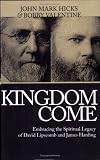
A historical-theological treatise attempting to reclaim the "Nashville Bible School Tradition" in churches of Christ.
The authors explore the theology of David Lipscomb and James Harding as exemplars of this "Nashville Bible School Tradition," along with some of the next generation descendants (primarily Anderson and Boll). They compare and contrast their theologies with what they deem the "Texas Tradition" in the "Firm Foundation" and manifest in Austin M'Gary, R. L. Whiteside, and others. show more They recognize the historical reality that the "Texas Tradition" would "win" inasmuch that their stances on these theological issues would become normative in churches of Christ in the 20th century whereas the views of Lipscomb and Harding were marginalized. In their estimation, this result was less than ideal.
The authors examine various issues chapter by chapter: Kingdom living as resident aliens, God's continued providential work, the continuing work of the Holy Spirit, reading of Scripture, fellowship and assistance of the oppressed, the Lord's table, prayer, pacifism, willingness to countenance different views about "non salvation issues" (particularly eschatology), and the hope of resurrection and renewal.
In each chapter the authors first set forth a coherent view of the NBST based on Lipscomb, Harding, or their later descendants, speak some about the contentions that arose regarding those views (when present), and then their own theological assessment in light of the tradition. It would have been better if the transition from primary sources to the authors' own theological assessment were more clear. The book ends with an assessment of what happened and a way forward.
It is highly likely that the story is a bit more complicated than it has been set forth in this narrative; the authors are attempting to schematize and analyze trends and relationships. The authors are aware of the shortcomings of those regarding whom they write and how their context shaped them.
On the whole, however, the work is compelling in showing that many of the difficulties and challenges that many members of churches of Christ have encountered regarding the "predominant view" on a series of issues is rooted in disputes that have existed within the movement/tradition since its beginnings. Many who may have felt that they were alone and odd in their concerns regarding God's working in His creation, the role and work of the Spirit, the relationship between the Christian and the state, and the final eschaton can find some solace in the recognition that some of their spiritual ancestors held views close to theirs and that the discussion, although presumed to have been settled in the early 20th century, perhaps should be re-opened.
I found the discussion of why the "NBST" fell out of favor a bit lacking. Many more reasons could be adduced. First and foremost, since the "NBST" persons "lost" on certain fronts, especially regarding baptism, their other views would have been seen as suspect. I am not old, but I know how the name of Boll was viewed among many in churches of Christ, and the strong desire to remain quite distant from anything to which he would adhere. The authors seem to primarily lament the aggressive demonization of premillennial views in the early part of the 20th century; while I am sure that many handled the issue in less than godly ways, the shift from historic to dispensational premillennialism at that time was highly problematic, and it is a credit to many in churches of Christ that they resisted falling in line with the rest of Evangelicalism in this matter. In terms of the work of God and the Spirit one can hardly overestimate the impact of the explosion of Pentecostalism right at the end of the lives of Harding and Lipscomb; in polemic it becomes far easier to defend a lack of spiritual gifts and little expectation of God's working in the creation and to condemn even moderate views as pentecostal lite. One could also say that many had to drink Enlightenment rationalism down to its dregs before one could see its ultimate bankruptcy; not a few Christians are seeking re-enchantment on account of it.
Nevertheless, whether you generally doctrinally/theologically agree with Lipscomb, Harding et al or not, this work is worth exploring so as to understand part of the Restoration Movement tradition as it attempts to faithfully serve God despite human innovations in a doctrinally confused world. show less
The authors explore the theology of David Lipscomb and James Harding as exemplars of this "Nashville Bible School Tradition," along with some of the next generation descendants (primarily Anderson and Boll). They compare and contrast their theologies with what they deem the "Texas Tradition" in the "Firm Foundation" and manifest in Austin M'Gary, R. L. Whiteside, and others. show more They recognize the historical reality that the "Texas Tradition" would "win" inasmuch that their stances on these theological issues would become normative in churches of Christ in the 20th century whereas the views of Lipscomb and Harding were marginalized. In their estimation, this result was less than ideal.
The authors examine various issues chapter by chapter: Kingdom living as resident aliens, God's continued providential work, the continuing work of the Holy Spirit, reading of Scripture, fellowship and assistance of the oppressed, the Lord's table, prayer, pacifism, willingness to countenance different views about "non salvation issues" (particularly eschatology), and the hope of resurrection and renewal.
In each chapter the authors first set forth a coherent view of the NBST based on Lipscomb, Harding, or their later descendants, speak some about the contentions that arose regarding those views (when present), and then their own theological assessment in light of the tradition. It would have been better if the transition from primary sources to the authors' own theological assessment were more clear. The book ends with an assessment of what happened and a way forward.
It is highly likely that the story is a bit more complicated than it has been set forth in this narrative; the authors are attempting to schematize and analyze trends and relationships. The authors are aware of the shortcomings of those regarding whom they write and how their context shaped them.
On the whole, however, the work is compelling in showing that many of the difficulties and challenges that many members of churches of Christ have encountered regarding the "predominant view" on a series of issues is rooted in disputes that have existed within the movement/tradition since its beginnings. Many who may have felt that they were alone and odd in their concerns regarding God's working in His creation, the role and work of the Spirit, the relationship between the Christian and the state, and the final eschaton can find some solace in the recognition that some of their spiritual ancestors held views close to theirs and that the discussion, although presumed to have been settled in the early 20th century, perhaps should be re-opened.
I found the discussion of why the "NBST" fell out of favor a bit lacking. Many more reasons could be adduced. First and foremost, since the "NBST" persons "lost" on certain fronts, especially regarding baptism, their other views would have been seen as suspect. I am not old, but I know how the name of Boll was viewed among many in churches of Christ, and the strong desire to remain quite distant from anything to which he would adhere. The authors seem to primarily lament the aggressive demonization of premillennial views in the early part of the 20th century; while I am sure that many handled the issue in less than godly ways, the shift from historic to dispensational premillennialism at that time was highly problematic, and it is a credit to many in churches of Christ that they resisted falling in line with the rest of Evangelicalism in this matter. In terms of the work of God and the Spirit one can hardly overestimate the impact of the explosion of Pentecostalism right at the end of the lives of Harding and Lipscomb; in polemic it becomes far easier to defend a lack of spiritual gifts and little expectation of God's working in the creation and to condemn even moderate views as pentecostal lite. One could also say that many had to drink Enlightenment rationalism down to its dregs before one could see its ultimate bankruptcy; not a few Christians are seeking re-enchantment on account of it.
Nevertheless, whether you generally doctrinally/theologically agree with Lipscomb, Harding et al or not, this work is worth exploring so as to understand part of the Restoration Movement tradition as it attempts to faithfully serve God despite human innovations in a doctrinally confused world. show less
You May Also Like


Statistics
- Works
- 27
- Members
- 674
- Popularity
- #37,467
- Rating
- 4.0
- Reviews
- 12
- ISBNs
- 33