

Elizabeth Inchbald (1753–1821)
Author of A Simple Story
About the Author
Image credit: Wikimedia Commons
Works by Elizabeth Inchbald
Associated Works
Tagged
Common Knowledge
- Other names
- Inchbald, Elizabeth Simpson
Simpson, Elizabeth (birth name) - Birthdate
- 1753-10-15
- Date of death
- 1821-08-01
- Gender
- female
- Education
- self-educated
- Occupations
- novelist
playwright
actor
translator
editor
drama critic - Organizations
- Theatre Royal, Covent Garden
- Short biography
- Elizabeth Inchbald, née Simpson, was born to a farming family in Stanningfield, Suffolk, England. She was educated at home and then ran away to London at age 18 to become an actor. She had a strong stammer that impeded her stage performances, but was greatly admired for her beauty and personality. In 1772, she married Joseph Inchbald, a fellow actor twice her age, in part for protection from the sexual advances of male theater personnel. Together they played the provincial theaters for four years. After her husband's death, Elizabeth continued to act for several years in Dublin, London, and elsewhere. She appeared in classical roles and new plays such as Hannah Cowley’s The Belle’s Stratagem, and subsequently began writing her own works. She became one of the first women in Great Britain to achieve fame as a playwright. She published about 20 plays,
including Lovers’ Vows (1798), which was featured by Jane Austen in her novel Mansfield Park. Elizabeth also wrote two novels, A Simple Story (1791) and Nature and Art (1796) that are still widely read today.
She also worked as a translator, and became one of the first prominent British female drama critics. - Nationality
- England
UK - Birthplace
- Stanningfield, Suffolk, England, UK
- Places of residence
- Suffolk, England, UK
London, England, UK
Liverpool, England, UK
Canterbury, Kent, England, UK
Dublin, Ireland - Place of death
- Kensington, London, England, UK
- Associated Place (for map)
- England, UK
Members
Reviews

This is the first play I think I’ve ever read all the way through, but I loved it! It’s mostly a lighthearted romance, and yes, it’s picture-perfect and awkward, and it goes against all modern sensibilities, but if you look at it from the perspective of the people who first wrote and translated it, I think that’s forgivable.
The butler was one of my top favorite characters of all time! He was hilarious! I’m no good at writing poetry, but his stance on poetry vs. prose kept me show more laughing and made the play for me.
A quick, engaging, entertaining read. If I ever get the chance to see this play performed, I’d definitely be keen to go! show less
The butler was one of my top favorite characters of all time! He was hilarious! I’m no good at writing poetry, but his stance on poetry vs. prose kept me show more laughing and made the play for me.
A quick, engaging, entertaining read. If I ever get the chance to see this play performed, I’d definitely be keen to go! show less
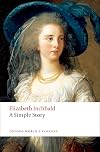
I am a fan of books written WAY back in the day, especially if they are still easy to understand and shed light on the differences between modern and olden sensibilities. First published in 1791, this is a bit older than my usual 19th century favorites. But it is still a wonderful portal into the past.
The spelling, at least in the edition I read, at that time had yet to be standardized, and they used many words that no longer exist in the English language. But yu can still understand things show more perfectly, (except perhaps for the use of the word lovelace as an insult), and it's extreme sentimentality, the way that people are in danger of death from unrequited love, the fact that the priests take snuff (cocaine) and other such era related shockers were enough to keep me riotously entertained. To the people of this time, this was nothing surprising. Even the fact that incest (real and figurative- Miss Milner wishes to marry her father figure, while later her daughter marries her cousin) is a prominent theme would probably not have raised any eyebrows. Now though, the sentiments expressed, the injustices upheld, and the fact that everyone adheres to an archaic mode of thought make this book positively startling.
I for one, gained a lot of insight, and a great appreciation for living in a post feminism world. Plus, it made me laugh a LOT, though that was never the author's intention. show less
The spelling, at least in the edition I read, at that time had yet to be standardized, and they used many words that no longer exist in the English language. But yu can still understand things show more perfectly, (except perhaps for the use of the word lovelace as an insult), and it's extreme sentimentality, the way that people are in danger of death from unrequited love, the fact that the priests take snuff (cocaine) and other such era related shockers were enough to keep me riotously entertained. To the people of this time, this was nothing surprising. Even the fact that incest (real and figurative- Miss Milner wishes to marry her father figure, while later her daughter marries her cousin) is a prominent theme would probably not have raised any eyebrows. Now though, the sentiments expressed, the injustices upheld, and the fact that everyone adheres to an archaic mode of thought make this book positively startling.
I for one, gained a lot of insight, and a great appreciation for living in a post feminism world. Plus, it made me laugh a LOT, though that was never the author's intention. show less
"A Simple Story" reads as if it is a romantic drama presented as a novel. The dialogue often replicates a stage setting. The emotions of the characters verge on histrionic dramatics. Mrs. Inchbald was an accomplished actress and playwright, hence these effects.
This is nevertheless an intersting novel to read because of the novelty and daring of its subject matter. There is an emphasis on the differing outcomes for the two female leads; Miss Milner who is arch, sexually active (but blessedly show more glossed by the writer), witty and disruptive and her daughter, Lady Matilda who proves submissive, educated, feminine and faithful to her moody father. It cannot escape notice that the latter's outward success in romantic and worldly endeavours rounds out the narrative in order to satisfy a public's need for happy endings.
It has been gratifying to read a novel full of new perspectives on Eighteenth Century English life by someone I hadn't heard of before.
There is also a fine informative Introduction by Jane Spencer which can be read with equal satisfaction both before or/and after completion. show less
This is nevertheless an intersting novel to read because of the novelty and daring of its subject matter. There is an emphasis on the differing outcomes for the two female leads; Miss Milner who is arch, sexually active (but blessedly show more glossed by the writer), witty and disruptive and her daughter, Lady Matilda who proves submissive, educated, feminine and faithful to her moody father. It cannot escape notice that the latter's outward success in romantic and worldly endeavours rounds out the narrative in order to satisfy a public's need for happy endings.
It has been gratifying to read a novel full of new perspectives on Eighteenth Century English life by someone I hadn't heard of before.
There is also a fine informative Introduction by Jane Spencer which can be read with equal satisfaction both before or/and after completion. show less
Lovers' Vows has been preserved from the obscurity it deserves by Jane Austen's Mansfield Park. This is the scandalous play that the Bertram and Crawford siblings rehearse but never perform. What a blessing for their audience. Most of the characters are repeatedly overcome by strong emotions, leading to frequent fainting and embracing, with occasional pauses for fortification from wine. There are a couple of mildly funny exchanges that the actors must have milked for all they were worth. The show more butler who insisted on speaking in rhyme reminded me of Prince Herbert in the Swamp Castle who just wanted to sing.
The epilogue (in rhyme) seems like a Georgian equivalent of the newsreel:
...So, of course, then, if prose is so tedious a crime,
It of consequence follows, there's virtue in rhime.
The best piece of prose that I've heard a long while,
Is what gallant Nelson has sent from THE NILE.
And had he but told us the story in rhime,
What a thing 'twou'd be; but, perhaps, he'd no time.
So, I'll do it myself—Oh! 'tis glorious news!
Nine sail of the line! Just a ship for each Muse.
As I live, there's an end of the French and their navy--
Sir John Warren has sent the Brest fleet to Old Davy.
'Tis in the Gazette, and that, every one knows,
Is sure to be truth, tho' 'tis written in prose.
Recommended mainly for readers who want to explore Jane Austen's use of this drama in Mansfield Park. show less
The epilogue (in rhyme) seems like a Georgian equivalent of the newsreel:
...So, of course, then, if prose is so tedious a crime,
It of consequence follows, there's virtue in rhime.
The best piece of prose that I've heard a long while,
Is what gallant Nelson has sent from THE NILE.
And had he but told us the story in rhime,
What a thing 'twou'd be; but, perhaps, he'd no time.
So, I'll do it myself—Oh! 'tis glorious news!
Nine sail of the line! Just a ship for each Muse.
As I live, there's an end of the French and their navy--
Sir John Warren has sent the Brest fleet to Old Davy.
'Tis in the Gazette, and that, every one knows,
Is sure to be truth, tho' 'tis written in prose.
Recommended mainly for readers who want to explore Jane Austen's use of this drama in Mansfield Park. show less
Lists
You May Also Like


Associated Authors
Statistics
- Works
- 24
- Also by
- 2
- Members
- 546
- Popularity
- #45,668
- Rating
- 3.4
- Reviews
- 14
- ISBNs
- 75
- Favorited
- 2