
Claude Cahun (1894–1954)
Author of Disavowals
About the Author
Works by Claude Cahun
Le scommesse sono aperte 1 copy
Associated Works
Fairy Tales for the Disillusioned: Enchanted Stories from the French Decadent Tradition (2016) — Contributor — 82 copies, 1 review
Tagged
Common Knowledge
- Canonical name
- Cahun, Claude
- Legal name
- Schwob, Lucy Renee Mathilde
- Birthdate
- 1894-10-25
- Date of death
- 1954-12-08
- Gender
- non-binary
- Education
- Sorbonne
Parsons Mead School, Ashstead, England, UK - Occupations
- photographer
sculptor
writer
resistance member
salonniere
political activist (show all 7)
novelist - Organizations
- Surrealist movement
- Relationships
- Schwob, Marcel (uncle)
Cahun, David-Léon (great-uncle) - Short biography
- Claude Cahun was born Lucy Renée Mathilde Schwob to a prominent Jewish family in Nantes, France. Due to her mother's mental illness, she was largely brought up by her grandmother. She attended Parsons Mead School in England after experiencing anti-Semitism at high school in Nantes. She later attended the Sorbonne and began making photographic self-portraits at about age 18. Around 1914, she changed her name to Claude Cahun, after having previously used other names. She's considered a groundbreaking artist who fully embraced gender neutrality long before the term came into use. During the early 1920s, she settled in Paris with her lifelong partner Marcel Moore (pseudonym of Suzanne Malherbe), and entered the milieu of the Surrealist art scene. Cahun and Moore collaborated on various written works, sculptures, photo-montages and collages. They published articles and novels, notably in the periodical Mercure de France, and befriended Henri Michaux, Pierre Morhange, and Robert Desnos. Cahun worked with Man Ray, and founded the left-wing group Contre Attaque with André Breton and Georges Bataille. The title of her 1930 diaristic publication Aveux non avenus (translated as Disavowals), illustrated by Moore, enigmatically suggested that for all that is revealed, much is still hidden or has been lost. In the late 1930s, Cahun and Moore moved to the island of Jersey, off the coast of Normandy. During World War II and the German Occupation of the island, they produced and distributed anti-Nazi propaganda. They were caught, imprisoned, and sentenced to death, but survived when Jersey was liberated by the Allies in 1945. Cahun never fully recovered from her maltreatment in prison and died in 1954 at age 60. Her work directly influenced contemporary photographers such as Francesca Woodman, Cindy Sherman, Gillian Wearing, and Nan Goldin. Her works are held in the collections of The Museum of Modern Art in New York, the San Francisco Museum of Modern Art, and the Museum of Fine Arts in Boston, among others.
In Disavowals, Cahun writes: "Masculine? Feminine? It depends on the situation. Neuter is the only gender that always suits me." - Nationality
- France
- Birthplace
- Nantes, Loire-Atlantique, Pays de la Loire, France
- Places of residence
- Paris, France
Jersey - Place of death
- Jersey
- Burial location
- Saint Brélade, Jersey
- Associated Place (for map)
- France
Members
Reviews

Heroines is a collection of prose pieces originally published in a literary journal. Almost all present famous female figures of myth or history--Eve, Judith, Salome, Sappho, Cinderella... seen, to put it mildly, under a different light. Cinderella, for instance, turns out to be a masochist absolutely delighted with the mistreatment she suffers at the hands of her evil stepmother and stepsisters, and agrees to marry the Prince (a shoe fetishist whose interest in women begins and ends at show more their feet) only after her fairy godmother convinces her that the torment of submitting to that match, therefore going against her nature, would be the greatest yet. show less
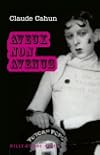
Avancer vers la découverte de soi, énoncer les dispositions secrètes du moi, mettre à nu les mécanismes sentimentaux, expérimenter les ambiguïtés de la différence sexuelle, se débattre avec la tentation de l’absolu, voilà l’entreprise dans laquelle se lance Claude Cahun (1894-1954), dès 1919. Pour se mettre à l’épreuve et donner forme à son « aventure invisible », la nièce du romancier Marcel Schwob braque sur elle les deux instruments qui capteront les images et show more permettront leur savant montage : l’écriture et l’appareil photographique.
D’emblée, elle sait que l’introspection sous le régime de la confession est une stérile illusion, que la prise directe est impuissante à restituer la singularité de l'expérience. C’est au jeu des incarnations et des métamorphoses que le moi se dévoile et s’invente sans fin : « Sous ce masque, un autre masque. Je n’en finirai pas de soulever tous ces visages », écrit-elle.
Dans Aveux non avenus, livre achevé en 1928, l’artiste se met elle-même en scène, distribue ses propres rôles, provocants ou ironiques, idéalisés ou détestés, personnages mythiques, masculins et féminins, neutres ou inclassables. Cette œuvre totale mêle aux photomontages, réalisés en collaboration avec sa compagne Suzanne Malherbe (dite Moore), des fragments de journaux intimes et de lettres, des poèmes, de la prose polémique, des considérations spéculatives.
Si Claude Cahun fascine tant depuis que son œuvre a été redécouverte par François Leperlier au milieu des années 1980, c’est que l’on voit en elle un précurseur. Individualiste et rebelle, elle explore avec une audace inouïe et sans concession l’insaisissable identité et subvertit tous les genres.
Aveux non avenus, son livre majeur et méconnu, dit l’étrangeté radicale et l'irrépressible liberté d’être. show less
D’emblée, elle sait que l’introspection sous le régime de la confession est une stérile illusion, que la prise directe est impuissante à restituer la singularité de l'expérience. C’est au jeu des incarnations et des métamorphoses que le moi se dévoile et s’invente sans fin : « Sous ce masque, un autre masque. Je n’en finirai pas de soulever tous ces visages », écrit-elle.
Dans Aveux non avenus, livre achevé en 1928, l’artiste se met elle-même en scène, distribue ses propres rôles, provocants ou ironiques, idéalisés ou détestés, personnages mythiques, masculins et féminins, neutres ou inclassables. Cette œuvre totale mêle aux photomontages, réalisés en collaboration avec sa compagne Suzanne Malherbe (dite Moore), des fragments de journaux intimes et de lettres, des poèmes, de la prose polémique, des considérations spéculatives.
Si Claude Cahun fascine tant depuis que son œuvre a été redécouverte par François Leperlier au milieu des années 1980, c’est que l’on voit en elle un précurseur. Individualiste et rebelle, elle explore avec une audace inouïe et sans concession l’insaisissable identité et subvertit tous les genres.
Aveux non avenus, son livre majeur et méconnu, dit l’étrangeté radicale et l'irrépressible liberté d’être. show less
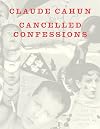
'Aveux non Avenus' is considered to be Claude Cahun’s masterpiece. Published in 1930 it defied description (it still does) and also showcased the incredible photomontages that Cahun and her lifelong partner, Marcel Moore, created together.
'Cancelled Confessions' reveals Claude Cahun to be a major surrealist writer and pioneering queer theorist almost a century ahead of her time.
‘The re-appearance of this glittering and dissenting semi-lost epic is a gift… Cahun’s writing is stylish, show more playful and prescient, peopled with angel slang, flowering disavowals, God’s lipstick and an infinite layering of masks.’ Daisy Lafarge, author.
In 1930, Claude Cahun (born Lucy Schwob) and her partner, artist Marcel Moore (born Suzanne Malherbe) published their surrealist masterpiece, 'Aveux non Avenus', translated here as Cancelled Confessions and available in English for the first time in twenty years.
Susan de Muth’s revised translation of Cancelled Confessions has a new introduction by art historian Amelia Groom which contextualizes it within contemporary queer discourse.
‘It’s a surrealist, trans, queer, autofiction, (anti)memoir, and also none of those things. It’s a text, and a life, felt as connection and at the same time completely singular.’ McKenzie Wark, author.
‘The kaleidoscopic text is pieced together from diverse fragments… there are philosophical and subversive theological musings, aphorisms and fables, letters and dialogues, dreams and hymns, nightmares and jokes,’ writes Groom.
The book’s nine sections are prefaced by dreamlike photomontages (reproduced in high definition here) which reflect, illuminate and converse with the verbal content.
Upon publication, 'Aveux non Avenus' simply baffled all but a few of Cahun’s friends and admirers, leading Cahun to describe herself as, ‘An unwanted Cassandra’.
Now, however, is the time of the remarkably prescient Cahun and Moore.
‘Cahun was a pioneer of gender-bending role-playing…eerily ahead of her time she has attracted an almost cult-like following.’ The late David Bowie
Cahun and Moore’s appeal is wide and universal. They were adventurers in life as in art. Cahun famously terrified Andre Breton in the 1920s when she appeared in a Paris café with her head shaved and painted gold. Having moved to Jersey in 1938, Cahun and Moore waged a mischievous two-person resistance campaign against the occupying Nazi forces from 1940. Finally caught and imprisoned in 1944, they were sentenced to death in 1945, saved at the very last moment by the armistice. show less
'Cancelled Confessions' reveals Claude Cahun to be a major surrealist writer and pioneering queer theorist almost a century ahead of her time.
‘The re-appearance of this glittering and dissenting semi-lost epic is a gift… Cahun’s writing is stylish, show more playful and prescient, peopled with angel slang, flowering disavowals, God’s lipstick and an infinite layering of masks.’ Daisy Lafarge, author.
In 1930, Claude Cahun (born Lucy Schwob) and her partner, artist Marcel Moore (born Suzanne Malherbe) published their surrealist masterpiece, 'Aveux non Avenus', translated here as Cancelled Confessions and available in English for the first time in twenty years.
Susan de Muth’s revised translation of Cancelled Confessions has a new introduction by art historian Amelia Groom which contextualizes it within contemporary queer discourse.
‘It’s a surrealist, trans, queer, autofiction, (anti)memoir, and also none of those things. It’s a text, and a life, felt as connection and at the same time completely singular.’ McKenzie Wark, author.
‘The kaleidoscopic text is pieced together from diverse fragments… there are philosophical and subversive theological musings, aphorisms and fables, letters and dialogues, dreams and hymns, nightmares and jokes,’ writes Groom.
The book’s nine sections are prefaced by dreamlike photomontages (reproduced in high definition here) which reflect, illuminate and converse with the verbal content.
Upon publication, 'Aveux non Avenus' simply baffled all but a few of Cahun’s friends and admirers, leading Cahun to describe herself as, ‘An unwanted Cassandra’.
Now, however, is the time of the remarkably prescient Cahun and Moore.
‘Cahun was a pioneer of gender-bending role-playing…eerily ahead of her time she has attracted an almost cult-like following.’ The late David Bowie
Cahun and Moore’s appeal is wide and universal. They were adventurers in life as in art. Cahun famously terrified Andre Breton in the 1920s when she appeared in a Paris café with her head shaved and painted gold. Having moved to Jersey in 1938, Cahun and Moore waged a mischievous two-person resistance campaign against the occupying Nazi forces from 1940. Finally caught and imprisoned in 1944, they were sentenced to death in 1945, saved at the very last moment by the armistice. show less
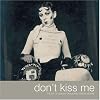
Claude Cahun and Marcel Moore were an extraordinary couple who worked and lived together for more than 40 years. Cahun and Moore were the pseudonyms for Lucy Schwob and Suzanne Malherbe, who met in their teens and embarked on their unique relationship. They travelled from provincial Nantes to the hot-house atmosphere of Paris and finally to Jersey, where they found the space and freedom to develop their ideas but where they were to suffer imprisonment during the Nazi occupation for their show more Resistance activities. Theirs was an extraordinary artistic collaboration that produced some of the most original images and literary works to be associated with Surrealism. Best known for her riveting photographic "self-portraits" (the book argues forcefully that all of her works were collaborations with Moore, negating the validity of the term) Cahun has come to prominence in recent years particularly for the way in which her self-image was manipulated, creating mysterious, androgynous personae that seem eerily ahead of their time. A selection of international authors examine Cahun and Moore's lives; their theatrical, literary and performance activities; their relationship with the wider Surrealist movement; and Cahun's photographic technique. The book also includes the first thorough account of the Resistance activities, trial, imprisonment and attempted suicides of the two artists during the Nazi occupation of Jersey. The extensive illustrations include previously unseen photographs and drawings, manuscripts and ephemera. The wealth of new material in this fascinating survey makes it an essential purchase for all those with an interest in Cahun and Moore, photography, gender studies or Surrealism. show less
You May Also Like


Associated Authors
Statistics
- Works
- 14
- Also by
- 4
- Members
- 232
- Popularity
- #97,291
- Rating
- 4.0
- Reviews
- 8
- ISBNs
- 24
- Languages
- 4