
Marcia Leonard
Author of When the Giants Came to Town
About the Author
Marcia Leonard is an author of children's books. Her books included the "How I Feel" series for children (How I Feel Proud, How I Feel Angry, How I Feel Silly). leonard has many books that are for learning to read and are found in the series, Real Kids Readers. (Bowker Author Biography)
Image credit: via SCBWI
Series
Works by Marcia Leonard
Houghton Mifflin Reading: The Nation's Choice: Theme Paperbacks Grade 1.1 Theme 1 - Dan and Dan (1998) 114 copies
Little Puppy's Rainy Day: Your First Adventure 10 (A Choose Your Own Adventure Book) (1987) 10 copies
Little Goat's Big Brother (Your First Adventure #12) A Choose Your Own Adventure Book (1987) 7 copies
How I Feel Silly with Sticker and Cards (How I Feel Books) by Marcia Leonard (2000-04-04) (1841) 4 copies
How I Feel Happy with Sticker and Cards (How I Feel Books) by Marcia Leonard (2000-04-04) (1842) 1 copy
How I Feel HAPPY Emotions 1 copy
How I Feel SCARED Emotions 1 copy
How I Feel ANGRY Emotions 1 copy
How I Feel Angry with Sticker and Cards (How I Feel Books) by Marcia Leonard (2000-04-02) (1669) 1 copy
Noisy Neighbors/Paintbox Penguins/The Kitten Twins/Counting Kangeroos (Brighter Visions) (1990) 1 copy
La ratita hace líos / 1 copy
Get the Ball,Slim 1 copy
Associated Works
Tagged
Common Knowledge
- Gender
- female
Members
Reviews
How I Feel Silly: An Interactive Book to Help Children to Understand Their Feelings (How I Feel Books) by Marcia Leonard (1999-12-31) by Marcia Leonard
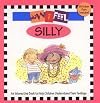
In my opinion this is a great book for young children. The first thing I like about this book is the writing. The writing is very engaging and organized as it starts out describing silly scenarios like, "This little girl is pretending to be a puppy. She likes being silly." Then later on, the book goes into places and times children should not act silly saying things like, "There are places where it's good to be silly, and places where it's not. Do you think this is a good place?" The second show more thing I enjoyed were the illustrations. The illustrations were appropriate to the mood and clearly enhanced the story. For the last quote about places where it is okay to be silly the illustration showed, a child playing with fruit in the grocery store while the father looked disappointed in him pushing the shopping cart. This image clearly displays a place where children should not act silly. Lastly, I enjoyed the characters throughout the book. When a child reads this story, they will be able to relate the text to themselves as the characters are believable. For example a child could remember a time they were acting too silly and got hurt after reading this quote, "And if your silliness gets too wild, someone might even get hurt." In the end, I think that the 'big idea' of this book is to teach and expose children to familiar situations. The book does this in order to help children recognize the emotion (silly), and express how they might feel in certain situations when they have that feeling. show less

Oh my goodness. How charming. Only two paths, with the same outcome, very simple plotline, but still worth reading at least twice. This library copy in terrible shape, but they won't cull it until it's ruined beyond repair... it's just being loved to pieces!
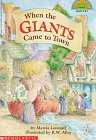
This was a cute little book. It is intended for Ages 7 to 9. It is a series of different stories about Giants. What I truly liked about this story for the young reader is that even though all of the stories were different, because they were describing different Giants, they all surrounded a theme of all of these giants being involved with a small little town on the side of the mountain.
So, the town being the anchor to the story, the Giants all interacted differently with it. I feel that it show more gave the entire book a sense of continuity. By the third story I was saying to myself with a laugh, "Oh that poor little town".
The print size is good for the 7 to 9 year old and the mix of words and pictures were well balanced in my opinion. Also, because each Giant was different, it gives the reader the impression of a chapter book. The young reader could easily stop at a particular giant and catch up with the new one later on. Also,the end of one Giant story was a good segway to the next one. Teaching the young reader to follow a series of events.
I would recommend this book for the 7 to 9 year old or as it states on the cover, it is for Grades 2 or 3. Very well written and the stories were very entertaining. show less
So, the town being the anchor to the story, the Giants all interacted differently with it. I feel that it show more gave the entire book a sense of continuity. By the third story I was saying to myself with a laugh, "Oh that poor little town".
The print size is good for the 7 to 9 year old and the mix of words and pictures were well balanced in my opinion. Also, because each Giant was different, it gives the reader the impression of a chapter book. The young reader could easily stop at a particular giant and catch up with the new one later on. Also,the end of one Giant story was a good segway to the next one. Teaching the young reader to follow a series of events.
I would recommend this book for the 7 to 9 year old or as it states on the cover, it is for Grades 2 or 3. Very well written and the stories were very entertaining. show less
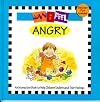
I believe this book is good, it has large, simple text in conjunction with correlating illustrations. The illustrations depict exactly what the text is saying. For example, the text reads "This little boy broke his toy. He feels angry." and the illustration shows a little boy breaking his toy. The little boy's eyebrows are slanted down, his cheeks are red, he has a frown on his face, and his arms are tense looking. All of these clues helped me to identify what angry may look like in a show more picture. Each page has a text with a supporting illustration that helps me, as the reader, understand the feeling of angry. The book is also great because, it asks thought provoking questions to make me think about how I would feel in certain situations. For example, it gives an incident when a child is angry and then asks, "What makes you angry?" It not only helps to identify what the emotion is, but how to deal with that feeling. The book describes that talking to a parent might help, crying it out, or needing a hug may help with that emotion. I think that is wonderful, because it took me through each part of the process. show less
You May Also Like


Associated Authors
Statistics
- Works
- 119
- Also by
- 3
- Members
- 3,247
- Popularity
- #7,868
- Rating
- 3.4
- Reviews
- 21
- ISBNs
- 345
- Languages
- 4