

Bob Costas
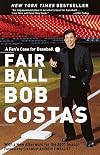
Author of Fair Ball: A Fan's Case for Baseball
About the Author
Bob Costas has won the Emmy Award as Outstanding Sports Broadcaster eight times & has been named National Sportscaster of the Year by his peers seven times. He has also received Emmy Awards for his writing, interviewing, & reporting. In addition to his sports broadcasting, Costas hosted the Emmy show more Award-winning interview show "Later ...with Bob Costas" on NBC, & will be hosting a new sports journalism program on HBO beginning in February 2001. A native New Yorker, Costas now lives in Saint Louis, Missouri. (Bowker Author Biography) show less
Works by Bob Costas
Associated Works
And the Crowd Goes Wild: Relive the Most Celebrated Sporting Events Ever Broadcast (1999) — Narrator — 313 copies, 6 reviews
And the Fans Roared: The Sports Broadcasts That Kept Us on the Edge of Our Seats (2000) — Narrator — 174 copies, 2 reviews
Built to Win: Inside Stories and Leadership Strategies from Baseball's Winningest GM (2006) — Foreword — 69 copies
Where's Harry?: Steve Stone Remembers 25 Years with Harry Caray (1999) — Foreword — 65 copies, 1 review
Out of Left Field: Over 1,134 Newly Discovered Amazing Baseball Records, Connections, Coincidences, and More! (1998) — Introduction — 53 copies
The Home Run Heard 'Round the World: The Dramatic Story of the 1951 Giants-Dodgers Pennant Race (1991) — Preface — 45 copies
The End of Baseball As We Knew It: The Players Union, 1960-81 (Sport and Society) (2002) — Foreword — 23 copies
The Magnificent Seasons: How the Jets, Mets, and Knicks Made Sports HIstory and Uplifted a City and the Country (2004) — Introduction — 19 copies, 1 review
Center Field on Fire: An Umpire's Life with Pine tar Bats, Spitballs, and Corked Personalities (2004) — Foreword — 17 copies
Classic Wiley: A Lifetime of Punchers, Players, Punks and Prophets (THE GREAT AMERICAN SPORTSWRITER SERIES) (2005) — Foreword — 16 copies
Bernie's Best: Favorite Sports Columns by Bernie Miklasz of The St. Louis Post-Dispatch (2008) — Foreword — 4 copies
Tagged
Common Knowledge
- Legal name
- Costas, Robert Quinlan
- Birthdate
- 1952-03-22
- Gender
- male
- Education
- Syracuse University (withdrew)
- Occupations
- sportscaster
television host - Organizations
- KMOX
NBC
HBO - Awards and honors
- Emmy - Outstanding Sports Personality, Studio Host (1993-1996, 2000-2005)
Outstanding Sports Personality, Play-by-Play (1997)
St. Louis Walk of Fame
National Sportscaster of the Year (1985, 1987, 1988, 1991, 1992, 1995, 1997, 2000) - Nationality
- USA
- Associated Place (for map)
- USA
Members
Reviews

Bob Costas should have named his treatise on the ills of the baseball, “A Serious and Detail-Oriented Fan’s Case for Baseball.” Not to say that the casual, a-few-games-a-year-and-only-when-my-favorite-team-is-playing-on-Saturday-afternoon fan won’t find something in the book. But Costas’ real appeal is for the everyday, box-scores-in-the-morning, I-know-what’s-wrong-with-the-game fan.
The set-up is the horrible third game of the 1997 World Series, Indians vs. Marlins. The Indians show more that year posted only the ninth-best regular-season record, barely over .500, and the Marlins were the wild card team. They battled past midnight on a freezing and snowy evening, trading errors and the lead, until Bob Uecker remarked during a commercial break, “This games sucks!” And it did. The 1997 match-up, and the “no, you win” atmosphere for much of the games, evidenced an ailing game.
Costas starts his plan for the revival of the game by defining what kind of a fan he really is: more of a “Bull Durham” guy and less of a “Field of Dreams” guy. There are those, and I am probably one of them, who is more likely to view the game, as Costas puts it, as “a parable, a metaphor for life, a prism through which to view the culture.” We are enchanted with the game in a nostalgic, sentimental way, revering the purity and history of the game as inviolate. Costas views the game more as a competitive business and one that was then in danger of destroying itself after a work stoppage in 1993, needless tinkering with the game’s administration, and a fan base that was growing tired of greedy players and owners.
At the time of Costas’ writing in 2000, no team had reached the World Series that didn’t have one of the top ten payrolls. (While that’s changed in the last decade, the landscape that generated the inequality hasn’t.) Those payrolls were largely fed by uneven local broadcasting revenues generated by exclusive contracts. Costas suggests, among other things, comprehensive revenue sharing, allowing each team to keep half of its revenue, including local revenue, and then placing the other half in a national pool to be divided equally among all teams. The second piece of Costas’ solution is a player salary cap and a floor. We’ve seen a few recent players give up larger contracts to play for teams that appear to be more competitive (Mark McGwire and, most recently, Cliff Lee). But the norm is guys like Albert Pujols, who demand to set a new market high, simply because he can, not because he needs 200 million instead of 180 million to live on. The result is constantly and infinitely inflated payrolls for teams who have the resources and a barren wasteland for those who don’t.
There is further discussion of realignment, the wild card, and interleague play. For the most part, I agree with nearly everything Costas suggests, including the banishment of the DH. I mean come-on, the DH is not necessary any more. At the time it was instituted, the AL was a struggling league. Does anyone really believe the AL is still struggling? And the wild card, while it appears to add excitement, only weakens real pennant races, where a team like the NY Yankees can essentially quit in the last few weeks of the season to get their pitching rotation in order for the playoffs. Not to mention what the extra playoff rounds do to the length of the over-all season, a problem that Bud Selig has tried to remedy this year with an early Opening Day.
Costas’ book was refreshing and interesting for true baseball fans, even ones who might not have taken an interest in the nature and administration of the game before. If you’ve ever complained about players and their salaries, read this book. If you’ve ever complained about ticket prices at the ball-park or the constantly shifting and greedy nature of the baseball broadcast world, read this book. Let’s face it; fans like me will come back no matter what. If they play, we will watch. But the relationship between baseball teams, players and owners alike, could be better if the game were better structured. And while Costas doesn’t fancy himself a “Field of Dreams” guy, most of what he suggests would bring back much of the allure of the old boys and the old days of the game.
Bottom Line: A comprehensive and well-thought out plan for real baseball parity and revival. Highly recommended for serious fans; and cautiously recommended for the casual fan.
5 bones!!!!! show less
The set-up is the horrible third game of the 1997 World Series, Indians vs. Marlins. The Indians show more that year posted only the ninth-best regular-season record, barely over .500, and the Marlins were the wild card team. They battled past midnight on a freezing and snowy evening, trading errors and the lead, until Bob Uecker remarked during a commercial break, “This games sucks!” And it did. The 1997 match-up, and the “no, you win” atmosphere for much of the games, evidenced an ailing game.
Costas starts his plan for the revival of the game by defining what kind of a fan he really is: more of a “Bull Durham” guy and less of a “Field of Dreams” guy. There are those, and I am probably one of them, who is more likely to view the game, as Costas puts it, as “a parable, a metaphor for life, a prism through which to view the culture.” We are enchanted with the game in a nostalgic, sentimental way, revering the purity and history of the game as inviolate. Costas views the game more as a competitive business and one that was then in danger of destroying itself after a work stoppage in 1993, needless tinkering with the game’s administration, and a fan base that was growing tired of greedy players and owners.
At the time of Costas’ writing in 2000, no team had reached the World Series that didn’t have one of the top ten payrolls. (While that’s changed in the last decade, the landscape that generated the inequality hasn’t.) Those payrolls were largely fed by uneven local broadcasting revenues generated by exclusive contracts. Costas suggests, among other things, comprehensive revenue sharing, allowing each team to keep half of its revenue, including local revenue, and then placing the other half in a national pool to be divided equally among all teams. The second piece of Costas’ solution is a player salary cap and a floor. We’ve seen a few recent players give up larger contracts to play for teams that appear to be more competitive (Mark McGwire and, most recently, Cliff Lee). But the norm is guys like Albert Pujols, who demand to set a new market high, simply because he can, not because he needs 200 million instead of 180 million to live on. The result is constantly and infinitely inflated payrolls for teams who have the resources and a barren wasteland for those who don’t.
There is further discussion of realignment, the wild card, and interleague play. For the most part, I agree with nearly everything Costas suggests, including the banishment of the DH. I mean come-on, the DH is not necessary any more. At the time it was instituted, the AL was a struggling league. Does anyone really believe the AL is still struggling? And the wild card, while it appears to add excitement, only weakens real pennant races, where a team like the NY Yankees can essentially quit in the last few weeks of the season to get their pitching rotation in order for the playoffs. Not to mention what the extra playoff rounds do to the length of the over-all season, a problem that Bud Selig has tried to remedy this year with an early Opening Day.
Costas’ book was refreshing and interesting for true baseball fans, even ones who might not have taken an interest in the nature and administration of the game before. If you’ve ever complained about players and their salaries, read this book. If you’ve ever complained about ticket prices at the ball-park or the constantly shifting and greedy nature of the baseball broadcast world, read this book. Let’s face it; fans like me will come back no matter what. If they play, we will watch. But the relationship between baseball teams, players and owners alike, could be better if the game were better structured. And while Costas doesn’t fancy himself a “Field of Dreams” guy, most of what he suggests would bring back much of the allure of the old boys and the old days of the game.
Bottom Line: A comprehensive and well-thought out plan for real baseball parity and revival. Highly recommended for serious fans; and cautiously recommended for the casual fan.
5 bones!!!!! show less
I have long felt that major-league baseball was a great game gone wrong somehow. Whitey Herzog articulated some of the reasons in his excellent analysis, "You're Missin' a Great Game". But his take on it was not nearly as thoroughly reasoned and expounded upon as this book, which puts to words the things I felt were wrong with baseball, and more importantly, lays out a reasonable plan for fixing it, which calls for sacrifices from all involved (save the fans) and will result in gains for all show more involved - including the fans. Costas should be the next baseball comissioner, except he'd never take the cut in pay. But his book should be closely read by the powers that be. It was good to see, too, that Costas' thoughts on lesser issues, such as interleague play and the DH rule, mirror my own. show less
ac raved so much about this book that it encouraged me to dig it out and finally read it. I have been an avid baseball fan since I was a young child but for the last 15 years I watched with dismay as my favorite game seemed to be sinking deeper and deeper into an expensive mediocre sport that seemed designed more to make money for the highest paid players and the owners. Bob Costas has not only laid out the mistakes that have been made to bring about this sad state of affairs, he has also show more suggested solutions to remedy the many problems that currently plague the game. Unfortunately its been about a decade since he published this book and I haven't seen any progress yet. I'll try not to get discouraged.
Two easy fixes that will improve the competitiveness and the post season excitement without costing either the players for the owners any money and to ditch the DH in the American League and to dump the “wild card” for the post season. His solution for that last suggestion is beautiful and easy to do. If you love baseball but are unhappy with the direction it has taken this is a must read—if only to know that the problems could be solved if the owners and players could work together. show less
Two easy fixes that will improve the competitiveness and the post season excitement without costing either the players for the owners any money and to ditch the DH in the American League and to dump the “wild card” for the post season. His solution for that last suggestion is beautiful and easy to do. If you love baseball but are unhappy with the direction it has taken this is a must read—if only to know that the problems could be solved if the owners and players could work together. show less
I listened to this audiobook in spring 2007, about 6 years after the book was published. I found much of the discussion of the business of baseball to be dated in our post-Moneyball world. Costas did, however, convert me into an opponent of the wild-card system.
Awards

You May Also Like


Associated Authors
Statistics
- Works
- 10
- Also by
- 23
- Members
- 393
- Popularity
- #61,673
- Rating
- 3.6
- Reviews
- 7
- ISBNs
- 11
