

Miguel Ruiz
Author of The Four Agreements: A Practical Guide to Personal Freedom
About the Author
Don Miguel Ruiz Jr. is a Nagual, a Toltec Master of Transformation, a direct descendant of the Toltecs of the Eagle Knight lineage, and the son of don Miguel Ruiz. He is the author of The Five Levels of Attachment and Living a Life of Awareness.
Disambiguation Notice:
“Don” in this author’s name is an honorific title, not a part of his given name or of his canonical name.
Image credit: Photo courtesy of Hay House, Inc.
Works by Miguel Ruiz
The Fifth Agreement: A Practical Guide to Self-Mastery (Toltec Wisdom) (2009) — Author — 672 copies, 9 reviews
The Four Agreements Companion Book : Using the Four Agreements to Master the Dream of Your Life (2000) 661 copies, 1 review
The Circle of Fire: Inspiration and Guided Meditation for Living in Love and Happiness (2019) 19 copies, 1 review
Wisdom of the Shamans: What the Ancient Masters Can Teach Us about Love and Life (Shamanic Wisdom Series) (2018) 9 copies
Los Cuatro acuerdos: Sabiduría tolteca - 48 cartas (Tarot, oráculos, juegos y vídeos) (Spanish Edition) (2016) 3 copies
Le livre de sagesse toltèque de Don Miguel Ruiz: Les enseignements essentiels (Aventure secrète, 13057) (French Edition) (2020) 3 copies
Rewriting the Storyteller Workshop 2 copies
KATËR MARRËVESHJET 2 copies
Los cuatro acuerdos 2 copies
The Mastery of Self 2 copies
Whispers of love 2 copies
Il quinto accordo: Guida pratica alla padronanza di sé (Nuove frontiere del pensiero) (Italian Edition) (2013) 1 copy
By Don Miguel Ruiz Les Quatre Accords Tolteques (French Edition) (JOUVENCE) [Mass Market Paperback] 1 copy
Sarajevo – Passatge 5 1 copy
Wisdom Summit - Miguel Ruiz 1 copy
Whispers of Happiness 1 copy
Mon ami le serpent à sonnettes: Une suite au Cinquième Accord toltèque (French Edition) (2015) 1 copy
The Birth of Innocence 1 copy
La padronanza dell'amore: Guida pratica all'arte dei rapporti personali. (Nuove frontiere del pensiero) (Italian Edition) (2013) 1 copy
Im Einklang mit dem Schöpfer 1 copy
The Four Agreements - Aazadi Pane Ke 4 Samzonten (Hindi Edition of The Four Agreements by Don Miguel Ruiz) (2018) 1 copy
Bốn thoả ước 1 copy
El camino del duelo: Cómo encontrar equilibrio y belleza en tiempos de duelo (Spanish Edition) (2023) 1 copy, 1 review
Associated Works
Warrior Goddess Training: Become the Woman You Are Meant to Be (2014) — Foreword — 232 copies, 1 review
Tagged
Common Knowledge
- Canonical name
- Ruiz, Miguel
- Legal name
- Ruiz, Miguel Ángel
- Birthdate
- 1952
- Gender
- male
- Occupations
- surgeon
shaman (nagual)
teacher - Nationality
- Mexico (birth)
- Places of residence
- Nevada, USA
- Disambiguation notice
- “Don” in this author’s name is an honorific title, not a part of his given name or of his canonical name.
- Associated Place (for map)
- Nevada, USA
Members
Reviews
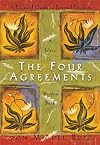
The Four Agreements by Don Miguel Ruiz has been a quiet presence on my bookshelf for some time. I finally decided to give it a read, intrigued by its reputation (and acclaim?). At just over a hundred pages, it’s a quick read—almost too quick—and leaves me questioning all the hubbub. While the book has its moments of clarity, its superficiality and reliance on commodified Toltec “wisdom” ultimately detract from its impact.
Ruiz presents four guiding principles: be impeccable with show more your word, don’t take anything personally, don’t make assumptions, and always do your best. On the surface, these agreements seem like sensible, even admirable, life lessons. Who wouldn’t benefit from more honesty, self-awareness, and effort in their day-to-day lives? Yet, as I turned the pages, I found myself wondering: is this really Toltec wisdom, or just common sense dressed up in borrowed cultural gravitas?
For those who value intellectual rigor and authenticity, Ruiz’s approach may feel more like marketing than philosophy. The “Toltec” framing feels performative—tacked on to lend an air of mysticism rather than serving as a deeply integrated cultural framework. While Ruiz claims these teachings stem from ancient wisdom, they are largely repackaged spiritual platitudes that lack the depth or historical fidelity to justify their purported heritage.
What truly hinders The Four Agreements is its oversimplification of life’s complexities. Ruiz offers catchy slogans but stops short of exploring the deeper philosophical or psychological underpinnings that make such principles effective. For example, “don’t take anything personally” is great advice for managing interpersonal conflict, but it also risks encouraging passivity in situations where assertiveness or boundaries are necessary. Similarly, “don’t make assumptions” could inhibit informed conjecture—an essential skill in critical thinking and decision-making.
Ruiz’s esoteric language also detracts from the practical applications of his advice. Phrases like “don’t let others poison you with their spells” may work as metaphors but fail to provide the actionable clarity one needs to implement these ideas in real-world situations. For those of us who value reason and evidence-based thinking, the mystical framing can feel frustratingly vague, even alienating.
In the end, I’d recommend skipping this book. Its simplicity may appeal to those new to self-help or mindfulness, but readers seeking a robust life philosophy will likely find it wanting. Instead, I encourage you to explore works that offer greater depth and intellectual engagement.
If you’re looking for a life philosophy rooted in reason and actionable wisdom, I’d suggest diving into something more “long-haired,” like Marcus Aurelius’s Meditations or Ayn Rand’s The Virtue of Selfishness. Both delve deeply into human nature, ethics, and how to live a meaningful life—one with clarity and intellectual rigor at its core. show less
Ruiz presents four guiding principles: be impeccable with show more your word, don’t take anything personally, don’t make assumptions, and always do your best. On the surface, these agreements seem like sensible, even admirable, life lessons. Who wouldn’t benefit from more honesty, self-awareness, and effort in their day-to-day lives? Yet, as I turned the pages, I found myself wondering: is this really Toltec wisdom, or just common sense dressed up in borrowed cultural gravitas?
For those who value intellectual rigor and authenticity, Ruiz’s approach may feel more like marketing than philosophy. The “Toltec” framing feels performative—tacked on to lend an air of mysticism rather than serving as a deeply integrated cultural framework. While Ruiz claims these teachings stem from ancient wisdom, they are largely repackaged spiritual platitudes that lack the depth or historical fidelity to justify their purported heritage.
What truly hinders The Four Agreements is its oversimplification of life’s complexities. Ruiz offers catchy slogans but stops short of exploring the deeper philosophical or psychological underpinnings that make such principles effective. For example, “don’t take anything personally” is great advice for managing interpersonal conflict, but it also risks encouraging passivity in situations where assertiveness or boundaries are necessary. Similarly, “don’t make assumptions” could inhibit informed conjecture—an essential skill in critical thinking and decision-making.
Ruiz’s esoteric language also detracts from the practical applications of his advice. Phrases like “don’t let others poison you with their spells” may work as metaphors but fail to provide the actionable clarity one needs to implement these ideas in real-world situations. For those of us who value reason and evidence-based thinking, the mystical framing can feel frustratingly vague, even alienating.
In the end, I’d recommend skipping this book. Its simplicity may appeal to those new to self-help or mindfulness, but readers seeking a robust life philosophy will likely find it wanting. Instead, I encourage you to explore works that offer greater depth and intellectual engagement.
If you’re looking for a life philosophy rooted in reason and actionable wisdom, I’d suggest diving into something more “long-haired,” like Marcus Aurelius’s Meditations or Ayn Rand’s The Virtue of Selfishness. Both delve deeply into human nature, ethics, and how to live a meaningful life—one with clarity and intellectual rigor at its core. show less
I've seen this book around for years, and I have to admit, the four basic concepts at the heart of it aren't bad.
But...
There's so much wrong with this book. Ruiz obviously came up with four great statements, but who's going to buy a four-page book, right? So, he filled it up with an awful lot of dreadful filler.
I'm sure he got rich for this, and I'm sure he's thankful that he put the book out in 1997 instead of 1967. Why?
Because in '67, he would have been very popular, but he would have been show more one of the long-haired, usually unwashed, pot-smoking bearded guys with a collection of equally unwashed, braless hangers-on hanging out in a park somewhere weaving dandelions into necklaces as he talked about black and white magic and the innocence of youth...
...but he wouldn't have been as rich.
Anyway, it's good that the secret of a happy, loving life is summed up in four statements...um...until the book sells fifteen million copies, and you need a follow up, so you discover a fifth one. show less
But...
There's so much wrong with this book. Ruiz obviously came up with four great statements, but who's going to buy a four-page book, right? So, he filled it up with an awful lot of dreadful filler.
I'm sure he got rich for this, and I'm sure he's thankful that he put the book out in 1997 instead of 1967. Why?
Because in '67, he would have been very popular, but he would have been show more one of the long-haired, usually unwashed, pot-smoking bearded guys with a collection of equally unwashed, braless hangers-on hanging out in a park somewhere weaving dandelions into necklaces as he talked about black and white magic and the innocence of youth...
...but he wouldn't have been as rich.
Anyway, it's good that the secret of a happy, loving life is summed up in four statements...um...until the book sells fifteen million copies, and you need a follow up, so you discover a fifth one. show less
The Mastery of Love: A Practical Guide to the Art of Relationship: A Toltec Wisdom Book by Miguel Ruiz
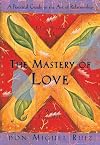
Reading The Mastery of Love felt like a quiet, reflective conversation with a wise friend. Don Miguel Ruiz’s Toltec perspective on relationships is simple but surprisingly profound: love starts with healing and accepting yourself. I really connected with the idea that many of the conflicts we experience in relationships come from unresolved fears and expectations we carry from the past. It made me pause and really think about how much of my energy goes into trying to “fix” others show more instead of nurturing myself and my own happiness.
Some parts of the book can feel repetitive, and at times the language is very metaphorical, which might not click with everyone. But for me, the gentle, philosophical tone was part of its charm, it encourages reflection rather than providing a rigid set of rules. The lessons about letting go of judgment, cultivating self-love, and embracing vulnerability were surprisingly practical and easy to apply in daily life.
Overall, The Mastery of Love left me feeling more aware of my own patterns and more committed to approaching relationships with kindness, patience, and honesty. It’s not a step by step manual, but it’s a book that stays with you, inviting you to slow down and love more consciously both yourself and others. show less
Some parts of the book can feel repetitive, and at times the language is very metaphorical, which might not click with everyone. But for me, the gentle, philosophical tone was part of its charm, it encourages reflection rather than providing a rigid set of rules. The lessons about letting go of judgment, cultivating self-love, and embracing vulnerability were surprisingly practical and easy to apply in daily life.
Overall, The Mastery of Love left me feeling more aware of my own patterns and more committed to approaching relationships with kindness, patience, and honesty. It’s not a step by step manual, but it’s a book that stays with you, inviting you to slow down and love more consciously both yourself and others. show less
This was an unusual read for me. Ruiz calls this "A Toltec Wisdom Book," and being the sort of reader who prides himself on reading texts with a critical eye, I find it hard not to read this or any book that claims to impart wisdom for my own self improvement without a substantial dose of skepticism. Add to that my mental association of this book with a class of self-help literature I was once required to sell in my former life as a bookstore employee, a time when I felt remarkably show more disempowered. Add to that the fact that Ruiz sometimes presents concepts in a cluttered way that chafes against my innate desire to place things in order. Despite all of this, I read this book because a good friend references these agreements often in our conversations, and I knew I would benefit by reading about them from the source. I think there is wisdom here, and that was easier to see once I set aside all my instincts to judge and to criticize and instead thought about what resonated for me. Which I'm not going to go into here. Suffice to say that for once I chose to lay criticism aside and, as Ruiz recommends, imagine for a moment I have the ability to see the world through different eyes, whenever I choose. And I think I will be coming back to his book again to remind myself of wisdom that, after all, can take a lifetime to absorb. show less
Lists
Awards


You May Also Like


Associated Authors
Statistics
- Works
- 88
- Also by
- 1
- Members
- 14,951
- Popularity
- #1,531
- Rating
- 3.8
- Reviews
- 189
- ISBNs
- 335
- Languages
- 25
- Favorited
- 12