
Rex Stout (1886–1975)
Author of Fer-de-Lance
About the Author
Author Rex Stout was born on December 1, 1886. A child prodigy with a gift for mathematics, Stout drifted as he became an adult, holding odd jobs in many places---cook, cabinetmaker, bellhop, hotel manager, salesman, bookkeeper, and even a guide in a pueblo. But his true talent lay in storytelling; show more he sold his first story, about William Howard Taft, in 1912. His most famous creation is Nero Wolfe, a 286-pound detective genius who, with sidekick Archie Goodwin, can often solve a case without leaving his room. It is the way in which the puzzle is solved that intrigues Nero Wolfe, who is much like Sherlock Holmes in his ability to use deductive reasoning. More than 60 million copies (in 24 languages) of Stout's books have been sold. Stout writes quickly, drawing upon a lifetime of impressions. He neither uses an outline nor revises; he lets his characters take over as the story develops. The classy, erudite Nero Wolfe presents for readers an alternative to the hard-boiled branch of the genre. He died on October 27, 1975 (Bowker Author Biography) show less
Series
Works by Rex Stout
Three Trumps, A Nero Wolfe Omnibus: The Black Mountain / If Death Ever Slept / Before Midnight (1973) 109 copies, 2 reviews
Obras selectas, tomo 3. La segunda confesión ; Orquídeas negras ; Trío de asesinatos (1984) 12 copies
Forest fire 8 copies
Before Nero Wolfe (Annotated and Illustrated): Justice Ends at Home and The Last Drive (Kindle) (2019) 6 copies, 1 review
Home to Roost 6 copies
Jedermanns Bombe - Kennzeichen wilde Rose - Tödliche Zigarren: Drei Nero Wolfe Krimis zur Fernsehserie in einem Band (1991) 5 copies
The New Adventures of Nero Wolfe: The Case of the Midnight Ride and Other Tales [With Earbuds] (Playaway Adult Fiction) (2005) 4 copies
Nero & Archie Incorporated 4 copies
His Own Hand 4 copies
Nero Wolf: Natale di morte 3 copies
Rex Stout Mystery Quarterly, #1 3 copies
Nero Wolfe e l'invulnerabile 3 copies
Nero Wolfe vince la partita 3 copies
Rex Stout Mystery Monthly, #6 2 copies
Nient'altro che la verità 2 copies
Rex Stout, Nero Wolfe, 3 books hardcover with jacket, Three at Wolfe's door, Death of a Dude, Too Many Clients (1960) 2 copies
Mitte veel piisavalt surnud 1 copy
Mustad orhideed 1 copy
Nero Wolfe E Il Suo Cadavere 1 copy
Det röda skrinet 1 copy
Assassinio Indiretto 1 copy
La pistola scomparsa 1 copy
Chapagne per uno 1 copy
Accoppiata per Nero Wolfe 1 copy
Come volevasi dimostrare 1 copy
Kolm seiklust 1 copy
Ullstein-Kriminalmagazin 1 1 copy
Novelas escogidas. Tomo I 1 copy
TROUBLE IN TRIPLICATE 1 copy
A Cadeia de Crimes 1 copy
Tome 1: Les années 1930 - 1939 : Fer de lance - Les compagnons de la peur - La bande élastique - La cassette rouge (1996) 1 copy
Theo Drake 1 copy
Nero Wolf fa la spia 1 copy
Nero Wolf e il caso Fyfe 1 copy
Nero Wolf discolpati 1 copy
Nero Wolfe Difenditi! 1 copy
Novelas 1 1 copy
TRINDADE HOMICIDA 1 copy
Under the Banner of Heaven 1 copy
Livsfarlig ingång 1 copy
Nero Wolfe Collection 1 copy
Nero Wolfes bomb 1 copy
Sensationelle opskrifter 1 copy
Tungviktare sökes 1 copy
Rose Orchid 1 copy
Gun Puzzle 1 copy
Delitti in vacanza 1 copy
The poisened needle 1 copy
Golden Remedy 1 copy
O Careless Love 1 copy
Novelas escogidas Tomo II 1 copy
ROMANZI 1 copy
Grim Fairy Tales 1 copy
For Tomorrow We Die 1 copy
In viaggio con Nero Wolfe. Tre romanzi. La guardia al toro, Nero Wolfe fa la spia, Nero Wolfe e il caso dei mirtilli (2003) 1 copy
Černé orchideje 1 copy
TRÊS CASOS DE ASSSSÍNIO 1 copy
CRIMES EM SÉRIE 1 copy
O CULPADO QUE SE APRESENTE 1 copy
CRIME NO CLUBE DE XADREZ 1 copy
A MILIONÁRIA PERSEGUIDA 1 copy
O DIREITO DE MORRER 1 copy
CRIMES IMPERFEITOS 1 copy
La mano en el guante 1 copy
Mystery Trilogy 1 copy
Ein Zeuge verstummt 1 copy
Nyomoz az FBI 1 copy
Zu viele Köche 1 copy
HOMICÍDIO NAS TERMAS 1 copy
La moglie perduta — Author — 1 copy
The red wool thread 1 copy
unknown number and titles 1 copy
Stout Rex 1 copy
Nero Wolfe Omnibus, The 1 copy
In vacanza con l'assassino 1 copy
Toque de campainha, Um 1 copy
Rex Stout Mystery Magazine — Editor — 1 copy
Un roman a tué 1 copy
Plagiat 1 copy
Associated Works
Great Detectives: A Century of the Best Mysteries from England and America (1984) — Contributor — 403 copies, 5 reviews
Murder on the Menu: Cordon Bleu Stories of Crime and Mystery, Volume 1 (1984) — Contributor — 211 copies, 2 reviews
Alfred Hitchcock Presents: Stories to Be Read with the Door Locked (1975) — Contributor — 187 copies, 4 reviews
Nero Wolfe: The Complete Classic Whodunit Series [videorecording] (2006) — Original book — 42 copies
Murder on the Menu: Cordon Bleu Stories of Crime and Mystery, Volume 2 (1993) — Contributor — 20 copies
The Case of the Black-Eyed Blonde | Death Comes as the End | Not Quite Dead Enough (1944) — Contributor — 9 copies
Great Mystery Books, 10 Volumes (Journey into Fear, The 39 Steps, And Then There Were None, Maltese Falcon, The Nine Tailors, The Doorbell Rang, The Confidential Agent, The Big… (1967) — Contributor — 6 copies
Crimes and Misfortunes: The Anthony Boucher Memorial Anthology of Mysteries — Contributor — 5 copies
Too Many Women | Night Walk | Draw the Curtain Close — Contributor — 4 copies
Detective-verhalen — Contributor — 3 copies
RDCBLP v081 Cordially Invited to Meet Death | Roommates: My Grandfather's Story | The Day We Almost Didn't Go (1995) 1 copy
The Dark Eyes of London | The Eight of Swords | The Iron Gates | The Second Confession | The Tragedy of Y (1965) — Contributor — 1 copy
Tagged
Common Knowledge
- Legal name
- Stout, Rex Todhunter
- Birthdate
- 1886-12-01
- Date of death
- 1975-10-27
- Gender
- male
- Education
- University of Kansas, Lawrence
- Occupations
- bookkeeper
sight-seeing guide
bookstore salesman
stablehand
hotel manager
detective novelist - Organizations
- Authors Guild
Mystery Writers of America
United States Navy
American Civil Liberties Union
Vanguard Press - Awards and honors
- MWA Grand Master (1959)
Archie Goodwin Award (2005) - Relationships
- Stout, Ruth (sister)
Wodehouse, P. G. (friend) - Short biography
- After leaving the Navy in 1908, he became an itinerant bookkeeper and then worked as a sight-seeing guide, bookstore salesman, stablehand and hotel manager. Later he devised and implemented a school banking system which was installed in four hundred cities and towns throughout the country. In 1927 he retired from the world of finance and began writing. In 1941 he became chairman of the Writer's War Board, and in 1943 he was elected president of the Authors Guild. He was married to wife, Pola.
- Nationality
- USA
- Birthplace
- Noblesville, Indiana, USA
- Places of residence
- Noblesville, Indiana, USA (Birth)
Wakarusa, Kansas, USA
Paris, Île-de-France, France
Danbury, Connecticut, USA - Place of death
- Danbury, Connecticut, USA
- Burial location
- cremated
- Associated Place (for map)
- USA
Members
Discussions
Some Buried Caesar - Spoilers in The Black Orchid (A Nero Wolfe Group) (March 2021)
Reviews

Nero Wolfe alias William Conrad habe ich früher gern gesehen, diesen wohlbeleibten, orchideenliebenden Gourmet, der immer wieder die New Yorker Mordkommission düpierte, indem er Fälle auf seine unnachahmliche Weise deutlich schneller als diese löste. Nun wurde eines der Bücher dieser Reihe in einer neuen Übersetzung wieder herausgegeben und ich muss sagen, ja, auch das Lesen lohnt sich.
In diesem Fall erhält er von einer sehr vermögenden Klientin den Auftrag, ihre Überwachung durch show more das FBI zu beenden. Dass sich das FBI von einem Privatdetektiv sicherlich nicht vorschreiben lässt, wen es überwachen darf und wen nicht, ist sowohl Wolfes Klientin klar wie auch ihm selbst. Seine Zweifel, diesen praktisch unlösbaren Auftrag anzunehmen, verschwinden, als ihm ein 100.000 $ Scheck als Vorschuss übergeben wird, den er in jedem Fall nicht zurückzahlen muss und die Aussicht, ein Honorar zu bekommen, dass er selbst festlegen darf, wenn er Erfolg hat. Wolfe nimmt an und beginnt mit der Arbeit in diesem offenbar aussichtlosen Fall ...
Erzählt wird die Geschichte von Archie, dem Assistenten von Nero Wolfe, der für diesen die Aussenaufgaben übernimmt. Denn Wolfe ist bequem, er liebt gutes Essen und Trinken, seine Orchideen und das Lesen, während er sein Zuhause nur in seltenen Fällen verlässt. Ansonsten ist es aber wohl das typische Szenario der Krimis dieser Zeit, der 60er Jahre. Coole Männer, lässig eine Zigarette rauchend und schönen jungen Frauen hinterherblickend, die meist nur als schmückendes Beiwerk, Zeugin oder Klientin dienen. Dazu eine in gewisser Weise etwas umständliche Sprache, die mich jedoch immer wieder zum Grinsen brachte. "Als sie mich aus blauen Augen betrachtete, wies ich meine an, sämtliche Aspekte zu ignorieren, die für die anstehenden Aufgaben ohne Belang waren." Auch eventuelle Beleidigungen sind eher subtil, die ich stellenweise recht originell und amüsant finde: "Von der Grösse her war er eine Erdnuss, aber eine elegante." Überhaupt ist der gesamte Umgangsstil in diesem Privatdetektivmilieu ungewöhnlich gehoben: Es werden Bücher gelesen ;-) Diners serviert wie 'Täubchen à la Moscovite, Pilze Polonaise, Salade Béatrice und Soufflé Armenonville' und das wohl schlimmste Unmut ausdrückende Wort ist 'Pfui'. Der Fall selbst ist recht verworren, denn um das gewünschte Ziel zu erreichen, sind zahlreiche Umwege vonnöten, die sich erst nach und nach als zielführend erweisen. Wolfe löst diese Angelegenheit (wie auch eine Menge andere) durch reines Nachdenken, nachdem er durch seinen 'Aussendienstmitarbeiter' mit den entsprechenden Informationen versorgt wurde.
Es ist ein ruhiger, stellenweise amüsanter Krimi ohne Blutvergießen und große Action, der zudem auch Gewicht auf das Drumherum der handelnden Personen legt. Ob die Neuübersetzung nun schlechter oder besser gelungen ist, kann ich nicht beurteilen. Gehe ich jedoch vom früheren Titel aus "Per Adresse Mörder X", ist der neue auf jeden Fall deutlich gelungener (im Original: "The Doorbell Rang"). Auch wenn es ein typischer Krimi seiner Zeit ist: Das Thema ist hochaktuell. Darf der Staat um der Sicherheit willen einfach Alles? Jede/n zu jeder Zeit und überall überwachen und abhören? Manche Probleme scheinen sich nie zu ändern... show less
In diesem Fall erhält er von einer sehr vermögenden Klientin den Auftrag, ihre Überwachung durch show more das FBI zu beenden. Dass sich das FBI von einem Privatdetektiv sicherlich nicht vorschreiben lässt, wen es überwachen darf und wen nicht, ist sowohl Wolfes Klientin klar wie auch ihm selbst. Seine Zweifel, diesen praktisch unlösbaren Auftrag anzunehmen, verschwinden, als ihm ein 100.000 $ Scheck als Vorschuss übergeben wird, den er in jedem Fall nicht zurückzahlen muss und die Aussicht, ein Honorar zu bekommen, dass er selbst festlegen darf, wenn er Erfolg hat. Wolfe nimmt an und beginnt mit der Arbeit in diesem offenbar aussichtlosen Fall ...
Erzählt wird die Geschichte von Archie, dem Assistenten von Nero Wolfe, der für diesen die Aussenaufgaben übernimmt. Denn Wolfe ist bequem, er liebt gutes Essen und Trinken, seine Orchideen und das Lesen, während er sein Zuhause nur in seltenen Fällen verlässt. Ansonsten ist es aber wohl das typische Szenario der Krimis dieser Zeit, der 60er Jahre. Coole Männer, lässig eine Zigarette rauchend und schönen jungen Frauen hinterherblickend, die meist nur als schmückendes Beiwerk, Zeugin oder Klientin dienen. Dazu eine in gewisser Weise etwas umständliche Sprache, die mich jedoch immer wieder zum Grinsen brachte. "Als sie mich aus blauen Augen betrachtete, wies ich meine an, sämtliche Aspekte zu ignorieren, die für die anstehenden Aufgaben ohne Belang waren." Auch eventuelle Beleidigungen sind eher subtil, die ich stellenweise recht originell und amüsant finde: "Von der Grösse her war er eine Erdnuss, aber eine elegante." Überhaupt ist der gesamte Umgangsstil in diesem Privatdetektivmilieu ungewöhnlich gehoben: Es werden Bücher gelesen ;-) Diners serviert wie 'Täubchen à la Moscovite, Pilze Polonaise, Salade Béatrice und Soufflé Armenonville' und das wohl schlimmste Unmut ausdrückende Wort ist 'Pfui'. Der Fall selbst ist recht verworren, denn um das gewünschte Ziel zu erreichen, sind zahlreiche Umwege vonnöten, die sich erst nach und nach als zielführend erweisen. Wolfe löst diese Angelegenheit (wie auch eine Menge andere) durch reines Nachdenken, nachdem er durch seinen 'Aussendienstmitarbeiter' mit den entsprechenden Informationen versorgt wurde.
Es ist ein ruhiger, stellenweise amüsanter Krimi ohne Blutvergießen und große Action, der zudem auch Gewicht auf das Drumherum der handelnden Personen legt. Ob die Neuübersetzung nun schlechter oder besser gelungen ist, kann ich nicht beurteilen. Gehe ich jedoch vom früheren Titel aus "Per Adresse Mörder X", ist der neue auf jeden Fall deutlich gelungener (im Original: "The Doorbell Rang"). Auch wenn es ein typischer Krimi seiner Zeit ist: Das Thema ist hochaktuell. Darf der Staat um der Sicherheit willen einfach Alles? Jede/n zu jeder Zeit und überall überwachen und abhören? Manche Probleme scheinen sich nie zu ändern... show less

Although private detective Nero Wolfe rarely leaves his New York brownstone, his reputation as a gourmand leads to an invitation to deliver the keynote address to an intimate gathering of the world’s greatest chefs. The book opens with Wolfe and his assistant, Archie Goodwin, on a train headed for the Kanawha Spa in West Virginia. From conversations on the train and at the spa after their arrival, it’s apparent that chef Philip Laszio is universally disliked. When Laszio is murdered show more while supervising a tasting contest, all clues point to one suspect. However, Wolfe realizes that there is more to this case than meets the eye. Will he survive long enough to expose the real killer?
This is the kind of impossible crime that made Wolfe such a famous fictional detective. The book was written in the Jim Crow era and set in the southern U.S., and several of the spa’s African American staff are crucial witnesses. While other characters in the book use highly offensive racial slurs for the African American service workers as well as for other ethnic minority characters, Wolfe never uses this offensive language, and he treats the African American staff with respect. show less
This is the kind of impossible crime that made Wolfe such a famous fictional detective. The book was written in the Jim Crow era and set in the southern U.S., and several of the spa’s African American staff are crucial witnesses. While other characters in the book use highly offensive racial slurs for the African American service workers as well as for other ethnic minority characters, Wolfe never uses this offensive language, and he treats the African American staff with respect. show less
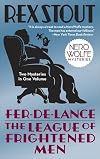
I first read a Nero Wolfe mystery when I was about 13 or 14, right at the height of my interest in classic detective fiction. Probably, because I normally stuck to British detectives, I picked up a Wolfe because my grandfather liked them and had a small boxed set of paperbacks on his shelf. He didn't keep many books in his house, so I can only guess that they were a gift - and/or he simply liked them a lot. Coming back to Rex Stout's famous sedentary sleuth a decade and a half later, I think show more there's a pretty good case to be made for the latter possibility. The joy of a Nero Wolfe mystery isn't actually the mystery; it's all in the interactions between Wolfe, the educated, upper-class armchair warrior, and his "extension," the hardboiled, ready-for-action Archie Goodwin. It doesn't take more than a few chapters to realize that the identity of a murderer, the location of a weapon or the revelation of an important clue is an entirely secondary concern to what Archie and Wolfe will have for lunch, how Wolfe will convey emotion through the slightest of physical movements, and crucially, the manner in which Archie chooses to colorfully phrase it. Knowing my granddad, I'm sure he found these books really, really funny, and extremely entertaining. I do, too.
In the last few years, Bantam has released five "2-in-1" trade paperbacks of selections from Stout's seventy-odd Wolfe novels and novella anthologies; going by the change in fonts and page numbers, these appear to be a cost-cutting method to rid them of unwanted stock. By luck more than design, it seems, the first of these "2-in-1"s collects the first two Nero Wolfe novels, Fer-de-Lance (1934) and The League of Frightened Men (1935).
Something told me I had read both of these books before, and I wasn't wrong; I've never had a memory for mystery solutions, though, so aside from a few familiar details they were essentially new to me all over again. I also had a small recollection that Frightened Men was the better of the two, and once more, that proved to be the case. Fer-de-Lance is, frankly, an absolutely typical murder mystery, without a whole lot of special interest; it's even got an almost arbitrary title, justified by a single comment from Archie toward the end of the book. Mostly, it's a good example of world-building, because even without making this "the first Nero Wolfe story" in narrative terms, Stout puts all of his energy behind his construction of Wolfe and Archie's existence: how they act, what they say, Wolfe's schedule, Archie's habits, the roles of regulars like Fred Durkin, Fritz Brenner and Saul Panzer, and (of course) many, many mealtimes. To become invested in Fer-de-Lance is to become invested in the reality of the brownstone on West 35th Street. As a "pilot," then, it works quite well, but it's not a particularly exceptional debut from the mystery standpoint, and Wolfe's dispensation of justice at the conclusion is even a little bit bizarre in its callousness.
The League of Frightened Men ups Stout's game considerably because it not only provides Wolfe with an excellent puzzle to solve, it gives him a great antagonist from the outset. This isn't a "whodunnit" but a "howdunnit," and perhaps more importantly, how are Wolfe and Archie going to stop him? The entire scenario allows Stout a great deal of opportunity for excellent character work on both sides of the equation, and I wouldn't be too surprised if he had a film adaptation in mind. Like the preceding novel, the technical aspect of the solution is a bit anticlimactic; this time, though, there is a marvelous verbal showdown between Wolfe and the focus of the book, Paul Chapin, that pretty much makes it worth the price of admission.
It's likely that these are neither the best Nero Wolfe novels nor the ones hardened enthusiasts would recommend to newcomers. I've read other reviews that suggest they are both "a little bit patchy" or that Stout is still "working out the kinks." Even without the experience of more than six or eight books in the series under my belt, I can see the validity of the criticism. That said, they are still great fun, highly flavorful, and at around 300 pages each, remarkably quick and addictive reads. Perfect reading for a rainy afternoon. show less
In the last few years, Bantam has released five "2-in-1" trade paperbacks of selections from Stout's seventy-odd Wolfe novels and novella anthologies; going by the change in fonts and page numbers, these appear to be a cost-cutting method to rid them of unwanted stock. By luck more than design, it seems, the first of these "2-in-1"s collects the first two Nero Wolfe novels, Fer-de-Lance (1934) and The League of Frightened Men (1935).
Something told me I had read both of these books before, and I wasn't wrong; I've never had a memory for mystery solutions, though, so aside from a few familiar details they were essentially new to me all over again. I also had a small recollection that Frightened Men was the better of the two, and once more, that proved to be the case. Fer-de-Lance is, frankly, an absolutely typical murder mystery, without a whole lot of special interest; it's even got an almost arbitrary title, justified by a single comment from Archie toward the end of the book. Mostly, it's a good example of world-building, because even without making this "the first Nero Wolfe story" in narrative terms, Stout puts all of his energy behind his construction of Wolfe and Archie's existence: how they act, what they say, Wolfe's schedule, Archie's habits, the roles of regulars like Fred Durkin, Fritz Brenner and Saul Panzer, and (of course) many, many mealtimes. To become invested in Fer-de-Lance is to become invested in the reality of the brownstone on West 35th Street. As a "pilot," then, it works quite well, but it's not a particularly exceptional debut from the mystery standpoint, and Wolfe's dispensation of justice at the conclusion is even a little bit bizarre in its callousness.
The League of Frightened Men ups Stout's game considerably because it not only provides Wolfe with an excellent puzzle to solve, it gives him a great antagonist from the outset. This isn't a "whodunnit" but a "howdunnit," and perhaps more importantly, how are Wolfe and Archie going to stop him? The entire scenario allows Stout a great deal of opportunity for excellent character work on both sides of the equation, and I wouldn't be too surprised if he had a film adaptation in mind. Like the preceding novel, the technical aspect of the solution is a bit anticlimactic; this time, though, there is a marvelous verbal showdown between Wolfe and the focus of the book, Paul Chapin, that pretty much makes it worth the price of admission.
It's likely that these are neither the best Nero Wolfe novels nor the ones hardened enthusiasts would recommend to newcomers. I've read other reviews that suggest they are both "a little bit patchy" or that Stout is still "working out the kinks." Even without the experience of more than six or eight books in the series under my belt, I can see the validity of the criticism. That said, they are still great fun, highly flavorful, and at around 300 pages each, remarkably quick and addictive reads. Perfect reading for a rainy afternoon. show less

There’s little to say about The Final Deduction as a mystery, save that it follows the conventions of the Golden Age. The suspects are numerous, the clues abundant, the violence offstage, and the motives straightforward. Nobody’s sister is also their daughter, and nobody is doing a drag act disguised as their dead mother. Rex Stout handles it all well – suspects, clues, motives, and detection – right down to the scene where Nero Wolfe, with sidekick Archie Goodwin and the reader show more looking on, Explains It All.
What sets Stout apart from the other Golden Age writers who also do it well is his bifurcation of the detective into two people. Wolfe is thought, Goodwin action, neither complete (or capable of solving the case) without the other. Their relationship is – to someone like me, who’s new to the series – engagingly weird: neither friends nor partners, but also not master and protégé or employer and employee. The closest analogue may be that of an aristocrat and his valet, which captures Wolfes’s languid certainty of his own centrality to the universe, and Arche’s intimate-yet-distant presence in his life. Their bickering and needling of one another, and Archie’s mordant asides to the reader about his employer, also suggest a couple who, after years of marriage, have neither secrets from or illusions about one another.
Stout’s join portrait of his two lead characters, combined with his richly detailed depiction of life in Manhattan at the dawn of the 1960s, helped to raise The Final Deduction out of the realm of “diverting, but not gripping” which is where Golden Age whodunits usually fall for me. It left me amenable to trying another of Wolfe and Archie’s long series of adventures sometime, but not inclined to immediately seek one of them out. show less
What sets Stout apart from the other Golden Age writers who also do it well is his bifurcation of the detective into two people. Wolfe is thought, Goodwin action, neither complete (or capable of solving the case) without the other. Their relationship is – to someone like me, who’s new to the series – engagingly weird: neither friends nor partners, but also not master and protégé or employer and employee. The closest analogue may be that of an aristocrat and his valet, which captures Wolfes’s languid certainty of his own centrality to the universe, and Arche’s intimate-yet-distant presence in his life. Their bickering and needling of one another, and Archie’s mordant asides to the reader about his employer, also suggest a couple who, after years of marriage, have neither secrets from or illusions about one another.
Stout’s join portrait of his two lead characters, combined with his richly detailed depiction of life in Manhattan at the dawn of the 1960s, helped to raise The Final Deduction out of the realm of “diverting, but not gripping” which is where Golden Age whodunits usually fall for me. It left me amenable to trying another of Wolfe and Archie’s long series of adventures sometime, but not inclined to immediately seek one of them out. show less
Lists
Witch Hunts (1)
Finished in 2019 (1)
1930s (1)
Favorite Series (1)
Awards


You May Also Like


Associated Authors
Statistics
- Works
- 374
- Also by
- 58
- Members
- 50,253
- Popularity
- #303
- Rating
- 4.0
- Reviews
- 1,158
- ISBNs
- 1,378
- Languages
- 20
- Favorited
- 193


