
Ellery Queen (1)
Author of The Roman Hat Mystery
For other authors named Ellery Queen, see the disambiguation page.
About the Author
Image credit: Frederic Dannay (left, one half of "Ellery Queen") with James Yaffe, World Telegram & Sun photo by Al Aumuller, 1943 (Library of Congress Prints and Photographs Division, LC-USZ62-126102)
Series
Works by Ellery Queen
101 Years' Entertainment: The Great Detective Stories 1841-1941 (1941) — Editor; Contributor — 111 copies, 1 review
Ellery Queen's Japanese Mystery Stories: From Japan's Greatest Detective and Crime Writers (1978) — Editor — 94 copies, 1 review
Masterpieces of Mystery : The Golden Age, Part 1 (1977) — Editor; Contributor — 73 copies, 2 reviews
The Hollywood Murders (The Devil to Pay, The Four of Hearts, The Origin of Evil) (2001) 69 copies, 2 reviews
The Ellery Queen Omnibus [The Adventures of Ellery Queen / The New Adventures of Ellery Queen] (1988) — Author — 40 copies
Ellery Queen's murdercade: 23 stories from Ellery Queen's mystery magazine (Mystery annual ; 29) (1975) — Editor — 25 copies
Ellery Queen's headliners; 20 stories from Ellery Queen's mystery magazine. (1972) — Editor — 15 copies
Ellery Queen Presents: The Case of the Murderer's Bride and Other Stories (1969) — Editor; Introduction — 14 copies
The Queen's Awards: Fifteenth Series — Editor — 10 copies
Ellery Queen's 13th Mystery Annual 6 copies
Ellery Queen's Boxed Set: Queens Full, And on the Eighth Day, Double, Double, and The Fourth Side of the Triangle (Ellery Queen Mysteries) (1976) 4 copies
Murder on the Orient Express / The Murderer Is a Fox [omnibus] — Author — 3 copies
Ellery Queen's Awards 3 copies
Ellery Queen Casebook - Last Man To Die, Three Widows, Snowball In July, Miracles Do Happen, Abraham Lincoln's Clue (1977) 2 copies
5 misteri per Ellery Queen: Sorpresa a mezzogiorno, Il mistero delle croci egizie, Sotto la campana di vetro, La lampada di Dio, Colpo di grazia (1977) 2 copies
Ellery Queen kriminalmagasin 23 2 copies
Ellery Queen the Fourth Side of the Triangle,queens Full, and on the Eighth Day Double,double (BOXED SET PAPERBACK) (1950) 1 copy
Un te' da pazzi — Author — 1 copy
ellery queen presenteert 4 1 copy
ellery queen presenteert 1 1 copy
ellery queen presenteert 3 1 copy
ellery queen presenteert 6 1 copy
ellery queen presenteert 2 1 copy
Ellery Queen Presents Custer's Ghost, Labyrinth of Life, Breaking Free and a Bagdad Reckoning (1987) 1 copy
Ellery Queen e l'accusato 1 copy
Ellery Queen 2 - Special 50th Anniversary Editions (Halfway House, The Roman Hat Mystery) (1971) 1 copy
Ellery Queen Presents the Vanished Steamboat, Playlover for Me, Brothers on the Beach and the Fifth Grave (1987) 1 copy, 1 review
Lo mejor de Ellery Queen 1 copy
Associated Works
Great Detectives: A Century of the Best Mysteries from England and America (1984) — Contributor — 406 copies, 4 reviews
Ellery Queen's Mystery Magazine - Australian Edition No 137 - Nov 1958 (1958) — Contributor — 1 copy
Ellery Queen's Mystery Magazine - 1958/08 — Contributor — 1 copy
Tagged
Common Knowledge
- Canonical name
- Queen, Ellery
- Other names
- Queen, Ellery
Ross, Barnaby - Birthdate
- 1905-10-20 (Frederic Dannay)
1905-01-11 (Manfred Bennington Lee) - Date of death
- 1982-09-03 (Frederic Dannay)
1971-04-03 (Manfred Bennington Lee) - Gender
- n/a
- Awards and honors
- MWA Grand Master (1961)
- Short biography
- Pseudonym of the American authors and cousins Manfred B. Lee & Frederic Dannay.
- Nationality
- USA
- Associated Place (for map)
- USA
Members
Discussions
Found: Murder mystery on a Mountain in Name that Book (January 2024)
Reviews
I won't even try to sum up the plot because there are so many elements and twists that it's bananas. But bananas in a really good way. I loved how complex the mystery was, the large cast of characters, and I thought I knew the solution just as many ties as the detectives did. Plus, Ellery Queen is an absolute hoot. He's like Sherlock Holmes' bratty-but-charming kid brother. This was my first of his mysteries but it won't be my last.
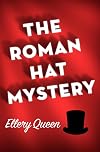
A Dud of a Series Start
A review of the Mysterious Press/Open Road eBook edition (October 11, 2013) of the original Frederick A. Stokes hardcover (June 7, 1929).
This was the first Ellery Queen novel. I decided to read this after enjoying The Adventures of Ellery Queen (1934) which was a collection of short stories mostly written for magazines in 1933-34. Much of the enjoyment in the EQ short stories came from the allusions and homage to Arthur Conan Doyle and his Sherlock Holmes / Dr. Watson show more detective duo. This first novel though was a chore to get through and contains some disturbing issues for readers a century later.
The pacing here is at a snail's pace, with the investigators going around in circles for the longest time. Shockingly, the Kindle edition I read is listed at 648 pages on GR, although the page count on my device comes in at 619 pages (the later pages being just advertising for other EQ books). Regardless, it is a crawl to get through most of it.
See image at https://images-na.ssl-images-amazon.com/images/S/compressed.photo.goodreads.com/...;
The cover of the original Frederick A. Stokes hardcover (1929). Image sourced from Goodreads.
This is the debut of NYC Police Inspector Richard Queen and his detective son Ellery Queen. You can expect some initial fumbling in a freshman effort, but often the action and dialogue reads very cringey. The elder Queen is rather stolid and constantly partakes in snuff after which he sneezes "his habitual joyful sneeze." The younger Queen lurks around the crime scene with his pince-nez glasses, smoking cigarets (sic) and makes "witty" asides which often make reference to classical literature, as if he is above it all. The elder is the main character but it is left to the younger to make the breakthrough deductions which help solve the case.
More disturbing though is the introduction of their "houseboy" Djuna, a character whose exact ethnic origins are not detailed but who is presumably of African or Middle Eastern origin based on the name. This character does the housework and cooking for the Queens at their NYC apartment. What is shocking is that Djuna apparently regularly sits or curls up on the floor in the corner of the apartment ("his favorite attitude"), and is referred to as an "imp" a "monkey" and "a rascal" by others. The elder Queen at one point strokes the hair of Djuna, when the latter reclines on the floor by his lap. It is as if the character is treated as a house pet.
The above scenes are short and are a distraction from the case itself, which involves a poisoning murder which occurs during a theatrical show at the Roman Theater in NYC. The victim is a well-known criminal attorney who serves rather unsavory clientele. The major clue in the case is that the victim was dressed in evening formal wear including a top hat. However, the hat has disappeared from the scene when the victim's body is found in his theater seat. The eventual resolution of the case introduces a racist element as well when a character who was "passing" is revealed.
The dated references and treatments are brief, but disturbing nevertheless. What dooms the book from being an enjoyable read is the glacial pacing. The combination means that this doesn't rise to a GR 3 "Like" or even a GR 2 "OK." It becomes a GR 1 "Did Not Like."
Trivia and Links
It is not often that you can get a Rembrandt image into a book review, so I couldn't resist including this. At one point EQ refers to the Aramaic saying mene mene tekel upharsin written on the wall during Belshazzar's Feast in Daniel 5:25-28. Our modern day saying of "the writing's on the wall" alluding to a forecasted ending comes from this reference.
See the painting at https://upload.wikimedia.org/wikipedia/commons/thumb/0/0e/Rembrandt-Belsazar.jpg...
Rembrandt's painting "Belshazzar's Feast" (c1635-1638). Image sourced from Wikipedia.
The fictional detective Ellery Queen was both the story protagonist and the writing pseudonym of cousins Frederic Dannay (1905-1982) and Manfred B. Lee (1905-1971). They wrote over 40 novels and short story collections under that name. After Lee's passing in 1971, Dannay retired from writing the series. The series has been adapted several times for radio and television. A mystery stories magazine in the same name was founded in 1941 and continues to this day as the bi-monthly Ellery Queen Mystery Magazine.
There is an Ellery Queen specialist site which provides extended information about the editions of The Roman Hat Mystery and includes some detailed story discussions (Note: Some spoilers included). You can read it at Queen.Spaceports.com. show less
A review of the Mysterious Press/Open Road eBook edition (October 11, 2013) of the original Frederick A. Stokes hardcover (June 7, 1929).
This was the first Ellery Queen novel. I decided to read this after enjoying The Adventures of Ellery Queen (1934) which was a collection of short stories mostly written for magazines in 1933-34. Much of the enjoyment in the EQ short stories came from the allusions and homage to Arthur Conan Doyle and his Sherlock Holmes / Dr. Watson show more detective duo. This first novel though was a chore to get through and contains some disturbing issues for readers a century later.
The pacing here is at a snail's pace, with the investigators going around in circles for the longest time. Shockingly, the Kindle edition I read is listed at 648 pages on GR, although the page count on my device comes in at 619 pages (the later pages being just advertising for other EQ books). Regardless, it is a crawl to get through most of it.
See image at https://images-na.ssl-images-amazon.com/images/S/compressed.photo.goodreads.com/...;
The cover of the original Frederick A. Stokes hardcover (1929). Image sourced from Goodreads.
This is the debut of NYC Police Inspector Richard Queen and his detective son Ellery Queen. You can expect some initial fumbling in a freshman effort, but often the action and dialogue reads very cringey. The elder Queen is rather stolid and constantly partakes in snuff after which he sneezes "his habitual joyful sneeze." The younger Queen lurks around the crime scene with his pince-nez glasses, smoking cigarets (sic) and makes "witty" asides which often make reference to classical literature, as if he is above it all. The elder is the main character but it is left to the younger to make the breakthrough deductions which help solve the case.
More disturbing though is the introduction of their "houseboy" Djuna, a character whose exact ethnic origins are not detailed but who is presumably of African or Middle Eastern origin based on the name. This character does the housework and cooking for the Queens at their NYC apartment. What is shocking is that Djuna apparently regularly sits or curls up on the floor in the corner of the apartment ("his favorite attitude"), and is referred to as an "imp" a "monkey" and "a rascal" by others. The elder Queen at one point strokes the hair of Djuna, when the latter reclines on the floor by his lap. It is as if the character is treated as a house pet.
The above scenes are short and are a distraction from the case itself, which involves a poisoning murder which occurs during a theatrical show at the Roman Theater in NYC. The victim is a well-known criminal attorney who serves rather unsavory clientele. The major clue in the case is that the victim was dressed in evening formal wear including a top hat. However, the hat has disappeared from the scene when the victim's body is found in his theater seat. The eventual resolution of the case introduces a racist element as well when a character who was "passing" is revealed.
The dated references and treatments are brief, but disturbing nevertheless. What dooms the book from being an enjoyable read is the glacial pacing. The combination means that this doesn't rise to a GR 3 "Like" or even a GR 2 "OK." It becomes a GR 1 "Did Not Like."
Trivia and Links
It is not often that you can get a Rembrandt image into a book review, so I couldn't resist including this. At one point EQ refers to the Aramaic saying mene mene tekel upharsin written on the wall during Belshazzar's Feast in Daniel 5:25-28. Our modern day saying of "the writing's on the wall" alluding to a forecasted ending comes from this reference.
See the painting at https://upload.wikimedia.org/wikipedia/commons/thumb/0/0e/Rembrandt-Belsazar.jpg...
Rembrandt's painting "Belshazzar's Feast" (c1635-1638). Image sourced from Wikipedia.
The fictional detective Ellery Queen was both the story protagonist and the writing pseudonym of cousins Frederic Dannay (1905-1982) and Manfred B. Lee (1905-1971). They wrote over 40 novels and short story collections under that name. After Lee's passing in 1971, Dannay retired from writing the series. The series has been adapted several times for radio and television. A mystery stories magazine in the same name was founded in 1941 and continues to this day as the bi-monthly Ellery Queen Mystery Magazine.
There is an Ellery Queen specialist site which provides extended information about the editions of The Roman Hat Mystery and includes some detailed story discussions (Note: Some spoilers included). You can read it at Queen.Spaceports.com. show less

While the book is very much a product of its time- i.e., 1954 small-town America, the red scare, etc.- it's also highly entertaining. Though it's an Ellery Queen book, neither Ellery or his father (Inspector Queen) are present. Instead we get to watch Judge Shinn and a war vet named Johnny try to unravel the truth behind the murder of a local artist. After a battle between a local mob and the state police over the fate of a transient accused of the killing, the judge hatches a plan to show more conduct a phony trial in order to avoid a lynching and get the accused killer out of town (and on to a fair trial).
And this is where the story gets good. In an abrupt change of tone (from the violent and suspenseful first half), a healthy dose of humor infuses the sham trial, as one rule of trial procedure after another gets steamrolled in an effort to buy more time for the accused. The trial's explosive finish, the ensuing chase, and the final solution keep the story moving to a satisfying conclusion.
Some readers dislike all the sermonizing about the "goodness" of small-town American folk, etc., but if you take the story for what it is, it's highly entertaining. show less
And this is where the story gets good. In an abrupt change of tone (from the violent and suspenseful first half), a healthy dose of humor infuses the sham trial, as one rule of trial procedure after another gets steamrolled in an effort to buy more time for the accused. The trial's explosive finish, the ensuing chase, and the final solution keep the story moving to a satisfying conclusion.
Some readers dislike all the sermonizing about the "goodness" of small-town American folk, etc., but if you take the story for what it is, it's highly entertaining. show less
Consumed Ellery Queen novels as a teen but haven’t picked one up in decades. I remembered them as rather dry and inauthentic, but now, with the wisdom of life experience, I’m discovering (rediscovering) some unexpected charms.
In this outing, Queen is called in by an old acquaintance, Howard, to investigate what Howard’s getting up to during increasingly frequent bouts of amnesia. Queen follows Howard back to his hometown of Wrightsville, where he meets Howard’s larger-than-life show more father Diedrich Van Horn and becomes embroiled in a plot involving adultery, blackmail, and (eventually) murder. The story moves at a leisurely but engaging pace, substituting characterization for interminable suspect interviews, inventive prose for mounting body counts. (Say what you will about their pulpy antecedents, those 1950s mystery authors – Chandler, Sayers, Highsmith – knew how to wordsmith.)
One issue I remember having with the stories is the blandness of the detective Ellery Queen, the series’ unrealistically exceptional protagonist. He’s a detective inspector, a writer, brilliant, learned, aristocratic, AND uses his exceptional insights into psychology to solve crimes! But after decades of being besieged by gimmicky detectives – detectives that cook! detectives that are famous historical personages! detectives that solve crimes with their cats! – admit it was refreshing to return to an era where mystery novels were about the novelty of the mystery rather than the novelty of the sleuth.
Which leads me to the plot, which was undeniably uncomplicated and preposterous. No actual human villain would implement a plot this convoluted and melodramatic! But it’s not like mystery novels have become *less* preposterous over the ensuing decades, and it turns out I’ve kind of missed the gimmicky plots of the 1950s where criminals organized their crimes around nursery rhymes and authors kept busy inventing new ways to commit murders in locked rooms. This one delivers not just one but *three* gimmicks: a crime with a Biblical twist, a double-twist ending, and a villain so brilliant, he even manages to bamboozle the great Ellery Queen, causing Queen to vow: “You’ve made it impossible for me to go on. I’m finished. I can never take another case.” (Did I just randomly end up reading Queen’s last case? I somehow doubt it!)
One thing I wasn’t looking for and didn’t expect was the enjoyment I derived from Queen’s elaborate descriptions of 1948s rural Wrightville, which are so spot-on, they feel a bit like time travel! In many ways, Wrightville ends up being the most authentic character in the novel, showcasing Queen’s lesser-indulged gifts for atmosphere, characterization, and social commentary. The icing on top of this satisfying cupcake of a story. show less
In this outing, Queen is called in by an old acquaintance, Howard, to investigate what Howard’s getting up to during increasingly frequent bouts of amnesia. Queen follows Howard back to his hometown of Wrightsville, where he meets Howard’s larger-than-life show more father Diedrich Van Horn and becomes embroiled in a plot involving adultery, blackmail, and (eventually) murder. The story moves at a leisurely but engaging pace, substituting characterization for interminable suspect interviews, inventive prose for mounting body counts. (Say what you will about their pulpy antecedents, those 1950s mystery authors – Chandler, Sayers, Highsmith – knew how to wordsmith.)
One issue I remember having with the stories is the blandness of the detective Ellery Queen, the series’ unrealistically exceptional protagonist. He’s a detective inspector, a writer, brilliant, learned, aristocratic, AND uses his exceptional insights into psychology to solve crimes! But after decades of being besieged by gimmicky detectives – detectives that cook! detectives that are famous historical personages! detectives that solve crimes with their cats! – admit it was refreshing to return to an era where mystery novels were about the novelty of the mystery rather than the novelty of the sleuth.
Which leads me to the plot, which was undeniably uncomplicated and preposterous. No actual human villain would implement a plot this convoluted and melodramatic! But it’s not like mystery novels have become *less* preposterous over the ensuing decades, and it turns out I’ve kind of missed the gimmicky plots of the 1950s where criminals organized their crimes around nursery rhymes and authors kept busy inventing new ways to commit murders in locked rooms. This one delivers not just one but *three* gimmicks: a crime with a Biblical twist, a double-twist ending, and a villain so brilliant, he even manages to bamboozle the great Ellery Queen, causing Queen to vow: “You’ve made it impossible for me to go on. I’m finished. I can never take another case.” (Did I just randomly end up reading Queen’s last case? I somehow doubt it!)
One thing I wasn’t looking for and didn’t expect was the enjoyment I derived from Queen’s elaborate descriptions of 1948s rural Wrightville, which are so spot-on, they feel a bit like time travel! In many ways, Wrightville ends up being the most authentic character in the novel, showcasing Queen’s lesser-indulged gifts for atmosphere, characterization, and social commentary. The icing on top of this satisfying cupcake of a story. show less
Lists
To read (1)
Awards


You May Also Like


Associated Authors
Statistics
- Works
- 284
- Also by
- 19
- Members
- 14,562
- Popularity
- #1,577
- Rating
- 3.6
- Reviews
- 285
- ISBNs
- 1,413
- Languages
- 20
- Favorited
- 2