
Daniel Pool
Author of What Jane Austen Ate and Charles Dickens Knew
About the Author
Works by Daniel Pool
Dickens' Fur Coat and Charlotte's Unanswered Letters: The Rows and Romances of England's Great Victorian Novelists (1997) 391 copies, 2 reviews
Tagged
Common Knowledge
- Birthdate
- 1948
- Gender
- male
- Education
- Brandeis University (PhD)
Columbia Law School (JD) - Occupations
- lawyer
- Nationality
- USA
- Places of residence
- New York, New York, USA
- Map Location
- USA
Members
Reviews
What Jane Austen Ate and Charles Dickens Knew: From Fox Hunting to Whist-The Facts of Daily Life in Nineteenth-Century E by Daniel Pool
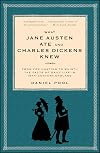
Delightful; a sort of a time-traveling tourist’s guide to 19th-century England with specific focus on various terms that turn up in period literature. I used to consider myself fairly knowledgeable here, but I confess on reading this that a lot of my assumptions on the way things worked were just plain wrong.
The book has two sections; the first three-quarters or so are chapters on each aspect of 19th century life - etiquette and social graces, transportation (around the country, not to show more Australia - that comes under “Crime”), the Church, personal life (courtship, marriage, and “a taxonomy of maids”), and how to be an orphan, get sick, and die. The remaining quarter is a extensive glossary, with many words explained that I only thought I knew the meaning of (“paraphernalia”, for example).
Essential if you want to know:
* Who goes into dinner first, a duke or an archbishop?
* The difference between nurse maids, parlor maids, ladies maids, scullery maids, house maids, kitchen maids, maids of all work, dairy maids and charwomen.
* The difference between a Nonconformist and a Dissenter.
* How to tell a groom from a footman.
* The correct classification of rectors, vicars, deans, canons, prebendaries, vergers and other churchmen.
* How to get a handle on the immense variety and subtle differences in horse-drawn vehicles: curricles, berlins, barouches, landaus, stanhopes, gigs, victorias, phaetons, diligences, etc.
There are lots of curious little facts. I was impressed to find that 16% of the national work force, even in 1891 when various labor-saving devices were starting to come into use, was “in service”. I suppose various pundits of the time must have reflected on the decline of service positions and wondered where all the dispossessed butlers and footmen were going to find jobs. Similarly, it’s amusing to find that there was always a reason to resist any technological advance on religious or social grounds (although not quoted in this book, the Duke of Wellington reportedly was opposed to railroads because “they would encourage the lower orders to move about”). The fanatical delicacy about being “in trade” is also pretty funny; a barrister’s wife could be presented at court while a solicitor’s could not. This was because you paid a solicitor to engage a barrister; the barrister did not take your money directly, instead receiving a “gift” from the solicitor, and thus was not “in trade”. If you think the law is slow now, it’s worthwhile to consider the Jennings case (the basis for Jarndyce versus Jarndyce in Bleak House). The case was over the will of a man who died in 1798 - it was settled in 1915 (after soaking up £250K in court costs). Life was grim for orphans; only one third of the prostitutes in London had both parents living. And, for those who claim that global warming will inflict topical diseases on us, malaria and yellow fever were both endemic in England until widespread swamp drainage in the middle of the century (although yellow fever was normally confined to ports; presumable the mosquito carrier was unable to overwinter).
Recommended, even if you were forced to read Far From The Madding Crowd in high school and swore never to touch Thomas Hardy again. show less
The book has two sections; the first three-quarters or so are chapters on each aspect of 19th century life - etiquette and social graces, transportation (around the country, not to show more Australia - that comes under “Crime”), the Church, personal life (courtship, marriage, and “a taxonomy of maids”), and how to be an orphan, get sick, and die. The remaining quarter is a extensive glossary, with many words explained that I only thought I knew the meaning of (“paraphernalia”, for example).
Essential if you want to know:
* Who goes into dinner first, a duke or an archbishop?
* The difference between nurse maids, parlor maids, ladies maids, scullery maids, house maids, kitchen maids, maids of all work, dairy maids and charwomen.
* The difference between a Nonconformist and a Dissenter.
* How to tell a groom from a footman.
* The correct classification of rectors, vicars, deans, canons, prebendaries, vergers and other churchmen.
* How to get a handle on the immense variety and subtle differences in horse-drawn vehicles: curricles, berlins, barouches, landaus, stanhopes, gigs, victorias, phaetons, diligences, etc.
There are lots of curious little facts. I was impressed to find that 16% of the national work force, even in 1891 when various labor-saving devices were starting to come into use, was “in service”. I suppose various pundits of the time must have reflected on the decline of service positions and wondered where all the dispossessed butlers and footmen were going to find jobs. Similarly, it’s amusing to find that there was always a reason to resist any technological advance on religious or social grounds (although not quoted in this book, the Duke of Wellington reportedly was opposed to railroads because “they would encourage the lower orders to move about”). The fanatical delicacy about being “in trade” is also pretty funny; a barrister’s wife could be presented at court while a solicitor’s could not. This was because you paid a solicitor to engage a barrister; the barrister did not take your money directly, instead receiving a “gift” from the solicitor, and thus was not “in trade”. If you think the law is slow now, it’s worthwhile to consider the Jennings case (the basis for Jarndyce versus Jarndyce in Bleak House). The case was over the will of a man who died in 1798 - it was settled in 1915 (after soaking up £250K in court costs). Life was grim for orphans; only one third of the prostitutes in London had both parents living. And, for those who claim that global warming will inflict topical diseases on us, malaria and yellow fever were both endemic in England until widespread swamp drainage in the middle of the century (although yellow fever was normally confined to ports; presumable the mosquito carrier was unable to overwinter).
Recommended, even if you were forced to read Far From The Madding Crowd in high school and swore never to touch Thomas Hardy again. show less
Dickens' Fur Coat and Charlotte's Unanswered Letters: The Rows and Romances of England's Great Victorian Novelists by Daniel Pool
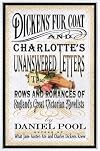
I had thought, judging from the title and dust jacket description, that this would just be a book of juicy, entertaining gossip about Victorian novelists. Well, certainly there was a lot of that in there -- did you know William Thackeray had a crazy wife he had to keep locked up? -- but this book is ever so much more than that.
It covers the development of the Victorian novel and the publishing industry over the 19th century. In the early 1800s, public libraries in England were nonexistent. show more Books were so rare and expensive that only wealthy people actually owned them and instead they were rented from circulating libraries (sort of like Blockbuster for books). The circulating libraries were very powerful and had an iron grip on the publishing industry. By the end of the century, books had become cheap and were sold at railroad stalls, and everyone was reading them. And it was a long, sometimes dramatic ride in between.
I learned a great deal more from this book than I had expected to. I feel richer for having read it. show less
It covers the development of the Victorian novel and the publishing industry over the 19th century. In the early 1800s, public libraries in England were nonexistent. show more Books were so rare and expensive that only wealthy people actually owned them and instead they were rented from circulating libraries (sort of like Blockbuster for books). The circulating libraries were very powerful and had an iron grip on the publishing industry. By the end of the century, books had become cheap and were sold at railroad stalls, and everyone was reading them. And it was a long, sometimes dramatic ride in between.
I learned a great deal more from this book than I had expected to. I feel richer for having read it. show less
What Jane Austen Ate and Charles Dickens Knew: From Fox Hunting to Whist -- The Facts of Daily Life in Nineteenth-Century England by Daniel Pool

This is one of those books you can open anywhere and get caught up in whatever the subject happens to be. If you're a fan of Victorian England, you'll be surprised to know the real story behind the country houses, servants, juicy sex lives, and other stuff that made up the lives of 19th century Britons.
What Jane Austen Ate and Charles Dickens Knew: From Fox Hunting to Whist - the Facts of Daily Life in Nineteenth-Century England by Daniel Pool

Lost in Austen? Defeated by Dickens? Troubled by Trollope? Then this could be the book for you!
Daniel Pool has written an accessible and entertaining guide to 19th century life in England covering both the Regency and Victorian periods. Although aimed at American readers, life in 19th century England was sufficiently different from life in 21st century England to make this a useful book for a native British person to read. The second half of the book is a 100 page glossary which would be a show more useful aide to refer to whilst reading.
What makes this book particularly interesting to a lover of 19th century British literature is that Pool often uses quotes or refers to passages in those well-known 19th century books to illustrate his explanations. Of course, this had the effect of either making me want to reread my favourite 19th century authors or investigate new ones - so be warned!
The only thing that stopped me from giving this book five stars was that I would have preferred a longer book with more information and pictures/diagrams. This book serves as a good introduction to the subject but left me wanting to know more and there were several areas where I felt the subjects discussed could have been much more easily explained using pictures. On the subject of carriages, for example, which are often mentioned in Austen's book, Pool runs through a list of the different coaches and carriages in use and the social status implied with each vehicle. But none of his explanation stayed in my head; the carriages all had fairly similar names and the descriptions given weren't enough to let me picture them in my head. A page of drawings illustrating the different types of carriages would have made all the difference. Similarly for the subject of dress in the 19th century. Would it have been all that difficult to include some pictures of the typical costumes worn by men and women during the 19th century?
But overall this was an enjoyable and informative read. It just needed a little bit more to make it truly exceptional. show less
Daniel Pool has written an accessible and entertaining guide to 19th century life in England covering both the Regency and Victorian periods. Although aimed at American readers, life in 19th century England was sufficiently different from life in 21st century England to make this a useful book for a native British person to read. The second half of the book is a 100 page glossary which would be a show more useful aide to refer to whilst reading.
What makes this book particularly interesting to a lover of 19th century British literature is that Pool often uses quotes or refers to passages in those well-known 19th century books to illustrate his explanations. Of course, this had the effect of either making me want to reread my favourite 19th century authors or investigate new ones - so be warned!
The only thing that stopped me from giving this book five stars was that I would have preferred a longer book with more information and pictures/diagrams. This book serves as a good introduction to the subject but left me wanting to know more and there were several areas where I felt the subjects discussed could have been much more easily explained using pictures. On the subject of carriages, for example, which are often mentioned in Austen's book, Pool runs through a list of the different coaches and carriages in use and the social status implied with each vehicle. But none of his explanation stayed in my head; the carriages all had fairly similar names and the descriptions given weren't enough to let me picture them in my head. A page of drawings illustrating the different types of carriages would have made all the difference. Similarly for the subject of dress in the 19th century. Would it have been all that difficult to include some pictures of the typical costumes worn by men and women during the 19th century?
But overall this was an enjoyable and informative read. It just needed a little bit more to make it truly exceptional. show less
Lists
You May Also Like


Statistics
- Works
- 3
- Members
- 3,616
- Popularity
- #7,001
- Rating
- 3.8
- Reviews
- 52
- ISBNs
- 9