
Venetia Murray (1932–2004)
Author of High Society in Regency Period, 1788-1830
About the Author
Works by Venetia Murray
Tagged
Common Knowledge
- Other names
- Alexander, Venetia Murray (married)
- Birthdate
- 1932-01-03
- Date of death
- 2004-09-26
- Gender
- female
- Education
- St. Paul's Girls' School
- Occupations
- writer
journalist
social historian - Relationships
- Murray, Gilbert (grandfather)
Paludan, Ann (sister)
Murray, Basil (father)
Mitford, Nancy (cousin)
Toynbee, Philip (cousin) - Short biography
- Venetia Murray was a daughter of British journalist and politician Basil Murray, and a granddaughter of classical scholar Gilbert Murray. Her sister Ann Paludan became a Chinese scholar and author. Venetia was educated at St. Paul's Girls' School in London and was introduced to society as a debutante with help from her cousin Nancy Mitford. In the 1950s, she moved to Bargemon in Provence, France, a tiny village where she was the only Englishwoman for many years. She suffered from alcoholism for 10 years but recovered to resume her career as a writer with the success of her books An Elegant Madness: High Society In Regency England (1999), Echoes of the East End (1989), Where Have All the Cowslips Gone? (1993), and Castle Howard: The Life And Times of a Stately Home (1994). Venetia spent her last years between Horningsham at Longleat and the village of Gaucin in Andalusia, Spain, where she entertained her many friends with zest and generosity. She was married three times and had two children.
- Nationality
- UK
- Places of residence
- Bargemon, Provence, France
Andalusia, Spain
Oxford, Oxfordshire, England, UK
Wiltshire, England, UK - Associated Place (for map)
- UK
Members
Reviews
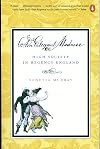
Regency England was a time period that technically lasted from 1811-1820 and which you might recognize as the setting of the genre known as “regency romances”. An Elegant Madness is an impressively thorough discussion of the time period, with chapters on everything from clothes to dinners, to society and scandalous sex lives. Although the author’s tone is fairly scholarly and dry, the topics and first hand accounts make for some fascinating reading.
The author’s research was clearly show more extensive and I loved all the snippets of letters she shared. I also appreciated the in-text citations, which are always useful for distinguishing fact from speculation. On the other hand, the author’s writing style was somewhat dry and the chapters occasionally felt like a collection of loosely connected anecdotes. The random, untranslated bits of French were also somewhat distracting. Fortunately, one thing saved the book from being too scholarly and hard to follow. Through the anecdotes chosen, the author does an amazing job conveying the feel of the fascinating society that was Regency England.
I would honestly recommend this book to anyone with some interest in history. The time period includes much upheaval and many contradictions, so it contains a variety of aspects that could appeal to many different kinds of readers. There was chivalry and romance, high society and balls and duels. There were crazy sexual escapades and and fabulous feasts and grandiose entertainments. And the author does a great job covering all of these aspects of Regency England with smoothly integrated quotes and superb commentary. I doubt anyone could read this book without at least a momentary desire to experience life as a member of high society in Regency England.
This review first published on Doing Dewey. show less
The author’s research was clearly show more extensive and I loved all the snippets of letters she shared. I also appreciated the in-text citations, which are always useful for distinguishing fact from speculation. On the other hand, the author’s writing style was somewhat dry and the chapters occasionally felt like a collection of loosely connected anecdotes. The random, untranslated bits of French were also somewhat distracting. Fortunately, one thing saved the book from being too scholarly and hard to follow. Through the anecdotes chosen, the author does an amazing job conveying the feel of the fascinating society that was Regency England.
I would honestly recommend this book to anyone with some interest in history. The time period includes much upheaval and many contradictions, so it contains a variety of aspects that could appeal to many different kinds of readers. There was chivalry and romance, high society and balls and duels. There were crazy sexual escapades and and fabulous feasts and grandiose entertainments. And the author does a great job covering all of these aspects of Regency England with smoothly integrated quotes and superb commentary. I doubt anyone could read this book without at least a momentary desire to experience life as a member of high society in Regency England.
This review first published on Doing Dewey. show less
This book is a terribly amusing trip through high society England at a high-water mark: the Regency, in which George III was feeling a little out of it (by which I mean he was talking to trees), and so his opium-drenched, gastronormous son kept the throne warm. It doesn't talk about the royal family so much as it does about society of the time. Believe it or not, it was a relatively open, licentious time, and the Victorian era which followed was in part a reaction against the wicked rakes show more and dandies that had come before. Murray fills the book with wonderful anecdotes (the best way to write about history, I think) involving country house living, the London season, Mistresses and Rakes, spendthrifts, eccentric characters, bizarre traditions and manners, and more. This is one of the few books that has tempted me to read the bibliography to see if I could get my hands on the sources for this book. It has, though, been criticized for a variety of minor errors: listing the wrong name on the wrong occasion, misidentifying a date, etc. But since the book is largely anecdotal, it seems to me that this is of less consequence than if it were a straight "In 1802 X happened. The factors involved were A and B, and possibly C." Instead, the book is arranged by topics. Probably not the best book for general use, but for anyone who enjoys reading stories about/from this era, knock yourself out. Also has a great little section on Jane Austen and how she dedicated one of her books to the Prince Regent himself. show less
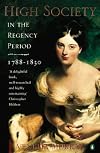
This is a wonderful resource for someone looking to find out the basics about the reality of life in the Regency period and should be required reading for many authors who write about the period. She goes into detail about the food, the fashions, the people and the habits and how it differed from previous and later generations. It's told in an engaging way with chapters concentrating on particular issues. Much of the information is taken from contemporary sources and it's got a pretty show more comprehensive bibliography, there are both footnotes and endnotes (which I actually like in a book).
Worth a read if you're interested in the period. show less
Worth a read if you're interested in the period. show less
If you are like me and your main impression of the Regency Era was based on just the snippets of the works of Jane Austin you had been partially exposed to over the years you will be quite surprised to find out that this time period was not as staid, reserved and restrictive as it seemed, I had always had the impression it wasn't that much different than the Victorian Era. And boy was I wrong.
This was a very dynamic and chaotic time of near constant change and flux.
And yet this book shows show more how elements and inventions from this time period have influenced our world to this day.
The authors style is very light and humorous making the book very accessible to even casual history fans, but it is also very informative and her knowledge base is quite vast.
My only quibble with this book was the use of illustrations. I feel the author used far to many cartoons satirizing the social and political scene vs. more realistic illustrations that would have made what she was writing about seem more real. After awhile I didn't even bother to look at them any more. show less
This was a very dynamic and chaotic time of near constant change and flux.
And yet this book shows show more how elements and inventions from this time period have influenced our world to this day.
The authors style is very light and humorous making the book very accessible to even casual history fans, but it is also very informative and her knowledge base is quite vast.
My only quibble with this book was the use of illustrations. I feel the author used far to many cartoons satirizing the social and political scene vs. more realistic illustrations that would have made what she was writing about seem more real. After awhile I didn't even bother to look at them any more. show less
You May Also Like


Statistics
- Works
- 10
- Members
- 678
- Popularity
- #37,271
- Rating
- 3.7
- Reviews
- 9
- ISBNs
- 14