
Charles Reznikoff (1894–1976)
Author of Testimony : The United States, 1885-1915 : recitative
About the Author
Works by Charles Reznikoff
Louis Marshall: Champion of Liberty - Selected Papers and Addresses (Two Volume Set) (1957) — Editor — 19 copies
Louis Marshall: Champion of Liberty - Selected Papers and Addresses, Volume 1 — Editor — 6 copies
Louis Marshall: Champion of Liberty - Selected Papers and Addresses, Volume 2 — Editor — 5 copies
Inscriptions: 1944-1956 5 copies
Five Groups of Verse 5 copies
Complete Poems Vol. 1 3 copies
Nine Plays 2 copies
Jerusalem the golden 2 copies
Co robisz na naszej ulicy 1 copy
Graffiti 1 copy
Associated Works
World Poetry: An Anthology of Verse from Antiquity to Our Time (1998) — Contributor — 499 copies, 2 reviews
American Poetry: The Twentieth Century, Volume Two: E. E. Cummings to May Swenson (2000) — Contributor — 444 copies, 1 review
The Jewish caravan : great stories of twenty-five centuries (1965) — Contributor, some editions — 141 copies
The Heath Anthology of American Literature, Concise Edition (2003) — Contributor — 73 copies, 1 review
The Serpent and the Fire: Poetries of the Americas from Origins to Present (2024) — Contributor — 18 copies
Epitaphs for Lorine — Contributor — 6 copies
Montemora No. 1 — Contributor — 2 copies
Tagged
Common Knowledge
- Birthdate
- 1894-08-31
- Date of death
- 1976-01-22
- Gender
- male
- Education
- New York University
- Occupations
- poet
- Awards and honors
- Morton Dauwen Zabel Prize (1971)
- Relationships
- Syrkin, Marie (wife)
- Nationality
- USA
- Places of residence
- Brooklyn, New York, USA
- Associated Place (for map)
- New York, USA
Members
Reviews
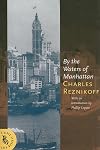
Lionel Trilling called this short novel "the first story of the Jewish immigrant that is not false". I'm not sure what he meant by that, or what other stories he was comparing it to, but "realism" is definitely an appropriate category to place it in. It is a totally unsentimental tale, in two distinct parts, of a family of Russian Jews both in the Old Country, and in the Manhattan of the late 19th century. We meet Sarah Yetta as a young girl in the village of Elizavetgrad, in what is now show more central Ukraine. She yearns to go to school like her older brother, but must stay home to help her mother as the family grows year by year. Nevertheless, Sarah Yetta reads and learns as much as she can. The family’s fortunes rise and fall--they move house many times, sometimes for the better, often not. As Sarah Yetta grows older, she meets and rejects a number of suitors, and begins to urge her widowed mother to emigrate to America. Mama will not even consider it, so eventually Sarah Yetta borrows money from an uncle, and makes the trip on her own, taking up life as a seamstress in Brooklyn where she moves between jobs and homes as often as her parents had done in Russia. This first part of Reznikoff’s novel reminded me of reading my grandmother’s diaries, or my mother’s beloved lists of dates and events (she kept track of her various jobs, the houses she had lived in, birth/marriage/death dates of family members, etc.). There is little narrative structure, and no plot at all. I chuckled to myself when, after finishing the book, I turned to the Introduction and found that the author’s mother had written a summary of her early life, which he reworked into the first half of this novel. Part two takes us ahead in time where we meet Sarah Yetta’s son, Ezekiel, a young man of 20-or-so who has an artist’s soul, but no training in or real affinity for any given Art. He spends much of his time in libraries and museums, never finding a direction for his life. Although he eventually opens a bookstore in Greenwich Village, and against all odds makes a modest success of it, he takes little satisfaction from the endeavor, nor from his half-hearted attempts at finding romance. At the end of Part One, his mother, who has worked hard all her life, yet barely managed to rise above the level of survival, says "We are a lost generation...It is for our children to do what they can." Yet Sarah Yetta always had a drive, a motivation to improve her situation, an idea about what should come next; her son, on the other hand, seemed to have no notion as to what he might want to strive for.
Reznikoff was primarily a poet, and there are bits of stunning prose in the second part of this novel that suggest I should get my hands on some of that output.
Once again, the David R. Godine Publishing Co. must be given credit for introducing me to an author whose work might never have appeared on my radar but for their annual catalog of not-to-be-forgotten gems. By the Waters of Manhattan was published under their Black Sparrow imprint. show less
Reznikoff was primarily a poet, and there are bits of stunning prose in the second part of this novel that suggest I should get my hands on some of that output.
Once again, the David R. Godine Publishing Co. must be given credit for introducing me to an author whose work might never have appeared on my radar but for their annual catalog of not-to-be-forgotten gems. By the Waters of Manhattan was published under their Black Sparrow imprint. show less
This turned out to be quite an interesting book with a clear pitcture of life many years ago. I don't remember reading other work in this stark style, although it did remind me a little of John Steinbeck. The writing seemed to match the stark, difficult times.
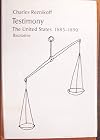
Mr. Reznikoff 1894-1976, grew up in New York City. As an attorney and poet he composed this "testimony" drawn from the law reports from several States, in the period 1885 to 1890. While we may be surprised by the amount of violence, we are also struck by its wanton diversity. He presents the cases without the judgments, awards, and sentencing. None of those things did any good.

Lists
You May Also Like


Associated Authors
Statistics
- Works
- 35
- Also by
- 14
- Members
- 637
- Popularity
- #39,574
- Rating
- 4.1
- Reviews
- 4
- ISBNs
- 53
- Languages
- 4
- Favorited
- 4