

Marie Belloc Lowndes (1868–1947)
Author of The Lodger
About the Author
Works by Marie Belloc Lowndes
The Terriford Mystery 6 copies
Best Detective Stories, Second Series — Contributor — 4 copies
What really happened 4 copies
One of those ways 3 copies
Motive 2 copies
His Most Gracious Majesty King Edward VII: Biography: His Royal Highness The Prince of Wales (1898) 2 copies
Mary Pechell 2 copies
A Passing World 2 copies
Who rides on a tiger 2 copies
The marriage-broker 2 copies
When no man pursueth 2 copies
The bread of deceit 2 copies
Lilla: a part of her life 2 copies
The Heart of Penelope 1 copy
Why they married 1 copy
The gentleman anonymous 1 copy
Another man's wife 1 copy
Popeau Intervenes 1 copy
The pulse of life 1 copy
Out of the War? 1 copy
Uttermost Farthing 1 copy
What Timmy Did 1 copy
A passing world 1 copy
The reason why 1 copy
The injured lover 1 copy
Reckless Angel 1 copy
The Christine diamond 1 copy
Before the storm 1 copy
What of the night? 1 copy
The Duenna 1 copy
'Thou shalt not kill' 1 copy
Jenny Newstead 1 copy
Love is a flame 1 copy
The duchess intervenes 1 copy
Edmond and Jules de Goncourt, 1895, Vol. 1 of 2: With Letters, and Leaves from Their Journals (Classic Reprint) (2017) 1 copy
Σκιές - Ιστορίες φρίκης 1 copy
The Philanderer 1 copy
And call it accident 1 copy
Associated Works
The Assassin's Cloak: An Anthology of the World's Greatest Diarists (2000) — Contributor, some editions — 622 copies, 9 reviews
Queens of the Abyss: Lost Stories from the Women of the Weird (2020) — Contributor — 155 copies, 4 reviews
The Web She Weaves: An Anthology of Mystery and Suspense Stories by Women (1983) — Contributor — 60 copies, 2 reviews
The Lifted Veil: The Book of Fantastic Literature by Women 1800-World War II (1806) — Contributor — 45 copies
City Sleuths and Tough Guys: Crime Stories from Poe to the Present (1989) — Contributor — 32 copies, 1 review
More Murder on Cue: Stage, Screen & Radio Favorites: Stories from Ellery Queen's Mystery Magazine (1990) — Contributor — 9 copies
Living London, Vol. I: Its Work and Its Play, Its Humour and Its Pathos, Its Sights and Its Scenes (1902) — Contributor — 2 copies
Living London, Vol. II: Its Work and Its Play, Its Humour and Its Pathos, Its Sights and Its Scenes (1902) — Contributor — 2 copies
Georgian Stories 1924 — Contributor — 2 copies
The grim thirteen : short stories by thirteen authors of standing — Contributor — 1 copy
Missing From Their Homes — Contributor — 1 copy
Tagged
Common Knowledge
- Legal name
- Lowndes, Marie Adelaide (married)
Belloc, Marie Adelaide Elizabeth Renée Julia (born) - Other names
- Belloc-Lowndes, Mrs.
Curtin, Philip (pseudonym) - Birthdate
- 1868-08-05
- Date of death
- 1947-11-14
- Gender
- female
- Occupations
- novelist
playwright
biographer
journalist
historical novelist - Organizations
- Women Writers' Suffrage League
- Relationships
- Belloc, Hilaire (brother)
Parkes, Bessie Rayner (mother)
Priestley, Joseph (great-great-grandfather)
Swanton Belloc, Louise (grandmother) - Short biography
- Marie Adelaide Elizabeth Rayner Lowndes (5 August 1868–14 November 1947)
Philip Curtin was the pseudonym used by the English born writer Marie Adelaide Belloc, the daughter of Louis Marie Belloc (1830-1872) and Elizabeth Rayner Parkes (1829-1925), born in George Street, Marylebone, London in 1868.
Marie's mother, better known as 'Bessie', founded the Woman's Suffrage Committee in England in 1866 with her best friend Barbara Bodichon. 'Bessie' Parkes was the granddaughter of Elizabeth Ryland (c.1769-1824) and Joseph Priestley, Jr. (1768-1833). Those maternal grandparents were respectively the children of Samuel Ryland (1745-1817), industrialist of Birmingham, England, and Joseph Priestley (1733-1804), the Unitarian minister who discovered oxygen.
'Bessie' soon left her friend Barbara Bodichon to continue 'the cause' so she could marry in 1867 to a French barrister named Louis Belloc, move with his to France and converted to Catholicism. After having her two children, her husband died in August of 1872 from sunstroke she returned to England and lost all interest in feminist issues.
However, Marie almost certainly got her writing skills from 'Bessie' who for eight years she had edited the magazine "The Englishwoman's Review" considered a much needed voice for women seeking advancement in society during that time.
Marie's brother, Joseph Hilaire Pierre René Belloc (1870–1953), although considered an influential writer in his own right was a Member of Parliament and possibly the most outspoken opponent to giving women not only the vote but also any higher education.
Marie married Frederick Sawnay Archibald Lowndes (1868-1940) in Kensington in 1896 and began writing royal biographies and historical novels such as a piece called "H.R.H. The Prince of Wales: an account of his career" (1898). Together they had three children - Edmund Harold Lowndes (1899-1918), Elizabeth Susan Angela Mary Lowndes (1900-1991), Susan Antonia Dorothea Priestley Lowndes (1907-1993).
Her work in her day was considered feminist, journalistic and sensational, and as was usually in the early 20th century publishers often encouraged reprinting works under different titles (particularly when republishing in the USA). They also thought it best a woman adopted a male pseudonym to encourage sales, hence the name 'Philip Curtin' was use when she wrote what was considered her most famous work "The Lodger" (1913) based on the Jack the Ripper murders and made into a film by Alfred Hitchcock in 1927.
A passage from "The Lodger" reads:
"It hadn't taken the landlady very long to find out that her lodger had a queer kind of fear and dislike of women. When she was doing the staircase and landings she would often hear Mr. Sleuth reading aloud to himself passages in the Bible that were very uncomplimentary to her sex. But Mrs. Bunting had no very great opinion of her sister woman, so that didn't put her out. Besides, where one's lodger is concerned, a dislike of women is better than -- well, than the other thing".
"Noted Murder Mysteries" (1914) was her non-fiction work offering accounts of nine notorious murder cases including "an exceptionally full account of the Bravo Case" considered at the time 'an enthralling drama in itself, told with admirable conciseness and very considerable power'. Marie also used her mothers names 'Elizabeth Rayner' in her honor as the alias for her third book "Not All Saints" (1914) - her mother died in Slindon, Sussex on the 11 August 1925, fifteen years after her father.
Near the end of her life she published two autobiography works - "I, too, have lived in Arcadia: a record of love and childhood" (1941) and "Where love and friendship dwelt" (1948). Then posthumously her work on her brother "The Young Hilaire Belloc" was published.
She died on 14 November 1947 at the home of her elder daughter, Elizabeth - Countess Iddesleigh (1930-1991) in Eversley Cross, Hampshire. She was interred in France, in La Celle-Saint-Cloud near Versailles, where she spent her youth.
Publications
"H.R.H. The Prince of Wales: an account of his career". New York & London (1898 as Anon, rev. 1901 as "His Most Gracious Majesty King Edward VII")
"The philosophy of the Marquise", (1899)
"T.R.H. The Prince and Princess of Wales", (1902, as Anon.)
"The heart of Penelope", (1904, New York 1915)
"Barbara Rebell", (1905, New York 1907)
"The pulse of life: a story of a passing world", (1908, New York 1909)
"The uttermost farthing", (1908, New York 1910)
"Studies in wives", (1909, New York 1910)
"When no man pursueth: an everyday story", (1910, New York 1911)
"Jane Aglander", (1911, New York 1911)
"The chink in the armour", (1912, New York 1912, London 1935 as "The house of peril")
"Mary Pechell", (1912, New York 1912)
"The lodger" (1913, New York 1913)
"The end of her honeymoon", (New York 1913, London 1914)
"Studies in love and terror", (1913, New York 1913)
"Noted murder mysteries", (1914 as by 'Philip Curtin')
"Told in gallant deeds: a child's history of the War", (1914)
"Good old Anna", (1915, New York 1916)
"Price of Admiralty", (1915)
"The Red Cross barge, (1916, New York 1918)
"Lilla: a part of her life", (1916, New York 1917)
"Love and hatred", (1917, New York 1917)
"Out of the war? ", (1918, 1934 as "The gentleman anonymous")
"From the vasty deep", (1920, New York 1921 as "From out the vasty deep")
"The lonely house", (1920, New York 1920)
"What Timmy did", (1921, New York 1922)
"Why they married", (1923)
"The Philanderer", (1923)
"The Terriford mystery", (1924, Garden City NY 1924)
"Bread of deceit", (1925, Garden City NY 1928 as "Afterwards")
"Some men and women" (1925, Garden City NY 1928)
"What really happened", (1926, Garden City NY 1926, London 1932, as a play)
"The story of Ivy", (1927, Garden City NY 1928)
"Thou shalt not kill", (1927)
"Cressida: no mystery", (1928, New York 1930)
"Duchess Laura: certain days of her life", (1929, New York 1933 as "The duchess Intervenes")
"Love's revenge", (1929)
"One of those ways", (1929)
"The key: a love drama in three acts", (1930)
"With all John's love: a play in three acts", (1930)
"Letty Lynton", (1931, New York 1931)
"Vanderlyn's adventure", (New York 1931, London 1937 as "The house by the sea")
"Why be lonely? A comedy in three acts", (1931 with F. S. A. Lowndes)
"Jenny Newstead", (1932 New York 1932)
"Love is a flame", (1932)
"The reason why", 1932)
"Duchess Laura: further days of her life", (New York 1933)
"Another man's wife", (1934, New York 1934)
"The Chianti flask", (New York 1934, London 1935)
"Who rides on a tiger", (New York 1935, London 1936)
"And call it accident", (New York 1936, London 1939 as "And call it an accident")
"The second key", (New York 1936, London 1939 as "The injured lover")
"The marriage-broker", (1937, New York 1937 as "The fortune of Bridget Malone")
"The Empress Eugenie: a three-act play", (New York 1938)
"Motive", (1938, New York 1938 as "Why it happened")
"Lizzie Borden: a study in conjecture", (New York: Longmans, Green and Co., 1939, London 1940)
"Reckless angel", (New York 1939)
"The Christie diamond", (New York 1940, London 1940)
"Before the storm", (New York 1941)
"I, too, have lived in Arcadia: a record of love and childhood", (1941, New York 1942)
"What of the night?", (New York 1943)
"Where love and friendship dwelt", (1943, New York 1943)
"Thee merry wives of Westminster", (1946)
"A passing world", (1948)
"She dwelt with beauty", (1949)
"The young Hilaire Belloc", (New York 1956).
Reference
Adrian Room. "Dictionary of Pseudonyms: 13,000 Assumed Names and Their Origins", NC: MacFarland & Company Inc. (5th Ed. 2010)
George Watson, Ian Willison, J. D. Pickles, R.J. Roberts, Michael Statham, K.J. Worth (Eds.). "The New Cambridge Bibliography of English Literature, Volume 1", London: Cambridge University Press (1972) - Nationality
- UK
- Birthplace
- London, England, UK
- Places of residence
- London, England, UK
La Celle-Saint-Cloud, France
Eversley Cross, Hampshire, England, UK - Place of death
- Eversley Cross, Hampshire, England, UK
- Burial location
- La Celle-Saint-Cloud, France
- Associated Place (for map)
- England, UK
Members
Reviews
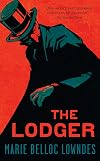
This book was surprisingly good and felt much more modern than something written in the 1910's! Loosely based on Jack the Ripper and another serial killer from the same general time, the novel follows a retired (not by choice) couple of house servants who have been trying to earn money by running a lodging house but are close to ruin. That is, until a stranger comes to stay with them and pays them generously for very little in the way of attention. The lodger is more than a bit strange and show more gradually the couple (each on their own) come to suspect him of being an infamous murderer who is currently on the loose. What makes this novel stand out is that it is more of a psychological novel than a murder mystery and the author does a fantastic job of looking at the public fascination with murder as well as the mindset of the wife as she both suspects yet wants to protect her lodger. It is really well done. show less
Mr. and Mrs. Bunting, after years of working in service, put their savings into running a lodging house. But things haven’t worked out as profitably as they’d like, and they find themselves very near to starvation when one day the perfect lodger knocks on their door. He wants to rent out all the rooms – he claims he needs peace and quiet for his work – and pays a large sum up front. At first the Buntings are ecstatic, but their eccentric lodger’s arrival in their lives coincides show more with the beginning of a string of murders near their London neighborhood, and Mrs. Bunting begins to suspect that it may not be a coincidence at all.
Inspired by the theory that Jack the Ripper was himself a lodger of this kind, the story does a great job of exploring the gamut of emotions and thoughts and fears that someone in Mrs. Bunting’s position might experience. Lowndes strikes a nice balance of good story and eerie atmosphere as well. show less
Inspired by the theory that Jack the Ripper was himself a lodger of this kind, the story does a great job of exploring the gamut of emotions and thoughts and fears that someone in Mrs. Bunting’s position might experience. Lowndes strikes a nice balance of good story and eerie atmosphere as well. show less

One of the lesser-known titles by Marie Belloc Lowndes, this suspenseful story opens up in a courtroom. An English woman stands accused of murdering her spouse. Theoretically, the dead man was given a dose of arsenic mixed in with a flask of Chianti wine. But no one can find the flask, the most significant piece of physical evidence against her. The prosecution has brought a witness against her, but he is a foreigner and those watching in the gallery are suspicious of him.
The question show more explored in the novel is whether the woman is innocent or guilty? At the time the novel was written, there was significant stigma attached to having appeared in the criminal docket. The preferred practice (if found innocent) would have been to emigrate to a different country under a new identity in order to re-establish one’s self as a respectable person in society. It could be expensive and difficult.
In this mystery, there are only a few named personalities. The primary person we follow is Laura. But there are others – her lawyer. her former employer, her doctor, etc. There is the house servant hired by her husband. He carried in the supper tray with the wine. Laura has been overwhelmed by her legal troubles; what is to happen to her now? Will she go mad? And is the cause of her madness legitimate guilt?
This is not a fast read, but it is an interesting one. Again and again, one must question the circumstances surrounding her husband’s death and whether or not Laura is deserving of happiness or even sympathy. Not for everyone, but those with a tolerance for British Golden Age mysteries may find this to be a memorable read. show less
The question show more explored in the novel is whether the woman is innocent or guilty? At the time the novel was written, there was significant stigma attached to having appeared in the criminal docket. The preferred practice (if found innocent) would have been to emigrate to a different country under a new identity in order to re-establish one’s self as a respectable person in society. It could be expensive and difficult.
In this mystery, there are only a few named personalities. The primary person we follow is Laura. But there are others – her lawyer. her former employer, her doctor, etc. There is the house servant hired by her husband. He carried in the supper tray with the wine. Laura has been overwhelmed by her legal troubles; what is to happen to her now? Will she go mad? And is the cause of her madness legitimate guilt?
This is not a fast read, but it is an interesting one. Again and again, one must question the circumstances surrounding her husband’s death and whether or not Laura is deserving of happiness or even sympathy. Not for everyone, but those with a tolerance for British Golden Age mysteries may find this to be a memorable read. show less
The ending is quite anti-climatic and disappointing. Readers are probably expecting some huge confrontation with the killer. However, the killer merely runs from his lodgers once he realizes that they are onto him. He does not return to collect his things, nor does he attempt to silence them like other killers might. Additionally, there was a lack of action.
I was so frustrated at how oblivious that the main characters were. Even with avid details from the newspapers and their detective show more friend, they remain oblivious for majority of the book. When they finally do accept who the killer is, they chose not to inform their detective friend or the police. Their reasoning was that they did not want to be swarmed by the police. It irritates me so much! This guy is a serial killer for crying out-loud! Who has been killing women for years! We also do not learn why he only targets blonde women.
The wife is also so stubborn in her old-fashioned mannerism and beliefs that I just wanted to scream! This was the most frustrated and annoyed that I've been with characters this year. I'm relieved that I've finally finished it. show less
I was so frustrated at how oblivious that the main characters were. Even with avid details from the newspapers and their detective show more friend, they remain oblivious for majority of the book. When they finally do accept who the killer is, they chose not to inform their detective friend or the police. Their reasoning was that they did not want to be swarmed by the police. It irritates me so much! This guy is a serial killer for crying out-loud! Who has been killing women for years! We also do not learn why he only targets blonde women.
The wife is also so stubborn in her old-fashioned mannerism and beliefs that I just wanted to scream! This was the most frustrated and annoyed that I've been with characters this year. I'm relieved that I've finally finished it. show less
Lists
Awards

You May Also Like


Associated Authors
Statistics
- Works
- 81
- Also by
- 39
- Members
- 954
- Popularity
- #26,999
- Rating
- 3.8
- Reviews
- 24
- ISBNs
- 218
- Languages
- 7
