

Francis Beeding (1885–1944)
Author of Death Walks in Eastrepps
About the Author
Disambiguation Notice:
Pen name of co-authors Hilary St. George Saunders and John Palmer. So please don't combine this page with either of theirs.
Image credit: A portrait of author Hilary St George Saunders at his flat in Camden Hill, London.
Series
Works by Francis Beeding
Hell Let Loose 6 copies
Eleven Were Brave 3 copies
Black Arrows 2 copies
The One Sane Man 2 copies
The erring under-secretary 1 copy
The emerald clasp 1 copy
The Woman He Had to Kill 1 copy
Associated Works
Tagged
Common Knowledge
- Birthdate
- 1885-09-04
- Date of death
- 1944-08-04
- Gender
- male
- Short biography
- John Leslie Palmer, an English author who, under his own name wrote extensively about early English actors and about British literary figures. He also wrote fiction under the collaborative pseudonyms Francis Beeding, Christopher Haddon, David Pilgrim and John Somers.
As "Francis Beeding", he and Hilary Saint George Saunders co-authored The House of Dr. Edwardes. The novel was later used as the basis for the Hitchcock film Spellbound.
The Beeding pseudonym was kept secret from its start in 1920, until in 1925 Saunders delivered a lecture about his writing methods, as Francis Beeding, while Palmer heckled for the audience. Saunders invited Palmer to the platform, and the dual authorship was revealed. - Birthplace
- Paddington, London, England, UK
- Map Location
- UK
- Disambiguation notice
- Pen name of co-authors Hilary St. George Saunders and John Palmer. So please don't combine this page with either of theirs.
Members
Reviews
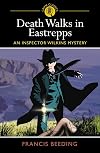
A series of murders disrupts the tourist season in the East Anglian town of Eastrepps. The local authorities look into the first murder, but Scotland Yard’s Inspector Wilkins is called on to lead the investigation after a second murder. The murders continue despite police patrols. What evil is stalking the town?
Even though the author of this Golden Age mystery doesn’t play fair with readers, but withholds clues and other vital information, I had no trouble identifying the killer midway show more through the book. I wouldn’t have minded so much if the investigation had proceeded in a satisfactory way. However,the killer initially succeeded in framing someone else for the murders, who was subsequently hanged. The true killer was eventually identified not by Scotland Yard, but by a witness for the defense who knew that her lover had been wrongly convicted. show less
Even though the author of this Golden Age mystery doesn’t play fair with readers, but withholds clues and other vital information, I had no trouble identifying the killer midway show more through the book. I wouldn’t have minded so much if the investigation had proceeded in a satisfactory way. However,

Corresponding to the regular clandestine visits of a man to a married woman, a serial killer appears to target the victims who lost money in a venture. The whole town becomes fearful with regular patrols of the street. On the night of one such venture, an up-and-coming Scotland Yard sergeant makes an arrest. The evidence, while circumstantial, appears solid to those reviewing the rest. While the man admits to other crimes, he denies the murders. I spotted the solution pretty early in the show more novel, but the author did a pretty good job at making readers who came to that conclusion second-guess themselves. This classic golden age mystery provides readers with an interesting case. show less

A serial killer is on the loose, terrorizing a small resort town in East Anglia, and the police are having a great deal of difficulty catching the killer; in the meantime, the man that perpetrated a notorious swindle nearly a generation before (which ruined many in that town), is conducting a clandestine affair in that town, and you know it won't end well for him. The book has some interesting characters, and some very good set-pieces, like the trial sequence and a fascinating interlude on show more the floor of the House of Commons. The negative is that the solution does "clank" a bit, and even with the detailed explanation at the end (no suicide, here: the killer is hung), it doesn't completely satisfy. Still, on balance, an interesting read. (Worthy of note: a war relic is of some importance in the book, and one of the authors, Saunders, fought on the Western Front in World War I and likely was familiar with the weapon.) show less
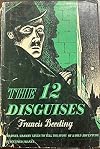
Excellent book! It follows the fictional exploits of the head of the British Secret Service during World War II as he tries to retrieve a rogue, but well-meaning British general in occupied France. He goes after him alone and needs 12 different disguises to make his way to the general.
i
Well written, entertaining, suspenceful and enjoyable. I highly recommend it.
i
Well written, entertaining, suspenceful and enjoyable. I highly recommend it.
Lists
Awards

You May Also Like


Associated Authors
Statistics
- Works
- 33
- Also by
- 5
- Members
- 469
- Popularity
- #52,470
- Rating
- 3.6
- Reviews
- 9
- ISBNs
- 32
- Languages
- 3
- Favorited
- 1