
David Olusoga
Author of Black and British: A Forgotten History
About the Author
Works by David Olusoga
The Kaiser's Holocaust: Germany's Forgotten Genocide and the Colonial Roots of Nazism (2010) 196 copies, 3 reviews
Black and British: A Forgotten History [2016 film] — Director — 2 copies
Black and British A Forgotten History, Natives, Why Im No Longer Talking To White People About Race 3 Books Collection Set (2019) 2 copies
Racism: A History: Fatal Impact [2007 TV mini series] — Director — 1 copy
First Encounters 1 copy
First Contact 1 copy
Associated Works
The Black History Book: Big Ideas Simply Explained (2021) — Foreword; Contributor — 148 copies, 1 review
Special Issue: Cotton Capital: How Slavery Shaped the Guardian, Britain & the World (2023) — Contributor — 1 copy
Tagged
Common Knowledge
- Birthdate
- 1970-01
- Gender
- male
- Education
- University of Liverpool (BA|History)
Leeds Trinity University - Occupations
- film director
TV presenter
writer
history professor - Nationality
- UK
Nigeria - Birthplace
- Lagos, Nigeria
- Map Location
- England, UK
Nigeria
Members
Reviews

From the African legionaries stationed on Hadrian's Wall to the riots in Brixton and Toxteth in 1981, Olusoga takes us through nearly 900 years of black history in Britain. He doesn't quite live up to his protestations that this is "forgotten" or "suppressed" history. From general reading of British and colonial history, I knew about the majority of the events and people he talks about — at least in outline — but that's not the point: context matters, and Olusoga brings out all sorts of show more interesting insights by presenting these things as part of a long-term story rather than as exotic add-ons to the history of a given period or place.
It really helps, for instance, to be able to see how the Abolition fervour of the early 19th century peaked with Uncle Tom's Cabin in 1852 and then started to shade away into Abolitionist self-satisfaction, Confederate propaganda, economic self-interest and the beginnings of "scientific" racism in the 1860s. All things we know about, in principle, but this is the first time I've seen them all brought together and their interactions charted out.
This is an enormously valuable book because of the way it gives you that kind of overview and perspective, in an accessible, popular narrative format, without fuss, but with a generous bibliography and a good index. But of course it has to limit itself: Olusoga is really only looking at Britain's links with West Africa, the Caribbean, and the USA, with only the briefest of nods to other parts of Africa and almost nothing on Asia. And this doesn't set out to be a complete history of the slave trade or the African and Caribbean colonies, nor is it a detailed sociological study of the origins of racism: there are plenty of other places where you can read about those things. show less
It really helps, for instance, to be able to see how the Abolition fervour of the early 19th century peaked with Uncle Tom's Cabin in 1852 and then started to shade away into Abolitionist self-satisfaction, Confederate propaganda, economic self-interest and the beginnings of "scientific" racism in the 1860s. All things we know about, in principle, but this is the first time I've seen them all brought together and their interactions charted out.
This is an enormously valuable book because of the way it gives you that kind of overview and perspective, in an accessible, popular narrative format, without fuss, but with a generous bibliography and a good index. But of course it has to limit itself: Olusoga is really only looking at Britain's links with West Africa, the Caribbean, and the USA, with only the briefest of nods to other parts of Africa and almost nothing on Asia. And this doesn't set out to be a complete history of the slave trade or the African and Caribbean colonies, nor is it a detailed sociological study of the origins of racism: there are plenty of other places where you can read about those things. show less
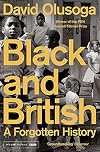
It's taken me a while to get through this book, partly because it's fairly chunky, partly because it's dense with facts and information about a difficult subject and 50 pages a day tended to be my absolute max before I felt mentally exhausted, and partly because it gave me so much to think about, and at times I made slow progress as I meandered off into thought mulling over what I'd just read.
Olusoga has written such an extremely thorough history of black people and Britain that if I hadn't show more been so mentally worn out by the end I'd have started right away at the beginning again to try and soak up more facts that I didn't retain first time around (to be fair, I have continued to dip in and out of it since finishing it). There is so much to cover and Olusoga does it methodically, taking us from the development of Britain's triangular trade route with Africa and America (which traded gold, ivory and slaves), to the sugar industry that fuelled the use of slaves in the West Indies, and Britain's eventual u-turn and abolition of slavery and efforts to combat it. This, of course, is anything but a simple history, and muddying the waters of the British moral efforts to eradicate slavery in the 1800s was the huge elephant in the room of it's ongoing reliance on slave-produced cotton from America for it's burgeoning textile industry, and the growing discomfort in some areas of white society with the increase in numbers of black people within the population.
Beyond Britain's industrial age, Olusoga examines the role and treatment of black people both during and after WWI and WWII, but gives a light touch to the race riots of the 1950s and 1980s and modern day race relations.
Given how utterly horrendous much of Britain's black history at the hands of white men has been, it is to Olusoga's credit that he is mostly very objective and even-handed in the analysis of his research. Having read this book I feel strongly that this is a part of history which white adults and children in Britain need to be better educated on, as without understanding the appalling historical experiences of black people in Britain (and beyond) it's impossible to properly contextualise many of today's modern racial issues. I'm shocked that I studied history up to A Level yet had never been taught most of what is in this book.
If I had to critique this book, my one disappointment is that Olusoga galloped in a few pages from post-war Britain to the present day. Having informed the reader so effectively on the history of the previous centuries, this felt like a hugely missed opportunity to better understand modern-day racism. In his short section on the 1981 Brixton riots, for example, he mentions the rising tensions in the black community over police discrimination associated with the new stop and search law, but ignores the issue of the rise in violent inner city crime in south London that precipitated this. As this issue of police racial discrimination is still a super hot topic given recent events in the States, it would have been great to have Olusoga's analysis on this. Was this another example of racism that the perception across many parts of Britain was that these early 80s London crimes were carried out by black gangs? Do the facts support or refute that?
All in all a dense but superbly written history of black British history. 150 pages less would have made this a less arduous read, but there is so much ground to cover it would probably be difficult to shorten it without missing out key information. I would love for Olusoga to write a follow up that goes into much more detail on the period from 1950 to present day.
If anyone is interested in this topic but can't quite face 500-odd pages of small print, Olusoga has a shortened version of the key facts coming out in October in the UK in a book called Black and British: A Short Essential History.
4 stars - A hugely important book. Recommended. show less
Olusoga has written such an extremely thorough history of black people and Britain that if I hadn't show more been so mentally worn out by the end I'd have started right away at the beginning again to try and soak up more facts that I didn't retain first time around (to be fair, I have continued to dip in and out of it since finishing it). There is so much to cover and Olusoga does it methodically, taking us from the development of Britain's triangular trade route with Africa and America (which traded gold, ivory and slaves), to the sugar industry that fuelled the use of slaves in the West Indies, and Britain's eventual u-turn and abolition of slavery and efforts to combat it. This, of course, is anything but a simple history, and muddying the waters of the British moral efforts to eradicate slavery in the 1800s was the huge elephant in the room of it's ongoing reliance on slave-produced cotton from America for it's burgeoning textile industry, and the growing discomfort in some areas of white society with the increase in numbers of black people within the population.
Beyond Britain's industrial age, Olusoga examines the role and treatment of black people both during and after WWI and WWII, but gives a light touch to the race riots of the 1950s and 1980s and modern day race relations.
Given how utterly horrendous much of Britain's black history at the hands of white men has been, it is to Olusoga's credit that he is mostly very objective and even-handed in the analysis of his research. Having read this book I feel strongly that this is a part of history which white adults and children in Britain need to be better educated on, as without understanding the appalling historical experiences of black people in Britain (and beyond) it's impossible to properly contextualise many of today's modern racial issues. I'm shocked that I studied history up to A Level yet had never been taught most of what is in this book.
If I had to critique this book, my one disappointment is that Olusoga galloped in a few pages from post-war Britain to the present day. Having informed the reader so effectively on the history of the previous centuries, this felt like a hugely missed opportunity to better understand modern-day racism. In his short section on the 1981 Brixton riots, for example, he mentions the rising tensions in the black community over police discrimination associated with the new stop and search law, but ignores the issue of the rise in violent inner city crime in south London that precipitated this. As this issue of police racial discrimination is still a super hot topic given recent events in the States, it would have been great to have Olusoga's analysis on this. Was this another example of racism that the perception across many parts of Britain was that these early 80s London crimes were carried out by black gangs? Do the facts support or refute that?
All in all a dense but superbly written history of black British history. 150 pages less would have made this a less arduous read, but there is so much ground to cover it would probably be difficult to shorten it without missing out key information. I would love for Olusoga to write a follow up that goes into much more detail on the period from 1950 to present day.
If anyone is interested in this topic but can't quite face 500-odd pages of small print, Olusoga has a shortened version of the key facts coming out in October in the UK in a book called Black and British: A Short Essential History.
4 stars - A hugely important book. Recommended. show less
The Kaiser's Holocaust: Germany's Forgotten Genocide and the Colonial Roots of Nazism by David Olusoga
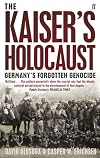
German concentration camps in Namibia: a pre-cursor to those of WW2, 10 July 2015
This review is from: The Kaiser's Holocaust: Germany's Forgotten Genocide and the Colonial Roots of Nazism (Paperback)
An extremely well-written account of an event of which I certainly was unaware - namely the appalling treatment of the native peoples of German S W Africa (now Namibia) in the early years of the 20th century. Based on the Kaiser's desire to create 'lebensraum' - space for the Aryan race to show more flourish, separate from the 'natives' - the German colonists created horrific concentration camps, notably that of Shark Island, near Luderitz.
But the author's don't confine themselves to relating African history; after explaining the German situation from WW1 to the disintegration of the country in its wake, and the rise of the Third Reich, they go on to draw parallels between the racial discrimination that was used to justify the treatment of natives in Africa, and that later used against Slavs and Jews.
"So much of what took place in German SW Africa at the beginning of the twentieth century horribly prefigures the events of the 1940s: concentration camps, the bureaucratisation of killing, meticulous record-keeping of death tolls and death rates, the use of work as a means of extermination, civilians transported in cattle trucks then worked to death, their remains experimented upon by race scientists, and the identification of ethnic groups who had a future of slaves and those who had no future of any sort."
A shocking book, yet written in a very readable style, and I learned so much, both about African and European history. show less
This review is from: The Kaiser's Holocaust: Germany's Forgotten Genocide and the Colonial Roots of Nazism (Paperback)
An extremely well-written account of an event of which I certainly was unaware - namely the appalling treatment of the native peoples of German S W Africa (now Namibia) in the early years of the 20th century. Based on the Kaiser's desire to create 'lebensraum' - space for the Aryan race to show more flourish, separate from the 'natives' - the German colonists created horrific concentration camps, notably that of Shark Island, near Luderitz.
But the author's don't confine themselves to relating African history; after explaining the German situation from WW1 to the disintegration of the country in its wake, and the rise of the Third Reich, they go on to draw parallels between the racial discrimination that was used to justify the treatment of natives in Africa, and that later used against Slavs and Jews.
"So much of what took place in German SW Africa at the beginning of the twentieth century horribly prefigures the events of the 1940s: concentration camps, the bureaucratisation of killing, meticulous record-keeping of death tolls and death rates, the use of work as a means of extermination, civilians transported in cattle trucks then worked to death, their remains experimented upon by race scientists, and the identification of ethnic groups who had a future of slaves and those who had no future of any sort."
A shocking book, yet written in a very readable style, and I learned so much, both about African and European history. show less
Best for:
Anyone unfamiliar with the history of Black Britons.
In a nutshell:
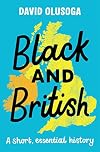
Author Olusoga provides this children’s version of his book Black and British: A Forgotten History.
Worth quoting:
“They would complain to the owners of pubs, restaurants or hotels that were serving Black GIs as guests. One white British woman running a bar had a complaint like this from a white GI. She replied that she would carry on serving Black soldiers because ‘their money is as good as yours, and we prefer show more their company.’”
Why I chose it:
My partner picked it up and after reading it passed it along to me. Also, as two white people from the US living in England, we thought it might be good understand the history of this country beyond a few Kings and Queens.
Review:
As someone from the US, and educated in a predominantly white education system, I was barely taught much about US history beyond the glorification of colonialism, let alone about the history of any other nations. Since I’m making a new country my home, it seems appropriate to make an effort to learn more here. This book is aimed at tweens (I think, judging from the writing style), so it doesn’t take any deep dives, but it does provide the start of a history, dating all the way back to the Roman times.
Much of what was in here I’d vaguely heard of (especially the areas Professor Olusoga highlights in the 1700s and beyond), but much of the information about things before then was brand new to me. And I learned some new things about topics I had a baseline knowledge of, like the Windrush generation, and the British profit from slave trade and slavery.
When the George Floyd murder happened in the US this summer and protests were organized, there were some (white) people in the UK shaking their heads and sort of congratulating themselves that racism isn’t as big a thing in the UK. To which the Black people and people of color I know here said, to paraphrase, ‘bullshit.’ This book, though in less strong language, definitely shows how the Black people in Britain have faced racism. But it also celebrates and highlights the accomplishments and contributions Black Britons have made to the culture and society here.
Keep it / Pass to a Friend / Donate it / Toss it:
Keep it show less
Anyone unfamiliar with the history of Black Britons.
In a nutshell:
Author Olusoga provides this children’s version of his book Black and British: A Forgotten History.
Worth quoting:
“They would complain to the owners of pubs, restaurants or hotels that were serving Black GIs as guests. One white British woman running a bar had a complaint like this from a white GI. She replied that she would carry on serving Black soldiers because ‘their money is as good as yours, and we prefer show more their company.’”
Why I chose it:
My partner picked it up and after reading it passed it along to me. Also, as two white people from the US living in England, we thought it might be good understand the history of this country beyond a few Kings and Queens.
Review:
As someone from the US, and educated in a predominantly white education system, I was barely taught much about US history beyond the glorification of colonialism, let alone about the history of any other nations. Since I’m making a new country my home, it seems appropriate to make an effort to learn more here. This book is aimed at tweens (I think, judging from the writing style), so it doesn’t take any deep dives, but it does provide the start of a history, dating all the way back to the Roman times.
Much of what was in here I’d vaguely heard of (especially the areas Professor Olusoga highlights in the 1700s and beyond), but much of the information about things before then was brand new to me. And I learned some new things about topics I had a baseline knowledge of, like the Windrush generation, and the British profit from slave trade and slavery.
When the George Floyd murder happened in the US this summer and protests were organized, there were some (white) people in the UK shaking their heads and sort of congratulating themselves that racism isn’t as big a thing in the UK. To which the Black people and people of color I know here said, to paraphrase, ‘bullshit.’ This book, though in less strong language, definitely shows how the Black people in Britain have faced racism. But it also celebrates and highlights the accomplishments and contributions Black Britons have made to the culture and society here.
Keep it / Pass to a Friend / Donate it / Toss it:
Keep it show less
Awards


You May Also Like


Associated Authors
Statistics
- Works
- 18
- Also by
- 2
- Members
- 1,065
- Popularity
- #24,175
- Rating
- 4.3
- Reviews
- 17
- ISBNs
- 45
- Languages
- 3