

Thomas Pakenham
Author of The Scramble for Africa: 1876–1912
About the Author
Thomas Pakenham's Remarkable Trees of the World received international acclaim
Image credit: Frickr
Works by Thomas Pakenham
Associated Works
Tagged
Common Knowledge
- Legal name
- Pakenham, Thomas Francis Dermot
- Other names
- Eighth Earl of Longford
- Birthdate
- 1933-08-14
- Gender
- male
- Education
- University of Oxford (Magdalen College)
University of Oxford (Belvedere College) - Occupations
- historian
arborist
peer - Awards and honors
- Hereditary Peerage (Eighth Earl of Longford, 2001)
- Relationships
- Fraser, Antonia (sister)
Billington, Rachel (sister)
Longford, Elizabeth (mother)
Pakenham, Frank, 7th Earl of Longford (father)
Kazantzis, Judith (sister)
Pakenham, Valerie (wife) (show all 13)
Pakenham, Eliza (daughter)
Pinter, Harold (brother-in-law)
Powell, Lady Violet (aunt)
Pakenham, Edward (uncle)
Lamb, Lady Pansy (aunt)
Fraser, Flora (niece)
Fraser, Rebecca (niece) - Nationality
- UK
Ireland - Places of residence
- London, England, UK
Tullynally Castle, County Westmeath, Ireland
Members
Reviews

If someone wants to read a single volume about the Boer War, this would be it. Pakenham has an incredible economy of style where he crams loads of information in a short space. Each page feels like 5, and not in a bad way. At the same time, the reading is enjoyable.
A point he repeatedly asserts is that the war was started partially for the rich gold miners to pay their black workers less. I can see the evidence that they encouraged the war. Maybe they wanted to be under British Dominion for show more other reasons. The Boers had a much lower opinion of black labor than the Brits. They literally broke away so they could maintain slaves after the Brits declared slavery illegal. Why would the mines be able to pay less under British rulership? That point was never made clearly.
In 2014 I did a study on WW1. As I read through this book, many names were eerily familiar - French, Haig, Hamilton, Allenby, Rawlinson, and of course Kitchener, among others. What's amazing is how the Brits had no ability to properly evaluate their generals. Kitchener was generally great strategically, but absolutely incompetent tactically and as a staff officer. It was all evident in the Boer War and even Sudan. All the other generals generally lacked imagination. Everything in WW1 was present here in a smaller scale. The Brits should never have been surprised that any of these incompetents would lose 40000 or 50000 men on a single day in a suicidal charge against entrenched positions. They did it on a smaller scale here. Repeatedly. These were the 1st generation of Sandhurst that actually earned their commissions. I guess the entitled, inbred classes had set the bar so low any moron qualified. After reading this, I can't help but feel the Brits received everything they deserved in WW1. show less
A point he repeatedly asserts is that the war was started partially for the rich gold miners to pay their black workers less. I can see the evidence that they encouraged the war. Maybe they wanted to be under British Dominion for show more other reasons. The Boers had a much lower opinion of black labor than the Brits. They literally broke away so they could maintain slaves after the Brits declared slavery illegal. Why would the mines be able to pay less under British rulership? That point was never made clearly.
In 2014 I did a study on WW1. As I read through this book, many names were eerily familiar - French, Haig, Hamilton, Allenby, Rawlinson, and of course Kitchener, among others. What's amazing is how the Brits had no ability to properly evaluate their generals. Kitchener was generally great strategically, but absolutely incompetent tactically and as a staff officer. It was all evident in the Boer War and even Sudan. All the other generals generally lacked imagination. Everything in WW1 was present here in a smaller scale. The Brits should never have been surprised that any of these incompetents would lose 40000 or 50000 men on a single day in a suicidal charge against entrenched positions. They did it on a smaller scale here. Repeatedly. These were the 1st generation of Sandhurst that actually earned their commissions. I guess the entitled, inbred classes had set the bar so low any moron qualified. After reading this, I can't help but feel the Brits received everything they deserved in WW1. show less
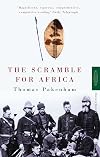
There are times when this book is like a long, endless slog through dense jungle with water and food running low and the natives looking unfriendly and most of the porters giving up and going home; but still the far distant waters of some undiscovered river beckons the fevered brain. It is dense with detail. There are two whole continents involved and this astonishing thirty years changes at least one of them into something unrecognisable, and all for reasons that were, initially at least, show more perfectly admirable. Stamping out the scourge of slavery was a major aim, and so were commerce and education, so-called civilising influences, if we can refrain from a hollow laugh when using such a phrase. Nothing wrong with trade and nothing wrong with the free flow of information, but that's not really what happened at all, is it?
Despite the influence of Livingstone's Three Cs - commerce, Christianity and the other one - there was no real desire or drive for empire in Africa, at least not by anyone who mattered. Britain had its informal empire, trade networks up and down the coast, and they didn't want the expense of anything else.. But mad-capped hare-brained explorers charged off through the interior and fractious settlers in the south caused trouble and poor old Egypt became a luckless pawn in the maneuverings of the Great Powers and the most evil arsehole of the 19th century, King Leopold of Belgium played his long, cunning game, and suddenly countries who could not afford to go to war with each other were competing furiously for domains and dominions and protectorates and colonies they mostly didn't want or need and for which they paid vast quantities in blood and treasure, and for which the Africans who lived there paid even more.
There are a lot of ugly atrocities in this book. A lot of war and a lot of adventure and a lot of international intrigue. It makes for hair-raising reading, but Pakenham keeps a crisp even tone throughout, writing lucidly and clearly. The reader might buckle under the sheer weight of it all, but the book itself never does. There aren't many likeable figures, European or African, a bare handful of women get mentioned in passing and precious few moments of levity, though the repetition of Gordon's phrase about throwing in the sponge must surely count as a kind of running joke. Less funny is the final chapter which begins with a cautiously hopeful description of the independence ceremony of Zimbabwe in 1980. show less
Despite the influence of Livingstone's Three Cs - commerce, Christianity and the other one - there was no real desire or drive for empire in Africa, at least not by anyone who mattered. Britain had its informal empire, trade networks up and down the coast, and they didn't want the expense of anything else.. But mad-capped hare-brained explorers charged off through the interior and fractious settlers in the south caused trouble and poor old Egypt became a luckless pawn in the maneuverings of the Great Powers and the most evil arsehole of the 19th century, King Leopold of Belgium played his long, cunning game, and suddenly countries who could not afford to go to war with each other were competing furiously for domains and dominions and protectorates and colonies they mostly didn't want or need and for which they paid vast quantities in blood and treasure, and for which the Africans who lived there paid even more.
There are a lot of ugly atrocities in this book. A lot of war and a lot of adventure and a lot of international intrigue. It makes for hair-raising reading, but Pakenham keeps a crisp even tone throughout, writing lucidly and clearly. The reader might buckle under the sheer weight of it all, but the book itself never does. There aren't many likeable figures, European or African, a bare handful of women get mentioned in passing and precious few moments of levity, though the repetition of Gordon's phrase about throwing in the sponge must surely count as a kind of running joke. Less funny is the final chapter which begins with a cautiously hopeful description of the independence ceremony of Zimbabwe in 1980. show less

Thomas Pakenham proclaims Meetings with Remarkable Trees to be a "book of British tree portraits" and indeed, he has personified trees into categories of natives, travelers, shrines, fantasies, and survivors. He will tell you from where certain trees have immigrated like they are refugees of war. He will give their ages like gossip out of the tabloids.
My favorite section was about the trees he called shrines. These are the mystical trees that were sacred to the landscape and continue to show more hold ancient secrets. Remarkably beautiful.
In reading Meetings with Remarkable Trees I discovered that I absolutely love the Ginkgo biloba tree, but the Davidia Involucrata, the Handkerchief or Dove tree, is also truly beautiful. Another jaw-dropping fact I enjoyed learning concerned the Himalayan Magnolia and how its blooms grow to be almost a foot in diameter.
The unexpected delight of Meetings with Remarkable Trees was Pakenham's subtle humor. I giggled when he called Aelian a killjoy. When Pakenham said he didn't normally hugged trees I had to laugh because I do hug trees on a regular basis.
The true mastery of Meetings with Remarkable Trees is Pakenham's ability to demonstrate the sheer size of each tree. Most photographs have a person standing next to the tree's massive trunk for perspective. At the end of the book Pakenham includes a gazetteer which provides information on the National Trust trees, the Forest Enterprise trees, the trees that are regularly accessible to the public and those that are on private property. show less
My favorite section was about the trees he called shrines. These are the mystical trees that were sacred to the landscape and continue to show more hold ancient secrets. Remarkably beautiful.
In reading Meetings with Remarkable Trees I discovered that I absolutely love the Ginkgo biloba tree, but the Davidia Involucrata, the Handkerchief or Dove tree, is also truly beautiful. Another jaw-dropping fact I enjoyed learning concerned the Himalayan Magnolia and how its blooms grow to be almost a foot in diameter.
The unexpected delight of Meetings with Remarkable Trees was Pakenham's subtle humor. I giggled when he called Aelian a killjoy. When Pakenham said he didn't normally hugged trees I had to laugh because I do hug trees on a regular basis.
The true mastery of Meetings with Remarkable Trees is Pakenham's ability to demonstrate the sheer size of each tree. Most photographs have a person standing next to the tree's massive trunk for perspective. At the end of the book Pakenham includes a gazetteer which provides information on the National Trust trees, the Forest Enterprise trees, the trees that are regularly accessible to the public and those that are on private property. show less
The Scramble for Africa: White Man's Conquest of the Dark Continent from 1876 to 1912 by Thomas Pakenham

The "Scramble for Africa" is comprehensive, enjoyable to read, and lively. It is well-edited and logically organized. For those intimidated by it's slightly larger than average size, it can easily be broken into chunks without too much lost. I believe this comprehensive survey is important to understand imperialism, colonialism, and African and world history. So much of the action was intertwined with events thousands of miles away and behaviors or political/ economic/ calculations of so show more many nations and people. Action in a French border area by a rogue soldier in West Africa could influence British policy in East or southern Africa.
I liked how Pakenham took the participant's POV in regards to the decisions made and actions taken using their own words. The rebuttal or criticism comes from their opposition's voices and actions when he writes from the opposition POV. Some readers may feel uncomfortable with this, as if he is presenting a sympathetic view or endorsing actions, but I prefer to have the actors speak for themselves and I'll make my own judgements. Additionally, when viewed in this uncritical way, readers would have to believe that Pakenham endorsed or sympathized with contrarian viewpoints.
This doesn't mean he keeps his personal judgments hidden behind others' words. Painting all of the independence movements as generally good things without the appropriate Cold War context does those peoples and their history a great disservice. His support of Mugabe - "statesman in the making" - should have been left out. All of that; however, is in the short Epilogue.
What amazed me most is to find that much of that colonial history took place in such a short time frame.
My assumption of imperialism from public high school history was that it was a simple drive to paint the map "our color" and hold the most (territory, population, riches...) &/or have markets for goods. I was surprised at how much African imperialism was driven by middle classes and entities (businesses, missionary organizations, NGOs), explorers, and relatively low-level events rather than the actual leadership in the countries. Pakenham doesn't mention this, but as I read, it became evident how much mass media amplified many voices and events far beyond their own ability to influence events. I believe part of this was the rise in mass literacy in Western nations, the contingent rise in mass media publications, and the corresponding rise in innovative politicians learning to play to the mass media. Low-level events (like a few missionaries in danger or killed in some dirt hole in the middle of a larger dirt hole in the middle of nowhere with no benefit to anyone, even the residents) could drive major policies and push politicians in ways that were contrary to their own inclinations and not in their country's best interest. One observation I made was that during this time frame, leadership devolved from statesmen to politicians. Rather than lead, media pushed and so the carts got ahead of the horses.
Overall, I learned a great deal from this book show less
I liked how Pakenham took the participant's POV in regards to the decisions made and actions taken using their own words. The rebuttal or criticism comes from their opposition's voices and actions when he writes from the opposition POV. Some readers may feel uncomfortable with this, as if he is presenting a sympathetic view or endorsing actions, but I prefer to have the actors speak for themselves and I'll make my own judgements. Additionally, when viewed in this uncritical way, readers would have to believe that Pakenham endorsed or sympathized with contrarian viewpoints.
This doesn't mean he keeps his personal judgments hidden behind others' words. Painting all of the independence movements as generally good things without the appropriate Cold War context does those peoples and their history a great disservice. His support of Mugabe - "statesman in the making" - should have been left out. All of that; however, is in the short Epilogue.
What amazed me most is to find that much of that colonial history took place in such a short time frame.
My assumption of imperialism from public high school history was that it was a simple drive to paint the map "our color" and hold the most (territory, population, riches...) &/or have markets for goods. I was surprised at how much African imperialism was driven by middle classes and entities (businesses, missionary organizations, NGOs), explorers, and relatively low-level events rather than the actual leadership in the countries. Pakenham doesn't mention this, but as I read, it became evident how much mass media amplified many voices and events far beyond their own ability to influence events. I believe part of this was the rise in mass literacy in Western nations, the contingent rise in mass media publications, and the corresponding rise in innovative politicians learning to play to the mass media. Low-level events (like a few missionaries in danger or killed in some dirt hole in the middle of a larger dirt hole in the middle of nowhere with no benefit to anyone, even the residents) could drive major policies and push politicians in ways that were contrary to their own inclinations and not in their country's best interest. One observation I made was that during this time frame, leadership devolved from statesmen to politicians. Rather than lead, media pushed and so the carts got ahead of the horses.
Overall, I learned a great deal from this book show less
Lists
Awards


You May Also Like


Associated Authors
Statistics
- Works
- 16
- Also by
- 2
- Members
- 4,437
- Popularity
- #5,644
- Rating
- 4.2
- Reviews
- 50
- ISBNs
- 91
- Languages
- 5
- Favorited
- 5
