
Sculley Bradley (1897–1987)
Author of Adventures of Huckleberry Finn [Norton Critical Edition, 1st ed.]
About the Author
Image credit: via University of Pennsylvania
Works by Sculley Bradley
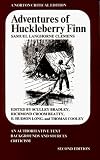
Adventures of Huckleberry Finn [Norton Critical Edition, 1st ed.] (1884) — Editor — 2,182 copies, 10 reviews
Adventures of Huckleberry Finn [Norton Critical Edition, 2nd ed.] (1977) — Editor — 332 copies, 4 reviews
The American Tradition in Literature, Volume 1 (1974) — Editor, some editions — 245 copies, 3 reviews
The Scarlet Letter: An Annotated Text, Backgrounds and Sources (Essays in Criticism, Norton Critical Editions) — Editor — 7 copies
Leaves of Grass Comprehensive Reader's Edition — Editor — 2 copies
The American Tradition in Literature 2 copies
Associated Works
The American Tradition in Literature, Volume 2 (1956) — Editor, some editions — 277 copies, 2 reviews
The American Tradition in Literature: Shorter Edition in One Volume/Ninth Edition (1985) — Editor, some editions — 217 copies
Leaves of Grass, A Textual Variorum of the Printed Poems: Volume II: Poems: 1860-1867 (1959) — Editor — 77 copies
COLOPHON NEW SERIES, A QUARTERLY FOR BOOKMEN AUTUMN 1936 VOL. 2 NEW SERIES NUMBER 1 (1936) — Contributor — 12 copies
Leaves of Grass [Norton Critical Edition, Instructor's Desk Copy] — Editor — 10 copies
Tagged
Common Knowledge
Members
Reviews
Adventures of Huckleberry Finn: An Authoritative Text, Backgrounds and Sources, Criticism by Mark Twain
The purity of the first 20 or so chapters of Huck Finn cannot be understated. They capture the restlessness of the outcast, the desire to break the bonds of society's expectations, to find freedom in nature. Huck is an abused child of an alcoholic; Jim is an enslaved man who has no bonds, familial or otherwise, that cannot be destroyed by being sold down the river. In some ways they are like Adam and Eve on Jackson Island, trying to create a civilization, or utopia, or Eden, that allows them show more their own version of freedom.
The flight from slave-hunters down the Mississippi is the destruction of this Eden, finalized by taking the Duke and the King onboard the raft.
I found Ralph Ellison and Judith Fetterley's essays most insightful in this Norton Critical Edition. Ellison connects the characterization of Jim to the minstrel show, and his friendship with Huck as an undermining of Black manhood. This is the primary scar, or flaw, in this text. Jim is a martyr; he is noble; but is he fully human in Twain's portrayal?
Fetterley's analysis of the Tom Sawyer episode at the end reveals Tom's malevolent egotism as a continuation of the King and the Duke, Miss Watson, and the general milieu of violent and primitive folks who live in small towns along the Mississippi. This river is not so dissimilar from Conrad's Congo - we are in a state of nature, where the concept of civilization resides in the power structure and those who are willing to use deceit or violence to attain power. show less
The flight from slave-hunters down the Mississippi is the destruction of this Eden, finalized by taking the Duke and the King onboard the raft.
I found Ralph Ellison and Judith Fetterley's essays most insightful in this Norton Critical Edition. Ellison connects the characterization of Jim to the minstrel show, and his friendship with Huck as an undermining of Black manhood. This is the primary scar, or flaw, in this text. Jim is a martyr; he is noble; but is he fully human in Twain's portrayal?
Fetterley's analysis of the Tom Sawyer episode at the end reveals Tom's malevolent egotism as a continuation of the King and the Duke, Miss Watson, and the general milieu of violent and primitive folks who live in small towns along the Mississippi. This river is not so dissimilar from Conrad's Congo - we are in a state of nature, where the concept of civilization resides in the power structure and those who are willing to use deceit or violence to attain power. show less
I read the Adventures of Huck Finn in high school and very quickly thereafter read Tom Sawyer. Both are such great adventure stories but also a lesson in writing in dialect. While there are aspects that are unfortunate/unpleasant in the way of terrible events and actions in history regarding 'The South' and the stain of the nation, it's an entertaining look into the past through the point of view of a young boy just making his way. Of course it definitely offers up opportunity for further show more and deeper discussion, but on the surface, it's an adventure story. show less
Although I've read the story before, I haven't read it since I bought this Norton Critical Edition, with all the wonderful supplementary material at the back. This past Christmas struck me as the perfect time to read about good old Huck Finn - although I'm not at all sure why I felt like it was a holiday book - so I picked it up for a reread.
I enjoyed this novel the first time I read it, back in high school, and then again when it was assigned college reading material. Yes, that makes this show more the third time I've read Twain's highly acclaimed, highly controversial, masterpiece. I find that reading a book three times can lead to deeper understanding and enjoyment, although I rarely have had the experience, because there are so many other books I want to read. This only ever happens, actually, when I get assigned to read the same book over again in classes or conferences. This time around, I was able to enjoy the story, since it had been quite a while since I last read it, and at the same time look at the literary composition that makes it a classic of literature and the subject matter that has made it so contentious.
No doubt about it, Twain wrote a powerful story. I'm reading the earlier Tom Sawyer to my daughter right now, and it just doesn't hold a candle to this novel. Using Huck as narrator was genius, and the way he captures his voice, innocent yet jaded, full of naive ethical morality and unwitting social commentary, is really amazing. Not to mention the wide variety of dialects used in the novel. Then there's Jim, who I love, and who becomes Huck's father figure (in the better moments of the novel). You can't help but fall for the rascally Duke and King, too, at first; yet their true nature is never hidden, and I was happy when they met their just rewards. The framework of the story, with the flowing river always pushing the characters on and holding them back, is a great piece of composition. The motifs of the novel are intertwined with the river and with the characters. Twain's craftsmanship, on so many levels, is high.
Of course, a person can write a book that is wonderfully made and still be terrible. Many people feel that Twain's book either is complicit in its acceptance of racism, or outright endorses it. This, despite the fact that Twain clearly makes a point of criticizing the society that Huck lives in, especially in regards to their treatment of slaves (and other classes of people) and makes Jim a real person that was a far cry from the accepted portrayal of African Americans at that time. Twain either doesn't go far enough, according to some, or still encourages racist stereotypes at the same time that he is purportedly denying them. After reading the story, and many of the commentaries at the end, I find the matter to be complicated, frankly. I'm a white woman, so I can't claim being able to see every angle of this issue. I can see how this book would make other African Americans uncomfortable, especially if it is taught to school children without expert handling by a teacher. Definitely, any one who reads this story will have to navigate the terrain of racial matters, and it should be handled sensitively and with understanding. For my part, I felt that Twain was trying to criticize the way African Americans were treated, both in his time and the time that the story takes place. While he obviously was still under the influence of his society and background, he was taking a bold move on his part to shake the assumptions of his contemporaries. Perhaps he could have done more, but the attempt, the desire to change things, is evident in his portrayal of Jim and Huck. The only way to come to your own evaluation of his motives is to just read the book yourself, and see what you think.
As to the format of the novel - this edition of the book will appeal to some and not others. It has a plethora of material at the conclusion of the novel to aid in deeper research into the novel. If you're like me, you'll enjoy the essays, letters, contemporary reviews and modern reviews, and other writings that accompany the text. I enjoy deconstructing my literature and finding deeper meaning; it makes me miss my undergrad English literature days. If you're like my husband, who doesn't want to be bothered with afterwords and forewords, even, but just get to the meat of the story, then this edition is not for you. Find a different edition of the story, but still find one, because this is a piece of literary history that should not be missed. show less
I enjoyed this novel the first time I read it, back in high school, and then again when it was assigned college reading material. Yes, that makes this show more the third time I've read Twain's highly acclaimed, highly controversial, masterpiece. I find that reading a book three times can lead to deeper understanding and enjoyment, although I rarely have had the experience, because there are so many other books I want to read. This only ever happens, actually, when I get assigned to read the same book over again in classes or conferences. This time around, I was able to enjoy the story, since it had been quite a while since I last read it, and at the same time look at the literary composition that makes it a classic of literature and the subject matter that has made it so contentious.
No doubt about it, Twain wrote a powerful story. I'm reading the earlier Tom Sawyer to my daughter right now, and it just doesn't hold a candle to this novel. Using Huck as narrator was genius, and the way he captures his voice, innocent yet jaded, full of naive ethical morality and unwitting social commentary, is really amazing. Not to mention the wide variety of dialects used in the novel. Then there's Jim, who I love, and who becomes Huck's father figure (in the better moments of the novel). You can't help but fall for the rascally Duke and King, too, at first; yet their true nature is never hidden, and I was happy when they met their just rewards. The framework of the story, with the flowing river always pushing the characters on and holding them back, is a great piece of composition. The motifs of the novel are intertwined with the river and with the characters. Twain's craftsmanship, on so many levels, is high.
Of course, a person can write a book that is wonderfully made and still be terrible. Many people feel that Twain's book either is complicit in its acceptance of racism, or outright endorses it. This, despite the fact that Twain clearly makes a point of criticizing the society that Huck lives in, especially in regards to their treatment of slaves (and other classes of people) and makes Jim a real person that was a far cry from the accepted portrayal of African Americans at that time. Twain either doesn't go far enough, according to some, or still encourages racist stereotypes at the same time that he is purportedly denying them. After reading the story, and many of the commentaries at the end, I find the matter to be complicated, frankly. I'm a white woman, so I can't claim being able to see every angle of this issue. I can see how this book would make other African Americans uncomfortable, especially if it is taught to school children without expert handling by a teacher. Definitely, any one who reads this story will have to navigate the terrain of racial matters, and it should be handled sensitively and with understanding. For my part, I felt that Twain was trying to criticize the way African Americans were treated, both in his time and the time that the story takes place. While he obviously was still under the influence of his society and background, he was taking a bold move on his part to shake the assumptions of his contemporaries. Perhaps he could have done more, but the attempt, the desire to change things, is evident in his portrayal of Jim and Huck. The only way to come to your own evaluation of his motives is to just read the book yourself, and see what you think.
As to the format of the novel - this edition of the book will appeal to some and not others. It has a plethora of material at the conclusion of the novel to aid in deeper research into the novel. If you're like me, you'll enjoy the essays, letters, contemporary reviews and modern reviews, and other writings that accompany the text. I enjoy deconstructing my literature and finding deeper meaning; it makes me miss my undergrad English literature days. If you're like my husband, who doesn't want to be bothered with afterwords and forewords, even, but just get to the meat of the story, then this edition is not for you. Find a different edition of the story, but still find one, because this is a piece of literary history that should not be missed. show less
Adventures of Huckleberry Finn : An Authoritative Text Contexts and Sources Criticism (Norton Critical Edition) by Mark Twain

Huckleberry Finn, like other classic works of the imagination, can provide every reader with whatever he is capable of finding as he reads. The well of the narrative runs as deep as the Mississippi River. Thus the book may be enjoyed by young boys and adults as well. It also means that the book can be and is a foundational document in American literature influencing many writers who have followed in its wake. The story is both epic and intimate. Over the years the excitement of Huck's show more adventures have gained depth of meaning for me that could not have when I was a boy even though I enjoyed them as much or more as a young reader. However, the friendship between Jim and Huck has come to the forefront for me in more recent readings. I have enjoyed my readings and as with all great works of literature I look forward to reading it again and gleaning more from its' depths. show less
Lists
You May Also Like


Associated Authors
Statistics
- Works
- 16
- Also by
- 7
- Members
- 3,340
- Popularity
- #7,646
- Rating
- 4.1
- Reviews
- 19
- ISBNs
- 49