
Ivar Ekeland
Author of Mathematics and the Unexpected
About the Author
Ivar Ekeland is professor of mathematics and economics at the University of British Columbia and director of the Pacific Institute for Mathematical Sciences
Works by Ivar Ekeland
Tagged
Common Knowledge
- Birthdate
- 1944
- Gender
- male
- Birthplace
- Parigi, Francia
Members
Reviews
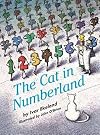
With thin pencil lines, in black and white cartoon fashion, O’Brien creates an imaginary world where numbers live in the Hotel Infinity, run by Mr. & Mrs. Hilbert and their white cat (who mostly sleeps peacefully curled up by the fireplace), where there is a room number 1 but no last room. The numbers know four games: addition, subtraction, multiplication and division. The only game they don’t like is division because not all of them can play. The story covers the inclusion of letters show more standing in for numbers (like math problems), fractions, and its all done in fun cartoonesque fashion, that even if the cat can’t figure it out and has to move to Corsica (where the Hotel has only 20 rooms, so no numbers or letters can visit) the 9-12 reader will.
If You Liked This, Try: Cookies: Bite-Size Life Lessons by Amy Krouse Rosenthal, Sea Horse: The Shyest Fish in the Sea by Chris Butterworth, Zelda and Ivy: The Runaways by Laura McGee Kvasnosky, Robert and the Practical Jokes by Barbara Seuling, Invisible by Katia Kamm. show less
If You Liked This, Try: Cookies: Bite-Size Life Lessons by Amy Krouse Rosenthal, Sea Horse: The Shyest Fish in the Sea by Chris Butterworth, Zelda and Ivy: The Runaways by Laura McGee Kvasnosky, Robert and the Practical Jokes by Barbara Seuling, Invisible by Katia Kamm. show less
This is a cute book with well-drawn illustrations. Its mission is to impart a mathematical understanding of infinity to young people and it is down in a rather clever fashion. The big task is how to fit Zero in a room when Hotel Infinity's rooms are all "filled up."
An interesting mathematical history of ideas concerning an often overlooked physical principle: the principle of least action. Normally credited to French philosopher Maupertuis, this pseudo-deterministic principle says that the action performed in a system will be minimized as it moves from state to state. Since its conception, this principle has been superseded by a more correct version where the action is not minimal but stationary: that is, not having any first-order variation.
A view of mechanics since Galileo, centered on the notion of action (the dimension of Planck's constant h -- momentum times distance or, equivalently, energy times time). "Classical mechanics (including the stationary action principle) appear to be valid only in a thin layer of reality, trapped between the subatomic scale, which is ruled by quantum mechanics and the Feynman probabilities, and the human scale, which is ruled by thermodynamics and decaying entropy" (p 122). The book's last show more quarter meanders among woolly topics such as optimization in economics and societal issues. show less
Lists
Cats in Fiction (1)
Awards


You May Also Like


Associated Authors
Statistics
- Works
- 18
- Members
- 566
- Popularity
- #44,191
- Rating
- 3.8
- Reviews
- 8
- ISBNs
- 54
- Languages
- 6