
Julian Maclaren-Ross (1912–1964)
Author of Of Love and Hunger
About the Author
Works by Julian Maclaren-Ross
Associated Works
Tagged
Common Knowledge
- Legal name
- Ross, James Maclaren
- Birthdate
- 1912-07-07
- Date of death
- 1964-11-03
- Gender
- male
- Occupations
- novelist
- Nationality
- UK
- Birthplace
- South Norwood, London, England, UK
- Places of residence
- Bournemouth, Dorset, England, UK
- Associated Place (for map)
- England, UK
Members
Reviews
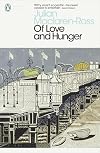
Utterly engrossing account, narrated by one Richard Fanshawe and set in the immediate lead-up to World War 2. Fanshawe is an educated man - a former journalist in India, where things didn't work out - but is currently scraping a living as an unsuccessful vacuum cleaner salesman. In debt to his tobacconist and others; struggling to keep a roof over his head by fobbing off the landlady to whom he is in arrears; and with occasional recollections of his unhappy past surfacing, life isn't good. show more Then his colleague goes off to be a ship's steward, leaving his adored wife in Fanshawe's care... And the War is looming, but is of secondary importance in the struggle for survival...
I absolutely loved it, especially the hilarious incidents in his salesmanship career. show less
I absolutely loved it, especially the hilarious incidents in his salesmanship career. show less

On the surface, this story may appear a slight one. It is told in the first person by late-twenty-something Richard Fanshawe who, despite a reasonably privileged background, is struggling to get by in 1939 England. Fanshawe lives in a boarding house in a seaside town on the south coast, attempts to make a living as a vacuum cleaner salesman and falls in love with his friend's wife.
Yet there is much more going on within and beyond the surface. The first thing which drew me in was all the show more wonderful 1930s detail. Of Love and Hunger was intended to tell us about life in Britain immediately before WWII and Maclaren-Ross paints a very convincing picture. Perhaps partly because it was written in 1947 when 1939 wasn't too far away, the story comes across as completely authentic. I loved the descriptions of cups of tea drank at Woolworths and was chilled when Fanshawe notices how many more Fascist supporters there seem to be these days. Reading the book in 2011, it was worrying to see parallels with contemporary Britain where young men like Fanshawe fail to find decent careers, the economy is in crisis and support for the British National Party is on the increase.
The descriptions of life as a vacuum cleaner salesman are alternately grim and amusing. There is a culture revealed of frequent scams, although as this is the 1930s they are not described as scams, of course but as jobs which turn out to be "another swizz" or "a lot of cock".
Bossman Ferdie purports to be supportive of "his boys" whilst driving a brand new Hillman and handing out cigarettes from a gold cigarette case. ("Woodbines. He'd filled the case up ready for us on the way over. He kept Players in another pocket to smoke himself".)
Fanshawe is a wonderfully believable character, seemingly thwarted by both circumstances and his own nature. His attitude is initially dour and cynical but occasional flashbacks to his early life reveal more about who he really is. The growing attraction and eventual affair between Fanshawe and Sukie is told through dialogue as well as Fanshawe's own words. The affair leaves Fanshawe bewildered but the reader looking on, understands more.
I found the prologue which takes place three years later particularly poignant. I won't say too much but Fanshawe has returned to the seaside town on embarkment leave and comments:
"It's a damn funny world where there has to be a war before a chap gets a second chance."
I didn't know anything about Julian Maclaren-Ross before reading this novel but according to the introduction to my Penguin Modern Classics edition, he was an infamous Bohemian writer, part of the 1940s London Fitzrovia set. I wasn't surprised to learn that he had lived in Bognor Regis during the 1930s and earned his living as a vacuum cleaner salesman! The author clearly states however:
All the characters, vacuum-cleaner firms etc., in this novel are completely ficitious.
I enjoyed this book very much and would recommend it to anyone with any interest in fiction from this era or anyone willing to give fiction from this era a try. show less
Yet there is much more going on within and beyond the surface. The first thing which drew me in was all the show more wonderful 1930s detail. Of Love and Hunger was intended to tell us about life in Britain immediately before WWII and Maclaren-Ross paints a very convincing picture. Perhaps partly because it was written in 1947 when 1939 wasn't too far away, the story comes across as completely authentic. I loved the descriptions of cups of tea drank at Woolworths and was chilled when Fanshawe notices how many more Fascist supporters there seem to be these days. Reading the book in 2011, it was worrying to see parallels with contemporary Britain where young men like Fanshawe fail to find decent careers, the economy is in crisis and support for the British National Party is on the increase.
The descriptions of life as a vacuum cleaner salesman are alternately grim and amusing. There is a culture revealed of frequent scams, although as this is the 1930s they are not described as scams, of course but as jobs which turn out to be "another swizz" or "a lot of cock".
Bossman Ferdie purports to be supportive of "his boys" whilst driving a brand new Hillman and handing out cigarettes from a gold cigarette case. ("Woodbines. He'd filled the case up ready for us on the way over. He kept Players in another pocket to smoke himself".)
Fanshawe is a wonderfully believable character, seemingly thwarted by both circumstances and his own nature. His attitude is initially dour and cynical but occasional flashbacks to his early life reveal more about who he really is. The growing attraction and eventual affair between Fanshawe and Sukie is told through dialogue as well as Fanshawe's own words. The affair leaves Fanshawe bewildered but the reader looking on, understands more.
I found the prologue which takes place three years later particularly poignant. I won't say too much but Fanshawe has returned to the seaside town on embarkment leave and comments:
"It's a damn funny world where there has to be a war before a chap gets a second chance."
I didn't know anything about Julian Maclaren-Ross before reading this novel but according to the introduction to my Penguin Modern Classics edition, he was an infamous Bohemian writer, part of the 1940s London Fitzrovia set. I wasn't surprised to learn that he had lived in Bognor Regis during the 1930s and earned his living as a vacuum cleaner salesman! The author clearly states however:
All the characters, vacuum-cleaner firms etc., in this novel are completely ficitious.
I enjoyed this book very much and would recommend it to anyone with any interest in fiction from this era or anyone willing to give fiction from this era a try. show less
The lives and loves of a vacuum cleaner salesman and his married paramour, Suki, in a depressed pre-war Britain. Naturally the love affair isn't all plain sailing, but it is as much a novel about the people and the times as it is about the affair.
It isn't a hopeful novel. It is life lived at the very edge of poverty where love isn't so much a grand illumination as light relief from the grinding greyness of a day where the future is always uncertain. Will there be enough money to pay the show more landlady, to eat, to buy cigarettes and maybe for a cheap date at the movies or the zoo? War looms, but again, it is the future, and today is another day to be got through.
Julian Maclaren-Ross has written a good contribution to the very British genre of boarding house literature, along with John Braine's [b:Room At The Top|1775733|Room At The Top|John Braine|http://d.gr-assets.com/books/1337622789s/1775733.jpg|1774077], Lynne Reid Bank's [b:The L-Shaped Room|960246|The L-Shaped Room (Jane Graham, #1)|Lynne Reid Banks|http://d.gr-assets.com/books/1330390079s/960246.jpg|1515574], Muriel Spark's wonderfully low-key [b:A Far Cry from Kensington|69516|A Far Cry from Kensington|Muriel Spark|http://d.gr-assets.com/books/1348215918s/69516.jpg|67358] and George Orwell's rather disappointing [b:Keep the Aspidistra Flying|9648|Keep the Aspidistra Flying|George Orwell|http://d.gr-assets.com/books/1331244097s/9648.jpg|3226250] among many other books, all of them a bit depressing.
The book is a solid four-star read. Very enjoyable but a bit downbeat, a reflective read rather than a jolly beach book. show less
It isn't a hopeful novel. It is life lived at the very edge of poverty where love isn't so much a grand illumination as light relief from the grinding greyness of a day where the future is always uncertain. Will there be enough money to pay the show more landlady, to eat, to buy cigarettes and maybe for a cheap date at the movies or the zoo? War looms, but again, it is the future, and today is another day to be got through.
Julian Maclaren-Ross has written a good contribution to the very British genre of boarding house literature, along with John Braine's [b:Room At The Top|1775733|Room At The Top|John Braine|http://d.gr-assets.com/books/1337622789s/1775733.jpg|1774077], Lynne Reid Bank's [b:The L-Shaped Room|960246|The L-Shaped Room (Jane Graham, #1)|Lynne Reid Banks|http://d.gr-assets.com/books/1330390079s/960246.jpg|1515574], Muriel Spark's wonderfully low-key [b:A Far Cry from Kensington|69516|A Far Cry from Kensington|Muriel Spark|http://d.gr-assets.com/books/1348215918s/69516.jpg|67358] and George Orwell's rather disappointing [b:Keep the Aspidistra Flying|9648|Keep the Aspidistra Flying|George Orwell|http://d.gr-assets.com/books/1331244097s/9648.jpg|3226250] among many other books, all of them a bit depressing.
The book is a solid four-star read. Very enjoyable but a bit downbeat, a reflective read rather than a jolly beach book. show less
Recommended by K.J., who noted that Powell based X. Trapnel on Maclaren-Ross. K.J. was surprised to note that this novel is really very good. I agree.
Lists
Awards


You May Also Like


Associated Authors
Statistics
- Works
- 17
- Also by
- 7
- Members
- 470
- Popularity
- #52,370
- Rating
- 3.7
- Reviews
- 7
- ISBNs
- 15
- Languages
- 3
- Favorited
- 5
