
Djuna Barnes (1892–1982)
Author of Nightwood
About the Author
Although Djuna Barnes was a New Yorker who spent much of her long life in Greenwich Village, where she died a virtual recluse in 1982, she resided for extended periods of time in France and England. Her writings are representative modernist works in that they seem to transcend all national show more boundaries to take place in a land peculiarly her own. Deeply influenced by the French symbolists of the late nineteenth century and by the surrealists of the 1930s, she also wrote as a liberated woman, whose unconventional way of life is reflected in the uncompromising individuality of her literary style. Barnes's dreamlike and haunted writings have never found a wide popular audience, but they have strongly influenced such writers as Rebecca West, Nelson Algren, Dahlberg, Lowry, Miller, and especially Nin, in whose works a semifictional character named Djuna sometimes appears. In 1915 Barnes anonymously published The Book of Repulsive Women. Not long after she moved to Paris and became associated with the colony of writers and artists who made that city the international center of culture during the 1920s and early 1930s. Her Ladies Almanack was privately printed in Paris in 1928, the same year that Liveright in the United States published Ryder, her first novel. The book on which Barnes's fame largely rests is Nightwood (1936), a surrealistic story set in Paris and the United States, dealing with the complex relationships among a group of strangely obsessed characters, most of them homosexuals and lesbians. Barnes wrote little after Nightwood. In 1952, she professed to Malcolm Lowry that the experience of writing that searing work so frightened her that she was unable to write anything after it. Fortunately, her literary talents revived with The Antiphon, a verse-drama originally published in 1958, which is now available in Selected Works (1962). (Bowker Author Biography) show less
Image credit: Djuna Barnes, ca. 1921 [author is unknown; grabbed from Wikipedia]
Works by Djuna Barnes
I Could Never Be Lonely Without a Husband: Interviews (1985) — Illustrator, some editions — 33 copies
Verführer an allen Ecken und Enden. Ratschläge für die kultivierte Frau. (Wagenbach SALTO) (1994) 2 copies
James Joyce 1 copy
Fumo 1 copy
Kurzy of the Sea 1 copy
Barnes, Djuna Archive 1 copy
Uma Noite Entre os Cavalos 1 copy
Associated Works
Wayward Girls and Wicked Women: An Anthology of Subversive Stories (1986) — Contributor — 579 copies, 9 reviews
Chloe Plus Olivia: An Anthology of Lesbian Literature from the 17th Century to the Present (1994) — Contributor — 482 copies, 1 review
American Poetry: The Twentieth Century, Volume One: Henry Adams to Dorothy Parker (2000) — Contributor — 480 copies, 1 review
The Heath Anthology of American Literature, Concise Edition (2003) — Contributor — 73 copies, 1 review
The Red Velvet Seat: Women's Writings on the Cinema: The First Fifty Years (2006) — Contributor — 20 copies
The Best Short Stories of 1919 and the Yearbook of the American Short Story (1919) — Contributor — 17 copies
Gender in Modernism: New Geographies, Complex Intersections (2007) — Contributor — 12 copies, 1 review
Fotspår : noveller ur Sveriges radio P1:s serie Författarskap på fötter (2003) — Contributor — 5 copies
Contact collection of contemporary writers — Contributor — 1 copy
Modern Choice 2 — Contributor — 1 copy
Tagged
Common Knowledge
- Canonical name
- Barnes, Djuna
- Other names
- Steptoe, Lydia
- Birthdate
- 1892-06-12
- Date of death
- 1982-06-18
- Gender
- female
- Education
- Pratt Institute
Art Students League of New York - Occupations
- short story writer
playwright
journalist
illustrator
artist
poet (show all 7)
magazine writer - Organizations
- Hayford Hall Circle
Brooklyn Daily Eagle
Provincetown Players - Awards and honors
- American Academy of Arts and Letters (Literature ∙ 1959)
National Institute of Arts and Letters (1961) - Relationships
- Joyce, James (friend)
Stein, Gertrude (friend)
Pound, Ezra (friend)
Hanfstaengl, Ernst (fiancé)
Barney, Natalie Clifford (friend) - Short biography
- Djuna Barnes was born near Cornwall-on-Hudson, New York. Her parents' household was eccentric; it included her father's mistress and children, though Djuna's negligent father did not adequately support them all. As the second oldest of eight children, Djuna spent much of her childhood helping to care for siblings and half-siblings. She received her early education at home, mostly from her father and grandmother. At 16 she was raped, possibly by a neighbor or by her father. She referred to the event in several of her works. She left home for New York City, where she studied art at the Pratt Institute and the Art Student's League. She got work as a magazine journalist and illustrator with The Brooklyn Eagle and McCall's Magazine before embarking on a literary career, producing short stories and plays, and articles for a variety of publications. In 1921, she made her first trip to Paris, the center of modernism in art and literature of the day, on assignment for McCall's. There she befriended many expatriate writers and artists and became a key figure in Bohemian circles of the Left Bank; her black cloak and acerbic wit are recalled in many memoirs of the time. Even before her first novel, the bestselling Ryder, was published in 1928, her literary reputation was already high, based on her short story "A Night Among the Horses," first published in The Little Review and reprinted in her 1923 collection A Book. She became part of the coterie surrounding the influential writer and salonnière Natalie Clifford Barney. Djuna set up housekeeping with artist Thelma Wood in a flat purchased with the proceeds of her successful novel. In 1928, she published Ladies Almanack, a controversial comic novel about a predominantly lesbian social circle, a thinly-disguised version of Natalie Barney's group. During the 1930s, Djuna was chronically ill and drank heavily; in February 1939 she attempted suicide. Peggy Guggenheim, her patron, sent her back to New York, where her family entered her into a sanatorium. She then moved to an apartment in New York City's Greenwich Village, where she would spend the last 42 years of her life. Her best-known later work was the play The Antiphon (1958). Djuana Barnes also achieved acclaim as an artist, and her paintings and drawings were exhibited at Peggy Guggenheim's gallery in Manhattan. She is considered one of the most important avant-garde writers and artists of the 20th century as well as a precursor of the "New Journalism" of the 1960s.
- Nationality
- USA
- Birthplace
- Storm King Mountain, New York, USA
- Places of residence
- New York, New York, USA
Greenwich Village, New York, USA
Paris, France - Place of death
- Manhattan, New York, USA
- Burial location
- New York, New York, USA
- Associated Place (for map)
- New York, USA
Members
Reviews
Vivid and Repulsive as the Truth: The Early Works of Djuna Barnes (Dover Literature: Literary Collections) by Djuna Barnes
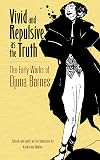
I picked up "Vivid and Repulsive as the Truth" free from the publisher for review, and I must confess, it took me for a completely unexpected literary and philosophical ride! My feelings about this book ran from elation to disappointment, and from profound tears to mild horror.
Since I had never heard of Djuna Barnes, I paid close attention to the introduction, where the editor gives you a description of who she was in society and in the world of publishing. I don't often take time to show more consider the introduction to these types of books, but I really appreciated the editor's candor, and I greatly appreciated the list of publications in which the pieces she included in the book were originally published. She even gave a short history and description for each of them. I loved that! It made the context of each article easier to imagine and understand.
The first fifty percent of the book is articles from newspapers and magazines. Every last one is outstanding, and they had a profound affect on me. While reading "Veterans in Harness No.1: Postman Joseph H. Dowling, Forty-Two Years in Service", the postman is describing what it's like to deliver mail for so many years. At one point he talks about the emotional weight of the letters he carried, and I broke down into tears. I actually had to put the book aside, have a little nostalgic cry, then make myself some Earl Grey tea before I could go on! She paints a marvelous picture of her New York city surroundings and the atmosphere of the times, which I greatly enjoyed. Through the observations she makes and the descriptions of her interviewees, she points out that whether you are a waiter in a restaurant or a popular actress, we are each an individual with our own unique outlook on living, and our own special way of interpreting the world in which we exist.
The next forty percent of the book is short stories. I hate to say this, but I found them terribly disappointing, especially after the emotional roller coaster I rode through the first half of the book. They are very well written, as I expected, and it's clear this author is very insightful and has an excellent grasp on human nature, but these stories read like parables with no moral that I could recognize; just terribly unhappy endings for the main characters and no good reason for it, with the exception of one, "Renunciation", which has a quasi-happy ending. After the positive portrayals and wonderful descriptions I read in her articles, I was surprised, shocked even, to find the complete opposite in her fictions. Also, every time a baby was involved in a story, the author referred to them as it in every story, not he or she, which to me suggests the the author's own view and not the characters'. I found this unsettling. The idea that a baby would not be seen as a fellow human and the emotionless way in which she portrays them, coupled with all the depressing endings, left me feeling... disturbed.
The last ten percent of this book is poetry. I love poetry, so I was very excited to read this section. I hoped they would bring me back to the lovely euphoria I felt while reading the articles or at least some semblance of it, but though they were nice and well done, most of them evoked no emotion in me at all, which in my opinion is the point of a poem. In fact with the exception of a few, they felt a bit clinical. This is probably a matter of taste though. Poetry is a very different sort of reading experience.
This entire book was a unique experience for me. I don't recall ever having so my many ups and downs in both opinion and emotion over one book, and even though I dislike the short stories and feel lukewarm about the the poetry, I'm giving it 5 stars. It's inspiring, nostalgic, thought provoking, and a little horrifying. This book will no doubt inspire some excellent discussion! emnoir.wordpress.com show less
Since I had never heard of Djuna Barnes, I paid close attention to the introduction, where the editor gives you a description of who she was in society and in the world of publishing. I don't often take time to show more consider the introduction to these types of books, but I really appreciated the editor's candor, and I greatly appreciated the list of publications in which the pieces she included in the book were originally published. She even gave a short history and description for each of them. I loved that! It made the context of each article easier to imagine and understand.
The first fifty percent of the book is articles from newspapers and magazines. Every last one is outstanding, and they had a profound affect on me. While reading "Veterans in Harness No.1: Postman Joseph H. Dowling, Forty-Two Years in Service", the postman is describing what it's like to deliver mail for so many years. At one point he talks about the emotional weight of the letters he carried, and I broke down into tears. I actually had to put the book aside, have a little nostalgic cry, then make myself some Earl Grey tea before I could go on! She paints a marvelous picture of her New York city surroundings and the atmosphere of the times, which I greatly enjoyed. Through the observations she makes and the descriptions of her interviewees, she points out that whether you are a waiter in a restaurant or a popular actress, we are each an individual with our own unique outlook on living, and our own special way of interpreting the world in which we exist.
The next forty percent of the book is short stories. I hate to say this, but I found them terribly disappointing, especially after the emotional roller coaster I rode through the first half of the book. They are very well written, as I expected, and it's clear this author is very insightful and has an excellent grasp on human nature, but these stories read like parables with no moral that I could recognize; just terribly unhappy endings for the main characters and no good reason for it, with the exception of one, "Renunciation", which has a quasi-happy ending. After the positive portrayals and wonderful descriptions I read in her articles, I was surprised, shocked even, to find the complete opposite in her fictions. Also, every time a baby was involved in a story, the author referred to them as it in every story, not he or she, which to me suggests the the author's own view and not the characters'. I found this unsettling. The idea that a baby would not be seen as a fellow human and the emotionless way in which she portrays them, coupled with all the depressing endings, left me feeling... disturbed.
The last ten percent of this book is poetry. I love poetry, so I was very excited to read this section. I hoped they would bring me back to the lovely euphoria I felt while reading the articles or at least some semblance of it, but though they were nice and well done, most of them evoked no emotion in me at all, which in my opinion is the point of a poem. In fact with the exception of a few, they felt a bit clinical. This is probably a matter of taste though. Poetry is a very different sort of reading experience.
This entire book was a unique experience for me. I don't recall ever having so my many ups and downs in both opinion and emotion over one book, and even though I dislike the short stories and feel lukewarm about the the poetry, I'm giving it 5 stars. It's inspiring, nostalgic, thought provoking, and a little horrifying. This book will no doubt inspire some excellent discussion! emnoir.wordpress.com show less
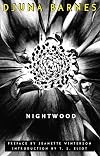
Reading this book is like being transported to another world (usually a good sign in a novel) a world full of allusion where the reader is left grasping at smoke rings, which elegantly curl above the heads of the characters. Although the language is elegant the emotions are raw as the characters, all living in a world of pain desperately try to cope with their feelings of love and loss.
There is an excellent introduction by T S Eliot that alerts the reader to the writing style of the author, show more prepares him perhaps for a reading experience that will take some concentration. I found it best to approach the book in small chunks, because the writing style then becomes fresh with every read and allowed me to revel in the use of language, without becoming too tired or complaisant. This approach served me well for the first six chapters: the final two where the strands of the story come together in a more narrative approach I was pleased to read in one sitting.
T S Eliot says the style of the novel with its beauty of phrasing the brilliance of wit and characterisation has a quality of horror and doom very nearly related to that of an Elizabethan tragedy. This is Barnes describing the Squatter Jenny Petherbridge:
“She was nervous about the future, it made her indelicate. She was one of the most importantly wicked women of her time - because she could not let her time alone, and yet could never be part of it. She wanted to be the reason for everything and so she was the cause of nothing. She had the fluency of tongue and action meted out by divine providence to those who cannot think for themselves. She was master of the over-sweet phrase , the over-tight embrace”
Barnes aims to fascinate the reader, not merely by what is said, but also by the manner of saying it. There is duality and word play in the sentences in a style not unlike that of the Elizabethan author Jon Lyly, but like Lyly’s writing the style can be more important than the content and so the reader is left with decisions to be made about what he has just read and what has just been said. It does not always work because at times it feels like a scatter-gun approach, and it can be waring. However there is much in the writing that made me stop and think at how thoughtful, original and appropriate a phrase or sentence was in the context of the novel.
Djuna Barnes was an American artist, illustrator, journalist and writer Nightwood published in 1936 is considered a cult classic of lesbian fiction. She spent two decades in Europe and her novel has a distinctly European feel, with its old world sophistication and her use of German, French and Italian phrases: much of it is set in Paris between the two world wars. The story is basically about a lesbian menage-a-trois relationship with the pains and guilt of love being laid at the door of a male Doctor who advises while getting caught up with the emotions and struggling with his own catholicism. The Doctor is an Irishman who is not a qualified practitioner and leads an alcohol fused existence on the edge of polite society. The events in the novel centre on a couple of incidents that define the nature of the relationships and lead to thoughts and conversations that reflect on love, pain and death. The book has an intense feeling of melancholy leading to despair and is shot through with observations that may not be life changing, but may make you think about living - warning the style can be infectious. It is a book that will go back onto my shelves for an occasional partial re-read and so 4 stars. show less
There is an excellent introduction by T S Eliot that alerts the reader to the writing style of the author, show more prepares him perhaps for a reading experience that will take some concentration. I found it best to approach the book in small chunks, because the writing style then becomes fresh with every read and allowed me to revel in the use of language, without becoming too tired or complaisant. This approach served me well for the first six chapters: the final two where the strands of the story come together in a more narrative approach I was pleased to read in one sitting.
T S Eliot says the style of the novel with its beauty of phrasing the brilliance of wit and characterisation has a quality of horror and doom very nearly related to that of an Elizabethan tragedy. This is Barnes describing the Squatter Jenny Petherbridge:
“She was nervous about the future, it made her indelicate. She was one of the most importantly wicked women of her time - because she could not let her time alone, and yet could never be part of it. She wanted to be the reason for everything and so she was the cause of nothing. She had the fluency of tongue and action meted out by divine providence to those who cannot think for themselves. She was master of the over-sweet phrase , the over-tight embrace”
Barnes aims to fascinate the reader, not merely by what is said, but also by the manner of saying it. There is duality and word play in the sentences in a style not unlike that of the Elizabethan author Jon Lyly, but like Lyly’s writing the style can be more important than the content and so the reader is left with decisions to be made about what he has just read and what has just been said. It does not always work because at times it feels like a scatter-gun approach, and it can be waring. However there is much in the writing that made me stop and think at how thoughtful, original and appropriate a phrase or sentence was in the context of the novel.
Djuna Barnes was an American artist, illustrator, journalist and writer Nightwood published in 1936 is considered a cult classic of lesbian fiction. She spent two decades in Europe and her novel has a distinctly European feel, with its old world sophistication and her use of German, French and Italian phrases: much of it is set in Paris between the two world wars. The story is basically about a lesbian menage-a-trois relationship with the pains and guilt of love being laid at the door of a male Doctor who advises while getting caught up with the emotions and struggling with his own catholicism. The Doctor is an Irishman who is not a qualified practitioner and leads an alcohol fused existence on the edge of polite society. The events in the novel centre on a couple of incidents that define the nature of the relationships and lead to thoughts and conversations that reflect on love, pain and death. The book has an intense feeling of melancholy leading to despair and is shot through with observations that may not be life changing, but may make you think about living - warning the style can be infectious. It is a book that will go back onto my shelves for an occasional partial re-read and so 4 stars. show less
A landmark work in lesbian literature and certainly the work of a highly intelligent woman, but for my taste, far too dense in its prose, with long meandering sentences making up paragraphs and modernist techniques that made it a battle to get through. The references and gist of the points Barnes expands on about her characters (telling instead of showing) often seem tedious or just escaped me. Maybe I’m just getting too old, but for whatever reason, this didn’t resonate with me, and I show more just didn’t see the elegance of poetry in the work, as T.S. Eliot did. show less
So incredibly good & wholly conceived & astoundingly executed that to give it merely 5 stars is an insult. One could spend an entire review on the genius of the title Nightwood, evocative as it is of nightshades (poisonous plants identifiable by their seductive rich red or black berries); evocative as it is of those things we draw at night that keep darkness where we want it, whether it be in or out. It is especially fitting for a novel peopled predominately by homo- & trans-sexual show more characters existing in the caesura between the First and Second World Wars. The socially marginalized experience the precarity of peace twice over: even in peacetime they can only exist as as themselves, in the shadows, under the cover of night; they are never without anxiety and therefore never without peace.
Djuna Barnes does not belabor (and by belaboring estrange) queerness, if anything she presents--in 1937--extraordinarily precise psychological portraits of what would be quite ordinary love, if only that love were not complicated by its cultural forbiddenness.
Nightwood is the story the irresistible & fickle Robin Vote, and the tornadic havoc she wreaks on those lovers (male and female) who enter her orbit. Her story is largely interpolated by “Doctor” Matthew O’Connor, a transexual woman, who finds himself in the role of accidental pseudo-psychoanalyst to all of Robin’s forsaken lovers. (Being faithful here to Barnes’ pronoun slippage). In a deeper sense however, Nightwood is an homage to O’Connor, how he has navigated the “nightwood,” how he has helped others to do the same, how exhausting & underappreciated his task, and how wisdom cannot suffice as a substitute of loneliness.
No review can do this book justice, you simply must read it. Every sentence describes its own small universe. Don’t be intimidated by its reputation as a difficult modernist masterpiece. You’ll get it, and if you don’t, it will keep rewarding you on each re-reading. show less
Djuna Barnes does not belabor (and by belaboring estrange) queerness, if anything she presents--in 1937--extraordinarily precise psychological portraits of what would be quite ordinary love, if only that love were not complicated by its cultural forbiddenness.
Nightwood is the story the irresistible & fickle Robin Vote, and the tornadic havoc she wreaks on those lovers (male and female) who enter her orbit. Her story is largely interpolated by “Doctor” Matthew O’Connor, a transexual woman, who finds himself in the role of accidental pseudo-psychoanalyst to all of Robin’s forsaken lovers. (Being faithful here to Barnes’ pronoun slippage). In a deeper sense however, Nightwood is an homage to O’Connor, how he has navigated the “nightwood,” how he has helped others to do the same, how exhausting & underappreciated his task, and how wisdom cannot suffice as a substitute of loneliness.
No review can do this book justice, you simply must read it. Every sentence describes its own small universe. Don’t be intimidated by its reputation as a difficult modernist masterpiece. You’ll get it, and if you don’t, it will keep rewarding you on each re-reading. show less
Lists
Awards


You May Also Like


Associated Authors
Statistics
- Works
- 65
- Also by
- 24
- Members
- 5,343
- Popularity
- #4,661
- Rating
- 3.5
- Reviews
- 83
- ISBNs
- 208
- Languages
- 16
- Favorited
- 29

