

Victor Arwas (1937–2010)
Author of Art Deco
About the Author
Victor Arwas is one of the leading authorities on the decorative arts from 1880 to the present. A lifelong collector of paintings, sculpture, and objets d'art, he regularly exhibits and promotes both fine and applied arts at his Editions Graphiques Gallery in London.
Image credit: Uncredited photo at The Telegraph website
Works by Victor Arwas
Associated Works
Tagged
Common Knowledge
- Birthdate
- 1937-06-29
- Date of death
- 2010-02-23
- Gender
- male
- Nationality
- UK
- Birthplace
- Cairo, Egypt
- Associated Place (for map)
- Cairo, Egypt
Members
Reviews
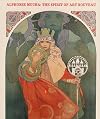
While this book is a great resource for scholarly articles and a comprehensive catalogue of mucha's artwork, it has some major flaws that make me like it a lot less than I should.
The first is how the layout is done. Text only appears in large blocks, which limits the arrangement (and therefore the size in many cases) of the illustrations. This is most likely a cause of printer limits in regards to layout, but it is unfortunate how small some pictures are as a result. The "Slav Epic," show more especially requires a large reproduction for readers to appreciate the amount of detail in each picture (the actual canvases are HUGE), but the reproductions here are so small that the images are largely lost.
Secondly, the pieces are not presented chronologically, so any researcher wanting to study the evolution of Mucha's style is hindered by having to flip pages constantly. Studying Mucha's "phases" is virutally impossible this way as well, since photographs appear in random places throughout the book, even though he did not start using them until much later in his career, so the reader is presented with a falsified timeline.
The last (and most important) problem is the colour. Many times only black ink is used, and I found many of the pictures in colour to have erronious tone! Mucha's art may be distinct because of it's line style, but art is effected greatly by colour, so the reader will be extremely underwhelmed by Mucha's creations in this form. show less
The first is how the layout is done. Text only appears in large blocks, which limits the arrangement (and therefore the size in many cases) of the illustrations. This is most likely a cause of printer limits in regards to layout, but it is unfortunate how small some pictures are as a result. The "Slav Epic," show more especially requires a large reproduction for readers to appreciate the amount of detail in each picture (the actual canvases are HUGE), but the reproductions here are so small that the images are largely lost.
Secondly, the pieces are not presented chronologically, so any researcher wanting to study the evolution of Mucha's style is hindered by having to flip pages constantly. Studying Mucha's "phases" is virutally impossible this way as well, since photographs appear in random places throughout the book, even though he did not start using them until much later in his career, so the reader is presented with a falsified timeline.
The last (and most important) problem is the colour. Many times only black ink is used, and I found many of the pictures in colour to have erronious tone! Mucha's art may be distinct because of it's line style, but art is effected greatly by colour, so the reader will be extremely underwhelmed by Mucha's creations in this form. show less

If I had heard about Grasset and Berthon, they were certainly names that were not front of mind when it came to art nouveau. Mucha, who was a contemporary, is certainly much better known for his designs and posters. But these two artists are certainly very impressive. One interesting thing that I learned from this book was that both Mucha and Grasset "rejected" art nouveau...basically because both were so steeped in the art of the past...and the high priests of Art Nouveau were rejecting show more everything from the past.
Grasset was the older (by about 10 years) and was also the teacher of Berthon. In fact, Grasset, really seemed to be a very good teacher and to both enjoy his teaching and to promote the careers of his pupils.
One little quirk was that with lithography, Grasset did careful watercolours first and reversed these onto the lithographic stone...whilst Berthon worked directly on the stone. Maybe more confidence in his own abilities? Grasset was content to leave the actual printmaking to craftsmen whilst Berthon was more involved directly in the printing process.
Lovely illustrations ...even if a lot of the work of these artists was lost ...especially because of the war years 1914-1917. Quite a lot is made of the Berthon maiden vs the Grasset maiden. The former more sensual ...looking straight out (well, sometimes anyway). Quite a nice reference book and, despite their claims about not being part of the Art Nouveau movement....both seem to me to be quintessentially significant exponents of the movement. Right up there with Mucha. I give it 5 stars. show less
Grasset was the older (by about 10 years) and was also the teacher of Berthon. In fact, Grasset, really seemed to be a very good teacher and to both enjoy his teaching and to promote the careers of his pupils.
One little quirk was that with lithography, Grasset did careful watercolours first and reversed these onto the lithographic stone...whilst Berthon worked directly on the stone. Maybe more confidence in his own abilities? Grasset was content to leave the actual printmaking to craftsmen whilst Berthon was more involved directly in the printing process.
Lovely illustrations ...even if a lot of the work of these artists was lost ...especially because of the war years 1914-1917. Quite a lot is made of the Berthon maiden vs the Grasset maiden. The former more sensual ...looking straight out (well, sometimes anyway). Quite a nice reference book and, despite their claims about not being part of the Art Nouveau movement....both seem to me to be quintessentially significant exponents of the movement. Right up there with Mucha. I give it 5 stars. show less
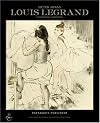
Being a selection of drawings, mostly reproduced in sepia-tone, by an artist whose emphasis is on figure studies of French women of the theater of his day, placing him somewhere between Degas and Rops stylistically. The comprehensive catalogue takes up almost half of the book.
some parts excellent. some complicated pictures very small.
You May Also Like


Associated Authors
Statistics
- Works
- 23
- Also by
- 2
- Members
- 726
- Popularity
- #34,982
- Rating
- 4.1
- Reviews
- 4
- ISBNs
- 51
- Languages
- 3