
Terry Pinkard
Author of German Philosophy 1760-1860: The Legacy of Idealism
About the Author
Terry Pinkard is Professor of Philosophy at Georgetown University and Honorary Professor at Tbingen University in Germany. He was awarded DAAD and Humboldt Fellowships. In 2003-2004, he was the recipient of the Humboldt Prize for lifetime achievement and in 2010-2011, he was a fellow at the show more Wissenschaftskolleg zu Berlin. Among his books, those that have attracted the most notice have to do with the development of German idealism and in particular with Hegel's philosophy. show less
Works by Terry Pinkard
Associated Works
Tagged
Common Knowledge
- Birthdate
- 1950
- Gender
- male
- Occupations
- professor
- Organizations
- Georgetown University
- Nationality
- USA
- Places of residence
- Washington, D.C., USA
- Associated Place (for map)
- D.C., USA
Members
Reviews
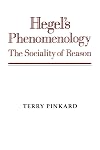
Perhaps *the* place to start if all you know about Hegel is that he's a metaphysical lunatic who thinks 'The Absolute' develops over time and individuals don't exist. Pinkard effectively destroys this silly reading, and provides an interesting one in its place: that Hegel is basically talking about the accounts we give of things and ourselves, and showing how they change over time. This leaves out a great deal though, reducing Hegel to a bit too much of a pragmatist. Pippin's work (e.g., show more 'Hegel's Idealism') is a good corrective, since it involves much more the transcendental question of how we come to know objects, or what an object is for us.
The best thing about this book, though, is that it makes the Phenomenology - one of the least coherent books of all time - coherent. Pinkard treats the opening chapters as they obviously ought to be treated, an investigation into the minimal conditions for an account of how things are (to put it in unhelpfully abstract terms). He argues that these minimal conditions include consciousness, and that the second section of the PhS is an investigation into the minimal conditions for an account of consciousness - which turns out to include self-consciousness, so that the next section is an investigation into *its* minimal conditions. The last, historical portion of the PhS is an account of how we came to this point. That all this makes sense is remarkable; not sure if it's right though. I suspect it just is incoherent.
One thing to note: I've read the PhS, and re-read most of it many times. It's not clear to me if this is helpful as an introduction to the reading of the PhS, but I'm certain it would be helpful to read alongside Hegel's work. And the introduction is excellent if you're looking for a short intro. show less
The best thing about this book, though, is that it makes the Phenomenology - one of the least coherent books of all time - coherent. Pinkard treats the opening chapters as they obviously ought to be treated, an investigation into the minimal conditions for an account of how things are (to put it in unhelpfully abstract terms). He argues that these minimal conditions include consciousness, and that the second section of the PhS is an investigation into the minimal conditions for an account of consciousness - which turns out to include self-consciousness, so that the next section is an investigation into *its* minimal conditions. The last, historical portion of the PhS is an account of how we came to this point. That all this makes sense is remarkable; not sure if it's right though. I suspect it just is incoherent.
One thing to note: I've read the PhS, and re-read most of it many times. It's not clear to me if this is helpful as an introduction to the reading of the PhS, but I'm certain it would be helpful to read alongside Hegel's work. And the introduction is excellent if you're looking for a short intro. show less
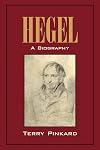
By no means a bad book, but ... Pinkard faces the challenge of writing the life of someone whose life was not, to say the least, stuffed to the gills with excitement and incident -- and he mostly succeeds.
The historical and cultural context surrounding Hegel gets filled in more colorfully than Hegel himself, I think, though it's nice to occasionally get glimpses of G. W. F. with his hair down -- we learn that he really liked playing cards, for example, and that he had an illegitimate child show more and ... well, Hegel lived.
I am halfway through the book and may update this when I am done. show less
The historical and cultural context surrounding Hegel gets filled in more colorfully than Hegel himself, I think, though it's nice to occasionally get glimpses of G. W. F. with his hair down -- we learn that he really liked playing cards, for example, and that he had an illegitimate child show more and ... well, Hegel lived.
I am halfway through the book and may update this when I am done. show less
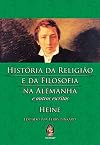
'História da Religião e da Filosofia na Alemanha' apresenta uma visão geral da história intelectual da Alemanha feita por uma figura central em seu desenvolvimento - Heinrich Heine (1797-1856). Ele discute a história da religião, da filosofia e da literatura de seu tempo, vista de sua perspectiva. Este trabalho é apresentado aqui baseado em uma nova tradução de Howard Pollack-Milgate. A obra também apresenta uma introdução de Terry Pinkard, que examina Heine tanto em relação a show more Hegel e a Nietzsche quanto como um pensador por seus próprios méritos. show less
Lists
You May Also Like


Associated Authors
Statistics
- Works
- 11
- Also by
- 2
- Members
- 595
- Popularity
- #42,222
- Rating
- 4.1
- Reviews
- 3
- ISBNs
- 37
- Languages
- 5
- Favorited
- 1