
Fran Wilde
Author of Updraft
About the Author
Fran Wilde was born in 1973 in Philadelphia, Pennsylvania. She is a graduate of the University of Virginia with a BA in English with Honors, Warren Wilson College with a MFA in poetry, and the University of Baltimore with a Masters in Information Architecture and Interior Design. Her previous jobs show more included a sailing instructor, Jewel's assistant, teacher, professor, and web and game developer. She writes for the blog GeekMom and runs the blog and podcast for Cooking the Books. She writes short stories and novels. Some of her short stories include Bent the Wing, Dark the Cloud, published in Beneath Ceaseless Skies, The Ghost Tide Chantey on Tor.com, You are Two Point Three Meters from Your Destination, published in Uncanny, and How to Walk through Historic Graveyards in the Digital Age, published in Asimov's Science Fiction. Her novel Updraft (2015) won the Andre Norton Award for Young Adult Science Fiction and Fantasy (2016). Her other novel is Cloudbound (2016). (Bowker Author Biography) show less
Image credit: photo credit: Dan Magus
Series
Works by Fran Wilde
Machina — Showrunner — 3 copies
The Bodiless Arm 2 copies
Seed Star 1 copy
Mayor for Today {novelette} 1 copy
The Assassin's Nest 1 copy
The Loud Politician 1 copy
Associated Works
His Hideous Heart: 13 of Edgar Allan Poe's Most Unsettling Tales Reimagined (2019) — Contributor — 327 copies, 8 reviews
From a Certain Point of View: 40 Stories Celebrating 40 Years of Return of the Jedi (2023) — Contributor — 214 copies, 6 reviews
The Maid and the Crocodile (2024) — Sensitivity reader - cane use, some editions — 170 copies, 10 reviews
The Year's Best Science Fiction Vol. 1: The Saga Anthology of Science Fiction 2020 (2020) — Contributor — 110 copies, 7 reviews
Some of the Best from Tor.com: 2020 Edition: A Tor.com Original (2021) — Contributor — 102 copies, 3 reviews
Screams from the Dark: 29 Tales of Monsters and the Monstrous (2022) — Contributor — 101 copies, 2 reviews
Uncanny Magazine Issue 24: September/October 2018 (Disabled People Destroy Science Fiction) (2018) — Contributor — 53 copies
Starstuff: Ten Science Fiction Stories to Celebrate New Possibilities (2025) — Contributor — 11 copies, 1 review
Beneath Ceaseless Skies Issue #261 (Tenth Anniversary Month Double-Issue I) (2018) — Contributor — 7 copies
Uncanny Magazine: The Best of 2018 — Contributor, some editions — 4 copies
Asimov's Science Fiction: Vol. 45, No. 1 & 2 [January/February 2021] (2020) — Contributor — 3 copies
Fearless Women Fall Sampler: Excerpts of Science Fiction and Fantasy Novels by Fearless Women (2018) — Contributor — 3 copies
Tagged
Common Knowledge
- Birthdate
- 1972
- Gender
- female
- Organizations
- Sunday Morning Transport (managing editor)
- Awards and honors
- World Fantasy Award Nominee (Special Award - Non-Professional, 2024)
Locus Award Finalist (Editor, 2026) - Nationality
- USA
- Birthplace
- Philadelphia, Pennsylvania, USA
- Associated Place (for map)
- Pennsylvania, USA
Members
Reviews

I went into Riverland blind, not even remembering Fran Wilde had written a couple short stories I had read. So I went in not expecting much, especially since none of the other 2019 Lodestar Award finalists really rose above the level of "pretty good." It took me a bit of time to orient myself in Riverland, and I wasn't sure what I thought because I wasn't exactly sure what was actually happening. (It's a tricky thing, fantasy books where something is magic and something else is only pretend show more magic.) But once I figured it out, I was hooked. Riverland is about two preteen sisters who use storytelling as a refuge from an awful home life; the older sister, Eleanor, is our viewpoint character as she works her hardest to protect her younger sister, and to keep herself out of the line of fire, too, by taking on responsibilities no child should have to. I found the book's depiction of her home life actually made me anxious, I was so worried about her. The way the fantasy elements are woven in is really effective, and though I struggled a tiny bit with the exposition, the fantasy world is evocative and the stakes high. show less
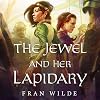
Lin, a member of royalty known as a "Jewel," and Sima, a "bound servant" to Lin known as "Lapidary," discover treason against the king and other political intrigue.
This book was categorized as science fiction in multiple places, which is part of the reason I picked it up. This is not even remotely sci-fi; it is 100% fantasy. (I know the line can be blurry sometimes, but that was really not the case here. This is decidedly fantasy.) That in and of itself would not be a problem; there are show more plenty of folks who equally like sci-fi and fantasy. I tend to prefer the former, but also have liked the latter in the past when it's done well.
The issue here is that it is not done well. As a short novella, there just really isn't enough time to do this story any justice. Instead of organic world building, it is almost entirely expositional. The characters are incredibly flat, even with there basically only being two of them for the majority of the text. The dialogue is slim and yet somehow felt repetitive.
The audiobook narrator was okay but not great. She really didn't make a vocal distinction between the characters, even with there again only really being two characters. Her general narration was a little too placid for something that was about royal intrigue and the end of an era.
Quite frankly, I was bored by this book and felt no real connection with the characters whatsoever. show less
This book was categorized as science fiction in multiple places, which is part of the reason I picked it up. This is not even remotely sci-fi; it is 100% fantasy. (I know the line can be blurry sometimes, but that was really not the case here. This is decidedly fantasy.) That in and of itself would not be a problem; there are show more plenty of folks who equally like sci-fi and fantasy. I tend to prefer the former, but also have liked the latter in the past when it's done well.
The issue here is that it is not done well. As a short novella, there just really isn't enough time to do this story any justice. Instead of organic world building, it is almost entirely expositional. The characters are incredibly flat, even with there basically only being two of them for the majority of the text. The dialogue is slim and yet somehow felt repetitive.
The audiobook narrator was okay but not great. She really didn't make a vocal distinction between the characters, even with there again only really being two characters. Her general narration was a little too placid for something that was about royal intrigue and the end of an era.
Quite frankly, I was bored by this book and felt no real connection with the characters whatsoever. show less
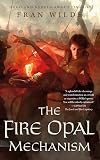
At first, I was surprised to find this book wasn’t a direct sequel to Jewel; I was hoping to know more about what happened after Lin and Sima’s stories. Well, I got what I wanted, just in a different way than expected. While this book takes place decades (centuries?) in the future – at a time where Jewels and Lapidaries seem like a myth – there is definitely a connection to the first book.
There are a lot more action, character development, and world-building in the second book and show more I’m here for it. Initially, it seems like there’s little to do with the time where gems could sing and there were those who could wield their power. We get a look into an all-too-possible future where a group, known as the Pressmen, seek to control knowledge by destroying all books and replacing them with their own Compendium.
This isn’t an uncommon theme in dystopias and it’s one that always sparks something within me. This is probably because I have quite a sizable hoard of books and I would certainly fight to keep them, and keep books of all kinds accessible to everyone! Reading about this sort of thing definitely instills me with rage and panic.
In this particular work, the Pressmen are collecting books to feed to their massive printing press which runs on the ink of words which have already been printed. The group plays on the fear of the public – they’ll recruit anyone they can and eliminate those who stand in their way. They offer a message of false equality; they seek to create a Compendium which will be free and accessible to all, to create a world where Knowledge is not kept behind the walls of schools, barring those who can’t afford it. On the surface, this is appealing to many, especially those who can’t afford higher education. However, the Compendium created by the Pressmen is one that can be changed and altered; it’s a book where one group controls the contents and can alter and delete as they see fit. Spooky!
Ania and Jorit find themselves reluctantly working together to fight the Pressmen and save what few books they can from the jaws of obliteration. By hiding in the clock, they discover a gem that transports them back in time. This is where the story connects back to Jewel and also gives an overview of how the Pressman gained traction and power. We get a better understanding of the powers of the gems and how they’re not as extinct as the population believes.
I like both of the characters and I enjoy that, so far, each book has a duo of ladies as the main characters. In both cases, I was getting some low-key romantic vibes too. Considering this book is much longer, we get a better look at the lives of Ania and Jorit and I think more of their personalities come through along the course of the story.
We also get some perspective from a former student turned Pressmen. His chapters give a lot of insight into the inner workings of the group and he has his own dealings with magical gems too. I liked the mix of character perspectives as well as the glimpses into different time periods of this universe. show less
There are a lot more action, character development, and world-building in the second book and show more I’m here for it. Initially, it seems like there’s little to do with the time where gems could sing and there were those who could wield their power. We get a look into an all-too-possible future where a group, known as the Pressmen, seek to control knowledge by destroying all books and replacing them with their own Compendium.
This isn’t an uncommon theme in dystopias and it’s one that always sparks something within me. This is probably because I have quite a sizable hoard of books and I would certainly fight to keep them, and keep books of all kinds accessible to everyone! Reading about this sort of thing definitely instills me with rage and panic.
In this particular work, the Pressmen are collecting books to feed to their massive printing press which runs on the ink of words which have already been printed. The group plays on the fear of the public – they’ll recruit anyone they can and eliminate those who stand in their way. They offer a message of false equality; they seek to create a Compendium which will be free and accessible to all, to create a world where Knowledge is not kept behind the walls of schools, barring those who can’t afford it. On the surface, this is appealing to many, especially those who can’t afford higher education. However, the Compendium created by the Pressmen is one that can be changed and altered; it’s a book where one group controls the contents and can alter and delete as they see fit. Spooky!
Ania and Jorit find themselves reluctantly working together to fight the Pressmen and save what few books they can from the jaws of obliteration. By hiding in the clock, they discover a gem that transports them back in time. This is where the story connects back to Jewel and also gives an overview of how the Pressman gained traction and power. We get a better understanding of the powers of the gems and how they’re not as extinct as the population believes.
I like both of the characters and I enjoy that, so far, each book has a duo of ladies as the main characters. In both cases, I was getting some low-key romantic vibes too. Considering this book is much longer, we get a better look at the lives of Ania and Jorit and I think more of their personalities come through along the course of the story.
We also get some perspective from a former student turned Pressmen. His chapters give a lot of insight into the inner workings of the group and he has his own dealings with magical gems too. I liked the mix of character perspectives as well as the glimpses into different time periods of this universe. show less

The Jewel and Her Lapidary is a story about transitions - about that space when one story is ending, and new stories are just about to begin. It is also a story about duty, loyalty, and sacrifice, and how sometimes those aren't enough to save the day. Taking place at the death of one kingdom and the genesis of a new order, the story occupies that netherworld that is often lost to history, a fact that is highlighted by the framing device used to tell it. Despite this tale's short length, show more Wilde manages to convey a complex fantasy world with an unusual and deadly system of magic and a social order that has arisen to deal with it while also infusing the characters with a weight and presence that one usually only finds in longer works.
The story of The Jewel and Her Lapidary is told in two modes, and alternates between them. The conventional aspect of the story is a straightforward fantasy that starts in the immediate aftermath of an act of betrayal that resulted in the murder of pretty much every member of the Jewel Court save for the Lapidary Lin and her Jewel, the Princess Sima. The architect of this treason is Lin's own father, formerly the Lapidary Aba who was bound to the King of the Jewel Court and who had embarked upon a plan born of insanity to overthrow the extant order and allow the armies of the neighboring Western Mountains under their warlord Remir to invade, apparently intending to offer his daughter and the princess as bargaining chips to gain something. The key here is that the plan is in fact born of insanity, and that insanity is part and parcel of the fantastical element that underpins the entire story - the existence of people called "Lapidaries" who can hear and use the powers of magical gemstones. The trouble is, the gems have a will of their own, and that will is apparently often inimical to humanity and drives these Jewels mad. The Lapidaries are bound to the service of people called Jewels, constrained by various oaths to prevent the gems from dominating their minds. Some gems are more powerful and sought after such as the Star Cabochon, while others are less impressive. Although not explicitly stated, the story implies that the more powerful a gem is, the more dangerous it is to the user.
This portion of the story is told by rotating between the viewpoints of Lin and Sima, focusing on one and then the other as they struggle to salvage at least something out of the shards of their shattered kingdom. For her part Lin must face the fact that it was her father who forsook his oaths and betrayed their kingdom, and the fact that she has to break her own oaths of duty in order to fulfill her promise of service to Sima. On her side of the ledger, Sima is faced with the task of navigating an impossible situation to save her people as best she can even though she was intentionally never prepared for politics. There is an almost claustrophobic element to this portion of the story, as most of it takes place within the confines of the Jeweled Palace, and the freedom of movement, and consequently freedom of action, that both Lin and Sima have gets progressively more constrained as the story goes on. As I said at the outset, this is a story about one story ending, and Lin and Sima must face this reality as it crashes into them as all of their options are closed off one by one, leaving them with no good choices, and only one that can even be described as not so bad. Wilde manages this story expertly, giving a sense of desperation and mounting terror and then offering just the smallest glimmer of hope underneath.
The other mode by which this story is told is a travelogue, written some undefined (but apparently quite lengthy) time after the events of the more conventionally told portion. In these sections, the reader is given tips on traveling to the Jeweled Valley, now a tourist destination with picturesque scenery, lovely walking trails, notable sites of interest, and quaint local crafts. These little saccharine snippets of guidebook information are set against the gritty and brutal reality of the other sections, and while they get something akin to the broad strokes of the history correct, they are devoid of crucial details - as if the reality of the society and dying struggles of the Jeweled Court have been entirely forgotten either intentionally or by accident. While the conventionally told portion is a well-told fantasy tale, what truly elevates this story is the meta-commentary provided by the travelogue sections highlights just how ephemeral the importance given to the tribulations faced by Lin and Sima actually was, and how critical events of the past can be obscured by the passage of time. Passages in which the relationship between a Jewel and their Lapidary are casually dismissed as "a conflation of multiple roles" show this decay with a stark harshness contained within the tranquil text of the travel guide. It is this casual disregard couched in almost soporific terms that is so very jarring, and makes it all the more brutal.
At first glance, The Jewel and Her Lapidary might seem like an ordinary, if well-written, little fantasy interlude. Once one starts the scratch the deceptively simple surface, however, one finds interlocking layer after layer of depth. Although Lin and Sima are the only two characters in the story who really feel fully fleshed out, their relationship is so intimately portrayed that it makes up for the fact that everyone else in the drama is essentially a one-note song. The fantastical magic set-up is intriguing, although it is not more than sketched out in outline form, but the characters sell the fact that the stakes surrounding it are incredibly high. Finally, the travel guide snippets worked into the interstitial areas of the story add a tone of almost bitter melancholy to the whole. All of these elements add together to make a beautiful novelette that has just enough to it to leave the reader feeling like they got a complete story, but still wanting more.
This review has also been posted to my blog Dreaming About Other Worlds. show less
The story of The Jewel and Her Lapidary is told in two modes, and alternates between them. The conventional aspect of the story is a straightforward fantasy that starts in the immediate aftermath of an act of betrayal that resulted in the murder of pretty much every member of the Jewel Court save for the Lapidary Lin and her Jewel, the Princess Sima. The architect of this treason is Lin's own father, formerly the Lapidary Aba who was bound to the King of the Jewel Court and who had embarked upon a plan born of insanity to overthrow the extant order and allow the armies of the neighboring Western Mountains under their warlord Remir to invade, apparently intending to offer his daughter and the princess as bargaining chips to gain something. The key here is that the plan is in fact born of insanity, and that insanity is part and parcel of the fantastical element that underpins the entire story - the existence of people called "Lapidaries" who can hear and use the powers of magical gemstones. The trouble is, the gems have a will of their own, and that will is apparently often inimical to humanity and drives these Jewels mad. The Lapidaries are bound to the service of people called Jewels, constrained by various oaths to prevent the gems from dominating their minds. Some gems are more powerful and sought after such as the Star Cabochon, while others are less impressive. Although not explicitly stated, the story implies that the more powerful a gem is, the more dangerous it is to the user.
This portion of the story is told by rotating between the viewpoints of Lin and Sima, focusing on one and then the other as they struggle to salvage at least something out of the shards of their shattered kingdom. For her part Lin must face the fact that it was her father who forsook his oaths and betrayed their kingdom, and the fact that she has to break her own oaths of duty in order to fulfill her promise of service to Sima. On her side of the ledger, Sima is faced with the task of navigating an impossible situation to save her people as best she can even though she was intentionally never prepared for politics. There is an almost claustrophobic element to this portion of the story, as most of it takes place within the confines of the Jeweled Palace, and the freedom of movement, and consequently freedom of action, that both Lin and Sima have gets progressively more constrained as the story goes on. As I said at the outset, this is a story about one story ending, and Lin and Sima must face this reality as it crashes into them as all of their options are closed off one by one, leaving them with no good choices, and only one that can even be described as not so bad. Wilde manages this story expertly, giving a sense of desperation and mounting terror and then offering just the smallest glimmer of hope underneath.
The other mode by which this story is told is a travelogue, written some undefined (but apparently quite lengthy) time after the events of the more conventionally told portion. In these sections, the reader is given tips on traveling to the Jeweled Valley, now a tourist destination with picturesque scenery, lovely walking trails, notable sites of interest, and quaint local crafts. These little saccharine snippets of guidebook information are set against the gritty and brutal reality of the other sections, and while they get something akin to the broad strokes of the history correct, they are devoid of crucial details - as if the reality of the society and dying struggles of the Jeweled Court have been entirely forgotten either intentionally or by accident. While the conventionally told portion is a well-told fantasy tale, what truly elevates this story is the meta-commentary provided by the travelogue sections highlights just how ephemeral the importance given to the tribulations faced by Lin and Sima actually was, and how critical events of the past can be obscured by the passage of time. Passages in which the relationship between a Jewel and their Lapidary are casually dismissed as "a conflation of multiple roles" show this decay with a stark harshness contained within the tranquil text of the travel guide. It is this casual disregard couched in almost soporific terms that is so very jarring, and makes it all the more brutal.
At first glance, The Jewel and Her Lapidary might seem like an ordinary, if well-written, little fantasy interlude. Once one starts the scratch the deceptively simple surface, however, one finds interlocking layer after layer of depth. Although Lin and Sima are the only two characters in the story who really feel fully fleshed out, their relationship is so intimately portrayed that it makes up for the fact that everyone else in the drama is essentially a one-note song. The fantastical magic set-up is intriguing, although it is not more than sketched out in outline form, but the characters sell the fact that the stakes surrounding it are incredibly high. Finally, the travel guide snippets worked into the interstitial areas of the story add a tone of almost bitter melancholy to the whole. All of these elements add together to make a beautiful novelette that has just enough to it to leave the reader feeling like they got a complete story, but still wanting more.
This review has also been posted to my blog Dreaming About Other Worlds. show less
Lists
mom (1)
Awards


You May Also Like


Associated Authors
Statistics
- Works
- 36
- Also by
- 50
- Members
- 1,414
- Popularity
- #18,191
- Rating
- 3.7
- Reviews
- 80
- ISBNs
- 54
- Languages
- 1
- Favorited
- 1
