
Darcy Ribeiro (1922–1997)
Author of The Brazilian People: The Formation and Meaning of Brazil
About the Author
Darcy Ribeiro was born in Minas Gerais, Brazil, in 1922. World-renowned anthropologist, minister of education, and personal adviser to President Goulart, Ribeiro lived in exile after the military coup of 1964. Since his return to Brazil, he has added another dimension to his image of Renaissance show more man---educator, distinguished statesman, lieutenant governor of Rio de Janeiro, anthropologist, and now a man of letters. Maira (1978) is the most acclaimed of his novels, with translations in French, German, Spanish, and Italian. The novel's major character is Isaias, a young Amazon Indian who attends a Catholic seminary in Rome and returns to his tribe to become its chieftain. Alma, a young white woman in search of her own spiritual fulfillment, joins a group of missionaries that work among the Mairum, Isaias's people. Their stories of return and of discovery, respectively, become a metaphor for the irreconcilable conflict between the rich and complex culture of the Indians and the modern technological Western civilization. Maira is an elegy of a culture that is disappearing. (Bowker Author Biography) Darcy Ribeiro is one of Brazil's leading 20th-century intellectuals, known internationally both for his work in Indian affairs & for his political activism. (Bowker Author Biography) show less
Works by Darcy Ribeiro
UnB: invenção e descaminho 10 copies
As Americas E A Civilizacao - Processo De Formacao E Causas Do Desenvolvimento Desigual Dos Povos Americanos (Em Portugues do Brasil) (2019) 7 copies
La universidad latinoamericana 4 copies
Universidade para quê? 3 copies
O Dilema da America Latina 3 copies
Educação como prioridade 2 copies
La pretensión procesal y la tutela judicial efectiva hacia una teoría procesal del Derecho (2004) 2 copies
O livro dos CIEPs 2 copies
Confissóes 1 copy
Configuraciones 1 copy
America Latina Nacao 1 copy
O indigenista Rondon 1 copy
Universidade do 3o. milênio 1 copy
Associated Works
SUMA Etnológica Brasileira Arte e Índia (Vol 3) — Contributor — 1 copy
Tagged
Common Knowledge
- Birthdate
- 1922-10-26
- Date of death
- 1997-02-17
- Gender
- male
- Education
- Grupo Escolar Gonçalves Chaves
Ginásio Episcopal de Montes Claros - Occupations
- anthropologist
author
politician - Organizations
- State University of Norte Fluminense (founder)
University of Brasilia (co-founder) - Awards and honors
- Brazilian Academy of Letters (1992)
- Nationality
- Brazil
- Birthplace
- Montes Claros, Brazil
- Places of residence
- Montes Claros, Brazil
- Place of death
- Brasilia, Brazil
- Map Location
- Brazil
Members
Reviews
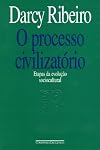
Como compreender as múltiplas sociedades da América pré-colombiana, que abrigava desde civilizações altamente desenvolvidas até tribos nômades? Como compreender os próprios europeus, que, com diferentes formações sócio-culturais, vieram para cá e ocuparam extensas áreas? Como situar, em relação a esses povos, os numerosos africanos desgarrados trazidos para o Brasil como mão-de-obra escrava? Foram questões dessa natureza que levaram Darcy Ribeiro a empreender, em meados dos show more anos 60, durante seu exílio no Uruguai, a tarefa monumental de repensar as etapas de evolução da humanidade. O resultado é um livro único, revelador da verve provocativa e estimulante deste grande pensador. show less
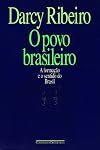
Interessante, até pela influência nefasta que teve em nossa esquerda, mas um fracasso. Propõe o Brasil como uma nova, e melhor, Roma. Embuste de autoengano de quem vivia em rebelião contra Deus.
O que não significa que não tenha algumas informações e análises úteis.
O que não significa que não tenha algumas informações e análises úteis.

This novel by a Brazilian anthropologist was a challenging read for me: at times fascinating and imaginative, at times frustrating and opaque. Ribeiro set himself the task of depicting fictionally the impact of western "civilization" on a remote tribe of Indians, the Mairun, deep in the forested regions of the Amazon. To do so, he mixes sections that tell of the Mairun origin myths and customs with stories told by people as varied as a Mairun who almost became a Roman Catholic priest, the show more Mairun guide of souls, other Mairuns, various missionaries, a half-Mairun river trader, an investigator, and others, and it was sometimes difficult to keep track of who was who.
The novel begins with the discovery of a dead white woman on the beach by the river, who has apparently died while giving birth to twins. Or was she murdered? By the end of the book, we have some idea of how she got there. She was a troubled young woman, Alma, who ended up on the same small plane as the Mairun man who had given up studying in Rome to be a priest and was returning home: Isías in his Western name, Avá in his Mairun name. As a Mairun, he is destined to become the next chieftain; the old one has just died (although apparently he didn't know this when he decided to leave Rome and return home). Alma ends up accompanying Isías/Avá by canoe down the river first to the monastery/convent where he originally studied as she had thought she would somehow help the nuns there, and then to his village. Needless to say, she is a curiosity there, but eventually she feels very at home; Isías/Avá has more difficulty fitting back in as he has become neither white nor Mairun.
This is the broadest outline of the plot, but the plot is just there to hang the ideas on. A lot of this book is about religion, both Mairun beliefs and Catholic and evangelical Protestant beliefs, and some of this, especially the Catholic material was hard for me to follow, especially since a lot of it was given in Latin and I didn't want to type it all in to Google Translate! The novel's sections are named largely with Christian concepts: Antiphony, Homily, Gospel, and Corpus. I feel I missed a lot of the Christian references and ideas.
On the other hand, the parts about the Mairun life and mythology were the richest and most compelling, and often beautifully written (and often quite earthy too), although occasionally I was very aware that an anthropologist was writing the book! (As far as I can tell, the Mairun are a made-up tribe, but I'm sure Ribeiro took ideas about customs, kinship, and origin myths from indigenous people he had studied.) I was quite taken with the guide of souls, the complex way the Mairun organize their intergroup relationships, and various individuals and their interactions.
Another aspect of the novel is how Isías/Avá attempts to reclaim his Mairun heritage but remains a prisoner in a way of all his years with the priests both in Brazil and in Rome. His struggle is a metaphor for one of the ways the indigenous cultures were destroyed; more overt methods make an appearance later on in the book.
This is a complex and complicated novel, and I don't feel it entirely works. But I am glad I read it, and I'm still thinking about it.
As a side note, I bought this book because I became interested in Aventura: The Vintage Library of Contemporary World literature, after reading Donoso's A House in the Country earlier this month (see this post for a list of titles); I had never heard of it before. These books are beautifully designed and printed on very nice paper, but this book at least was marred by careless proofreading (e.g., "wit" for "with"). show less
The novel begins with the discovery of a dead white woman on the beach by the river, who has apparently died while giving birth to twins. Or was she murdered? By the end of the book, we have some idea of how she got there. She was a troubled young woman, Alma, who ended up on the same small plane as the Mairun man who had given up studying in Rome to be a priest and was returning home: Isías in his Western name, Avá in his Mairun name. As a Mairun, he is destined to become the next chieftain; the old one has just died (although apparently he didn't know this when he decided to leave Rome and return home). Alma ends up accompanying Isías/Avá by canoe down the river first to the monastery/convent where he originally studied as she had thought she would somehow help the nuns there, and then to his village. Needless to say, she is a curiosity there, but eventually she feels very at home; Isías/Avá has more difficulty fitting back in as he has become neither white nor Mairun.
This is the broadest outline of the plot, but the plot is just there to hang the ideas on. A lot of this book is about religion, both Mairun beliefs and Catholic and evangelical Protestant beliefs, and some of this, especially the Catholic material was hard for me to follow, especially since a lot of it was given in Latin and I didn't want to type it all in to Google Translate! The novel's sections are named largely with Christian concepts: Antiphony, Homily, Gospel, and Corpus. I feel I missed a lot of the Christian references and ideas.
On the other hand, the parts about the Mairun life and mythology were the richest and most compelling, and often beautifully written (and often quite earthy too), although occasionally I was very aware that an anthropologist was writing the book! (As far as I can tell, the Mairun are a made-up tribe, but I'm sure Ribeiro took ideas about customs, kinship, and origin myths from indigenous people he had studied.) I was quite taken with the guide of souls, the complex way the Mairun organize their intergroup relationships, and various individuals and their interactions.
Another aspect of the novel is how Isías/Avá attempts to reclaim his Mairun heritage but remains a prisoner in a way of all his years with the priests both in Brazil and in Rome. His struggle is a metaphor for one of the ways the indigenous cultures were destroyed; more overt methods make an appearance later on in the book.
This is a complex and complicated novel, and I don't feel it entirely works. But I am glad I read it, and I'm still thinking about it.
As a side note, I bought this book because I became interested in Aventura: The Vintage Library of Contemporary World literature, after reading Donoso's A House in the Country earlier this month (see this post for a list of titles); I had never heard of it before. These books are beautifully designed and printed on very nice paper, but this book at least was marred by careless proofreading (e.g., "wit" for "with"). show less
O povo brasileiro: A formacao e o sentido do Brasil (Estudos de antropologia da civilizacao) (Portuguese Edition) by Darcy Ribeiro
Não dá pra conhecer o Brasil sem ler este livro.
Lists
Awards


You May Also Like


Associated Authors
Statistics
- Works
- 81
- Also by
- 1
- Members
- 846
- Popularity
- #30,226
- Rating
- 3.6
- Reviews
- 12
- ISBNs
- 115
- Languages
- 8