
Randy Roberts
Author of Blood Brothers: The Fatal Friendship Between Muhammad Ali and Malcolm X
About the Author
Randy Roberts, a native of Pittsburgh, is professor of history at Purdue University
Image credit: Jason Tefzloff
Works by Randy Roberts
American Experiences: Readings in American History, Vol. 1: To 1877 (American Experiences) (1998) 8 copies
Pittsburgh Sports: Stories From The Steel City (The Library of Pittsburgh Sports History) (2000) 5 copies
American Experiences: Readings in American History : Since 1865 (American Experiences (Addison Wesley)) (1998) 3 copies
Associated Works
America Past and Present, Volume I: Chapters 1-16 (6th Edition) (1997) — some editions — 88 copies, 3 reviews
Tagged
Common Knowledge
- Birthdate
- 1951-01-08
- Gender
- male
Members
Reviews
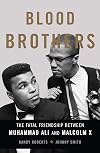
I've never been a fan of boxing and I'm no expert on the Civil Rights era, but this was a very compelling read. Malcolm X was a minister for the Nation of Islam (NOI) and basically a black supremacist. Cassius Clay was a talented young boxer with a big mouth and a gift for self-promotion. Their unlikely friendship, however, had dangerous results for both of them.
Malcolm X disagreed with the non-confrontational and patient "we shall overcome" approach of Martin Luther King, advocating instead show more for violent means if necessary to secure respect and rights for blacks. He became a rising star in the NOI and was known as "The Messenger" for Elijah Muhammad, the frail but self-proclaimed prophet Muhammad, for his fierce loyalty and captivating speaking ability.
Cassius Clay was also a rising star in the boxing world. After winning a gold medal at the Rome Olympics, he commenced a professional boxing career, winning most of his fights by knockout. He adopted an egotistical style of self-promotion but was really a quiet and thoughtful person who strongly believed in clean living and was drawn to the doctrines of the NOI because of his upbringing and the friendship with Malcolm X.
At the time Clay defeated Sonny Liston for the heavyweight title, Malcolm's standing in the NOI was declining. He was bothered by the passive stand the NOI took on black rights, but he'd also learned of Elijah Muhammad's many infidelities and was bothered by the NOI's exploitation of poor blacks. Clay, however, became caught in the middle between Malcolm and Elijah, and when Malcolm was ousted from the movement, Elijah pulled Clay in closer and gave him a new name: Muhammed Ali.
This is a fascinating look at the lives of both men and their relationship with the NOI - a relationship that eventually cost Malcolm X his life. I remember watching part of the fights against Leon Spinks as a kid in 1978, but knew nothing of his highly controversial past. I knew even less about Malcolm X, and was surprised at his extreme racism prior to his split with the NOI. (Honestly, neither of the men came off as likable, but the authors really illustrate the reasons behind their views and I felt I understood why the felt the way they did.) But this was an interesting book, and sometimes I could hardly put it down. (I received an advance copy from Amazon Vine.) show less
Malcolm X disagreed with the non-confrontational and patient "we shall overcome" approach of Martin Luther King, advocating instead show more for violent means if necessary to secure respect and rights for blacks. He became a rising star in the NOI and was known as "The Messenger" for Elijah Muhammad, the frail but self-proclaimed prophet Muhammad, for his fierce loyalty and captivating speaking ability.
Cassius Clay was also a rising star in the boxing world. After winning a gold medal at the Rome Olympics, he commenced a professional boxing career, winning most of his fights by knockout. He adopted an egotistical style of self-promotion but was really a quiet and thoughtful person who strongly believed in clean living and was drawn to the doctrines of the NOI because of his upbringing and the friendship with Malcolm X.
At the time Clay defeated Sonny Liston for the heavyweight title, Malcolm's standing in the NOI was declining. He was bothered by the passive stand the NOI took on black rights, but he'd also learned of Elijah Muhammad's many infidelities and was bothered by the NOI's exploitation of poor blacks. Clay, however, became caught in the middle between Malcolm and Elijah, and when Malcolm was ousted from the movement, Elijah pulled Clay in closer and gave him a new name: Muhammed Ali.
This is a fascinating look at the lives of both men and their relationship with the NOI - a relationship that eventually cost Malcolm X his life. I remember watching part of the fights against Leon Spinks as a kid in 1978, but knew nothing of his highly controversial past. I knew even less about Malcolm X, and was surprised at his extreme racism prior to his split with the NOI. (Honestly, neither of the men came off as likable, but the authors really illustrate the reasons behind their views and I felt I understood why the felt the way they did.) But this was an interesting book, and sometimes I could hardly put it down. (I received an advance copy from Amazon Vine.) show less
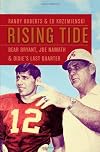
I thought the authors did a fine job of conveying the culture of late 50's/early 60's Beaver Falls, PA and the University of Alabama campus of the early-mid 60's. This is primarily a sports book with the history of the era in the background, but fascinating for those of us from a younger generation (in my case, Namath retired from the NFL around the time I was born) to see the intersection of Namath, Bryant, and even the controversy involving Bryant and the Saturday Evening Post.
I attended a conference in San Antonio, Texas last week, and before my trip, I checked this book out from the library. I knew the basic story of the Alamo, but I thought that I might enjoy my visit to the site more if I knew a few more details. This book describes the events leading up to the battle at the Alamo and provides a comprehensive description of the 13 day siege in which Mexican General Santa Anna faces off against 183 Texan revolutionaries at the Alamo. With larger-than-life show more figures, such as Davy Crockett, Jim Bowie, and William Travis, the story of the Alamo becomes a captivating story of courage and bravery. But Roberts and Olson don't stop there. They also include several chapters about how the Alamo has been remembered throughout history. They describe the fight by the Daughters of the Texas Revolution to preserve the historical site, the Hollywood perspectives of the Alamo provided by Walt Disney and John Wayne, and the alternative views of the battle provided by recent historians. At times, these final few chapters felt a little disconnected, including almost too much detail about visits to and mentions of the Alamo. But overall, I learned a lot from this book. It's a good overview both of the history of the Alamo and the way that history is shaped and reshaped through the ages. show less
Got this from my mom from the CCHS library. Last book I read while we lived in Oceanside in 2023. Provided a good insight on the history of the battle and helped to shed light on some of the myths. Had additional portions about more recent history of the site and its preservation that were not as interesting to me. Would not really recommend reading.
Lists
New York Yankees (1)
Awards


You May Also Like


Associated Authors
Statistics
- Works
- 35
- Also by
- 4
- Members
- 1,079
- Popularity
- #23,833
- Rating
- 3.9
- Reviews
- 10
- ISBNs
- 119
- Languages
- 1