
Sarah R. Shaber
Author of Simon Said
About the Author
Series
Works by Sarah R. Shaber
Tar Heel Dead: Tales of Mystery and Mayhem from North Carolina (2005) — Editor; Contributor — 26 copies
The Louise Pearlie series 1 copy
Associated Works
A Taste of Murder: Diabolically Delicious Recipes from Contemporary Mystery Writers (1999) — Contributor — 48 copies, 1 review
A Sampling of Sleuths: Short Stories from Bingeworthy Mystery Authors (2023) — Contributor — 16 copies, 3 reviews
Dead of Winter: Chilling New Tales of Crime — Contributor — 4 copies
Tagged
Common Knowledge
- Canonical name
- Shaber, Sarah R.
- Gender
- female
- Places of residence
- Raleigh, North Carolina, USA
- Associated Place (for map)
- North Carolina, USA
Members
Reviews

Simon Shaw is the perfect protagonist for a cozy mystery; unlike other cozies, which dump corpses behind bakeries or in bookstores, Shaber deposits a 70-year-old corpse in the middle of an archeological dig at a college, where a depressed and socially awkward professor of history is happy to take up the research to put a name to the skull, and a name to the bullet inside of that skull. As an amateur detective, Shaw utilizes his skill set as an academic and researcher, and pieces together the show more mystery in a way that is purposeful and conceivable. While one of the two mysteries of the text isn't quite so meticulous, Shaw's own efforts are strong.
So why just three stars? Shaw himself is repugnant, albeit far less so than some of his colleagues. Emotionally crippled by the departure of his wife, Shaw is initially presented as a wounded animal, and lacks sympathy (when Shaw himself analyzes his failed marriage he can understand how his actions and decisions lead to the separation, and so can I). However, such emotional frailty could be overlooked if Shaw himself wasn't such blatant a sexist. Although a colleague in the history department is labeled a sexist, it is Shaw himself who proves far more demeaning and critical: the colleague dismisses women as a waste of time, while Shaw criticizes the "love interest's" choice of clothing, eating habits, and choice of beverages in a way that exerts his superiority over an independent and successful woman. To Shaw, she lacks autonomy and instead functions as an inevitable addition to his life - after all, once she works through her far-more-complicated emotions he will be there to indulge in the relationship of his choosing.
As much as I enjoy Shaw as an amateur detective, his personal life is enough to keep me from pursuing the series. show less
So why just three stars? Shaw himself is repugnant, albeit far less so than some of his colleagues. Emotionally crippled by the departure of his wife, Shaw is initially presented as a wounded animal, and lacks sympathy (when Shaw himself analyzes his failed marriage he can understand how his actions and decisions lead to the separation, and so can I). However, such emotional frailty could be overlooked if Shaw himself wasn't such blatant a sexist. Although a colleague in the history department is labeled a sexist, it is Shaw himself who proves far more demeaning and critical: the colleague dismisses women as a waste of time, while Shaw criticizes the "love interest's" choice of clothing, eating habits, and choice of beverages in a way that exerts his superiority over an independent and successful woman. To Shaw, she lacks autonomy and instead functions as an inevitable addition to his life - after all, once she works through her far-more-complicated emotions he will be there to indulge in the relationship of his choosing.
As much as I enjoy Shaw as an amateur detective, his personal life is enough to keep me from pursuing the series. show less
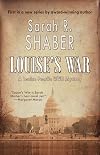
American involvement in World War II is six months old, and everybody and her sister flocks to the nation’s capital to find a job. Louise Pearlie, whose husband has died years before and can’t bear to remain in rural North Carolina, has brought her excellent secretarial skills and work experience to the Office of Strategic Services, the intelligence organization. Gossip has it that the Allies will invade North Africa within months, hence the OSS search for maps of the coastline and show more experts who understand the beaches.
One such authority is Gerald Bloch, a French Jew married to a school friend of Louise’s. From what little news she’s received, Louise gathers that Gerald and Rachel are stuck in Marseilles, while reports say that the Vichy government has made sure that no Jews will receive exit visas. Deportation looms, and Louise, who owes Rachel a huge debt, wishes she could help.
Theoretically, the OSS could claim that Gerald Bloch would provide necessary information concerning the upcoming invasion. But the file on him goes missing during the confusion ensuing from the fatal heart attack suffered by the director of Louise’s section. At first, she thinks nothing of this, but soon, at tremendous risk, she sets out to discover how and why a sensitive dossier could simply vanish, and whether recovering it would save the Blochs.
It’s an excellent premise, if a mite dependent on coincidence, but Shaber’s narrative has a lot going for it. For starters, I like how she’s drawn Louise. Growing up poor and churchy, Louise doesn’t quite know what to make of the big city, where old values get shunted aside in the business of making war. The tremendous crush of people in a hurry and under pressure, with ambition and money to spend, offers temptations she’s not used to, but which attract her. Her parents want her to remarry, but she enjoys her independence, even if she wonders what it would feel like to have the financial security and creature comforts she’d never afford on her own.
That said, Louise also knows that many, if not most, men expect women to keep quiet and use their brains only to help solve male problems, for which, of course, they’ll receive no credit. But her common sense doesn’t prevent her from wanting what might not be good for her. I like that complexity.
The other winning facet of Louise’s War is the atmosphere. Whether it’s fabric shortages, the bus company’s refusal to hire Black drivers, people trying to get around the sugar ration, or the habit of traveling GIs tossing letters out train windows, knowing that someone will stamp and mail them, Shaber knows her ground and deploys details with skill.
Given that keen eye and grasp of psychology, I’m surprised to stumble across a cardinal error. Louise’s first-person narration works just fine, but, for some reason, Shaber shoehorns brief, usually first-person, sections belonging to minor characters, ostensibly to reveal information Louise couldn’t know. Since these look as clumsy as they sound, you have to ask, Does the reader need to know? I doubt it.
Pretty much everything would have kept until Louise manages to discover it, and her ignorance could have heightened the tension, complicating her attempts to parse conflicting evidence. As it is, the story telegraphs answers to a couple major questions when, with little effort, the author might have shaded the account of events to create doubt and keep the reader guessing along with Louise.
Less glaring to the general reader, though unfortunately common in fiction, the Jewish characters don’t feel genuine, which turns them into a narrative convenience. I also object to how certain authors consistently say “Nazis” to identify those who invaded other countries and committed mass murder and expropriation, as though “ordinary” Germans distanced themselves from those crimes.
I can’t help think that the author, or her publisher, wants to separate people we like from those we can hate with abandon. Too bad. Similarly, the novel presents a likable, admirable protagonist, born and raised in North Carolina, who befriends the Black women servants in her boardinghouse without a second thought. That seems a little easy.
Nevertheless, in other ways Louise’s War brilliantly presents a city during conflict, a heroine whose voice draws you in, and a mystery that will keep you turning the pages. show less
One such authority is Gerald Bloch, a French Jew married to a school friend of Louise’s. From what little news she’s received, Louise gathers that Gerald and Rachel are stuck in Marseilles, while reports say that the Vichy government has made sure that no Jews will receive exit visas. Deportation looms, and Louise, who owes Rachel a huge debt, wishes she could help.
Theoretically, the OSS could claim that Gerald Bloch would provide necessary information concerning the upcoming invasion. But the file on him goes missing during the confusion ensuing from the fatal heart attack suffered by the director of Louise’s section. At first, she thinks nothing of this, but soon, at tremendous risk, she sets out to discover how and why a sensitive dossier could simply vanish, and whether recovering it would save the Blochs.
It’s an excellent premise, if a mite dependent on coincidence, but Shaber’s narrative has a lot going for it. For starters, I like how she’s drawn Louise. Growing up poor and churchy, Louise doesn’t quite know what to make of the big city, where old values get shunted aside in the business of making war. The tremendous crush of people in a hurry and under pressure, with ambition and money to spend, offers temptations she’s not used to, but which attract her. Her parents want her to remarry, but she enjoys her independence, even if she wonders what it would feel like to have the financial security and creature comforts she’d never afford on her own.
That said, Louise also knows that many, if not most, men expect women to keep quiet and use their brains only to help solve male problems, for which, of course, they’ll receive no credit. But her common sense doesn’t prevent her from wanting what might not be good for her. I like that complexity.
The other winning facet of Louise’s War is the atmosphere. Whether it’s fabric shortages, the bus company’s refusal to hire Black drivers, people trying to get around the sugar ration, or the habit of traveling GIs tossing letters out train windows, knowing that someone will stamp and mail them, Shaber knows her ground and deploys details with skill.
Given that keen eye and grasp of psychology, I’m surprised to stumble across a cardinal error. Louise’s first-person narration works just fine, but, for some reason, Shaber shoehorns brief, usually first-person, sections belonging to minor characters, ostensibly to reveal information Louise couldn’t know. Since these look as clumsy as they sound, you have to ask, Does the reader need to know? I doubt it.
Pretty much everything would have kept until Louise manages to discover it, and her ignorance could have heightened the tension, complicating her attempts to parse conflicting evidence. As it is, the story telegraphs answers to a couple major questions when, with little effort, the author might have shaded the account of events to create doubt and keep the reader guessing along with Louise.
Less glaring to the general reader, though unfortunately common in fiction, the Jewish characters don’t feel genuine, which turns them into a narrative convenience. I also object to how certain authors consistently say “Nazis” to identify those who invaded other countries and committed mass murder and expropriation, as though “ordinary” Germans distanced themselves from those crimes.
I can’t help think that the author, or her publisher, wants to separate people we like from those we can hate with abandon. Too bad. Similarly, the novel presents a likable, admirable protagonist, born and raised in North Carolina, who befriends the Black women servants in her boardinghouse without a second thought. That seems a little easy.
Nevertheless, in other ways Louise’s War brilliantly presents a city during conflict, a heroine whose voice draws you in, and a mystery that will keep you turning the pages. show less
Rating: 3.5* of five
The Book Report: First of the Dr. Simon Shaw, forensic historian, series set in 1990s Raleigh, North Carolina. Simon Shaw's not having a good end of spring semester, 1996. His wife has left him, sending him into a deep depression. His colleagues are concerned, one of them to the point of using his depression as a lever to pry Simon out of small Kenan College's last tenured history professorship, in an academic-politics war that could end a career.
But it's the corpse in show more the college's historical home-cum-museum that's causing most of the trouble for Simon. In fact, it's about to get him killed, despite being seventy years dead. You see, Anne Bloodworth, the rightful heiress of the property, disappeared one April night in 1926, never to be seen or heard from again. Until a body is discovered in a routine excavation of the old house's vanished outdoor kitchen site.
Simon is called to the scene, told the probable timing of the death, and using clues such as a quilt in which the gun-shot corpse was wrapped, the jewelry the corpse still wore, and the lore of the house, gives Raleigh Police detective Otis Gates and Police Department counsel Julia McGloughlan an ID for the vic...so what, the killer's dead by now, can't prosecute a dead person, and let's all go on with life.
Simon can't just go on with life, and besides he's been depressed about his life since his wife left, so he latches on to the case. His investigation takes him into the world of upper-crust Raleigh before Jim Crow was tamed, into dusty library stacks, into microfiche readers and card catalogs, and requires him to survive murder attempts that make no sense in a case this old.
Until they do, in a moment of revelation that had me squirming in acute discomfort, and fanning pages to find out what was going to happen next.
My Review: Metaphorically speaking, that is, since one can't fan pages on a Kindle. Bella Rosa Books, a small press with the specific mission of rescuing out-of-print series mysteries for new fans to find, reprinted this 1997 St. Martin's Press Malice Domestic contest winner in 2011, and a Kindle version was made at the same time. Very wisely, the first book in the five-book series was free on Kindle for a few weeks, and even now is free for Prime members to read. It's whetted my appetite for the others, so their decision to forego immediate revenue for future sales is proving to be effective in at least one case.
This is not to say there are no issues with the Kindle edition. In several places, too many to be overlooked and forgiven, words or dates are missing (eg, David Morgan has all the Rolling Stone issues printed since . SINCE WHEN?!). Some flaws, such as Simon and Julia's attraction for each other being glued on to the plot, and the underuse of a perfectly delightful red herring suspect, are too minor to register as more than niggles.
In the end, it's the atmospherics of the book, the evocation of a vanished moment—and good riddance to it—that make the book fun. Simon is an entertaining sleuth, his pleasantly hang-dog ways and his sharp mind (if conveniently distractable eye) making him less a Holmes figure than a Maigret one. He's relatable and still plausible. And the book is good fun. Kindlers of the world, spend that $2.99 with no fear of wasting your money! show less
The Book Report: First of the Dr. Simon Shaw, forensic historian, series set in 1990s Raleigh, North Carolina. Simon Shaw's not having a good end of spring semester, 1996. His wife has left him, sending him into a deep depression. His colleagues are concerned, one of them to the point of using his depression as a lever to pry Simon out of small Kenan College's last tenured history professorship, in an academic-politics war that could end a career.
But it's the corpse in show more the college's historical home-cum-museum that's causing most of the trouble for Simon. In fact, it's about to get him killed, despite being seventy years dead. You see, Anne Bloodworth, the rightful heiress of the property, disappeared one April night in 1926, never to be seen or heard from again. Until a body is discovered in a routine excavation of the old house's vanished outdoor kitchen site.
Simon is called to the scene, told the probable timing of the death, and using clues such as a quilt in which the gun-shot corpse was wrapped, the jewelry the corpse still wore, and the lore of the house, gives Raleigh Police detective Otis Gates and Police Department counsel Julia McGloughlan an ID for the vic...so what, the killer's dead by now, can't prosecute a dead person, and let's all go on with life.
Simon can't just go on with life, and besides he's been depressed about his life since his wife left, so he latches on to the case. His investigation takes him into the world of upper-crust Raleigh before Jim Crow was tamed, into dusty library stacks, into microfiche readers and card catalogs, and requires him to survive murder attempts that make no sense in a case this old.
Until they do, in a moment of revelation that had me squirming in acute discomfort, and fanning pages to find out what was going to happen next.
My Review: Metaphorically speaking, that is, since one can't fan pages on a Kindle. Bella Rosa Books, a small press with the specific mission of rescuing out-of-print series mysteries for new fans to find, reprinted this 1997 St. Martin's Press Malice Domestic contest winner in 2011, and a Kindle version was made at the same time. Very wisely, the first book in the five-book series was free on Kindle for a few weeks, and even now is free for Prime members to read. It's whetted my appetite for the others, so their decision to forego immediate revenue for future sales is proving to be effective in at least one case.
This is not to say there are no issues with the Kindle edition. In several places, too many to be overlooked and forgiven, words or dates are missing (eg, David Morgan has all the Rolling Stone issues printed since . SINCE WHEN?!). Some flaws, such as Simon and Julia's attraction for each other being glued on to the plot, and the underuse of a perfectly delightful red herring suspect, are too minor to register as more than niggles.
In the end, it's the atmospherics of the book, the evocation of a vanished moment—and good riddance to it—that make the book fun. Simon is an entertaining sleuth, his pleasantly hang-dog ways and his sharp mind (if conveniently distractable eye) making him less a Holmes figure than a Maigret one. He's relatable and still plausible. And the book is good fun. Kindlers of the world, spend that $2.99 with no fear of wasting your money! show less
I really liked this book. The police were intelligent, the amateur wasn't an idiot, and no one wears vintage clothes or shoes they can't afford. The amateur actually solves a mystery through research and deduction, rather than just floundering around until the criminal gets bored and confesses. The author did a good job of writing the kind of mildly snarky dialog that my friends use, and, wonder of wonders, captures that amazing feeling you get while doing research on an interesting topic. I show more am totally willing to forgive the few minor formatting flaws. I can't wait to read another one. show less
Awards
You May Also Like


Associated Authors
Statistics
- Works
- 18
- Also by
- 4
- Members
- 812
- Popularity
- #31,426
- Rating
- 3.7
- Reviews
- 44
- ISBNs
- 75
- Favorited
- 2