
Marc Prensky
Author of Don't Bother Me Mom--I'm Learning!
About the Author
Marc Prensky is an internationally acclaimed speaker, author, consultant, and designer in the field of education. He is the founder and executive director of The Global Future Education Foundation and institute. Contact Marc at marcprensky@gmail.com.
Works by Marc Prensky
Tagged
Common Knowledge
- Gender
- male
Members
Reviews
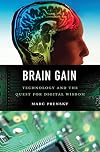
Marc Prensky has some good ideas.
Unfortunately this book (with proper editing) would have been better as an extended article for a magazine like Atlantic or The New Yorker. The book is vague, repetitive and meandering. There is a lot of speculation and a disappointingly small amount of information about current technologies. The author undermines himself by using terms like evolution and wisdom in ways that stretch the definitions of these words to their limits. In the cases where the show more author refers to existing technology, he does so without having fully researched them, and fails to offer enough information. When the author refers to neurological research he mostly relies on popularizations and not very good ones at that. He does not appear to have gone back to primary sources, nor to really understand the studies he references. I had high hopes for this book when I read the description, but I can't really recommend it to anyone who is not more interesting in wandering speculation than in hard information.
I quite agree with the premise that technology does in fact offer us many benefits and extends and improves our intelligence in many ways. I would love to read a well-researched exploration of this topic. I'm sorry to say, though, that this is not that book.
Only worth reading if you are interested in the topic and can tolerate vague speculation. show less
Unfortunately this book (with proper editing) would have been better as an extended article for a magazine like Atlantic or The New Yorker. The book is vague, repetitive and meandering. There is a lot of speculation and a disappointingly small amount of information about current technologies. The author undermines himself by using terms like evolution and wisdom in ways that stretch the definitions of these words to their limits. In the cases where the show more author refers to existing technology, he does so without having fully researched them, and fails to offer enough information. When the author refers to neurological research he mostly relies on popularizations and not very good ones at that. He does not appear to have gone back to primary sources, nor to really understand the studies he references. I had high hopes for this book when I read the description, but I can't really recommend it to anyone who is not more interesting in wandering speculation than in hard information.
I quite agree with the premise that technology does in fact offer us many benefits and extends and improves our intelligence in many ways. I would love to read a well-researched exploration of this topic. I'm sorry to say, though, that this is not that book.
Only worth reading if you are interested in the topic and can tolerate vague speculation. show less
 This review was written for LibraryThing Early Reviewers.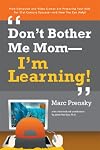
I finished reading Marc Prensky’s “Don’t Bother me Mom – I’m Learning!”, and I’d give it a 5 out of 5 stars and would highly recommend it to parents, educators, and anyone who thinks gaming is a frivolous pursuit.
I am, at best, a casual gamer myself, and after reading Prensky’s book, I’m thinking that I should make more of an effort to increase my game time. As a psychologist, I was already aware of the benefits of escapism and such of games on stress management as well as show more the fact that most games today are complex puzzles and require problem solving and strategy skills which keep one’s brain in shape. But Marc showed me a side of video games I had never before considered, probably because I had never played them.
I think the game was called Rollercoaster Tycoon, where you design and run your own amusement park. Kids as young as 7 were playing this and understanding economic, customer service, and design issues and then applying it to real-world situations. For example, the aforementioned 7-year-old looked around a park with playground equipment and made the observation that the place still cost money and cost more money because the equipment was nicer.
Another twenty-something business exec commented on how his parents always criticized him for playing online MMORPGs when he was in high school and college. He attributes his success to those games because managing his division in the company was easy compared to managing a guild of over 200 other players.
Something I need to check into is “modding,” where you can create your own levels of a game or even create a spin-off game entirely, and supposedly these modding tools are built into the game program. I’m not sure if this is just for PC games or if platform games have some way to do this, too. But this is an example where the games are teaching kids basic programming by enticing them to have even greater control of their gaming environment. Other examples of games teaching programming would be where players use macros to accomplish tasks faster.
As for cheat codes… A bit of a misnomer. This is still something I’m contemplating, as some would argue that using cheat codes teaches kids to cheat in real life. Yet we all will do what we can to get a leg up in the real world, such as making sure we get noticed at work, by a member of the opposite sex, or even on the dance floor or in sports. If we take a course in college that would be perfect to help us land a great job, is that cheating? It could be an unfair advantage over someone who can’t afford said course but is just as passionate about the subject matter. It’s kind of making me wonder if I’ve been playing too fair in this life so far…
I also liked how he dealt with the idea of video game addiction, pointing out that not everyone get’s “addicted” to games. Furthermore, I agree with his argument that “addiction” is a term that is over-used and creating a fear reaction to anything that someone happens to really enjoy doing. Some people play video games for two or three hours after work, and could be said to be addicted, yet someone else who reads for three or four hours after work isn’t said to be addicted to books. The fact is, serious gamers are also doing research on the game and even on the subject matter of the game. Not only are gamers seeking out sourcebooks and such, but they’re reading books on mythology, archaeology, history, biology, physics, and so on all to better understand the game they play and discover and develop a “real-world” interest.
On a final note, Marc discusses the role of technology overall, how it’s here to stay, and how people who refuse to adapt to it will be left by the wayside. Rather than complaining about kids and their smartphones, their games, their computers, their jargon, and so on, people need to start understanding these things, or else they will be forever outside looking in. Technology as a tool can be a wonderful thing, and we need to realize that if we are going to survive in the 21st Century. I liked one of his examples about how laparoscopic and microsurgical tools had controls similar to video game controls, and that surgeons who played video games tended to be better, more precise surgeons with significantly fewer errors, and how some hospitals are have surgeons warm up on video games before beginning surgery.
In conclusion, games are not the trivial distractions they once were, but are now complex, cognitively-challenging, artificially intelligent pieces of software that will push a child’s (and adult’s) mind into new directions. They should be embraced, not shunned. They should be given the recognition due them for their role in our digital, 21st-Century society. show less
I am, at best, a casual gamer myself, and after reading Prensky’s book, I’m thinking that I should make more of an effort to increase my game time. As a psychologist, I was already aware of the benefits of escapism and such of games on stress management as well as show more the fact that most games today are complex puzzles and require problem solving and strategy skills which keep one’s brain in shape. But Marc showed me a side of video games I had never before considered, probably because I had never played them.
I think the game was called Rollercoaster Tycoon, where you design and run your own amusement park. Kids as young as 7 were playing this and understanding economic, customer service, and design issues and then applying it to real-world situations. For example, the aforementioned 7-year-old looked around a park with playground equipment and made the observation that the place still cost money and cost more money because the equipment was nicer.
Another twenty-something business exec commented on how his parents always criticized him for playing online MMORPGs when he was in high school and college. He attributes his success to those games because managing his division in the company was easy compared to managing a guild of over 200 other players.
Something I need to check into is “modding,” where you can create your own levels of a game or even create a spin-off game entirely, and supposedly these modding tools are built into the game program. I’m not sure if this is just for PC games or if platform games have some way to do this, too. But this is an example where the games are teaching kids basic programming by enticing them to have even greater control of their gaming environment. Other examples of games teaching programming would be where players use macros to accomplish tasks faster.
As for cheat codes… A bit of a misnomer. This is still something I’m contemplating, as some would argue that using cheat codes teaches kids to cheat in real life. Yet we all will do what we can to get a leg up in the real world, such as making sure we get noticed at work, by a member of the opposite sex, or even on the dance floor or in sports. If we take a course in college that would be perfect to help us land a great job, is that cheating? It could be an unfair advantage over someone who can’t afford said course but is just as passionate about the subject matter. It’s kind of making me wonder if I’ve been playing too fair in this life so far…
I also liked how he dealt with the idea of video game addiction, pointing out that not everyone get’s “addicted” to games. Furthermore, I agree with his argument that “addiction” is a term that is over-used and creating a fear reaction to anything that someone happens to really enjoy doing. Some people play video games for two or three hours after work, and could be said to be addicted, yet someone else who reads for three or four hours after work isn’t said to be addicted to books. The fact is, serious gamers are also doing research on the game and even on the subject matter of the game. Not only are gamers seeking out sourcebooks and such, but they’re reading books on mythology, archaeology, history, biology, physics, and so on all to better understand the game they play and discover and develop a “real-world” interest.
On a final note, Marc discusses the role of technology overall, how it’s here to stay, and how people who refuse to adapt to it will be left by the wayside. Rather than complaining about kids and their smartphones, their games, their computers, their jargon, and so on, people need to start understanding these things, or else they will be forever outside looking in. Technology as a tool can be a wonderful thing, and we need to realize that if we are going to survive in the 21st Century. I liked one of his examples about how laparoscopic and microsurgical tools had controls similar to video game controls, and that surgeons who played video games tended to be better, more precise surgeons with significantly fewer errors, and how some hospitals are have surgeons warm up on video games before beginning surgery.
In conclusion, games are not the trivial distractions they once were, but are now complex, cognitively-challenging, artificially intelligent pieces of software that will push a child’s (and adult’s) mind into new directions. They should be embraced, not shunned. They should be given the recognition due them for their role in our digital, 21st-Century society. show less
Rejecting the popular opinion that rapidly increasing reliance on technology makes us dumber and less human, Marc Prensky argues persuasively that we can—and do—use technology to make us wiser. While the human mind is unsurpassed in creativity, learning from experience, understanding context, appreciating humor, and telling stories our minds are limited in several ways, including: capacity, objectivity, focus, and accuracy. The good news is that the strengths and weaknesses of the human show more mind are often complementary to the strengths and weaknesses of technologies.
After defining wisdom as: the ability to find practical, creative, contextually appropriate, and emotionally satisfying solutions to complicated human problems, he goes on to ask “Are we wiser if…” for each of 50 areas in which technology is used to supplement our thinking, now and in the near future. For each area he cites current examples and explores the questions: “Is this use of technology wise?” and “Are there wiser uses of this technology?” He then balances this optimistic outlook with a candid survey of less beneficial uses of technology—cataloging those that are merely clever, undoubtedly stupid, and even dangerous.
Just as fire is a technology that can be used to provide great benefit or do great harm, much of the value of digital technology depends on how we choose to use it. Chapter five gives helpful advice for using today’s technology to cultivate brain gain and digital wisdom. Chapter six encourages us to teach our kids wise ways to employ technologies. He recommends focusing on the enduring “verbs” of education, rather than the transient “nouns” because we always need to: understand, communicate, analyze, persuade, and decide what we believe, although the tools we use to complete these tasks change as our technologies change. Math education should emphasize problem formulation and leave the calculations to the machines. The final chapter looks further into the future with a brief overview of Ray Kurzweil’s concept of the Singularity—the moment in history when the power of technology exceeds the power of the human brain.
Portions of the book that help us to recognize wise and unwise uses of technology may be enduring; however the many specific examples used in the book will soon be obsolete. Perhaps the book can be kept up to date by publishing updated versions, or maintaining an effective companion website. show less
After defining wisdom as: the ability to find practical, creative, contextually appropriate, and emotionally satisfying solutions to complicated human problems, he goes on to ask “Are we wiser if…” for each of 50 areas in which technology is used to supplement our thinking, now and in the near future. For each area he cites current examples and explores the questions: “Is this use of technology wise?” and “Are there wiser uses of this technology?” He then balances this optimistic outlook with a candid survey of less beneficial uses of technology—cataloging those that are merely clever, undoubtedly stupid, and even dangerous.
Just as fire is a technology that can be used to provide great benefit or do great harm, much of the value of digital technology depends on how we choose to use it. Chapter five gives helpful advice for using today’s technology to cultivate brain gain and digital wisdom. Chapter six encourages us to teach our kids wise ways to employ technologies. He recommends focusing on the enduring “verbs” of education, rather than the transient “nouns” because we always need to: understand, communicate, analyze, persuade, and decide what we believe, although the tools we use to complete these tasks change as our technologies change. Math education should emphasize problem formulation and leave the calculations to the machines. The final chapter looks further into the future with a brief overview of Ray Kurzweil’s concept of the Singularity—the moment in history when the power of technology exceeds the power of the human brain.
Portions of the book that help us to recognize wise and unwise uses of technology may be enduring; however the many specific examples used in the book will soon be obsolete. Perhaps the book can be kept up to date by publishing updated versions, or maintaining an effective companion website. show less
This review was written for LibraryThing Early Reviewers.This book at first looks like another of those wide-eyed technology-boosting books. Fortunately it is more nuanced than that. The author's stated intention is to counter all the gloom-and-doom 'X is making us dumber or antisocial' books from the past few years. He does that pretty well. For the contents see here: http://www.worldcat.org/title/brain-gain-technology-and-the-quest-for-digital-wi... .
The coverage of technology is pretty wide and shallow. The reference to 'the computer language show more Unix' on page 170 suggests that the author may not actually understand what he is writing about, unless this is an editorial mistake (Unix is an operating system, not a language).
The two strengths of the book are references you can use to get more details and some practical recommendations on how to use technology for kids. For example, schools should not buy expensive computers and amortize them over 10 years because this means the students are stuck with obsolete equipment for 90% of that time. What they should do is buy cheap equipment such as tablets that could be replaced each year. Another example is that parents should not give their old computers to the kids as hand-me-downs. They should buy the latest stuff for the kids and have them hand up the previous generation to their parents. That way the kids can help their parents on how to use current technology.
Another thing I like about the book is that the author is reasonable and does not indulge in hubris. Nothing here is presented as dogma. He reports on 'The Singularity' but does not treat it as something to be worshiped as a secular replacement for 'The Rapture'. show less
The coverage of technology is pretty wide and shallow. The reference to 'the computer language show more Unix' on page 170 suggests that the author may not actually understand what he is writing about, unless this is an editorial mistake (Unix is an operating system, not a language).
The two strengths of the book are references you can use to get more details and some practical recommendations on how to use technology for kids. For example, schools should not buy expensive computers and amortize them over 10 years because this means the students are stuck with obsolete equipment for 90% of that time. What they should do is buy cheap equipment such as tablets that could be replaced each year. Another example is that parents should not give their old computers to the kids as hand-me-downs. They should buy the latest stuff for the kids and have them hand up the previous generation to their parents. That way the kids can help their parents on how to use current technology.
Another thing I like about the book is that the author is reasonable and does not indulge in hubris. Nothing here is presented as dogma. He reports on 'The Singularity' but does not treat it as something to be worshiped as a secular replacement for 'The Rapture'. show less
This review was written for LibraryThing Early Reviewers.You May Also Like


Statistics
- Works
- 11
- Members
- 302
- Popularity
- #77,841
- Rating
- 3.4
- Reviews
- 15
- ISBNs
- 18
- Languages
- 3
