
Susan Rabiner
Author of Thinking Like Your Editor: How to Write Great Serious Nonfiction and Get It Published
Works by Susan Rabiner
Thinking Like Your Editor: How to Write Great Serious Nonfiction and Get It Published (2002) 360 copies, 6 reviews
Associated Works
The Science of Jurassic Park: And the Lost World Or, How to Build a Dinosaur (1997) — Editor — 254 copies, 1 review
Tagged
Common Knowledge
- Gender
- female
Members
Reviews
Thinking Like Your Editor: How to Write Great Serious Nonfiction and Get It Published by Susan Rabiner
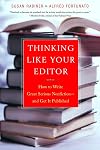
This book takes readers/writers through the publishing process for trade (as opposed to academic) "serious" nonfiction: writing a proposal, putting together a submission package, contacting agents and/or editors, writing the book, and getting yourself "published well."
The chapters on the publishing-industry, how does this unfamiliar process work? stuff are clear, helpful, and nonthreatening.
The part on the writing process felt really weak to me, perhaps in part because I've taught writing show more for a decade. 'Be aware of your audience' and 'write with clarity' are not exactly news flashes. The book lost me as a reader at: "while argument is a term frequently heard in book publishing, it is not, as far as I can tell, commonly used in academia. You have your research and your interpretation of what you have found, adding up to your thesis" (141). Not hanging out much with folks in the humanities, huh? Or with first-year writing instructors ... or comp/rhet PhDs ... So, that chunk might be helpful for some readers but was alienating for me.
The whole book is repetitive and only competently written (clear but not compelling). I also wish it had defined "serious nonfiction," rather an odd term and not one that the reading public bandies around much. On the other hand, it gave me the basic overview I needed to move forward into more detailed treatments, and into the process itself--and it avoided making an overwhelming and unfamiliar process sound even more overwhelming. show less
The chapters on the publishing-industry, how does this unfamiliar process work? stuff are clear, helpful, and nonthreatening.
The part on the writing process felt really weak to me, perhaps in part because I've taught writing show more for a decade. 'Be aware of your audience' and 'write with clarity' are not exactly news flashes. The book lost me as a reader at: "while argument is a term frequently heard in book publishing, it is not, as far as I can tell, commonly used in academia. You have your research and your interpretation of what you have found, adding up to your thesis" (141). Not hanging out much with folks in the humanities, huh? Or with first-year writing instructors ... or comp/rhet PhDs ... So, that chunk might be helpful for some readers but was alienating for me.
The whole book is repetitive and only competently written (clear but not compelling). I also wish it had defined "serious nonfiction," rather an odd term and not one that the reading public bandies around much. On the other hand, it gave me the basic overview I needed to move forward into more detailed treatments, and into the process itself--and it avoided making an overwhelming and unfamiliar process sound even more overwhelming. show less
Thinking Like Your Editor: How to Write Great Serious Nonfiction and Get It Published by Susan Rabiner
I borrowed this book from my local library and am glad I did so. This contains a lot of relevant, pertinent advice from two great editors that explain to you what works, what doesn't, and what falls in between. I thought that it was a well thought out, integral piece of advice for aspiring authors on how to structure their work appropriately so that it has a chance in a world beset by challenge and competition. For those interested in writing non-fiction, or writing at all, I think this book show more would be useful.
4 stars! show less
4 stars! show less
Thinking Like Your Editor: How to Write Great Serious Nonfiction and Get It Published by Susan Rabiner
There is a lot of good stuff here about book publishing, how the process works, and what agents and editors tend to focus on. This is also accompanied by some advice that is likely quite useful. Unfortunately, the authors are a bit too opinionated and long-winded at times. They sometimes have an obvious bias or agenda to push as well, which detracts from the reliability and neutrality of the book.
Thinking Like Your Editor: How to Write Great Serious Nonfiction--and Get it Published by Susan Rabiner
Excellent practical advice on writing non-fiction books and getting them published. With example proposal.
You May Also Like


Associated Authors
Statistics
- Works
- 1
- Also by
- 1
- Members
- 360
- Popularity
- #66,629
- Rating
- 3.9
- Reviews
- 6
- ISBNs
- 5