
Lisa Wingate
Author of Before We Were Yours
About the Author
Lisa Wingate is an award-winning journalist, magazine columnist, popular inspirational speaker and a national bestselling author. Recently, Lisa's Blue Sky Hill Series received national attention with back-to-back nominations for American Christian Fiction Writers Book of the Year Award for A Month show more of Summer (2009) and The Summer Kitchen (2010). In 2011, Lisa's Novel, Never Say Never, won the American Christian Fiction Writers Book of the Year Award. Lisa is also the author of The Tending Roses, Daily Texas, Moses Lake, and the Texas Hill Country Series. (Bowker Author Biography) show less
Image credit: Used by permission of Baker Publishing Group, copyright © 2008. All rights to this material are reserved. Materials are not to be distributed to other web locations for retrieval, published(see © info.)
Series
Works by Lisa Wingate
Before and After: The Incredible Real-Life Stories of Orphans Who Survived the Tennessee Children's Home Society (2019) 449 copies, 28 reviews
TENDING ROSES SERIES: Tending Roses; Language of Sycamores; Drenched in Light; A Thousand Voices 2 copies
The Blue Sky Hill series: A Month of Summer; The Summer Kitchen; Beyond Summer; Dandelion Summer 2 copies
Talk of the Town - Book 1 1 copy
Skjult under trækronerne 1 copy
La ragazza del passato 1 copy
Associated Works
Tagged
Common Knowledge
- Birthdate
- 1965
- Gender
- female
- Occupations
- journalist
- Nationality
- USA
- Birthplace
- Germany
- Places of residence
- Texas, USA
Oklahoma, USA - Associated Place (for map)
- USA
Members
Reviews
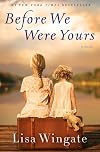
Holy God, what a heart breaking read.
I picked this one up knowing almost nothing about it. I found myself being instantly pulled into the river life of the Foss children; the writing allowing me to picture the sights and sounds of the water flowing, the tall grasses, to hear the crickets and the laughter as the kids and their parents played around on the boat. It seemed like such a nice life to have.
Once Queenie's labor started, I knew things were going to take a bad turn. My heart show more absolutely shattered when I found out how right I was. There were just so many parts during this story that had me actually crying and my heart thudding.
The author's note at the end just made things so much worse. Finding out that the nightmare organization present in the book was a real thing and that what happened to the Foss children actually happened to countless children in real life was horrifying.
I would highly recommend this book to anyone, though I do suggest that going into it knowing as little as possible would be best. show less
I picked this one up knowing almost nothing about it. I found myself being instantly pulled into the river life of the Foss children; the writing allowing me to picture the sights and sounds of the water flowing, the tall grasses, to hear the crickets and the laughter as the kids and their parents played around on the boat. It seemed like such a nice life to have.
Once Queenie's labor started, I knew things were going to take a bad turn. My heart show more absolutely shattered when I found out how right I was. There were just so many parts during this story that had me actually crying and my heart thudding.
The author's note at the end just made things so much worse. Finding out that the nightmare organization present in the book was a real thing and that what happened to the Foss children actually happened to countless children in real life was horrifying.
I would highly recommend this book to anyone, though I do suggest that going into it knowing as little as possible would be best. show less
No work of fiction has touched my heart as deeply as Before We Were Yours, not even The Memory Keeper’s Daughter or The Secret Life of Bees. I would definitely put this book in the league with those titles and To Kill A Mockingbird. That is high praise indeed in my book.
About halfway through Before We Were Yours, I felt compelled to do a little online research of The Tennessee Children’s Home Society and Georgia Tann. How I had not heard of Tann and the Memphis branch of this society show more that operated from the 1920s through the 1950s, I cannot imagine. Tann arranged thousands of questionable adoptions. She and her network of informants tricked uneducated parents, poor parents, and single parents into surrendering their children, others were simply stolen off porches, on their way to school, and other places children might be found without adult supervision. In addition to the thousands that were adopted out, often to the crème of society, hundreds did not survive the life they were forced to live within the wall of homes run by Tann and the society. Most biological parents never knew what had happened to their children.
While the sons and daughters of Queenie and Briny Foss were fictional characters. Their experience with the Tennessee Children’s Home Society mirrored those of real life victims. Wingate tells their story in such a way that the reader is fully engrossed and completely overwhelmed with the raw emotion evoked by the tale. I found myself praying for those real-life children and families who were victimized in this decades-long tragedy. While this book is no fluffy beach read, I would suggest that if you don’t read any other book this summer, read this one.
I thank Ballantine Books a division of Random House and NetGalley for making this book available in exchange for my honest review. I received no monetary compensation for providing this review. show less
About halfway through Before We Were Yours, I felt compelled to do a little online research of The Tennessee Children’s Home Society and Georgia Tann. How I had not heard of Tann and the Memphis branch of this society show more that operated from the 1920s through the 1950s, I cannot imagine. Tann arranged thousands of questionable adoptions. She and her network of informants tricked uneducated parents, poor parents, and single parents into surrendering their children, others were simply stolen off porches, on their way to school, and other places children might be found without adult supervision. In addition to the thousands that were adopted out, often to the crème of society, hundreds did not survive the life they were forced to live within the wall of homes run by Tann and the society. Most biological parents never knew what had happened to their children.
While the sons and daughters of Queenie and Briny Foss were fictional characters. Their experience with the Tennessee Children’s Home Society mirrored those of real life victims. Wingate tells their story in such a way that the reader is fully engrossed and completely overwhelmed with the raw emotion evoked by the tale. I found myself praying for those real-life children and families who were victimized in this decades-long tragedy. While this book is no fluffy beach read, I would suggest that if you don’t read any other book this summer, read this one.
I thank Ballantine Books a division of Random House and NetGalley for making this book available in exchange for my honest review. I received no monetary compensation for providing this review. show less
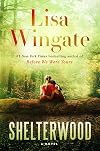
Meticulously researched and immersive Shelterwood by Lisa Wingate is a heart-wrenching and immensely thought-provoking read.
Set in and around the Winding Stairs Mountains region, the story is rooted in the history of Oklahoma and the division of natural resource-rich Native American lands into allotment parcels assigned to individual members in the late 1800s. Orphaned Indigenous children were exploited and cheated of their rights, abandoned and forced to fend for themselves by show more “guardians” who were responsible for their welfare. The story also sheds light on the efforts of women pioneers who fought for the rights of these children - namely the Oklahoma Federation of Women’s Clubs and Kate Barnard, the first woman to be elected as a state official in Oklahoma.
The narrative is presented in dual timelines in alternating chapters. In 1909, Pushmataha County, Oklahoma, we meet eleven-year-old Olive “Ollie” Augusta Peele, who flees from her abusive stepfather. With her is Nessa, a Choctaw child whom her deceased father had sheltered in their home along with Nessa's older sister Hazel. Olive is sure that her stepfather was responsible for Hazel’s disappearance and running is the only way she believes she can protect them both from meeting the same fate. Along her way to her family’s old home in the mountains, she meets other runaways and orphans who inhabit the woods and form their own community – a community she names “Shelterwood”. The narrative follows Ollie, Nessa and their friends as they fight for survival amid much adversity.
The current timeline (Talihina, Oklahoma, 1990) is presented from the perspective of Valerie Boren-Odell, the new park law enforcement Ranger at Horsethief Trail National Park who has only recently moved to the area with her young son. On her first day on the job, she is informed of the recent discovery of the remains of three children in a cave. However, before Valerie can pursue her investigation, her superiors see to it that the bones are removed and the crime scene is closed off. Valerie is also approached by twelve-year-old Sydney for help locating her missing older brother Braden and her ailing grandmother, former state representative Budgie Blackwell. Sydney often frustrates Valerie, withholding information and manipulating the truth, but Valerie can’t deny that there is more to the disappearances than meets the eye.
As the narrative progresses, we follow Valerie’s investigation, which takes into the dark history of the area a story of exploitation, greed and corruption that is far from over.
Both timelines are well-developed and the narrative flows well. The pacing is slightly uneven, but I liked how the author brings all the threads of the story together. Ollie is a memorable character and I admired her courage and resourcefulness. The rich historical context, vivid settings and well-thought-out characters render this novel a compelling read.
Please read the informative Author’s Note where she discusses the history, people and events that inspired this novel.
Many thanks to Random House Publishing Group - Ballantine for the digital review copy via NetGalley. All opinions expressed in this review are my own. show less
Set in and around the Winding Stairs Mountains region, the story is rooted in the history of Oklahoma and the division of natural resource-rich Native American lands into allotment parcels assigned to individual members in the late 1800s. Orphaned Indigenous children were exploited and cheated of their rights, abandoned and forced to fend for themselves by show more “guardians” who were responsible for their welfare. The story also sheds light on the efforts of women pioneers who fought for the rights of these children - namely the Oklahoma Federation of Women’s Clubs and Kate Barnard, the first woman to be elected as a state official in Oklahoma.
The narrative is presented in dual timelines in alternating chapters. In 1909, Pushmataha County, Oklahoma, we meet eleven-year-old Olive “Ollie” Augusta Peele, who flees from her abusive stepfather. With her is Nessa, a Choctaw child whom her deceased father had sheltered in their home along with Nessa's older sister Hazel. Olive is sure that her stepfather was responsible for Hazel’s disappearance and running is the only way she believes she can protect them both from meeting the same fate. Along her way to her family’s old home in the mountains, she meets other runaways and orphans who inhabit the woods and form their own community – a community she names “Shelterwood”. The narrative follows Ollie, Nessa and their friends as they fight for survival amid much adversity.
The current timeline (Talihina, Oklahoma, 1990) is presented from the perspective of Valerie Boren-Odell, the new park law enforcement Ranger at Horsethief Trail National Park who has only recently moved to the area with her young son. On her first day on the job, she is informed of the recent discovery of the remains of three children in a cave. However, before Valerie can pursue her investigation, her superiors see to it that the bones are removed and the crime scene is closed off. Valerie is also approached by twelve-year-old Sydney for help locating her missing older brother Braden and her ailing grandmother, former state representative Budgie Blackwell. Sydney often frustrates Valerie, withholding information and manipulating the truth, but Valerie can’t deny that there is more to the disappearances than meets the eye.
As the narrative progresses, we follow Valerie’s investigation, which takes into the dark history of the area a story of exploitation, greed and corruption that is far from over.
Both timelines are well-developed and the narrative flows well. The pacing is slightly uneven, but I liked how the author brings all the threads of the story together. Ollie is a memorable character and I admired her courage and resourcefulness. The rich historical context, vivid settings and well-thought-out characters render this novel a compelling read.
Please read the informative Author’s Note where she discusses the history, people and events that inspired this novel.
Many thanks to Random House Publishing Group - Ballantine for the digital review copy via NetGalley. All opinions expressed in this review are my own. show less
Before and After: The Incredible Real-Life Stories of Orphans Who Survived the Tennessee Children's Home Society by Judy Christie
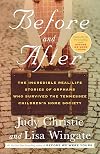
My initial reaction to this is... hot damn.
History is full of shitty people doing shitty things. That should be no surprise to anyone with an inkling of history. People got shat on for being the wrong sex, religion, race, caste/class, or nationality. They got shat on for all kinds of reasons - money (or wealth/land/resources) being one of the biggest reasons.
This is no exception. Children were kidnapped and sold because of people who valued money over the lives of children, or the bond that show more mothers had with their children. I don't want to say 'trigger warning' here, but some of the stories are truly heartbreaking and fucked-up.
I mean, sure, many of these children were adopted into loving homes, so good for them, but others died, and nothing will change the fact that they were kidnapped, and their birth mothers told that they died, or the like. show less
History is full of shitty people doing shitty things. That should be no surprise to anyone with an inkling of history. People got shat on for being the wrong sex, religion, race, caste/class, or nationality. They got shat on for all kinds of reasons - money (or wealth/land/resources) being one of the biggest reasons.
This is no exception. Children were kidnapped and sold because of people who valued money over the lives of children, or the bond that show more mothers had with their children. I don't want to say 'trigger warning' here, but some of the stories are truly heartbreaking and fucked-up.
I mean, sure, many of these children were adopted into loving homes, so good for them, but others died, and nothing will change the fact that they were kidnapped, and their birth mothers told that they died, or the like. show less
Lists
Genealogy (2)
GAL Book Club (1)
Awards


You May Also Like


Associated Authors
Statistics
- Works
- 49
- Also by
- 1
- Members
- 15,015
- Popularity
- #1,526
- Rating
- 4.0
- Reviews
- 666
- ISBNs
- 381
- Languages
- 15
- Favorited
- 7

