
Drew Magary
Author of The Hike
About the Author
Works by Drew Magary
A Caminhada - eBook 1 copy
Associated Works
Tagged
Common Knowledge
- Birthdate
- 20th century
- Gender
- male
- Nationality
- USA
- Birthplace
- Wahroonga, New South Wales, Australia
- Places of residence
- Maryland, USA
- Associated Place (for map)
- USA
Members
Reviews
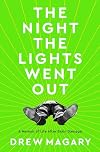
The Night the Lights Went Out by Drew Magary tells the author’s story of experiencing a traumatic brain injury and the gradual process of recovery. After hosting the 2018 Deadspin Awards, he collapsed, breaking his skull and his brain. In this book, he brings readers along as his life is turned upside down.
Since the author was not conscious for several weeks following his injury, that part of the story is pulled together from colleagues, family members, and doctors. It was laid out with a show more few sentences at a time from one person, then another person, then another person, etc. It captures the franticness and confusion of the time, as people tried to piece together what had happened. I think that this is probably a very captivating way of telling a story that would be compelling for a lot of readers; however, my concentration is crap because of the effects of depression, so I found it hard to follow.
When the story reached the point that Magary was conscious and alert again, it shifted to first-person storytelling, which I found much easier to read. The author’s writing style is informal and candid, with plenty of humour and profanity thrown in. I learned some new lingo, too, including crack of ass (I’d heard butt crack of dawn, but I like crack of ass more), and butt-rock, which is apparently the genre that Hemorrhage by Fuel falls into. I also liked descriptions along the lines of “the requisite assless hospital gown: the one scientifically designed to rob you of your dignity.”
The brain injury, as well as the effects of later cochlear implant surgery, had significant sensory effects, impairing his hearing, smell, and taste. I thought the author did a great job of conveying how these deficits influenced the way he related to the world, including what it felt like to lose sensory memories and be unable to replace them.
As a result of the injury, the author joins the young old people club that many of us with chronic illness are already members of. He needed to use a walker, get a pillbox, and transition to being “a Hearing Aid Guy,” and wrote that, “In the span of less than two months, I had aged thirty years.” It’s interesting to hear the perspective of someone who experiences those changes suddenly compared to the slower adjustment in chronic illness.
The author is open about how hard it became to interact with the world with a brain that wasn’t working properly. He talked about being a “cranky old turd” and “an overly sensitive prick,” and realizing he needed to figure out a way to “get the fuck over myself.” He observed, “The more I recovered from my hemorrhage, the more pronounced my losses became to me.” It was one of the many points in the book that highlighted how much commonality there is in different kinds of wonky brain experiences.
The book also addresses the push/pull of wanting to be normal yet wanting people to accommodate his limitations. He grappled with acceptance, and realized stubbornness was serving as “a flimsy cover for outright denial.” When he found out that a coworker was also deaf in one ear, he discovered something a lot of us in the mental health blogging community have already learned: “It never hurts to know someone who’s been through your very specific brand of shit.”
Vulnerability was another theme that came up, including the need to get over his own mental block that made him reluctant to see a therapist. This book is certainly proof that he’s prepared to be vulnerable, even if it isn’t easy.
Culturally, I live in a very different world from the author, who is currently a columnist at Defector, which I hadn’t heard of before I read this book (nor had I heard of Deadspin). I think many of my cohabitants in the mental illness/chronic illness world will likely be able to relate to a lot of the issues that come up in this book. Where I think this book will really have value, though, is in bringing these kinds of issues and this vulnerability to audiences within the author’s cultural world.
I received a reviewer copy from the publisher through Netgalley. show less
Since the author was not conscious for several weeks following his injury, that part of the story is pulled together from colleagues, family members, and doctors. It was laid out with a show more few sentences at a time from one person, then another person, then another person, etc. It captures the franticness and confusion of the time, as people tried to piece together what had happened. I think that this is probably a very captivating way of telling a story that would be compelling for a lot of readers; however, my concentration is crap because of the effects of depression, so I found it hard to follow.
When the story reached the point that Magary was conscious and alert again, it shifted to first-person storytelling, which I found much easier to read. The author’s writing style is informal and candid, with plenty of humour and profanity thrown in. I learned some new lingo, too, including crack of ass (I’d heard butt crack of dawn, but I like crack of ass more), and butt-rock, which is apparently the genre that Hemorrhage by Fuel falls into. I also liked descriptions along the lines of “the requisite assless hospital gown: the one scientifically designed to rob you of your dignity.”
The brain injury, as well as the effects of later cochlear implant surgery, had significant sensory effects, impairing his hearing, smell, and taste. I thought the author did a great job of conveying how these deficits influenced the way he related to the world, including what it felt like to lose sensory memories and be unable to replace them.
As a result of the injury, the author joins the young old people club that many of us with chronic illness are already members of. He needed to use a walker, get a pillbox, and transition to being “a Hearing Aid Guy,” and wrote that, “In the span of less than two months, I had aged thirty years.” It’s interesting to hear the perspective of someone who experiences those changes suddenly compared to the slower adjustment in chronic illness.
The author is open about how hard it became to interact with the world with a brain that wasn’t working properly. He talked about being a “cranky old turd” and “an overly sensitive prick,” and realizing he needed to figure out a way to “get the fuck over myself.” He observed, “The more I recovered from my hemorrhage, the more pronounced my losses became to me.” It was one of the many points in the book that highlighted how much commonality there is in different kinds of wonky brain experiences.
The book also addresses the push/pull of wanting to be normal yet wanting people to accommodate his limitations. He grappled with acceptance, and realized stubbornness was serving as “a flimsy cover for outright denial.” When he found out that a coworker was also deaf in one ear, he discovered something a lot of us in the mental health blogging community have already learned: “It never hurts to know someone who’s been through your very specific brand of shit.”
Vulnerability was another theme that came up, including the need to get over his own mental block that made him reluctant to see a therapist. This book is certainly proof that he’s prepared to be vulnerable, even if it isn’t easy.
Culturally, I live in a very different world from the author, who is currently a columnist at Defector, which I hadn’t heard of before I read this book (nor had I heard of Deadspin). I think many of my cohabitants in the mental illness/chronic illness world will likely be able to relate to a lot of the issues that come up in this book. Where I think this book will really have value, though, is in bringing these kinds of issues and this vulnerability to audiences within the author’s cultural world.
I received a reviewer copy from the publisher through Netgalley. show less
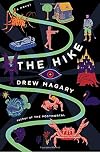
The Hike was the first book I finished this year, and it definitely took me on a wild ride. I wasn’t entirely sure what I was getting into, but this book turned out to be chaotic, adventurous, and very different from anything else I’ve read recently.
At its core, the story follows a man who goes on a hike while away from home—only for that hike to turn into a long, surreal journey back to his family. The book moves fast, sometimes too fast, and constantly throws new obstacles and show more strange scenarios at the main character. Listening to it on audiobook definitely added to that feeling, though the narration itself was solid.
What I enjoyed most were the characters he meets along the way. The supporting cast is far more memorable than I expected, and they added humor, depth, and heart to the story. There are moments that are genuinely funny and others that feel almost absurd, but that outlandishness is part of the book’s charm.
That said, this is not a book that explains everything neatly. I finished it with quite a few unanswered questions, especially around the purpose of the journey itself. While the story clearly wants to convey a message about life, time, and appreciating what you have, it sometimes felt like the main character already understood that lesson before the journey even began. Because of that, parts of the story felt more confusing than meaningful.
Still, I didn’t dislike this book. It’s fast-paced, imaginative, and commits fully to its weirdness. Even when I wasn’t sure what was happening—or why—it kept me engaged simply because of how bold and unpredictable it was.
Overall, The Hike is a strange, adventurous read that won’t be for everyone, but if you enjoy stories that take risks, embrace absurdity, and don’t always spell everything out, this one might be worth checking out. show less
At its core, the story follows a man who goes on a hike while away from home—only for that hike to turn into a long, surreal journey back to his family. The book moves fast, sometimes too fast, and constantly throws new obstacles and show more strange scenarios at the main character. Listening to it on audiobook definitely added to that feeling, though the narration itself was solid.
What I enjoyed most were the characters he meets along the way. The supporting cast is far more memorable than I expected, and they added humor, depth, and heart to the story. There are moments that are genuinely funny and others that feel almost absurd, but that outlandishness is part of the book’s charm.
That said, this is not a book that explains everything neatly. I finished it with quite a few unanswered questions, especially around the purpose of the journey itself. While the story clearly wants to convey a message about life, time, and appreciating what you have, it sometimes felt like the main character already understood that lesson before the journey even began. Because of that, parts of the story felt more confusing than meaningful.
Still, I didn’t dislike this book. It’s fast-paced, imaginative, and commits fully to its weirdness. Even when I wasn’t sure what was happening—or why—it kept me engaged simply because of how bold and unpredictable it was.
Overall, The Hike is a strange, adventurous read that won’t be for everyone, but if you enjoy stories that take risks, embrace absurdity, and don’t always spell everything out, this one might be worth checking out. show less
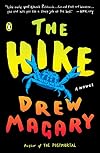
I’m pretty sure I heard about this book from Kendra Adachi, who seems to be a potential book twin, also drawn to some wonderfully weird, oddball, unique, and off-kilter writing. (See also The Bloggess.)
The Hike is a JOURNEY and a vibe. It reads like a surreal fever dream that sorta daisy chains to Tom Robbins with a touch of Blake Crouch and Douglas Adams thrown in. I’ve never read the author’s other stuff, so can’t say if this is typical or a-.
This book is delightfully, all-caps show more WEIRD. I love stories that are unconventional in style or format and plot twists I can’t see coming. This was that in spades. It’s dark with bits of inappropriate or morbid humor or dialogue sprinkled in like catnip. Some of the characters were giving me everything - particularly the smokes, Fermona the cannibalistic giant, the cranky crab, and the dogfaces.
I’m sure there’s a metaphor or probably several that could be fished out of this, but I won’t ruin it. The dual plot twist/s at the end, well. Not only did I not see them coming, but I laughed out loud.
Not for everyone, but it’ll find its people and is raucously joyful from beginning to end. show less
The Hike is a JOURNEY and a vibe. It reads like a surreal fever dream that sorta daisy chains to Tom Robbins with a touch of Blake Crouch and Douglas Adams thrown in. I’ve never read the author’s other stuff, so can’t say if this is typical or a-.
This book is delightfully, all-caps show more WEIRD. I love stories that are unconventional in style or format and plot twists I can’t see coming. This was that in spades. It’s dark with bits of inappropriate or morbid humor or dialogue sprinkled in like catnip. Some of the characters were giving me everything - particularly the smokes, Fermona the cannibalistic giant, the cranky crab, and the dogfaces.
I’m sure there’s a metaphor or probably several that could be fished out of this, but I won’t ruin it. The dual plot twist/s at the end, well. Not only did I not see them coming, but I laughed out loud.
Not for everyone, but it’ll find its people and is raucously joyful from beginning to end. show less
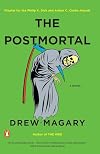
The Postmortal is a powerful book. Magary takes an honest look at society's reaction to not aging - constant partying, marriages fall apart, the earth's resources are dwindling. We see John Farrell, a wise-cracking lawyer, who's life changes markedly throughout the book as he gets older without aging. His optimism turns to skepticism, even on to hopelessness. The storyline is very dark in this book, but Magary manages to add humor and lighten the mood in just the right places.
It's an show more interesting novel, showing how society slowly disintegrates just as it is granted one of its biggest wishes. The government begins to take total control of everyone's life...and death. This story really makes you think, even as you're being entertained. show less
It's an show more interesting novel, showing how society slowly disintegrates just as it is granted one of its biggest wishes. The government begins to take total control of everyone's life...and death. This story really makes you think, even as you're being entertained. show less
Lists
Awards


You May Also Like


Associated Authors
Statistics
- Works
- 10
- Also by
- 1
- Members
- 2,331
- Popularity
- #11,003
- Rating
- 3.7
- Reviews
- 161
- ISBNs
- 43
- Languages
- 6
- Favorited
- 2
