
Paolo Bacigalupi
Author of The Windup Girl
About the Author
Paolo Bacigalupi won the Hugo, Nebula, Locus, Compton Crook, and John W. Campbell Memorial Awards for his debut novel, The Windup Girl, which was published in 2009. His short story collection Pump Six and Other Stories was a 2008 Locus Award winner for Best Collection and his young adult novel Ship show more Breaker won the Michael L. Printz Award for Excellence in Young Adult Literature and was finalist for the National Book Award. His work has also appeared in High Country News, Salon.com, The Magazine of Fantasy and Science Fiction, and Asimov's Science Fiction Magazine. (Bowker Author Biography) show less
Image credit: Paolo Bacigalupi
Series
Works by Paolo Bacigalupi
The Tamarisk Hunter 12 copies
Mika Model [short story] 4 copies
Nebula Awards Showcase 2011 3 copies
El fabricante de calorías 1 copy
A Full Life 1 copy
EXCERPT SAMPLER ; What Will You Read Next? First Printing, Uncorrected Proofs . Complimentary Copy 1 copy
The Children of Khaim 1 copy
Shooting the Apocalypse 1 copy
Associated Works
The Year's Best Science Fiction: Twenty-Second Annual Collection (2005) — Contributor — 579 copies, 11 reviews
The Year's Best Science Fiction: Twenty-First Annual Collection (2004) — Contributor — 573 copies, 6 reviews
The Year's Best Science Fiction: Twenty-Third Annual Collection (2006) — Contributor — 568 copies, 5 reviews
The Year's Best Science Fiction: Twenty-Fourth Annual Collection (2007) — Contributor — 457 copies, 6 reviews
The Year's Best Science Fiction: Twenty-Sixth Annual Collection (2009) — Contributor — 424 copies, 2 reviews
The Year's Best Fantasy and Horror: Seventeenth Annual Collection (2004) — Contributor — 241 copies, 9 reviews
The Best Science Fiction and Fantasy of the Year, Volume 1 (2007) — Contributor — 217 copies, 6 reviews
The Year's Best Science Fiction: Thirty-Second Annual Collection (2015) — Contributor — 206 copies, 8 reviews
The Year's Best Science Fiction: Thirty-Third Annual Collection (2016) — Contributor — 190 copies, 2 reviews
The Best Science Fiction and Fantasy of the Year, Volume 3 (2009) — Contributor — 150 copies, 2 reviews
The Year's Best Science Fiction: Thirty-Fourth Annual Collection (2017) — Contributor — 147 copies, 4 reviews
Loosed upon the World: The Saga Anthology of Climate Fiction (2015) — Contributor — 130 copies, 4 reviews
The Very Best of Fantasy & Science Fiction, Volume 2 (2014) — Contributor, some editions — 112 copies, 7 reviews
I'm With the Bears: Short Stories from a Damaged Planet (2011) — Contributor — 107 copies, 4 reviews
The Best Science Fiction and Fantasy of the Year, Volume 9 (2015) — Contributor — 73 copies, 3 reviews
The Best Science Fiction and Fantasy of the Year, Volume 10 (2016) — Contributor — 60 copies, 3 reviews
The Magazine of Fantasy and Science Fiction September/October 2019, Vol. 137, Nos. 3 & 4 (1991) — Contributor — 18 copies
Brave New Worlds {Second Edition ebook} — Contributor, some editions — 11 copies
Terra Nova vol. 3: Antología de ciencia ficción contemporánea (2014) — Contributor — 6 copies, 1 review
Tagged
Common Knowledge
- Birthdate
- 1972-08-06
- Gender
- male
- Occupations
- science fiction writer
fantasy writer - Organizations
- Science Fiction and Fantasy Writers of America
- Awards and honors
- Jack Williamson Lectureship (2015)
- Nationality
- USA
- Birthplace
- Colorado Springs, Colorado, USA
- Places of residence
- Western Colorado, USA
- Associated Place (for map)
- USA
Members
Discussions
GROUP READ -- THE WINDUP GIRL by Paolo Bacigalupi in The 12 in 12 Category Challenge (August 2012)
THE WINDUP GIRL - Discussion Thread ***Possible SPOILERS*** in The 12 in 12 Category Challenge (March 2012)
Reviews
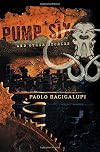
I am weary of dystopian fiction. Maybe you are too. Bacigalupi writes dystopian fiction. But listen, this is really, really good. In each story the outlook for humanity is bleak, but the characters are sympathetic as they scrabble for a better shake of the stick. The future looks a bit like Bombay. Or like a vast impoverished American Indian reservation. Or a bioengineered living skyscraper. It's the people in it that make is a real place for the reader; their stories are varied and compelling.
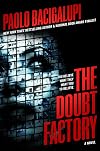
This is a story that reads for all the world like a horrible dystopia, but is based on facts that are all too real. Bacigalupi credits the 2008 article by Michelle Nijhuis, called “The Doubt Makers” for the inspiration of the story, and for much of the non-fiction content. In essence, Nijhuis exposes how businesses systematically cast doubt on scientific studies that might interfere with their profit-making enterprises, allowing many dangerous commodities to stay on the market long after show more they should have been banned.
[This process still goes on, of course. As scientist Seth Darling, author of a book on climate change, writes, in spite of an overwhelming consensus among scientists that our planet is warming and that we are primarily to blame, mainstream news outlets still provide substantial airtime to skeptics. In a July 31, 2014 op ed for the Chicago Tribune he wrote: “Because the mass media have propped up a false debate, the general public is understandably confused.” Many of these so-called skeptics are actually paid for their "testimony," and it is this manipulation that is the focus of Bacigalupi's novel.]
The author does a good job of weaving a compelling plot out of this disturbing practice. He creates a group of talented teenagers, each of whom has experienced a death in his or her family because of unsafe products that should not have been allowed to stay on the market. Calling themselves “2.0” and led by Moses Cruz, they are working together to try to stop further risks to public health. They have targeted the biggest enabling PR firm, Banks Strategy Partners, where Simon Banks and his business partner George Saamsi help put together reports, testimony, and controversy for companies with potentially lethal merchandise, in order to delay punitive government action. The 2.0 group wants to convince Alix, Simon’s daughter, to help them get into her father’s records so they can (hopefully) interest the media. It is not an easy job: Alix has no idea what her dad really does, but she loves him, and has a hard time believing he would help companies put so many lives at risk for the sake of greed.
And Alix isn’t the only one needing convincing. “Status quo is easy to sell,” one of the 2.0 group says. “You can’t con someone who doesn’t want to be conned, and you can’t wake up someone who doesn’t want to wake up.”
But Alix is drawn to Moses, and also wants to know what the truth is about her father. What she doesn’t realize is that the power and money behind these corporations could threaten her life, as well as the lives of others in the group.
Bacigalupi previously tackled the nefarious side of corporate greed in his story for middle graders, Zombie Baseball Beatdown, but that book ended on a more upbeat (and unfortunately more unrealistic) note than this book for older readers.
Evaluation: Bacigalupi successfully integrates his info-dumping into an interesting and suspenseful scenario. He is a consistently intelligent and compassionate writer.
In addition, I really like the fact that this is a very diverse group of teens, but the focus is on what unites them rather than their physical or gender-related differences. show less
[This process still goes on, of course. As scientist Seth Darling, author of a book on climate change, writes, in spite of an overwhelming consensus among scientists that our planet is warming and that we are primarily to blame, mainstream news outlets still provide substantial airtime to skeptics. In a July 31, 2014 op ed for the Chicago Tribune he wrote: “Because the mass media have propped up a false debate, the general public is understandably confused.” Many of these so-called skeptics are actually paid for their "testimony," and it is this manipulation that is the focus of Bacigalupi's novel.]
The author does a good job of weaving a compelling plot out of this disturbing practice. He creates a group of talented teenagers, each of whom has experienced a death in his or her family because of unsafe products that should not have been allowed to stay on the market. Calling themselves “2.0” and led by Moses Cruz, they are working together to try to stop further risks to public health. They have targeted the biggest enabling PR firm, Banks Strategy Partners, where Simon Banks and his business partner George Saamsi help put together reports, testimony, and controversy for companies with potentially lethal merchandise, in order to delay punitive government action. The 2.0 group wants to convince Alix, Simon’s daughter, to help them get into her father’s records so they can (hopefully) interest the media. It is not an easy job: Alix has no idea what her dad really does, but she loves him, and has a hard time believing he would help companies put so many lives at risk for the sake of greed.
And Alix isn’t the only one needing convincing. “Status quo is easy to sell,” one of the 2.0 group says. “You can’t con someone who doesn’t want to be conned, and you can’t wake up someone who doesn’t want to wake up.”
But Alix is drawn to Moses, and also wants to know what the truth is about her father. What she doesn’t realize is that the power and money behind these corporations could threaten her life, as well as the lives of others in the group.
Bacigalupi previously tackled the nefarious side of corporate greed in his story for middle graders, Zombie Baseball Beatdown, but that book ended on a more upbeat (and unfortunately more unrealistic) note than this book for older readers.
Evaluation: Bacigalupi successfully integrates his info-dumping into an interesting and suspenseful scenario. He is a consistently intelligent and compassionate writer.
In addition, I really like the fact that this is a very diverse group of teens, but the focus is on what unites them rather than their physical or gender-related differences. show less
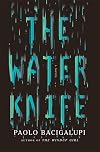
The south-western US states have run out of water. Federal authority has all but broken down; there are patrolled borders between states to cut down on refugees. Phoenix is a dust-bowl, any refugees that have made it from Texas face a life scraping on the margins, doing what they have to do. The South Nevada Water Authority under Catherine Case aggressively pursues its water rights over the Colorado River making Phoenix’s problems worse.
There are three narrative viewpoints; Angel, the show more water knife of the title, one of Catherine Case’s enforcers; Lucy, an investigative journalist; and Maria, a refugee from Texas scrabbling to survive. The plot centres round ancestral water rights which once belonged to Native Americans and which outweigh all others.
It is an almost relentlessly misanthropic endeavour. Only one character states a view approaching anything compassionate, “‘We’re all each other’s people.... When everything’s going to pieces, people can forget. But in the end? We’re all in it together.’” Yet he then goes on to say what an immigrant from India had told him, “‘... people are alone here in America. And they don’t trust anyone except themselves, and they don’t rely on anyone except themselves..... India would survive all this apocalyptic shit but America wouldn’t. Because here, no one knew their neighbo(u)rs.... in America everyone had left their homes in other countries, so maybe that was why we’d forgotten what it was to have neighbo(u)rs.’”
More representative is when Angel describes “a view of the world that anticipated evil from people because people always delivered.” Contrast that to the essentially optimistic view of humanity in Naomi Mitchison’s The Bull Calves which I read just beforehand. If anything, The Water Knife actually shows the necessity for a resilient, well-ordered, balanced society, even in times of stress; but that is not an argument which Bacigalupi makes.
The back cover here reads (in part,) “One of the most exciting and original novels you will read this year.” I must disagree. It’s the same picture of degradation and selfishness peddled by too much recent SF. Only the details differ. Bacigalupi does it well though. show less
There are three narrative viewpoints; Angel, the show more water knife of the title, one of Catherine Case’s enforcers; Lucy, an investigative journalist; and Maria, a refugee from Texas scrabbling to survive. The plot centres round ancestral water rights which once belonged to Native Americans and which outweigh all others.
It is an almost relentlessly misanthropic endeavour. Only one character states a view approaching anything compassionate, “‘We’re all each other’s people.... When everything’s going to pieces, people can forget. But in the end? We’re all in it together.’” Yet he then goes on to say what an immigrant from India had told him, “‘... people are alone here in America. And they don’t trust anyone except themselves, and they don’t rely on anyone except themselves..... India would survive all this apocalyptic shit but America wouldn’t. Because here, no one knew their neighbo(u)rs.... in America everyone had left their homes in other countries, so maybe that was why we’d forgotten what it was to have neighbo(u)rs.’”
More representative is when Angel describes “a view of the world that anticipated evil from people because people always delivered.” Contrast that to the essentially optimistic view of humanity in Naomi Mitchison’s The Bull Calves which I read just beforehand. If anything, The Water Knife actually shows the necessity for a resilient, well-ordered, balanced society, even in times of stress; but that is not an argument which Bacigalupi makes.
The back cover here reads (in part,) “One of the most exciting and original novels you will read this year.” I must disagree. It’s the same picture of degradation and selfishness peddled by too much recent SF. Only the details differ. Bacigalupi does it well though. show less
This book is so current it's terrifying. So many references are (presumably intentionally) applicable to what's really going on in the world right now that it feels like it's talking about our lives instead of some post-apocalyptic world. I would read chapters about refugees and then wake up to NPR talking about refugees; read chapters about water shortages and the Colorado River, and then wake up to a report on the Colorado River. Sometimes a little too real, considering how violent and show more painful most of this book was, and how in the end, it was unclear whether anything was redeemable.
I would probably give this 3.5 stars instead of 4 if I could; I was caught off guard by how much it worries me to see the world the way Bacigalupi writes it, far more than with Ship Breaker. show less
I would probably give this 3.5 stars instead of 4 if I could; I was caught off guard by how much it worries me to see the world the way Bacigalupi writes it, far more than with Ship Breaker. show less
Lists
Best Dystopias (1)
To Read (1)
Ghosts (1)
Five star books (1)
Nebula Award (1)
io9 Book Club (1)
5 Best 5 Years (1)
Asia (1)
Science Fiction (1)
Absolute Power (1)
Best Cyberpunk (1)
Boy Protagonists (1)
Sense of place (1)
Science Fiction (2)
Strange Cities (2)
Urban Fiction (2)
Favourite Books (1)
Unread books (1)
First Novels (1)
Climate Change (1)
Awards


You May Also Like


Associated Authors
Statistics
- Works
- 43
- Also by
- 50
- Members
- 17,546
- Popularity
- #1,258
- Rating
- 3.8
- Reviews
- 921
- ISBNs
- 234
- Languages
- 16
- Favorited
- 29


