
Tom Butler-Bowdon
Author of 50 Psychology Classics: Who We Are, How We Think, What We Do; Insight and Inspiration from 50 Key Books
About the Author
Series
Works by Tom Butler-Bowdon
50 Psychology Classics: Who We Are, How We Think, What We Do; Insight and Inspiration from 50 Key Books (2006) 560 copies, 11 reviews
50 Philosophy Classics: Thinking, Being, Acting, Seeing, Profound Insights and Powerful Thinking from Fifty Key Books (50 Classics) (2013) 246 copies, 2 reviews
50 Success Classics: Winning Wisdom for Life and Work from 50 Landmark Books (2004) 192 copies, 1 review
50 Spiritual Classics: Timeless Wisdom from 50 Great Books on Inner Discovery, Enlightenment and Purpose (2005) 177 copies, 2 reviews
50 Economics Classics: Your shortcut to the most important ideas on capitalism, finance, and the global economy (50 Classics) (2017) 116 copies
50 Politics Classics: Your shortcut to the most important ideas on freedom, equality, and power (50 Classics) (2015) 77 copies, 1 review
50 Prosperity Classics: Attract It, Create It, Manage It, Share It (50 Classics) (2008) 76 copies, 1 review
50 Business Classics: Your shortcut to the most important ideas on innovation, management and strategy (2008) 48 copies
50 Prosperity Classics 1 copy
Your Way to Success: 50 Success Classics, 50 Self-Help Classics, 50 Prosperity Classics (2012) 1 copy
Yi ci du dong zheng zhi xue jing dian : guan yu zi you, ping deng yu quan li zui zhong yao de guan nian jie jing (2019) 1 copy
Associated Works
Tagged
Common Knowledge
- Birthdate
- 1967-11-08
- Gender
- male
- Education
- University of Sydney (B.A.) (Politics and History)
London School of Economics (M.Sc.) (International Political Economy) - Occupations
- government advisor
non-fiction author - Organizations
- Australian government
- Nationality
- Australia
- Birthplace
- Adelaide, South Australia, Australia
- Associated Place (for map)
- South Australia, Australia
Members
Reviews
50 Philosophy Classics: Your shortcut to the most important ideas on being, truth, and meaning (50 Classics) by Tom Butler-Bowdon
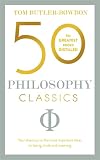
Pretty much, every time that I've read a digest of a book as a time-saving device, I've been disappointed. And, I'm reminded of the advice of my old Philosophy lecturer, Thomas Mautner, that to understand a philosophy book you really needed to read it four times (or was it three?) ....anyway, it was certainly not to read the digest. And, to be fair to myself and my principles, when I bought this book and started reading it, I thought I was getting a set of essays by the original writers show more themselves. But no. This is a digest by Tom Butler-Bowdon of his-take on the 50 thinkers/writers he has selected here. I almost stopped then but I'm now glad that I persevered. I had actually read a number of these works including spending the best part of a year studying Hume's "An enquiry concerning Human Understanding".....so I thought this would mainly be a refresher for me. But the reality was that many of these authors were fairly prolific and of the 50 books selected, I think I had only read about 13. Though many the the same ideas were being canvassed by the different writers in different words, in their various books.
And, I must say, that Tom Butler-Bowdon has earned my admiration for the way that he's been able to capture the essence of the works in a clear and helpful way. Also, he's not afraid to slip in the odd critical comment or a comment that indicates how history has treated this particular work...and the flaws exposed in it.
It's not possible for me to try and do, here, a book-summary of Tom's summaries of 50 books but I will draw out a few things that were either new to me or I found especially interesting. For example:
Harry Frankfurt, "On Bullshit": "A lie can shock or startle, but we accept it as being, after all, consistent with human nature. Bullshitting, however, particularly when it extends beyond individuals to organisations and governments, is perverse, a corruption of humanity. Rejection of the "authority of truth" is favour of selling or telling a story can lead to the rise of Hitlers and Pol Pots, whose spin on history is so captivating that it attracts millions of followers".
William James, "Pragmatism": "A belief or idea has value only if it 'works'--that is, changes our world in some way. Other notions nd ideas, however, attractive or elegant, should be dismissed'. "James divides philosophers into two basic categories: the empiricists, who wish to boil everything down to naked facts and observation; and the rationalists, who believe in abstract and eternal principles. The former tend to have an unsentimental, fatalistic, irreligious, and often dark view of the world, while the latter are optimists who tend to believe in free will, spiritual order, and the unity of all things. Naturally, each camp tends to have a low view of the other.
James notes that we live in an empirically minded age, yet this still does not cancel out the natural human impulse for religion. Many find themselves caught between philosophy that does not cover spiritual needs, that offers a completely materialistic universe, and religious philosophy that does not take account of facts"......"It is astonishing to see how many philosophical disputes collapse into insignificance the moment you subject them to this simple test of tracing a concrete consequence".
Daniel Kahneman, "Thinking fast and slow": "These immediate impressions Kahneman describes as fast or System 1 thinking. We use this much more often than slow, deliberative, System 2 thinking, which can include anything from filling out a tax form, to parking in a narrow space, to trying out an argument. System 2 thought involves attention and effort, or, to use a philosophical word, reason.
The systems can operate in tandem. When System I cannot solve a problem immediately, it calls on System 2, with its detailed and deliberate procesing, to
chew it over and come up with an answer. System l allows us to drive along a highway without thinking about driving; System 2 kicks in when we suddenly
need to think where we are going. System l allows us to read a story to our daughter without actually taking it in; System 2 comes to life when she asks a question".........Our brains are set up to detect a predator in a fraction of a second, much quicker than the part of the brain that acknowledges one has been seen. That is why we can act before we even "know we are acting. "Threats are privileged above opportunities" Kahneman says. This natural tendency means that we "overweight unlikely events, such as being caught in a terrorist attack. It also leads to us overestimating our chances of winning the lottery.
"Act calm and kind regardless of how you feel" is good advice, Kahneman says....."In the 1970s, most social scientists made an assumption that people are generally rational and their thinking sound, but that sometimes emotion hijacks this rationality. In fact, things work more the other way around. We draw on the rational mind only when we really need it. Our thought is not "corrupted" by emotion; instead, much of our thinking is emotional".
Friederich Nietzsche, "Beyond good and evil".......this was one of the books that I have read before (some 60 years ago) .....though I have no recollections of what he said....though I do recall that he went insane towards the end of his life....that must have been in the prologue. ........:"In spite of all the value which may belong to the true, the positive and the unselfish, it might be possible that a higher and more fundamental value for life should generally be assigned to pretence, to the will to delusion, to selfishness and cupidity Perhaps good and evil are more knitted together than we think, though (in the interests of purity) we like to see them as separate.
Good and evil are a creation of humankind"........"....philosophers are not lovers of wisdom, but lovers of their wisdom. At the heart of each of their world views is a moral position, and "knowledge" is the costume in which it is dressed". ....On free will :"I shall never tire of emphasising a small, terse fact, namely, that a thought comes when 'it' wishes, and not when 'I' wish."
Plato, "The Republic": "Athenian leaders gained power by telling voters what they wanted to hear, when they should have been charting a plan for the health of the state.The result was a pleasing, lawless, various sort of government, distributing equality to equals and
unequals alike"....."Plato's alternative is an elite governing body of philosophers whose sole purpose is to work for the good of the state.
Plato suggests that we should not expect a nation or state to be run properly by merchants, tradesman, or soldiers, but only by those who have the best general overview of what constitutes the good in society. A society run by soldiers would be always at war and limit freedom to its citizens; a state run by businessmen would course with envy and materialism; Only a highiy educated generalist, trained over many years in abstract subjects (Socrates suggests 10 years' study of mathematics before moving on to philosophy). can govern well." ....."The Republics power lies not in its provision of a template for government (it is unlikely that we will ever see states run by "philosopher kings"), but in showing how the qualities of wisdom, courage, self-discipline, and justice make for well-balanced individuals".
John Rawls, "A theory of justice": "The best societies are those that do not simply offer personal freedom but lessen the lottery of life by giving a fair chance for all"......"Rawls proposes his own principles by which a just society could be guided:
1. There must be basic freedoms (e.g., of speech, association, religion).
2. The inequalities that inevitably result from freedom are so arranged to bring most benefit to the worst off, including full equality of opportunity.
The first "priority rule" supporting these principles is that freedom can only be restricted when it results in other freedoms. As Rawls puts it, "a less extensive liberty must strengthen the total system of liberty shared by all
The second priority rule is that justice is always more important than efficiency or utility of outcomes. Specifically, equal opportunity is more important than achieving a certain whole-of-society outcome, or what some government may believe is for the good of the people"..........The big problem, as Rawls sees it, with existing theories for achieving ajust society lies in the biases and prejudices of those charged with running it. To get around this, he makes his famous "veil of ignorance" proposal. Every member in society agrees to voluntary and temporary amnesia. As the veil of ignorance descends on them, they forget who they are and the place they hold in society, so that fairness to all is their main concern. After all, Rawls notes, if someone knew they were rich, they might want to oppose taxes welfare policies, not only because it might reduce their fortune, but because they may have conditioned themselves to see welfare as an unjust principle. The veil of ignorance eliminates such prejudices, because each person is blind to their station in life".
Jean-Jaques Rousseau, "The Social Contract": "Only through living in a framework of laws can people flourish. While they can be happy (in a brute sort of way) living in a state of nature, they can never reach their fullest potential, because only society provides an environment that can develop human virtues, and it is virtues that elevate man. Political equality and freedom are not natural rights, but rights required for the highest kind of human being or community to come into existence"........"The social pact between individual and state requires that individuals who "refuse to obey the general will shall be constrained to do so by the whole body Rousseau puts this even more plainly: 'such an individual will be forced to be free'."...."All the individual desires balance each other out, and from this melee emerges the wider public interest. Rousseau warns that we should always be on our guard against some sectional or group interest becoming so powerful that it skews the general will".
Bottom line is that I think Butler Bowdon has done a first rate job of summarising and putting into context the works of 50 significant philosophers and he's convinced me to seek out more of his works. I give the book five stars. show less
And, I must say, that Tom Butler-Bowdon has earned my admiration for the way that he's been able to capture the essence of the works in a clear and helpful way. Also, he's not afraid to slip in the odd critical comment or a comment that indicates how history has treated this particular work...and the flaws exposed in it.
It's not possible for me to try and do, here, a book-summary of Tom's summaries of 50 books but I will draw out a few things that were either new to me or I found especially interesting. For example:
Harry Frankfurt, "On Bullshit": "A lie can shock or startle, but we accept it as being, after all, consistent with human nature. Bullshitting, however, particularly when it extends beyond individuals to organisations and governments, is perverse, a corruption of humanity. Rejection of the "authority of truth" is favour of selling or telling a story can lead to the rise of Hitlers and Pol Pots, whose spin on history is so captivating that it attracts millions of followers".
William James, "Pragmatism": "A belief or idea has value only if it 'works'--that is, changes our world in some way. Other notions nd ideas, however, attractive or elegant, should be dismissed'. "James divides philosophers into two basic categories: the empiricists, who wish to boil everything down to naked facts and observation; and the rationalists, who believe in abstract and eternal principles. The former tend to have an unsentimental, fatalistic, irreligious, and often dark view of the world, while the latter are optimists who tend to believe in free will, spiritual order, and the unity of all things. Naturally, each camp tends to have a low view of the other.
James notes that we live in an empirically minded age, yet this still does not cancel out the natural human impulse for religion. Many find themselves caught between philosophy that does not cover spiritual needs, that offers a completely materialistic universe, and religious philosophy that does not take account of facts"......"It is astonishing to see how many philosophical disputes collapse into insignificance the moment you subject them to this simple test of tracing a concrete consequence".
Daniel Kahneman, "Thinking fast and slow": "These immediate impressions Kahneman describes as fast or System 1 thinking. We use this much more often than slow, deliberative, System 2 thinking, which can include anything from filling out a tax form, to parking in a narrow space, to trying out an argument. System 2 thought involves attention and effort, or, to use a philosophical word, reason.
The systems can operate in tandem. When System I cannot solve a problem immediately, it calls on System 2, with its detailed and deliberate procesing, to
chew it over and come up with an answer. System l allows us to drive along a highway without thinking about driving; System 2 kicks in when we suddenly
need to think where we are going. System l allows us to read a story to our daughter without actually taking it in; System 2 comes to life when she asks a question".........Our brains are set up to detect a predator in a fraction of a second, much quicker than the part of the brain that acknowledges one has been seen. That is why we can act before we even "know we are acting. "Threats are privileged above opportunities" Kahneman says. This natural tendency means that we "overweight unlikely events, such as being caught in a terrorist attack. It also leads to us overestimating our chances of winning the lottery.
"Act calm and kind regardless of how you feel" is good advice, Kahneman says....."In the 1970s, most social scientists made an assumption that people are generally rational and their thinking sound, but that sometimes emotion hijacks this rationality. In fact, things work more the other way around. We draw on the rational mind only when we really need it. Our thought is not "corrupted" by emotion; instead, much of our thinking is emotional".
Friederich Nietzsche, "Beyond good and evil".......this was one of the books that I have read before (some 60 years ago) .....though I have no recollections of what he said....though I do recall that he went insane towards the end of his life....that must have been in the prologue. ........:"In spite of all the value which may belong to the true, the positive and the unselfish, it might be possible that a higher and more fundamental value for life should generally be assigned to pretence, to the will to delusion, to selfishness and cupidity Perhaps good and evil are more knitted together than we think, though (in the interests of purity) we like to see them as separate.
Good and evil are a creation of humankind"........"....philosophers are not lovers of wisdom, but lovers of their wisdom. At the heart of each of their world views is a moral position, and "knowledge" is the costume in which it is dressed". ....On free will :"I shall never tire of emphasising a small, terse fact, namely, that a thought comes when 'it' wishes, and not when 'I' wish."
Plato, "The Republic": "Athenian leaders gained power by telling voters what they wanted to hear, when they should have been charting a plan for the health of the state.The result was a pleasing, lawless, various sort of government, distributing equality to equals and
unequals alike"....."Plato's alternative is an elite governing body of philosophers whose sole purpose is to work for the good of the state.
Plato suggests that we should not expect a nation or state to be run properly by merchants, tradesman, or soldiers, but only by those who have the best general overview of what constitutes the good in society. A society run by soldiers would be always at war and limit freedom to its citizens; a state run by businessmen would course with envy and materialism; Only a highiy educated generalist, trained over many years in abstract subjects (Socrates suggests 10 years' study of mathematics before moving on to philosophy). can govern well." ....."The Republics power lies not in its provision of a template for government (it is unlikely that we will ever see states run by "philosopher kings"), but in showing how the qualities of wisdom, courage, self-discipline, and justice make for well-balanced individuals".
John Rawls, "A theory of justice": "The best societies are those that do not simply offer personal freedom but lessen the lottery of life by giving a fair chance for all"......"Rawls proposes his own principles by which a just society could be guided:
1. There must be basic freedoms (e.g., of speech, association, religion).
2. The inequalities that inevitably result from freedom are so arranged to bring most benefit to the worst off, including full equality of opportunity.
The first "priority rule" supporting these principles is that freedom can only be restricted when it results in other freedoms. As Rawls puts it, "a less extensive liberty must strengthen the total system of liberty shared by all
The second priority rule is that justice is always more important than efficiency or utility of outcomes. Specifically, equal opportunity is more important than achieving a certain whole-of-society outcome, or what some government may believe is for the good of the people"..........The big problem, as Rawls sees it, with existing theories for achieving ajust society lies in the biases and prejudices of those charged with running it. To get around this, he makes his famous "veil of ignorance" proposal. Every member in society agrees to voluntary and temporary amnesia. As the veil of ignorance descends on them, they forget who they are and the place they hold in society, so that fairness to all is their main concern. After all, Rawls notes, if someone knew they were rich, they might want to oppose taxes welfare policies, not only because it might reduce their fortune, but because they may have conditioned themselves to see welfare as an unjust principle. The veil of ignorance eliminates such prejudices, because each person is blind to their station in life".
Jean-Jaques Rousseau, "The Social Contract": "Only through living in a framework of laws can people flourish. While they can be happy (in a brute sort of way) living in a state of nature, they can never reach their fullest potential, because only society provides an environment that can develop human virtues, and it is virtues that elevate man. Political equality and freedom are not natural rights, but rights required for the highest kind of human being or community to come into existence"........"The social pact between individual and state requires that individuals who "refuse to obey the general will shall be constrained to do so by the whole body Rousseau puts this even more plainly: 'such an individual will be forced to be free'."...."All the individual desires balance each other out, and from this melee emerges the wider public interest. Rousseau warns that we should always be on our guard against some sectional or group interest becoming so powerful that it skews the general will".
Bottom line is that I think Butler Bowdon has done a first rate job of summarising and putting into context the works of 50 significant philosophers and he's convinced me to seek out more of his works. I give the book five stars. show less
50 Psychology Classics: Who We Are, How We Think, What We Do: Insight and Inspiration from 50 Key Books by Tom Butler-Bowdon
This book is an easy introduction to the current state of popular psychology (or rather to the arrival of serious psychological research into mainstream culture).
It is particularly valuable for anyone whose education in these matters ended before the massive flow of insights since the early 1980s on sexual difference, techniques of persuasion, emotional intelligence and the actual rather than theoretical workings of the unconscious.
The psychologists are a-political in general but their show more findings generally place to one side and forever the theory of the 'blank slate' that has driven so much progressive thinking for so long.
Men and women are now recognised as thinking profoundly differently for very fundamental hormonal and brain structure reasons. Society is better for that common sense realisation - even if ageing feminists of both sexes just cannot get their head around this fact of life.
The new gender psychology gives its due to both sexes' rights to negotiate their own sexual identity and remain responsible for themselves. I guess that our kids are going to be a lot more 'together' (on average) than anyone hitting their late 30s and above.
As for the manipulative aspects of psychology, thinking on these matters started as early as Stanley Milgram's experiments and the analyses of the Jonestown massacre in the 1970s.
It has taken almost thirty years and Abu Ghraib (and recent child abuse scandals) for it to sink into public consciousness that any claim of authority must be looked on with a very jaundiced eye if we are to avoid being dragged back into the social criminalities of the last century.
This, too, is fundamentally political. If the rising generations are conservative, they are also profoundly distrusting of the State and libertarian - and often more highly educated and resistant to the persuasive techniques of the market.
They will accept the latter but only as a form of permanent consumer-led entertainment, a process helped by the critical role of new technologies in moving sentiment against those who would manipulate too crassly. On the other hand, through movements like NLP, 'manipulation' has become democratised, creating an uncertain environment in interpersonal relations.
It may take a while for these changes to work through the system. Post-35 voters clearly dominate the agenda in recent US elections (this review has been revised slightly since it was originally written in 2008).
Each book is covered in a short, usually six-page, summary, that helps one choose which books might be chosen to read later because of one's particular interests.
The author (who has produced recent similar guides on self-help, spiritual and wealth creation) has a talent for distilling complex arguments into sufficient narrative that you move on feeling that you have both learnt something and want to learn more.
The only quibble is a common irritation that publishers always seem to insist on introducing books or ideas alphabetically - an irrational approach derived from the dictionary and encyclopedia. This is wholly inappropriate for contextual learning, ironically showing that the publishers and author (in this case) have not mentally moved on from older patterns of thinking.
This approach weakens the reader's ability to see how the discipline of psychology has developed, from William James, Sigmund Freud and Jean Piaget to Pinker, Seligman, Schwartz, Gladwell, Brizendine and Gilbert.
Fortunately, the author is intelligent enough to provide a useful introduction on the 'themes' at the beginning of the book and then a chronological list of texts (and another 50 influential books also introduced chronologically) at the back. Highly recommended. show less
It is particularly valuable for anyone whose education in these matters ended before the massive flow of insights since the early 1980s on sexual difference, techniques of persuasion, emotional intelligence and the actual rather than theoretical workings of the unconscious.
The psychologists are a-political in general but their show more findings generally place to one side and forever the theory of the 'blank slate' that has driven so much progressive thinking for so long.
Men and women are now recognised as thinking profoundly differently for very fundamental hormonal and brain structure reasons. Society is better for that common sense realisation - even if ageing feminists of both sexes just cannot get their head around this fact of life.
The new gender psychology gives its due to both sexes' rights to negotiate their own sexual identity and remain responsible for themselves. I guess that our kids are going to be a lot more 'together' (on average) than anyone hitting their late 30s and above.
As for the manipulative aspects of psychology, thinking on these matters started as early as Stanley Milgram's experiments and the analyses of the Jonestown massacre in the 1970s.
It has taken almost thirty years and Abu Ghraib (and recent child abuse scandals) for it to sink into public consciousness that any claim of authority must be looked on with a very jaundiced eye if we are to avoid being dragged back into the social criminalities of the last century.
This, too, is fundamentally political. If the rising generations are conservative, they are also profoundly distrusting of the State and libertarian - and often more highly educated and resistant to the persuasive techniques of the market.
They will accept the latter but only as a form of permanent consumer-led entertainment, a process helped by the critical role of new technologies in moving sentiment against those who would manipulate too crassly. On the other hand, through movements like NLP, 'manipulation' has become democratised, creating an uncertain environment in interpersonal relations.
It may take a while for these changes to work through the system. Post-35 voters clearly dominate the agenda in recent US elections (this review has been revised slightly since it was originally written in 2008).
Each book is covered in a short, usually six-page, summary, that helps one choose which books might be chosen to read later because of one's particular interests.
The author (who has produced recent similar guides on self-help, spiritual and wealth creation) has a talent for distilling complex arguments into sufficient narrative that you move on feeling that you have both learnt something and want to learn more.
The only quibble is a common irritation that publishers always seem to insist on introducing books or ideas alphabetically - an irrational approach derived from the dictionary and encyclopedia. This is wholly inappropriate for contextual learning, ironically showing that the publishers and author (in this case) have not mentally moved on from older patterns of thinking.
This approach weakens the reader's ability to see how the discipline of psychology has developed, from William James, Sigmund Freud and Jean Piaget to Pinker, Seligman, Schwartz, Gladwell, Brizendine and Gilbert.
Fortunately, the author is intelligent enough to provide a useful introduction on the 'themes' at the beginning of the book and then a chronological list of texts (and another 50 influential books also introduced chronologically) at the back. Highly recommended. show less
50 Psychology Classics: Who We Are, How We Think, What We Do; Insight and Inspiration from 50 Key Books by Tom Butler-Bowdon
After an introduction, the book consists of fifty short chapters each laying out the main ideas in a classic psychology book. Each chapter concludes with a short biography of the author or authors. The chapters are well written, give a good summary of the main ideas and avoid controversy. This book is good if you want an overview of the various schools of thought of psychology. I found some chapters very interesting so it has been helpful in directing my reading to my interests. It is show more worthwhile noting the chapters that are of particular interest so that you don't have to go back over the book. There is probably too little detail to be of very much use to psychology students. The book concludes with a list of fifty more books with a one sentence description which is also useful. show less
50 Psychology Classics, Second Edition: Your shortcut to the most important ideas on the mind, personality, and human nature (50 Classics) by Tom Butler-Bowdon
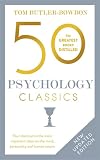
With 50 Psychology Classics, we are introduced to a distilled version of fifty works in Psychology. They aren’t all classics, so the title might be a bit misleading. The book spans from William James to Walter Mischel. Some of the works are quite recent, but influence in other ways. They might be bestsellers or quoted a great amount. Some of the works are ones that I have read or at least have heard of. This is a pretty good introduction to Psychology in general, in that it recommends show more books and gets you interested in the material. The same guy does this series, and I have read the one on Philosophy.
I really enjoyed the book and would highly recommend it. I actually bought a copy of it, but I don’t remember where I got it from. show less
I really enjoyed the book and would highly recommend it. I actually bought a copy of it, but I don’t remember where I got it from. show less
Awards

You May Also Like


Associated Authors
Statistics
- Works
- 27
- Also by
- 2
- Members
- 1,800
- Popularity
- #14,294
- Rating
- 3.8
- Reviews
- 24
- ISBNs
- 164
- Languages
- 13
- Favorited
- 2

