
Merlin Donald
Author of Origins of the Modern Mind: Three Stages in the Evolution of Culture and Cognition
About the Author
Merlin Donald is professor of psychology at Queen's University, Ontario, Canada
Works by Merlin Donald
Origins of the Modern Mind: Three Stages in the Evolution of Culture and Cognition (1991) 217 copies, 1 review
Origins of the Human Mind 1 copy
Mind So Rare, A 1 copy
Associated Works
Cognition and Material Culture: The Archaeology of Symbolic Storage (Monograph Series) (1999) — Contributor — 16 copies
Tagged
Common Knowledge
- Birthdate
- 1939-11-17
- Gender
- male
- Education
- McGill University (PhD | neuropsychology | 1968)
- Occupations
- professor (Yale School of Medicine)
professor (Queen's University | Kingston, Canada | 1972)
chair (Cognitive Science - Case Western Reserve University | 2005) - Nationality
- Canada
- Associated Place (for map)
- Canada
Members
Reviews
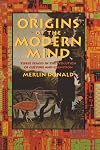
Donald's three-stage model of primate evolution begins with a plausible description of primate cognition at the level of chimps. He then proposes the crucial intermediary stage between chimp communication and human language, which he calls mimetic.
As far as I know--I'm not an anthropologist, I'm a cognitive systems theorist--this is an original contribution and is absolutely brilliant because is essentially solves the problem, in broad terms, of how we got from the cognitive processes show more employed by chimps when they communicate to the human cognitive processes we employ when we acquire and use language.
I have not actually finished the book. He begins with a valuable overview of various aspects of the problem of explaining language and understanding chimp capacity, reviewing theories, anatomy, anthropology, and both psychology and newer work under the heading of neuropsychology. He is a bit weak on the semiotics as far as I'm concerned, but he's working with a confused literature that is also weak. He then proceeds to his three-stage model. I got as far as stage 2, and started branching out from there and have never gotten back to it.
As far as I'm concerned this is the operative model of human evolution as it concerns cognition. show less
As far as I know--I'm not an anthropologist, I'm a cognitive systems theorist--this is an original contribution and is absolutely brilliant because is essentially solves the problem, in broad terms, of how we got from the cognitive processes show more employed by chimps when they communicate to the human cognitive processes we employ when we acquire and use language.
I have not actually finished the book. He begins with a valuable overview of various aspects of the problem of explaining language and understanding chimp capacity, reviewing theories, anatomy, anthropology, and both psychology and newer work under the heading of neuropsychology. He is a bit weak on the semiotics as far as I'm concerned, but he's working with a confused literature that is also weak. He then proceeds to his three-stage model. I got as far as stage 2, and started branching out from there and have never gotten back to it.
As far as I'm concerned this is the operative model of human evolution as it concerns cognition. show less
Lists
You May Also Like


Associated Authors
Statistics
- Works
- 4
- Also by
- 2
- Members
- 378
- Popularity
- #63,850
- Rating
- 3.5
- Reviews
- 2
- ISBNs
- 9
- Languages
- 2