
Steven Mithen
Author of After the Ice: A Global Human History 20,000-5000 BC
About the Author
Steven Mithen is Professor of Early Prehistory and Head of the School of Human and Environmental Sciences at the University of Reading.
Works by Steven Mithen
The Prehistory of the Mind: The Cognitive Origins of Art, Religion and Science (1996) 541 copies, 9 reviews
The Singing Neanderthals: The Origins of Music, Language, Mind, and Body (2005) 377 copies, 5 reviews
The Language Puzzle: Piecing Together the Six-Million-Year Story of How Words Evolved (2024) 127 copies, 2 reviews
To the Islands: An Archaeologist's Relentless Quest to Find the Prehistoric Hunter-Gatherers of the Hebrides (2010) 11 copies
Associated Works
The Oxford Illustrated Prehistory of Europe (1994) — Contributor, some editions — 423 copies, 1 review
Cognition and Material Culture: The Archaeology of Symbolic Storage (Monograph Series) (1999) — Contributor — 16 copies
Tagged
Common Knowledge
- Birthdate
- 1960-10-16
- Gender
- male
- Education
- University of Cambridge (PhD)
York University (MSc)
University of Sheffield (BA) - Occupations
- professor (Archaeology)
- Organizations
- University of Reading
- Nationality
- UK
- Map Location
- England, UK
Members
Reviews
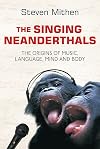
Wonderful synthesis of prehistory, archaeological detail, neuroscience, psychology, communication, the whole shebang, all with a light touch and flashes of humour. Neatly skirts the "pop science" issues of whether H sapiens mated with or massacred the Neanderthals to deal with more relevant matters of how we came to be the way we are. Clear lines between the speculative, the likely and the proven. Enjoyable to read and deeply informative.
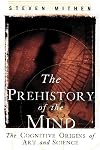
Imagine for a moment that our ancestors, many tens of thousands of years ago, all trooped up a gangplank and then flew by spaceship to a different planet. Well, in effect, that’s exactly what we’ve done as a species—the Earth of today is as different from that earlier Earth as an alien world (and it’s us who have largely changed it of course, to suit ourselves and at the expense of nearly everything else that lives here). But inside our heads we still have the original brains and show more minds: the human mind wasn’t shaped by this modern alien world, and to understand much of why it is the way it is it makes a lot of sense (or so it seems to me at least) to look back at the world which did shape it.
By the time The Prehistory of the Mind was written (1996) evolutionary psychology was already on its way to becoming a subject in its own right—psychologists drawing on archaeological evidence. Steven Mithen was an archaeologist doing all this the other way around: “Rather than having archaeology play the supporting role, I want it to set the agenda … Indeed, many archaeologists now feel confident that the time is ripe to move beyond asking questions about how these ancestors looked and behaved, to asking what was going on within their minds.”
The book spans the period from the time of our last common ancestor with other apes (about six million years ago or so); then the australopithecines (between six million and two); then the various Homo species: habilis, erectus, neanderthalensis, sapiens. And, broadly speaking, it divides this period into the three main phases Mithen claims the human mind has passed through: first, a generalised intelligence; then something more modular with specialised capabilities (one of those Swiss Army knives is a good way of picturing this); and finally, these modules partly coalescing into something more flexible, more cognitively fluid. On the one hand, some of the reasoning here (but it is only some of it) does have a decided house-of-cards feel to me—minds aren’t themselves fossilised, obviously, so you’re inferring. But on the other hand, what did impress me was just how much you can infer: from the fossilised skeletal remains themselves and footprints in fossilised mud; from ceremonial burials, the detritus of worksites and campfires; from artefacts of all kinds (weapons, implements, ornaments and tools for making other tools); from cave paintings, carvings and dwellings—from all these physical remains you can infer behaviour, and from behaviour to a surprising amount about the minds behind it.
Mithen’s book was an early attempt at this sort of reconstruction, so inevitably has by now become a bit out of date. A really interesting read though all the same. show less
By the time The Prehistory of the Mind was written (1996) evolutionary psychology was already on its way to becoming a subject in its own right—psychologists drawing on archaeological evidence. Steven Mithen was an archaeologist doing all this the other way around: “Rather than having archaeology play the supporting role, I want it to set the agenda … Indeed, many archaeologists now feel confident that the time is ripe to move beyond asking questions about how these ancestors looked and behaved, to asking what was going on within their minds.”
The book spans the period from the time of our last common ancestor with other apes (about six million years ago or so); then the australopithecines (between six million and two); then the various Homo species: habilis, erectus, neanderthalensis, sapiens. And, broadly speaking, it divides this period into the three main phases Mithen claims the human mind has passed through: first, a generalised intelligence; then something more modular with specialised capabilities (one of those Swiss Army knives is a good way of picturing this); and finally, these modules partly coalescing into something more flexible, more cognitively fluid. On the one hand, some of the reasoning here (but it is only some of it) does have a decided house-of-cards feel to me—minds aren’t themselves fossilised, obviously, so you’re inferring. But on the other hand, what did impress me was just how much you can infer: from the fossilised skeletal remains themselves and footprints in fossilised mud; from ceremonial burials, the detritus of worksites and campfires; from artefacts of all kinds (weapons, implements, ornaments and tools for making other tools); from cave paintings, carvings and dwellings—from all these physical remains you can infer behaviour, and from behaviour to a surprising amount about the minds behind it.
Mithen’s book was an early attempt at this sort of reconstruction, so inevitably has by now become a bit out of date. A really interesting read though all the same. show less
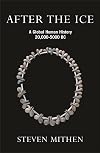
I picked up this book in the hopes of learning about what mischief humans got up to on all the continents after the ice age (20 000 BC) until the event of civilization (5000 BC) via archaeological, genetic and linguistic evidence. Well, this book just didn't do it for me. I read approximately half the book and had to stop. Instead of a science/history book, the author wrote an annoying historical fiction novel with the odd bit of archaeological findings thrown in.
The author has a habit of show more describing what he thinks life might be like at various places at various points in history, but he isn't always clear to differentiate between the information based on archaeological evidence and what is essentially the author's speculation. In addition, the presence of an extremely annoying, silly and distracting fictional, time-travelling anthropologist ghost gimmick acting as eye-witness is included everywhere. This fictional character was amusing int he first two chapters, but after that I kept hoping some neolithic shaman would exorcise him.
This annoying fictional character wonders around the prehistoric world in no particular order, other than dealing with each continent at a time. This random wondering in time and space makes for jumbled and confusing reading, especially since no additional timeline diagram was provided. In addition, many of the sites discussed in the book have similar findings and everything eventually blurres into one big smudge. Pictures or diagrams would have been useful to differentiate these sites from one another.
In between the historical fiction accounts are jumbled-up, brief and rather vague archeological descriptions of selected sites, but genetic and linguistic evidence is mostly ignored, or currently outdated (the book was published in 2004).
What facts I managed to pick out of what I read of this book were interesting, but the writing style was confusing, messy and after a while, rather boring. I just couldn't keep my interest in this book going any further and decided to find something else to read. show less
The author has a habit of show more describing what he thinks life might be like at various places at various points in history, but he isn't always clear to differentiate between the information based on archaeological evidence and what is essentially the author's speculation. In addition, the presence of an extremely annoying, silly and distracting fictional, time-travelling anthropologist ghost gimmick acting as eye-witness is included everywhere. This fictional character was amusing int he first two chapters, but after that I kept hoping some neolithic shaman would exorcise him.
This annoying fictional character wonders around the prehistoric world in no particular order, other than dealing with each continent at a time. This random wondering in time and space makes for jumbled and confusing reading, especially since no additional timeline diagram was provided. In addition, many of the sites discussed in the book have similar findings and everything eventually blurres into one big smudge. Pictures or diagrams would have been useful to differentiate these sites from one another.
In between the historical fiction accounts are jumbled-up, brief and rather vague archeological descriptions of selected sites, but genetic and linguistic evidence is mostly ignored, or currently outdated (the book was published in 2004).
What facts I managed to pick out of what I read of this book were interesting, but the writing style was confusing, messy and after a while, rather boring. I just couldn't keep my interest in this book going any further and decided to find something else to read. show less
People are first amazed, then terrified as rising sea level caused by global warming – 7° C in 50 years - overwhelms coastal plains, turning lowlands to scattered islands, then drowning those islands. Entire ecosystems disappear or are modified beyond recognition. Savannas change to desert, alpine valleys are covered by forests, and most of the world’s megafauna go extinct – 36 large mammal species in North America, 46 in South America, 15 in Australia, 7 in Europe, 2 in Africa. show more Familiar plants and animals disappear along with their habitats. It is an ecological catastrophe beyond the imagination of the people who witnessed it. Which were not very many, because we’re talking about the end of the Younger Dryas period, around 9600 BCE.
Despite that little bit of sensationalism, I have mixed feelings about After the Ice. The bad parts first:
*Author Steven Mithen adopts an annoying narrative device – that of a young modern man, John Lubbock, who is able to travel in time and wander invisibly around the various peoples of the Mesolithic and Neolithic. This starts out only slightly cute and becomes increasingly tedious. The wanderings of Lubbock add considerable useless bulk to an already thick book. Perhaps some readers will find this useful; not me.
*Nothing is tied together chronologically; instead the book is organized geographically – Western Asia to Europe to the Americas to Australia to South Asia to Africa, and even within a region Lubbock does not travel in time order, repeatedly bouncing from 20000 BCE to 6000 BCE and back as he enters different areas. If there was a chart somewhere that related the different sites – showing that the Middle Eastern Natufian culture was contemporary with the Ahrensburg site in Schleswig-Holstein, the Monte Verde site in southern Chile, the earliest Jomon of Japan and the Eland Cave site in South Africa (for example) – it would be better, but instead you have to depend on your memory and “John Lubbock”’s interior monologs.
*Mithen swallows the Environmental Litany hook, line, and sinker. Despite repeatedly pointing out in the text that the climate change from the last glacial maximum through the late glacial interstadial through the return of the ice during the Younger Dryas and the sudden end of that period was vastly greater than the worst imaginings of Al Gore, his final chapter is full of the usual stuff about carbon footprint and genetically modified food and overpopulation.
Mithen is careless and poor at explaining information from other fields. He repeatedly talks about “changes in the Earth’s orbit” – Milankovitch cycles – as if these were some sort of sudden and unpredictable event. In fact, these aren’t “changes in the Earth’s orbit” at all; they’re just as much a part of the Earth’s orbit as the annual revolution around the Sun, they just happen at a time scale outside human experience.
Now the good parts:
*The book covers a time period that tends to be ignored by popular works. There are lots of book on the origins of our genus in East Africa, and lots on the dawn of civilization in the Near East, but not much on what happened in between.
Along the same lines, Mithen shows that a lot of “perceived knowledge” about this period is just plain wrong. For years, the conventional wisdom was a gradual transition from hunter-gatherer to agriculture to settled farming community to animal domestication to pottery to metal working to Reality TV. Mithen shows that there were lots of places where hunter-gatherers lived in settled communities, where pottery preceded farming, where people abandoned early agriculture to return to a hunter-gatherer lifestyle, and so on. This is one of the advantages of the global scope of the book; archaeology has tended to focus on events in the Middle East and Europe. Farming is hard work, and people won't do it it if they don't have to. It was always a puzzle to European settlers in North America why the natives didn't immediately adopt European-style farming as soon as they saw it; the answer apparently is they didn't see much point in it. Our own view of what the transition to farming is "supposed" to look like is probably heavily colored by the way things went in "hydraulic" civilizations like Mesopotamia, Egypt, and early China. Lots of other cultures developed farming independently and in most cases it seems to have gone more like the transitional hunter-gatherer-gardener pattern than the extensive irrigation agriculture pattern. I wonder if a lot of academic preconceptions are influenced by the Marxist idea of historical inevitability? Marx was pretty convinced that the hydraulic civilization stage was a necessary part of his historic pattern.
The book is full of fascinating little tidbits of knowledge (just as an example, did you know that there was a Neolithic hunter-gatherer people in northern Siberia whose principal game animal was the polar bear?)
Mithen is willing to speculate about various controversies – was the late Pleistocene megafauna extinction in North America due to overhunting by the Clovis culture or to climate change or both – but is careful to distinguish speculation from what’s actually known. He especially and laudably distances himself from the archaeological tradition of explaining anything that isn’t understood as “ritual artifacts” or “ritual behavior” or “ritual structures”.
There are excellent maps, showing the extent of ice and the coastline at the last glacial maximum. There’s also a fine chart of oxygen isotope data from the LGM to the present, showing (although Mithen doesn’t draw attention to either) that the planet has been cooling since the temperature high at the end of the Younger Dryas, and that such controversial events as the Medieval Climate Optimum and the Little Ice Age are not even recognizable blips in the long term pattern (in terms of oxygen-18 data, the change at the transition from the last interstadial to the Younger Dryas was about nine time as much as the difference between the MCO and the LIA. Of course, this is only a proxy for global temperature, but till pretty interesting.)
So I suppose I’ll have to give this one three stars, with the understanding that parts of the book deserve five and parts one. show less
Despite that little bit of sensationalism, I have mixed feelings about After the Ice. The bad parts first:
*Author Steven Mithen adopts an annoying narrative device – that of a young modern man, John Lubbock, who is able to travel in time and wander invisibly around the various peoples of the Mesolithic and Neolithic. This starts out only slightly cute and becomes increasingly tedious. The wanderings of Lubbock add considerable useless bulk to an already thick book. Perhaps some readers will find this useful; not me.
*Nothing is tied together chronologically; instead the book is organized geographically – Western Asia to Europe to the Americas to Australia to South Asia to Africa, and even within a region Lubbock does not travel in time order, repeatedly bouncing from 20000 BCE to 6000 BCE and back as he enters different areas. If there was a chart somewhere that related the different sites – showing that the Middle Eastern Natufian culture was contemporary with the Ahrensburg site in Schleswig-Holstein, the Monte Verde site in southern Chile, the earliest Jomon of Japan and the Eland Cave site in South Africa (for example) – it would be better, but instead you have to depend on your memory and “John Lubbock”’s interior monologs.
*Mithen swallows the Environmental Litany hook, line, and sinker. Despite repeatedly pointing out in the text that the climate change from the last glacial maximum through the late glacial interstadial through the return of the ice during the Younger Dryas and the sudden end of that period was vastly greater than the worst imaginings of Al Gore, his final chapter is full of the usual stuff about carbon footprint and genetically modified food and overpopulation.
Mithen is careless and poor at explaining information from other fields. He repeatedly talks about “changes in the Earth’s orbit” – Milankovitch cycles – as if these were some sort of sudden and unpredictable event. In fact, these aren’t “changes in the Earth’s orbit” at all; they’re just as much a part of the Earth’s orbit as the annual revolution around the Sun, they just happen at a time scale outside human experience.
Now the good parts:
*The book covers a time period that tends to be ignored by popular works. There are lots of book on the origins of our genus in East Africa, and lots on the dawn of civilization in the Near East, but not much on what happened in between.
Along the same lines, Mithen shows that a lot of “perceived knowledge” about this period is just plain wrong. For years, the conventional wisdom was a gradual transition from hunter-gatherer to agriculture to settled farming community to animal domestication to pottery to metal working to Reality TV. Mithen shows that there were lots of places where hunter-gatherers lived in settled communities, where pottery preceded farming, where people abandoned early agriculture to return to a hunter-gatherer lifestyle, and so on. This is one of the advantages of the global scope of the book; archaeology has tended to focus on events in the Middle East and Europe. Farming is hard work, and people won't do it it if they don't have to. It was always a puzzle to European settlers in North America why the natives didn't immediately adopt European-style farming as soon as they saw it; the answer apparently is they didn't see much point in it. Our own view of what the transition to farming is "supposed" to look like is probably heavily colored by the way things went in "hydraulic" civilizations like Mesopotamia, Egypt, and early China. Lots of other cultures developed farming independently and in most cases it seems to have gone more like the transitional hunter-gatherer-gardener pattern than the extensive irrigation agriculture pattern. I wonder if a lot of academic preconceptions are influenced by the Marxist idea of historical inevitability? Marx was pretty convinced that the hydraulic civilization stage was a necessary part of his historic pattern.
The book is full of fascinating little tidbits of knowledge (just as an example, did you know that there was a Neolithic hunter-gatherer people in northern Siberia whose principal game animal was the polar bear?)
Mithen is willing to speculate about various controversies – was the late Pleistocene megafauna extinction in North America due to overhunting by the Clovis culture or to climate change or both – but is careful to distinguish speculation from what’s actually known. He especially and laudably distances himself from the archaeological tradition of explaining anything that isn’t understood as “ritual artifacts” or “ritual behavior” or “ritual structures”.
There are excellent maps, showing the extent of ice and the coastline at the last glacial maximum. There’s also a fine chart of oxygen isotope data from the LGM to the present, showing (although Mithen doesn’t draw attention to either) that the planet has been cooling since the temperature high at the end of the Younger Dryas, and that such controversial events as the Medieval Climate Optimum and the Little Ice Age are not even recognizable blips in the long term pattern (in terms of oxygen-18 data, the change at the transition from the last interstadial to the Younger Dryas was about nine time as much as the difference between the MCO and the LIA. Of course, this is only a proxy for global temperature, but till pretty interesting.)
So I suppose I’ll have to give this one three stars, with the understanding that parts of the book deserve five and parts one. show less
Lists
Climate Change (1)
Awards


You May Also Like


Associated Authors
Statistics
- Works
- 15
- Also by
- 3
- Members
- 1,949
- Popularity
- #13,205
- Rating
- 3.7
- Reviews
- 30
- ISBNs
- 51
- Languages
- 5
- Favorited
- 1