
Maggie Gee
Author of The White Family
About the Author
Image credit: Maggie Gee Conference
Series
Works by Maggie Gee
Associated Works
Seeing Further: The Story of Science, Discovery, and the Genius of the Royal Society (2010) — Contributor — 1,155 copies, 19 reviews
Tagged
Common Knowledge
- Birthdate
- 1948
- Gender
- female
- Education
- University of Oxford (Somerville College)
Wolverhampton Polytechnic (PhD) - Occupations
- teaching fellow
novelist - Organizations
- Royal Society of Literature ( [2004])
Sussex University (Teaching Fellow) - Awards and honors
- Granta's Best of Young British Novelists (1983)
Order of the British Empire (Officer, 2012)
Royal Society of Literature (Fellow) - Agent
- Anne McDermid (Curtis Brown)
- Relationships
- Rankin, Nicholas (spouse)
Rankin-Gee, Rosa (daughter) - Nationality
- UK
- Birthplace
- Poole, England, UK
- Places of residence
- London, England, UK
Midlands, England, UK
Sussex, England, UK - Associated Place (for map)
- England, UK
Members
Reviews
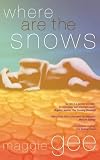
"Where are the Snows" features two very rich, self-obsessed lovers. The book begins with the two of them deciding to just "permanently leave" the two college-age kids behind and go do want they want (travel, live in hotels & f*ck mostly). The story is told in 1st person vignettes, dated between the late 80s and 2007, by each of the characters involved, but mostly our two lovers (did I say she is the stepmother?). That’s as much as I’m going to say about the plot.
My first response to show more this story was an immediate reaction to what the two were doing and how they talked about it. I couldn’t think of a more self-obsessed twosome. Do they deserve my sympathy? I spent the first chapter pissed-off and disgusted...but...I kept reading…. Even at the end of the story I couldn't say that I had any sympathy for the twosome at all (which shocks me a bit as I'm a very empathetic person, but I guess I have limits…) However, the book itself, does make one think… What do their actions do to the idea of family? Can teens be damaged by this kind of behavior? (or does one think them 'fully formed' at this point?) What is love and what is obsession, can they be the same thing? Do we blame the man or the woman more? Would a reader who was not a parent have the same reaction I did? Would a male reader have a different reaction to the story? Or should the gender of the reader make no difference?
I'd love to hear a book club discuss this book… (there’s fair bit of sexual content in it, so perhaps not good for every book group;-) The book also reminds me a bit of reading [We Need to Talk about Kevin]. So, this is a “reaction as a review….” I’ll give it 4.5 stars for blowing my mind. show less
My first response to show more this story was an immediate reaction to what the two were doing and how they talked about it. I couldn’t think of a more self-obsessed twosome. Do they deserve my sympathy? I spent the first chapter pissed-off and disgusted...but...I kept reading…. Even at the end of the story I couldn't say that I had any sympathy for the twosome at all (which shocks me a bit as I'm a very empathetic person, but I guess I have limits…) However, the book itself, does make one think… What do their actions do to the idea of family? Can teens be damaged by this kind of behavior? (or does one think them 'fully formed' at this point?) What is love and what is obsession, can they be the same thing? Do we blame the man or the woman more? Would a reader who was not a parent have the same reaction I did? Would a male reader have a different reaction to the story? Or should the gender of the reader make no difference?
I'd love to hear a book club discuss this book… (there’s fair bit of sexual content in it, so perhaps not good for every book group;-) The book also reminds me a bit of reading [We Need to Talk about Kevin]. So, this is a “reaction as a review….” I’ll give it 4.5 stars for blowing my mind. show less
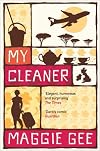
My Cleaner studies the relationship between two women with much more in common than either of them suspects. Vanessa is a sixtyish English woman, solidly middle class, a writer with two novels and several successful Pilates books to her credit, who now teaches creative writing, the divorced mother of a son. Mary is a younger Ugandan woman, college educated, linen supervisor in a hotel in Kampala, also the divorced mother of a son, who once worked for several years as Vanessa's cleaner. When show more Vanessa's son Justin has a nervous breakdown, she appeals to Mary to return to England to help him. Mary realizes that she can save most of the money she makes in England and use it for a better life with her boyfriend and for the girls in her village.
The two women do not like each other. Vanessa is jealous of Mary's relationship with Justin, but Mary mothered Justin when he was a baby and Vanessa was too busy. In fact, Vanessa is jealous of Mary's relationships with everybody and spends a good bit of her time shoring up her own shaky ego. Mary, on the other hand, lost her son to her husband when they divorced, and although she was devoted to him, she was not able to spend a lot of time with him when he was a baby because she was taking care of Justin. Now Jamil (or Jamey or Jamie - Does Mary not know how he spells his name?) has disappeared, and Mary is as fearful for him as Vanessa is for Justin. Mary sees Vanessa as out of touch with reality, a small woman swamped by her possessions, spoiled, and too self-indulgent to be of any use in the world.
What ensues is a charming, funny, touching journey to self-understanding and accommodation through misunderstandings and deception. Maggie Gee's writing is pitch-perfect, understated, and insightful. As Mary and Vanessa haggle over money, she writes, "They are a breath apart, with the world between them." I thought before I wrote this that I liked the book very much. Now I believe I love it. show less
The two women do not like each other. Vanessa is jealous of Mary's relationship with Justin, but Mary mothered Justin when he was a baby and Vanessa was too busy. In fact, Vanessa is jealous of Mary's relationships with everybody and spends a good bit of her time shoring up her own shaky ego. Mary, on the other hand, lost her son to her husband when they divorced, and although she was devoted to him, she was not able to spend a lot of time with him when he was a baby because she was taking care of Justin. Now Jamil (or Jamey or Jamie - Does Mary not know how he spells his name?) has disappeared, and Mary is as fearful for him as Vanessa is for Justin. Mary sees Vanessa as out of touch with reality, a small woman swamped by her possessions, spoiled, and too self-indulgent to be of any use in the world.
What ensues is a charming, funny, touching journey to self-understanding and accommodation through misunderstandings and deception. Maggie Gee's writing is pitch-perfect, understated, and insightful. As Mary and Vanessa haggle over money, she writes, "They are a breath apart, with the world between them." I thought before I wrote this that I liked the book very much. Now I believe I love it. show less
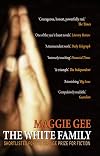
Alfred White is nearing the end of his 50 year career as a park keeper in a fictional London neighborhood in which he has lived for his entire life. He and his wife May have three children: Darren, a famed but restless journalist with a quick temper; Shirley, who has irked her parents by marrying a black African and dating a black Briton of Jamaican descent after her husband's death; and Dirk, the youngest sibling, whose small size and smaller ambitions mark him as a failure compared to his show more brother.
The neighborhood, once populated by white working class Britons, has now become home to immigrants from Africa, Asia, the Caribbean and other parts of Europe. Alfred loathes these newcomers, even the noisy yellow "foreign" birds that have taken over the park, as they are not truly British, but he generally keeps his emotions and feelings in check. However Dirk, who worships his father and fully embraces his beliefs, views all nonwhites as threats, blames them for his personal failures, and hates them with a seething fury.
The White family is thrown into crisis when Alfred collapses while on duty. The family rallies around his sickbed, but deep wounds that have festered for years are brought into the open, which creates almost unbearable stress within each member. Dirk is the most deeply affected of all, as his grief over his father's illness is compounded by the realization that none of the rest of his family understands or cares about him. Fueled by rage, fear and hopelessness, he seeks to exact revenge on those whom he hates the most, the 'coloureds' that have made his life a living hell.
The White Family is a spectacular novel about a white working class family in a multicultural London that no longer seems to accept or appreciate them. The characters are richly portrayed, and this reader felt sympathy for even the most dislikable characters. I could hardly put this book down after the first 50 pages, and I won't soon forget these characters or Gee's wonderful narrative. Other than a slightly disappointing last few pages this book was nearly perfect, and this is easily one of my favorite novels of the year. show less
The neighborhood, once populated by white working class Britons, has now become home to immigrants from Africa, Asia, the Caribbean and other parts of Europe. Alfred loathes these newcomers, even the noisy yellow "foreign" birds that have taken over the park, as they are not truly British, but he generally keeps his emotions and feelings in check. However Dirk, who worships his father and fully embraces his beliefs, views all nonwhites as threats, blames them for his personal failures, and hates them with a seething fury.
The White family is thrown into crisis when Alfred collapses while on duty. The family rallies around his sickbed, but deep wounds that have festered for years are brought into the open, which creates almost unbearable stress within each member. Dirk is the most deeply affected of all, as his grief over his father's illness is compounded by the realization that none of the rest of his family understands or cares about him. Fueled by rage, fear and hopelessness, he seeks to exact revenge on those whom he hates the most, the 'coloureds' that have made his life a living hell.
The White Family is a spectacular novel about a white working class family in a multicultural London that no longer seems to accept or appreciate them. The characters are richly portrayed, and this reader felt sympathy for even the most dislikable characters. I could hardly put this book down after the first 50 pages, and I won't soon forget these characters or Gee's wonderful narrative. Other than a slightly disappointing last few pages this book was nearly perfect, and this is easily one of my favorite novels of the year. show less
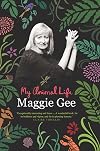
I went back and forth in my admiration for and dismissal of Maggie Gee's My Animal Life. I ended in admiration because her musings on her particular life do finally celebrate the universal, animal life that we all lead, the life filled with spirit and joy and tragedy and acceptance.
We are nearly of an age, so I was never bored with reading intimate details of her life in England. She spends a good deal of time with her immediate family. Her father was abusive and angry, so that she grew up show more frightened. She knew, however, that both her parents loved her, and she has been able to acknowledge his gifts to her as well as the gifts from her beloved mother. She speaks of her husband and of her daughter, both of whom give her life joy and meaning. She speaks of her writing through which she channels the abundance of her life.
This is all a great weight for one little book to carry, but I come away from it affirmed and even more grateful for my animal life. "I am alive at the time of writing this," she writes, "And so are you. --- The light is on, the eye open. Life! From nothing, we are ourselves, moving and breathing, here. Suddenly, this is our chance; our luck, our animal luck." show less
We are nearly of an age, so I was never bored with reading intimate details of her life in England. She spends a good deal of time with her immediate family. Her father was abusive and angry, so that she grew up show more frightened. She knew, however, that both her parents loved her, and she has been able to acknowledge his gifts to her as well as the gifts from her beloved mother. She speaks of her husband and of her daughter, both of whom give her life joy and meaning. She speaks of her writing through which she channels the abundance of her life.
This is all a great weight for one little book to carry, but I come away from it affirmed and even more grateful for my animal life. "I am alive at the time of writing this," she writes, "And so are you. --- The light is on, the eye open. Life! From nothing, we are ourselves, moving and breathing, here. Suddenly, this is our chance; our luck, our animal luck." show less
 This review was written for LibraryThing Early Reviewers.
Lists
Awards


You May Also Like


Associated Authors
Statistics
- Works
- 19
- Also by
- 4
- Members
- 916
- Popularity
- #27,999
- Rating
- 3.6
- Reviews
- 44
- ISBNs
- 76
- Languages
- 7
- Favorited
- 2
