
Elias Khoury (1948–2024)
Author of Gate of the Sun
About the Author
Image credit: Suz
Series
Works by Elias Khoury
Scent of Soap - In Arabic 1 copy
Stella Maris 1 copy
رحلة غاندي الصغير 1 copy
مجمع الأسرار 1 copy
رائحة الصابون 1 copy
اسمي آدم (أولاد الغيتو، #1) 1 copy
Associated Works
Tagged
Common Knowledge
- Legal name
- إلياس خوري
- Other names
- Khūrī, Ilyās
- Birthdate
- 1948-07-12
- Date of death
- 2024-09-15
- Gender
- male
- Education
- Lebanese University, Beirut (Bx)
University of Paris (PhD|Social history) - Occupations
- novelist
professor
magazine editor - Organizations
- New York University
An-Nahar
Palestine Studies magazine - Awards and honors
- Al Owais Award (2007)
- Nationality
- Lebanon
- Birthplace
- Beirut, Lebanon
- Places of residence
- Beirut, Lebanon
New York, New York, USA - Associated Place (for map)
- Lebanon
Members
Reviews
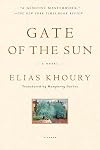
Keeping track of how many books I read each year, and writing about each one, is fun and challenging. The one downside though is that there may have been times, here and there, where I decided not to read a book because it was too long or dense and might mess up my numbers. I almost did that with this 531 page tome, but I'm glad I chose a good book over a higher number of books read.
Gate of the Sun focuses on the protagonist, Khalil. Khalil isn't a doctor, but he calls himself one and works show more in a hospital. He works with someone else who is an actual doctor, but instead of doctoring he just steals and sells medical equipment. Khalil is mostly taking care of someone whom he sometimes calls Father, sometimes Son, and other times by three or four other names. This person is in a coma, but Khalil refuses to admit that there's nothing to be done; instead he's convinced that if his father/son can just make it nine months, he'll be born again.
Khalil spends a lot of time talking to his father/son, recounting dozens of stories that he either experienced first hand or has heard from Yunes (one of the other names of the father/son) or other people he has come across. All the stories are about Palestine and Palestinians. They jump around a lot—from the '40s all the way til the '80s and from Lebanon to Syria to Palestine—but tell a very deep, sad, horrible, and beautiful tale of Palestine from the time Israel became a state.
While reading this book, I was also reading a book that talked about the nazi Holocaust, and I would find myself getting the stories mixed up in my head. It feels like the zionists took what they learned from the people who tried to erase their existence, and have been using it to erase a whole other people. Yet somehow books about the holocaust are in every bookstore and almost everyone I know has read at least one, while books like this very, very rarely appear anywhere that's easy to find.
Read this book. It's important, especially if you have trouble seeing certain humans as worth of life. show less
Gate of the Sun focuses on the protagonist, Khalil. Khalil isn't a doctor, but he calls himself one and works show more in a hospital. He works with someone else who is an actual doctor, but instead of doctoring he just steals and sells medical equipment. Khalil is mostly taking care of someone whom he sometimes calls Father, sometimes Son, and other times by three or four other names. This person is in a coma, but Khalil refuses to admit that there's nothing to be done; instead he's convinced that if his father/son can just make it nine months, he'll be born again.
Khalil spends a lot of time talking to his father/son, recounting dozens of stories that he either experienced first hand or has heard from Yunes (one of the other names of the father/son) or other people he has come across. All the stories are about Palestine and Palestinians. They jump around a lot—from the '40s all the way til the '80s and from Lebanon to Syria to Palestine—but tell a very deep, sad, horrible, and beautiful tale of Palestine from the time Israel became a state.
While reading this book, I was also reading a book that talked about the nazi Holocaust, and I would find myself getting the stories mixed up in my head. It feels like the zionists took what they learned from the people who tried to erase their existence, and have been using it to erase a whole other people. Yet somehow books about the holocaust are in every bookstore and almost everyone I know has read at least one, while books like this very, very rarely appear anywhere that's easy to find.
Read this book. It's important, especially if you have trouble seeing certain humans as worth of life. show less
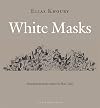
White Masks is a murder mystery told from the perspective of six different characters, and each account raises the possibility of one or more possible perpetrators. Statements by the narrator, a self-described disinterested party who is merely curious about this unusual murder, bookend the six versions. But this genre plot is merely a device for social commentary on the Lebanese Civil War and its effects on the ordinary people of Beirut.
Khalil Ahmad Jaber is a simple man, a minor civil show more servant in the post office, who derives a great deal of self-respect from the fame and then martyrdom of his son, Ahmed. Obsessed with his son’s death, Khalil gradually becomes benignly insane, wandering his neighborhood whitewashing the poster covered walls of the city. His death seems inexplicable. Who would want to torture and then murder this obsessed but harmless old man?
The narrator, a travel agent originally trained to be a journalist, becomes interested in the case and interviews the victim’s wife, a gossiping architect well-known in the neighborhood, the wife of the deceased caretaker of a local building, the garbage man who discovered the body, a young militiaman who witnessed the victim being brought in for questioning, and the deceased’s daughter. Also related is the story of the doctor who performed the autopsy. Each interview is not only another perspective on Khalil, but also the story of their life and, from their diverse experiences, a picture of life in an ordinary Beirut neighborhood is formed. Corruption, compromise, and crime form the backdrop against which these people try to survive.
I found it hard to put this book down, despite my usual avoidance of the murder mystery genre, and that is because the book is more about people caught in a vise of violence than it is about who killed Khalil. I was caught up in the lives of these people and in the theme Khoury weaves about the inanity and uselessness of war and violence in general. Parts of the book made for grim reading, but I was also inspired by the resilience and fortitude of these ordinary people. I would highly recommend White Masks as an introduction to the literature of Elias Khoury. show less
Khalil Ahmad Jaber is a simple man, a minor civil show more servant in the post office, who derives a great deal of self-respect from the fame and then martyrdom of his son, Ahmed. Obsessed with his son’s death, Khalil gradually becomes benignly insane, wandering his neighborhood whitewashing the poster covered walls of the city. His death seems inexplicable. Who would want to torture and then murder this obsessed but harmless old man?
The narrator, a travel agent originally trained to be a journalist, becomes interested in the case and interviews the victim’s wife, a gossiping architect well-known in the neighborhood, the wife of the deceased caretaker of a local building, the garbage man who discovered the body, a young militiaman who witnessed the victim being brought in for questioning, and the deceased’s daughter. Also related is the story of the doctor who performed the autopsy. Each interview is not only another perspective on Khalil, but also the story of their life and, from their diverse experiences, a picture of life in an ordinary Beirut neighborhood is formed. Corruption, compromise, and crime form the backdrop against which these people try to survive.
I found it hard to put this book down, despite my usual avoidance of the murder mystery genre, and that is because the book is more about people caught in a vise of violence than it is about who killed Khalil. I was caught up in the lives of these people and in the theme Khoury weaves about the inanity and uselessness of war and violence in general. Parts of the book made for grim reading, but I was also inspired by the resilience and fortitude of these ordinary people. I would highly recommend White Masks as an introduction to the literature of Elias Khoury. show less
Set during and around the years of war in Lebanon, it presents a meandering tale whose supposed purpose is to determine who killed an older man in a neighborhood. However, the real purpose seems to be to show you the confusions, justifications, brutalities, kindnesses, look-the-other-way attitudes, privations, duties, myths, life-goes-on-even-amid-death-and-war activities, heartbreaks, shifting morals, & so on that happen to a regular populace during a wartime situation. It's not really a show more linear story, almost more of an out-loud conversation with a variety of everyday people, stream-of-consciousness ramblings about their lives.... Haunting, especially when you think of the many humans caught up in wars at this very minute. This could be your story. Or mine. Or of the stranger halfway around the world. show less
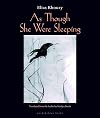
I received this as part of the Early Reviewers program, back in 2012, and I finally read it. Why so long? It was a challenging fever dream of a book for me. I started and stopped several times. I find it difficult to give up on a book, though. Much of the book's first part feels liminal-- between vivid dreams of relationships and a dreamer in body who is disoriented and uses stream-of-consciousness. The reason for this becomes clear at the end, but no spoilers. I notice so much is seen show more through a veil, through fog, or in a state of dissolving, with narratives making u-turns. Dreams are essential to this book, often intense and prophetic, blending past and present, reality and imagination, often in a state of confusion and fear and haunted by a sense of danger and disconnection. Dreams blur the lines between past and present, childhood and adulthood. Yet there is something like faith, will, or prayer that clears such fog. The ambivalence towards the marriage at the center of the book is powerful and the entirety of the life of the protagonist is in the shadow of the 1948 battle of Jaffa and the disintegration of Palestinian culture as it once existed before this. Repeated imagery of eyes is loaded with symbolism throughout As Though She Were Sleeping. Elias Khoury boldly takes on ideas of divine abandonment related to the Naqba. In the way the book ends, I read Milia--the narrator-- not only as a singular subject but as a kind of figurative, collective motherly tragic stand-in for all of Palestine. show less
 This review was written for LibraryThing Early Reviewers.
Lists
Awards


You May Also Like


Associated Authors
Statistics
- Works
- 22
- Also by
- 3
- Members
- 1,279
- Popularity
- #20,043
- Rating
- 3.7
- Reviews
- 29
- ISBNs
- 108
- Languages
- 11
- Favorited
- 3
