
Scholastique Mukasonga
Author of Our Lady of the Nile
About the Author
Works by Scholastique Mukasonga
A Book of My Own 2 copies
Tagged
Common Knowledge
- Birthdate
- 1956-12-10
- Gender
- female
- Occupations
- social worker
writer - Awards and honors
- Prix Renaudot
Prix Ahmadou-Kourouma, 2012 - Nationality
- Rwanda
France - Birthplace
- Gikongoro, Rwanda
- Places of residence
- Nyamata, Rwanda
Butare, Rwanda
Burundi
France
Hérouville-Saint-Clair, Normandy, France
Members
Discussions
AFRICAN NOVEL CHALLENGE OCTOBER 2023 : NGUGI WA THIONG'O & SCHOLASTIQUE MUKASONGA in 75 Books Challenge for 2023 (November 2023)
Reviews
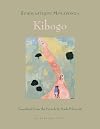
NATIONAL BOOK AWARD FOR FICTION IN TRANSLATION FINALIST!
It's my annual six-stars-of-five read!
Rating: 6* of five
The Publisher Says: In four beautifully woven parts, Mukasonga spins a marvelous recounting of the clash between ancient Rwandan beliefs and the missionaries determined to replace them with European Christianity.
When a rogue priest is defrocked for fusing the gospels with the martyrdom of Kibogo, a fierce clash of cults ensues. Swirling with the heady smell of wet earth and show more flashes of acerbic humor, Mukasonga brings to life the vital mythologies that imbue the Rwandan spirit. In doing so, she gives us a tale of disarming simplicity and profound universal truth.
Kibogo's story is reserved for the evening's end, when women sit around a fire drinking honeyed brew, when just a few are able to stave off sleep. With heads nodding, drifting into the mist of a dream, one faithful storyteller will weave the old legends of the hillside, stories which church missionaries have done everything in their power to expunge.
To some, Kibogo's tale is founding myth, celestial marvel, magic incantation, bottomless source of hope. To white priests spritzing holy water on shriveled, drought-ridden trees, it looms like red fog over the village: forbidden, satanic, a witchdoctor's hoax. All debate the twisted roots of this story, but deep down, all secretly wonder--can Kibogo really summon the rain?
I RECEIVED A DRC FROM THE PUBLISHER VIA EDELWEISS+. THANK YOU.
My Review: Come and sit down. Settle in for a winter afternoon's pleasure-reading of someone else's culture's stories. This novella-in-stories is, in under 150pp or about three hours'-worth of reading, going to tell you about Rwanda. Not the country that threw itself a genocide in 1994. The foreign colony undergoing coerced christianization, the colonizers whose need for men and food to fight a war on another continent was the only thing they saw, the people of Ruanda-Urundi whose bodies and souls were the raw material and the means of production but never just themselves. What happens when Nature decides to withhold her usual munificence and deny Mankind her fecundity is always very, very educational to the mass of the people.
What Kibogo does, then, is tell you the stories of the people. They're funny, they're poignant, they're sometimes befuddlingly different from our Global Northern expectations. But they are alive, they sing on the pages of this book, they make their world felt and heard and seen through Author Scholastique Mukasonga's careful, gentle, unsparingly honest eyes. Translator Mark Polizzotti comes in for a heap of praise as well. I could hear Author Scholastique speaking to me, and he is the reason I wasn't slugging through the book with La Petite Larousse ten centimeters from my elbow at all times.
Kibogo is a god, a divine creature whose rule over Ruanda's people is challenged by the Catholic priests. If you know anything about that religion, the focus of worship is what they start with changing...Jesus, not Kibogo...while syncretizing as much of the pre-christian myth structure and storytelling architecture as possible. In the event, who's the god isn't always clear...it comes down to the name one calls when one is in extremis...and that name can surprise even the caller.
The worst part of believing in a super-natural being, a creature above the natural world we must perforce inhabit, is that there is always, always a loose end to tuck in, a wrinkled page to smooth out and make readable. When a man works to make this his life's gift to the world, he neglects the woman whose gift the world is in: No birth happens without a man and a woman agreeing to make it happen. The issues for the Ruandan god's bride and the Catholic church's groom grow urgent. Both seek a spirit, see a world for what it has and can be made into; the world, meanwhile, just Is. How can this end except in tears? Watch and learn, people without belief.
Or just follow Author Scholastique as she, seeming as bemused as the rest of us, watches the borning Rwandan African attempts to put flesh on the hollow bones of ancestral skulls. It is here that I felt the sting of tears as, not free of sarcasm, Author Scholastique offers up the flesh of a bumbling, pompous Western world in sacrifice to the simple, bright, carnivorous land we all must share. The land is the only god worth worshiping because it is the only god we can touch and who responds to us, who feeds our families and accepts our worn-out remains for its eventual reuse, recycling what can not be reduced more than it is by the myriad eating mouths and excreting guts of Life.
This was a rare, perfect reading experience for me. It came exactly when I wanted and needed it. It answered some call I made, unknowing, as I looked for a reason for winter's cold and brilliance not to weigh me down. Thank you for it, Author Scholatique, Translator Polizzotti, and Archipelago Books via Edelweiss+. Gifts of this great value come when they're most needed. show less
It's my annual six-stars-of-five read!
Rating: 6* of five
The Publisher Says: In four beautifully woven parts, Mukasonga spins a marvelous recounting of the clash between ancient Rwandan beliefs and the missionaries determined to replace them with European Christianity.
When a rogue priest is defrocked for fusing the gospels with the martyrdom of Kibogo, a fierce clash of cults ensues. Swirling with the heady smell of wet earth and show more flashes of acerbic humor, Mukasonga brings to life the vital mythologies that imbue the Rwandan spirit. In doing so, she gives us a tale of disarming simplicity and profound universal truth.
Kibogo's story is reserved for the evening's end, when women sit around a fire drinking honeyed brew, when just a few are able to stave off sleep. With heads nodding, drifting into the mist of a dream, one faithful storyteller will weave the old legends of the hillside, stories which church missionaries have done everything in their power to expunge.
To some, Kibogo's tale is founding myth, celestial marvel, magic incantation, bottomless source of hope. To white priests spritzing holy water on shriveled, drought-ridden trees, it looms like red fog over the village: forbidden, satanic, a witchdoctor's hoax. All debate the twisted roots of this story, but deep down, all secretly wonder--can Kibogo really summon the rain?
I RECEIVED A DRC FROM THE PUBLISHER VIA EDELWEISS+. THANK YOU.
My Review: Come and sit down. Settle in for a winter afternoon's pleasure-reading of someone else's culture's stories. This novella-in-stories is, in under 150pp or about three hours'-worth of reading, going to tell you about Rwanda. Not the country that threw itself a genocide in 1994. The foreign colony undergoing coerced christianization, the colonizers whose need for men and food to fight a war on another continent was the only thing they saw, the people of Ruanda-Urundi whose bodies and souls were the raw material and the means of production but never just themselves. What happens when Nature decides to withhold her usual munificence and deny Mankind her fecundity is always very, very educational to the mass of the people.
What Kibogo does, then, is tell you the stories of the people. They're funny, they're poignant, they're sometimes befuddlingly different from our Global Northern expectations. But they are alive, they sing on the pages of this book, they make their world felt and heard and seen through Author Scholastique Mukasonga's careful, gentle, unsparingly honest eyes. Translator Mark Polizzotti comes in for a heap of praise as well. I could hear Author Scholastique speaking to me, and he is the reason I wasn't slugging through the book with La Petite Larousse ten centimeters from my elbow at all times.
Kibogo is a god, a divine creature whose rule over Ruanda's people is challenged by the Catholic priests. If you know anything about that religion, the focus of worship is what they start with changing...Jesus, not Kibogo...while syncretizing as much of the pre-christian myth structure and storytelling architecture as possible. In the event, who's the god isn't always clear...it comes down to the name one calls when one is in extremis...and that name can surprise even the caller.
The worst part of believing in a super-natural being, a creature above the natural world we must perforce inhabit, is that there is always, always a loose end to tuck in, a wrinkled page to smooth out and make readable. When a man works to make this his life's gift to the world, he neglects the woman whose gift the world is in: No birth happens without a man and a woman agreeing to make it happen. The issues for the Ruandan god's bride and the Catholic church's groom grow urgent. Both seek a spirit, see a world for what it has and can be made into; the world, meanwhile, just Is. How can this end except in tears? Watch and learn, people without belief.
Or just follow Author Scholastique as she, seeming as bemused as the rest of us, watches the borning Rwandan African attempts to put flesh on the hollow bones of ancestral skulls. It is here that I felt the sting of tears as, not free of sarcasm, Author Scholastique offers up the flesh of a bumbling, pompous Western world in sacrifice to the simple, bright, carnivorous land we all must share. The land is the only god worth worshiping because it is the only god we can touch and who responds to us, who feeds our families and accepts our worn-out remains for its eventual reuse, recycling what can not be reduced more than it is by the myriad eating mouths and excreting guts of Life.
This was a rare, perfect reading experience for me. It came exactly when I wanted and needed it. It answered some call I made, unknowing, as I looked for a reason for winter's cold and brilliance not to weigh me down. Thank you for it, Author Scholatique, Translator Polizzotti, and Archipelago Books via Edelweiss+. Gifts of this great value come when they're most needed. show less
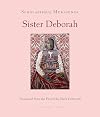
Rating: 4* of five
The Publisher Says: When time-worn ancestral remedies fail to heal young Ikirezi’s maladies, she is rushed to the Rwandan hillsides. From her termite perch under the coral tree, health blooms under Sister Deborah’s hands. Women bare their breasts to the rising sun as men under thatched roofs stand, “stunned and impotent before this female fury.”
Now grown, Ikirezi unearths the truth of Sister Deborah’s passage from America to 1930s Rwanda, and the mystery show more surrounding her sudden departure. In colonial records, Sister Deborah is a “pathogen,” an “incident.” Who is the keeper of truth, Ikirezi impels us to ask, Who stands at the threshold of memory? Did we dance? Did she heal? Did we look to the sky with wonder? Ikirezi writes on, pulling Sister Deborah out from the archive, inscribing her with breath.
A beautiful novel that works in the slippages of history, Sister Deborah at its core is a story of what happens when women—black women and girls—seek the truth by any means.
I RECEIVED A DRC FROM THE PUBLISHER VIA EDELWEISS+. THANK YOU.
My Review: Patriarchy putting words in women's mouths. Colonial masters defining reality for the colonized. Big-god-industry fans denigrating anyone they can't control. Nothing new here.
Until Author Scholastique got hold of the reins. Then this buggy got movin' fast (under 150pp) and furious (women under patriarchal colonialist control got some rage). The action is, unsurprisingly for émigré Mukasonga, split between a Rwandan émigré before and after immigation to the US, and an unusual American woman healer. Ikirezi, whose encounters with African-American missionary and faith healer (of a sort) change her inside and out, leaves the suddenly-too-small world she was born into under the influence of Sister Deborah's...unconventional...take on religion. The meditation practice, the acceptance of the Divine's presence in the beliefs and actions of (especially female) Rwandans, all make Sister Deborah no sister to The Authorities.
Ikirezi maintains a deep connection to Sister Deborah's teachings even as she consumes a Western education and takes on an academic view of this experience in her past. She decides to return to Rwanda to determine the fate of the much-maligned Sister Deborah.
We then hear from that lady directly, learning about her painful, blighted past in the lead-up to an immense awakening experience: The protestant Savior is, indeed, coming back to judge the quick and the dead.
And she's a Black African.
Cat, meet pigeons. Sister Deborah is a profoundly disturbed person, in my view, claiming that a divine avatar is speaking to her; there's meds for schizophrenia now, and she really needs 'em. The one reason I'm not eviscerating this book is that Author Scholastique doesn't take sides, she simply evokes the experience (most powerfully of baptism) that Sister Deborah undergoes as well as provides for the downtrodden women she ministers to. I'm not so constituted as to feel religious awe, nor do I have a clawing need for "community" among believers. In fact, the modern religion-equivalent called "fandom" is too much for me most of the time. The story, then, wastes its lovely magical-realist prose flights on me. They're nice and all, but no gooseflesh over here.
I offer four stars to a story I'm sympathetic to, but not much moved by, because like Kibogo, my guide is a deeply knowledgable person whose experiences allow her to communicate to me both a sense of consensus reality's view of the action, and the lived experience of people deeply Other to me. I'll never not appreciate, value, and celebrate that gift when I'm offered it.
It doesn't hurt that I find all of her writing I've read so far fully worth my eyeblinks. show less
The Publisher Says: When time-worn ancestral remedies fail to heal young Ikirezi’s maladies, she is rushed to the Rwandan hillsides. From her termite perch under the coral tree, health blooms under Sister Deborah’s hands. Women bare their breasts to the rising sun as men under thatched roofs stand, “stunned and impotent before this female fury.”
Now grown, Ikirezi unearths the truth of Sister Deborah’s passage from America to 1930s Rwanda, and the mystery show more surrounding her sudden departure. In colonial records, Sister Deborah is a “pathogen,” an “incident.” Who is the keeper of truth, Ikirezi impels us to ask, Who stands at the threshold of memory? Did we dance? Did she heal? Did we look to the sky with wonder? Ikirezi writes on, pulling Sister Deborah out from the archive, inscribing her with breath.
A beautiful novel that works in the slippages of history, Sister Deborah at its core is a story of what happens when women—black women and girls—seek the truth by any means.
I RECEIVED A DRC FROM THE PUBLISHER VIA EDELWEISS+. THANK YOU.
My Review: Patriarchy putting words in women's mouths. Colonial masters defining reality for the colonized. Big-god-industry fans denigrating anyone they can't control. Nothing new here.
Until Author Scholastique got hold of the reins. Then this buggy got movin' fast (under 150pp) and furious (women under patriarchal colonialist control got some rage). The action is, unsurprisingly for émigré Mukasonga, split between a Rwandan émigré before and after immigation to the US, and an unusual American woman healer. Ikirezi, whose encounters with African-American missionary and faith healer (of a sort) change her inside and out, leaves the suddenly-too-small world she was born into under the influence of Sister Deborah's...unconventional...take on religion. The meditation practice, the acceptance of the Divine's presence in the beliefs and actions of (especially female) Rwandans, all make Sister Deborah no sister to The Authorities.
Ikirezi maintains a deep connection to Sister Deborah's teachings even as she consumes a Western education and takes on an academic view of this experience in her past. She decides to return to Rwanda to determine the fate of the much-maligned Sister Deborah.
We then hear from that lady directly, learning about her painful, blighted past in the lead-up to an immense awakening experience: The protestant Savior is, indeed, coming back to judge the quick and the dead.
And she's a Black African.
Cat, meet pigeons. Sister Deborah is a profoundly disturbed person, in my view, claiming that a divine avatar is speaking to her; there's meds for schizophrenia now, and she really needs 'em. The one reason I'm not eviscerating this book is that Author Scholastique doesn't take sides, she simply evokes the experience (most powerfully of baptism) that Sister Deborah undergoes as well as provides for the downtrodden women she ministers to. I'm not so constituted as to feel religious awe, nor do I have a clawing need for "community" among believers. In fact, the modern religion-equivalent called "fandom" is too much for me most of the time. The story, then, wastes its lovely magical-realist prose flights on me. They're nice and all, but no gooseflesh over here.
I offer four stars to a story I'm sympathetic to, but not much moved by, because like Kibogo, my guide is a deeply knowledgable person whose experiences allow her to communicate to me both a sense of consensus reality's view of the action, and the lived experience of people deeply Other to me. I'll never not appreciate, value, and celebrate that gift when I'm offered it.
It doesn't hurt that I find all of her writing I've read so far fully worth my eyeblinks. show less

Thanks, Marc, for mentioning the term backshadowing during a discussion of this book. I think that term nails what makes this book so powerful, having been witness to the Rwandan genocide & seeing this (fictional) look at Rwanda in a time prior to -- but not far from -- the genocide. What once might have passed as something minor or as teenage "mean girl" actions suddenly carries much more weight & danger when reading with the knowledge of impending, absolutely crushing, real events. It's show more not just internal strife either; there's a complete burn to the West for its apathy, its fetishization, its imperialism, its ignorance.... There's more too (including misogyny, religion, royalty, faith, duty, abuse, patriotism, & militarism), all done with a light touch, played out in miniature by the students in their daily life at the lycée. The juxtaposition absolutely cut me to the core.
Clever. Subtle. Devastating.
Absolutely recommended. show less
Clever. Subtle. Devastating.
Absolutely recommended. show less
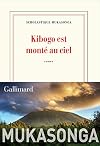
(Read in French)
Bewitching collection of interlinked stories about the clash between tradition and modernity in colonial Rwanda. Mukasonga shows how colonialism can never be done “correctly”, no matter how you try to put a benevolent face on it. Christianity, even in its platitudes of universal love, becomes corrupted by racial hierarchy; the supposedly objective practice of scientific research becomes a conduit for the glory of academics, and turns the colonized society into a Petri show more dish for study. No matter what promises the colonizer makes, the system is built for their benefit, and cannot function any other way.
What makes this book more interesting is the way it portrays the colonized’s struggle for agency in a system that is designed to suck them dry - the whites that came to the area did bring with them advanced technology, education, agricultural techniques, etc. As a colonized person, is it better to fight against the colonizer, or do your best to take what you can from their system, rise in the ranks, and maybe make change from the top down? No matter how clearly this dream can be seen as the false hope that it is, it is still almost impossible not to be seduced by power, and be bought off to do power’s bidding. show less
Bewitching collection of interlinked stories about the clash between tradition and modernity in colonial Rwanda. Mukasonga shows how colonialism can never be done “correctly”, no matter how you try to put a benevolent face on it. Christianity, even in its platitudes of universal love, becomes corrupted by racial hierarchy; the supposedly objective practice of scientific research becomes a conduit for the glory of academics, and turns the colonized society into a Petri show more dish for study. No matter what promises the colonizer makes, the system is built for their benefit, and cannot function any other way.
What makes this book more interesting is the way it portrays the colonized’s struggle for agency in a system that is designed to suck them dry - the whites that came to the area did bring with them advanced technology, education, agricultural techniques, etc. As a colonized person, is it better to fight against the colonizer, or do your best to take what you can from their system, rise in the ranks, and maybe make change from the top down? No matter how clearly this dream can be seen as the false hope that it is, it is still almost impossible not to be seduced by power, and be bought off to do power’s bidding. show less
Lists
Awards


You May Also Like


Associated Authors
Statistics
- Works
- 13
- Members
- 1,082
- Popularity
- #23,754
- Rating
- 4.0
- Reviews
- 56
- ISBNs
- 84
- Languages
- 10
- Favorited
- 1
