
José Eduardo Agualusa
Author of The Book of Chameleons
About the Author
José Eduardo Agualusa was born on December 13, 1960 in Huambo, Angola. He studied agronomy and silviculture in Lison, Portugal. He has worked as a journalist for the Portuguese magazine LER, the Brazilian newspaper O Globo, and the Angolan portal Rede Angola. He is also the host of a radio program show more A Horas das Cigarras on the RDP Africa channel. He is an award-winning writer whose work has been translated into multiple languages. Those translated to English include Creole, winner of the Portuguese Grand Prize for Literature; The Book of Chameleons, which won the Independent Foreign Fiction Prize; My father's wives, and Rainy Season. He has written four plays W generation, O monologo, Chovem amores na Rua do Matador (written with Mia Couto), and A Caixa Preta (written with Mia Couto). His work also includes novellas, short stories, and poetry. His recent novels include A educacao sentimental dos passaros, A Vida no Ceu, and A Rainha Ginga, and a book of short stories O Livro dos Camaleoes. (Bowker Author Biography) show less
Works by José Eduardo Agualusa
Contos que Contam — Author — 3 copies
o homem que parecia um domingo 2 copies
遗忘通论 2 copies
O terrorismo elegante 1 copy
244. Era uma vez 1 copy
Slørede grænser 1 copy
Associated Works
Tagged
Common Knowledge
- Birthdate
- 1960-12-13
- Gender
- male
- Organizations
- União dos Escritores Angolanos
- Short biography
- José Eduardo Agualusa è nato, nel 1960, a Huambo in Angola e oggi vive tra Lisbona, Rio de Janeiro e Luanda. Giornalista ed editore, è soprattutto l'autore di alcuni tra i romanzi più apprezzati negli ultimi anni dai lettori portoghesi e brasiliani. Le sue opere, alcune delle quali saranno presto adattate per il cinema, sono state tradotte nelle principali lingue europee. In Italia, La Nuova Frontiera ha già pubblicato il romanzo Quando Zumbi prese Rio.
- Nationality
- Angola
- Birthplace
- Huambo, Angola
- Places of residence
- Lisbon, Portugal
Amsterdam, Netherlands
Brazil
Angola - Associated Place (for map)
- Angola
Members
Reviews

"For a long time, European critics used to demand that we only write about Africa. The Africa they imagined. An African writer who opted, oh, I don't know, to write a novel about the Spanish Civil War would be considered a lunatic. Fortunately, that's changed."
Jude, who had sat down on a lounger, facing the sea, turns towards Daniel, surprised.
"Has it really?"
This is a novel about an international writers's conference, located on Mozambique Island, just off the coast and connected by a show more causeway. It's being run by Daniel, who is originally from Angola, but now lives on this sleepy, post-colonial island with his pregnant wife. The writers arrive, they settle in, they have conversations about their writing, about the state of literature, they appear on panels and talks. And then a storm leaves them cut off from the mainland, without cellular coverage or electricity, but the writers continue to talk, to walk on the beach, occasionally wondering/complaining about when things will be back to normal. The fishing boats can't reach the mainland and the causeway can't be crossed. To conserve gas, generators only run a few hours a day, there is some worry about running out of beer. Then some of the characters from the authors's books start appearing in town, which is especially confusing for the authors who write autofiction. Things are weird and there's a lot of uncertainty.
This novel is doing a lot of things, and doing them well. A writers's conference where the writers come from different countries, but all are African, even if one or two are now living in London, and this gives the novel a glimpse of talented authors talking outside of the European/American paradigm and exchanging ideas and experiences. I honestly would have be completely happy with a book about this conference in which everything went as planned. But Agualusa is doing more than that, playing with the reality the writers all live in, in ways that words reflect and change reality. This was a fascinating novel and I look forward to reading more by this author. show less
Jude, who had sat down on a lounger, facing the sea, turns towards Daniel, surprised.
"Has it really?"
This is a novel about an international writers's conference, located on Mozambique Island, just off the coast and connected by a show more causeway. It's being run by Daniel, who is originally from Angola, but now lives on this sleepy, post-colonial island with his pregnant wife. The writers arrive, they settle in, they have conversations about their writing, about the state of literature, they appear on panels and talks. And then a storm leaves them cut off from the mainland, without cellular coverage or electricity, but the writers continue to talk, to walk on the beach, occasionally wondering/complaining about when things will be back to normal. The fishing boats can't reach the mainland and the causeway can't be crossed. To conserve gas, generators only run a few hours a day, there is some worry about running out of beer. Then some of the characters from the authors's books start appearing in town, which is especially confusing for the authors who write autofiction. Things are weird and there's a lot of uncertainty.
This novel is doing a lot of things, and doing them well. A writers's conference where the writers come from different countries, but all are African, even if one or two are now living in London, and this gives the novel a glimpse of talented authors talking outside of the European/American paradigm and exchanging ideas and experiences. I honestly would have be completely happy with a book about this conference in which everything went as planned. But Agualusa is doing more than that, playing with the reality the writers all live in, in ways that words reflect and change reality. This was a fascinating novel and I look forward to reading more by this author. show less
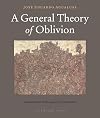
Set in Angola during and after revolution and independence, this book tells the story of Ludo, a woman who barricaded herself insider her apartment to avoid the violence occurring outside. She lived there for thirty years. It is a fictionalized story based on a real Portuguese woman who lived in Angola and kept diaries. Other characters come into the narrative briefly and appear later with a more robust version of their story. Ludo is only one of several narrators, and her story highlights show more the human desire for connection, reaching out to her the animals that come to the terrace of her apartment. Other narrators provide the details of the violence and turmoil of Angola’s wars, and the involvement of Portugal, Cuba, Zaire, and South Africa. The story is beautifully told, contrasting Ludo’s isolation and compassion against the chaos of wartime Angola. I really loved this little gem of a story. It is an informative read about a region and time period about which I had not previously read extensively. It led me to do more research on the history of Angola, which is always a positive sign. It is also an emotionally touching story.
"God weighs souls on a pair of scales. In one of the dishes is the soul, and in the other, the tears of those who weep for it. If nobody cries, the soul goes down to hell. If there are enough tears, and they are sufficiently heartfelt, it rises up to heaven. Ludo believed this. Or wanted to believe this. That was what she told Sabalu: 'People who are missed by other people, those are the ones who go to Paradise. Paradise is the space we occupy in other people's hearts.'" show less
"God weighs souls on a pair of scales. In one of the dishes is the soul, and in the other, the tears of those who weep for it. If nobody cries, the soul goes down to hell. If there are enough tears, and they are sufficiently heartfelt, it rises up to heaven. Ludo believed this. Or wanted to believe this. That was what she told Sabalu: 'People who are missed by other people, those are the ones who go to Paradise. Paradise is the space we occupy in other people's hearts.'" show less
What first caught my attention was the title: I imagined a lot of different things that it could conceal. The book turned out to be none of these. "A General Theory of Oblivion" is a narrative web which seems to have caught fragments of stories, scraps of diaries, poems, events far and near: I could imagine it published as a constellation (on the world wide web, for instance) which the reader would navigate to piece together the story... But I'm glad to have it in the shape of a book. The show more square cover printed on textured paper was the second thing that caught my attention (whatever Archipelago Books release is always going to have a magic aura about it, and they seem to be one of those few presses with which you can never go wrong). The metaphor of the web is all the more appropriate that it is also a metaphor for the interconnectedness of human lives: try as one might, no human being lives in isolation, not even the Portuguese woman, Ludo who, stranded in Angola during the liberation war, decided to wall herself up in her apartment, like some medieval nun, retreating into an increasingly austere existence. Not even she is entirely cut off from the world, and a single of her gestures propels the narrative in an unexpected direction... while another gesture leaves it intact:
"It wasn't until she was desperate that she took the Mucubals [watercolor] down off the wall. She was going to pull out the nail, just for aesthetic reasons, because it looked wrong there, serving no purpose, when it occurred to her that maybe this, this piece of metal, was holding up the wall. Maybe it was holding up the whole building. Who knows, if she pulled the nail out of the wall, the whole city might collapse.
She did not pull out the nail."
The story is written with subtle humor, and although it is haunted by the shadow of the liberation struggle, along with the regime changes, arrests, torture, and summary executions that usually accompany such events, and which shape the lives of the characters like ocean currents pushing them toward each other or pulling them apart, it is less about those historical events than about the bonds forged among the people.
It is also a story about forgetting, all forms of forgetting -- disappearances, escapes, metamorphoses, solitudes, and amnesias -- as much as it a story of remembering: when something is forgotten, or vanishes, what is it that is left in its place. Can forgetting create anything?
"... the dead suffer from amnesia. They suffer even more from the poor memories of the living. You remember him every day ... You should laugh as you remember him, you should dance..." show less
"It wasn't until she was desperate that she took the Mucubals [watercolor] down off the wall. She was going to pull out the nail, just for aesthetic reasons, because it looked wrong there, serving no purpose, when it occurred to her that maybe this, this piece of metal, was holding up the wall. Maybe it was holding up the whole building. Who knows, if she pulled the nail out of the wall, the whole city might collapse.
She did not pull out the nail."
The story is written with subtle humor, and although it is haunted by the shadow of the liberation struggle, along with the regime changes, arrests, torture, and summary executions that usually accompany such events, and which shape the lives of the characters like ocean currents pushing them toward each other or pulling them apart, it is less about those historical events than about the bonds forged among the people.
It is also a story about forgetting, all forms of forgetting -- disappearances, escapes, metamorphoses, solitudes, and amnesias -- as much as it a story of remembering: when something is forgotten, or vanishes, what is it that is left in its place. Can forgetting create anything?
"... the dead suffer from amnesia. They suffer even more from the poor memories of the living. You remember him every day ... You should laugh as you remember him, you should dance..." show less
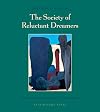
A fever dream of a gorgeously written novel and maze, The Society of Reluctant Dreamers manages to balance the most believable of characters against revolution, dreams, and a twisting history that sometimes itself feels more like a dream. This is one that I sank into and lived in, and which I'm already ready to read again.
Lists
Awards


You May Also Like


Associated Authors
Statistics
- Works
- 52
- Also by
- 1
- Members
- 2,173
- Popularity
- #11,807
- Rating
- 3.9
- Reviews
- 83
- ISBNs
- 214
- Languages
- 15
- Favorited
- 3