
Ondjaki
Author of Good Morning Comrades
About the Author
Image credit: Brasília - O escritor angolano Ondjaki participa da 1ª Bienal do Livro e da Literatura. By Elza fiúza/ABr - 1ª Bienal Brasil do Livro e da Leitura, CC BY 3.0 br, https://commons.wikimedia.org/w/index.php?curid=19129641
Works by Ondjaki
Associated Works
Tagged
Common Knowledge
- Legal name
- de Almeida, Ndalu
- Birthdate
- 1977
- Gender
- male
- Education
- University of Lisbon (BA|Sociology|2002)
- Nationality
- Angola
- Birthplace
- Luanda, Angola
- Places of residence
- Luanda, Angola
Lisbon, Portugal - Map Location
- Angola
Members
Reviews
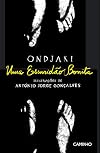
Numa das muitas noites em que falta a luz em Luanda, dois adolescentes ensaiam o seu primeiro beijo, mas este primeiro beijo precisa de muitos ensaios, de muitos momentos de aproximação e afastamento, de certezas e de inseguranças… o ambiente ajuda e o pretexto surge: estão os dois na varanda da avó Dezanove, às escuras, à espera do cinema bu: um cinema que só acontece (na p. 80) quando um carro passa com a velocidade e os faróis certos para projetar sombras/imagens nas paredes show more brancas das casas da rua escura.
O beijo acontece mesmo, mas apenas na p. 101. Esta é uma das mais comoventes estórias do narrador infantil do Ondjaki. show less
O beijo acontece mesmo, mas apenas na p. 101. Esta é uma das mais comoventes estórias do narrador infantil do Ondjaki. show less
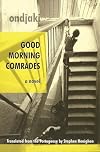
Out of the mouths of babes... Good Morning Comrades is set in Angola in the early 90s, among civil war and supposed post-colonialism spearheaded by the liberating comrades from Cuba and the Soviet Union, with roving gangs of bandits and political unrest. And all witnessed through the eyes of a 12-year-old boy who's never known anything else and is just as cheerfully proud of it all as you'd expect of a good citizen.
I'm always a bit worried when I stumble upon a novel written by a poet; show more there's always the risk of trying to write like a poet, weighing the novel down with language. But like a good poet, Ondjaki knows the value of language, how to tell a story simply, without the narrator realising just how many different layers there are to his story, how much of history echoes in his language. show less
I'm always a bit worried when I stumble upon a novel written by a poet; show more there's always the risk of trying to write like a poet, weighing the novel down with language. But like a good poet, Ondjaki knows the value of language, how to tell a story simply, without the narrator realising just how many different layers there are to his story, how much of history echoes in his language. show less
#ReadAroundTheWorld #Angola
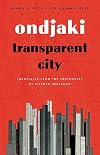
This is a novel set in Luanda, Angola, by Angolan author Ndalu de Almeida, writing under the pen name of Ondjaki. It is a contemporary story set in an apartment block that shifts between many characters, some of them rather quirky.
I’m sure this is a clever book with much to say. It touches on capitalism, exploitation, colonialism, corruption, drugs and poverty. There are elements of humour, or the ludicrous, with an eclipse that is cancelled, a man seeking fame show more for his huge hernia, and other elements of satyr and the farcical, pointing out the failures of the government, colonial powers, the police and legal system. There is magical realism, with one of the characters progressively becoming transparent, I presume as a metaphor for the invisibility of poverty and hardship. However this was all wasted on me due to the storyline, or more precisely the lack of storyline, which I found unengaging and difficult to wade through. This was probably amplified by an audio-narrator that failed to distinguish between the many characters at all. Sadly although I was excited to read my first book from Angola by a local award-winning author, this was a disappointing read for me. show less
This is a novel set in Luanda, Angola, by Angolan author Ndalu de Almeida, writing under the pen name of Ondjaki. It is a contemporary story set in an apartment block that shifts between many characters, some of them rather quirky.
I’m sure this is a clever book with much to say. It touches on capitalism, exploitation, colonialism, corruption, drugs and poverty. There are elements of humour, or the ludicrous, with an eclipse that is cancelled, a man seeking fame show more for his huge hernia, and other elements of satyr and the farcical, pointing out the failures of the government, colonial powers, the police and legal system. There is magical realism, with one of the characters progressively becoming transparent, I presume as a metaphor for the invisibility of poverty and hardship. However this was all wasted on me due to the storyline, or more precisely the lack of storyline, which I found unengaging and difficult to wade through. This was probably amplified by an audio-narrator that failed to distinguish between the many characters at all. Sadly although I was excited to read my first book from Angola by a local award-winning author, this was a disappointing read for me. show less
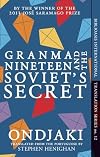
I enjoyed Good Morning, Comrades more, but he clearly has a voice and things to say. The story is simple: the Soviets are building a mausoleum to house the remains of the late Comrade President (Agostinho Neto) in Luanda (a true story). The book tells the story through the eyes of a child who lives on the beach near the construction zone; it’s about his life, their lives, and the Soviet presence. It’s fun and funny, whimsical and poignant, and has things to say and things to think about. show more A powerful writer with a penchant for experiment. show less
Lists
Awards


You May Also Like


Associated Authors
Statistics
- Works
- 45
- Also by
- 1
- Members
- 888
- Popularity
- #28,846
- Rating
- 3.8
- Reviews
- 19
- ISBNs
- 100
- Languages
- 7
- Favorited
- 1

