
Hanne Ørstavik
Author of Love
About the Author
Works by Hanne Ørstavik
Barnet mitt 1 copy
Associated Works
Mujeres de los fiordos — Contributor — 1 copy
Tagged
Common Knowledge
- Birthdate
- 1969-11-28
- Gender
- female
- Awards and honors
- Aschehoug Prize (2007)
- Nationality
- Norway
- Associated Place (for map)
- Norway
Members
Reviews
3.5
This novella is written in a spare language, rendered beautifully in English. The story takes place on a single day, but is indicative of any day in their lives. The lives of mother and son are clearly sad (or seem so to me). I don't think the author intended this to be the case, but nonetheless, sad.
Initially, I thought the mother outrageously selfish, but I think I missed the more subtle point that she also has a right to her happiness and just because she has a child, there is not the show more need to forfeit the right to search for joy.
Both, coexist in the same world but apart from each other. They have to invent the happiness they desire. They both have needs they don't know how to fulfil.
The book doesn't judge them.
The reader ends up doing so...in one way or another. show less
This novella is written in a spare language, rendered beautifully in English. The story takes place on a single day, but is indicative of any day in their lives. The lives of mother and son are clearly sad (or seem so to me). I don't think the author intended this to be the case, but nonetheless, sad.
Initially, I thought the mother outrageously selfish, but I think I missed the more subtle point that she also has a right to her happiness and just because she has a child, there is not the show more need to forfeit the right to search for joy.
Both, coexist in the same world but apart from each other. They have to invent the happiness they desire. They both have needs they don't know how to fulfil.
The book doesn't judge them.
The reader ends up doing so...in one way or another. show less
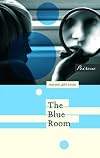
Hanne Ørstavik’s bracingly odd novel, The Blue Room, tells the unsettling story of Johanne, a young woman in her early 20s, a college student, who, to save money, lives with her mother in her mother’s Oslo apartment. (There is no talk of Johanne’s father. A brother, Edward, who is attending school in the US, is mentioned in passing.) Johanne’s life revolves around her classes, her mother (“Mum”), and her devotion to God. Academically, Ørstavik suggests that Johanne is a show more middling student who sometimes struggles. Socially, she comes across as underdeveloped; she is timid and naïve, lacks confidence, and is almost tragically isolated. She is about to lose her closest friend, Karin, who has trained to be a pastor and will soon be leaving the city to take up a post. Johanne craves her mother’s approval, and the two spend much of their free time in each other’s company. But Johanne also dreams of being independent, of gaining her psychologist qualification and opening a practice. Being financially dependent on her mother, it seems that Johanne lives her life in deference to her mother’s needs more so than her own. Her mother is involved with a man, Svenn—who has a family, so their opportunities for intimacy are few—and on occasions when Johanne sees that her mother has left money out, it’s a signal that she is to take the money, remove herself from the apartment and keep herself occupied for the length of Svenn’s visit. Everything changes though, when Johanne meets Ivar, who works in the university cafeteria. Ivar, a bit older and much more worldly than Johanne, is a musician with an active social and sexual life, and Johanne suddenly finds herself attracted to another person in a way that starts her rethinking her approach to living in the world. After they have sex, Johanne obsesses over Ivar’s body and can think of little besides pleasing him. Wisely or not, Johanne invites Ivar over for dinner and afterward must deal with her mother’s passive-aggressive comments: “This Ivar, Johanne, are you sure he’s right for you?” The novel opens at a crucial juncture in Johanne and Ivar’s liaison. The two have been involved for several weeks and Ivar wants Johanne to come with him on a trip to the US. But the end of term is near, and Johanne faces increasing pressure to complete her schoolwork. After much internal debate, she decides to go. But on the morning of their scheduled departure, Johanne gets out of bed and finds the door to her bedroom locked. She can’t get out, her mother has left for work, she has no phone, and she’s naked—her clothes from the previous day are in the wash and her wardrobe is in the hallway. She could smash the window, but she can’t leave that way because the apartment is on the 4th floor. Everything we subsequently learn about Johanne, her mother, and Ivar comes to us via Johanne’s anxious perspective while she’s trapped in her bedroom. We can’t help but wonder if her mother has deliberately locked her in. Will she escape? Will Ivar wait for her? For the remainder of the book Johanne’s thoughts roam freely and sometimes veer in surprising directions, even descending into violent and twisted sexual fantasy. Narratively and psychologically, The Blue Room fascinates while providing a quick, sometimes disturbing read. In this novel we take a deep dive into the mind of a young woman learning a life lesson the hard way. Will she let her mother win and remain docile and compliant, or is this the wake-up call she needs? show less
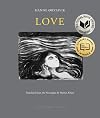
Love, Hanne Ørstavik’s acclaimed novella (originally published as Kjurlighet in 1997), tells a haunting and ultimately tragic story of a young mother, Vibeke, and her son, Jon, who have recently moved from a city to a much smaller town in northern Norway. It is late in the day, late in the year and very cold. Jon is anticipating tomorrow, his 9th birthday, and the celebration he is sure his mother is planning. After supper Jon leaves to sell raffle tickets for his school sports club. He show more wants to be out for a while, to give his mother time to bake the cake and wrap his presents. But the old man at the first house he approaches buys all the tickets. So, Jon returns home, but quickly leaves again, for the same reason as before. In the meantime, Vibeke has taken a shower. She’s pleased with how her new job is going and thinks she deserves a treat, which for her is a trip to the library to return the books she’s read and to borrow new ones. Vibeke lives in her head, reading non-stop, fantasizing romantic encounters. She’s also fixated on her appearance and preoccupied with making a good impression on her new work colleagues. Jon is not her priority. She’s forgotten his birthday, and through inattention and distraction has not seen her son leave the house the second time. When she calls out for him and he doesn’t answer, she thinks, “Most likely he’s doing something in his room.” Vibeke prepares herself, goes out, gets in the car and drives off. The remainder of Ørstavik’s novella is concerned with Jon and Vibeke’s various encounters, which have a random quality about them but movingly demonstrate the emotional distance that exists between mother and son—one self-obsessed and looking for love, the other distracted by expectations and the newness of everything around him—and the vastly different manner in which they approach and perceive the world. Ørstavik’s third-person omniscient narrative flits back and forth between Jon and Vibeke, sometimes from one paragraph to the next, in a way that might be jarring but acts as a constant reminder of the separate worlds that mother and son occupy and, as the evening progresses, the diminishing odds of them reconnecting. Ørstavik’s prose, expertly rendered into English by Martin Aitkin, gleams like the frozen landscape it so capably evokes. Love is an odd and disturbing little book that places a clear-eyed focus on how each of us is confined to a discrete universe of awareness and emotion that sets us apart from everyone else. Writing powerfully and without sentiment, Hanne Ørstavik shows that she is well acquainted with the lonely passion of the human heart. show less
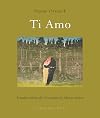
This is an intense, introspective, and even claustrophobic work, and evidently an autobiographical one. For Archipelago Books, its publisher, it is an “uncategorized” title—not definitively fiction or autobiography. The subject matter is painful. In it the unnamed narrator, a writer, addresses her sensitive, intelligent husband (also unnamed)—a successful publisher who once aspired to be an artist. He is dying of pancreatic cancer.
Their relationship has not been a long one—four show more years. They married only the previous summer, in August 2019. After his diagnosis, the narrator’s partner wanted to affirm their love in a formal union. In this man, the writer had, for the first time, found home and a sense of belonging. She had also moved from Oslo to Milan. One of the questions for her now is how she will continue without him. Her main preoccupation, however, is with her husband’s unwillingness or inability to acknowledge that he is dying. The writer has always believed herself to be a person committed to the truth—facing it head-on—yet she finds she cannot broach the subject with him. His doctors also do not.Their philosophy is that if the patient is not asking questions, they do not supply information that could deprive him of hope. The oncologist comments that the narrator too has not been seeking clarification.
For close to two years, since her partner began to experience concerning symptoms, the writer has been unable to write. She rereads a notebook entry from months before in which she observed: “It’s as if the writing in me has withdrawn — tactfully, almost — not wanting to bother me in these times.” After a trip to a book fair in Guadalajara, Mexico, she feels a return of life energy and purpose, recognizing that the novel she has begun—this novel, Ti Amo, now before the reader—“is the life I live on the inside and it fetches things up from different times and separate layers that I often don’t realize need to meet, so that I can be with them, the way you might sit on the edge of a bed in the evening and hold the hand of a child, just being there, for the novel possesses an insight so much deeper than my own, and because it’s in touch with this very life force itself, it knows so much better than I do where the wave of each new novel is going to take me. But since . . . you [the husband] became ill, it’s been completely impossible for me to write . . . your coming meant that I moved forward, I came home. But now you’re going to die, you, who allowed me at last to find that home with you, and how am I going to move forward from that, here and now?”
During the pandemic, I read a short piece by a retired doctor whose wife had recently died (not from the virus). He noted that during the course of her final illness, she had not wanted to speak about her death. In the end she thanked him for “letting her go gently.” It occurs to me that people have their own way of leaving this life. It can be hard work to let go. Talking about “the truth” is not the path for everyone. You can know things in your own time and your own way. show less
Their relationship has not been a long one—four show more years. They married only the previous summer, in August 2019. After his diagnosis, the narrator’s partner wanted to affirm their love in a formal union. In this man, the writer had, for the first time, found home and a sense of belonging. She had also moved from Oslo to Milan. One of the questions for her now is how she will continue without him. Her main preoccupation, however, is with her husband’s unwillingness or inability to acknowledge that he is dying. The writer has always believed herself to be a person committed to the truth—facing it head-on—yet she finds she cannot broach the subject with him. His doctors also do not.
For close to two years, since her partner began to experience concerning symptoms, the writer has been unable to write. She rereads a notebook entry from months before in which she observed: “It’s as if the writing in me has withdrawn — tactfully, almost — not wanting to bother me in these times.” After a trip to a book fair in Guadalajara, Mexico, she feels a return of life energy and purpose, recognizing that the novel she has begun—this novel, Ti Amo, now before the reader—“is the life I live on the inside and it fetches things up from different times and separate layers that I often don’t realize need to meet, so that I can be with them, the way you might sit on the edge of a bed in the evening and hold the hand of a child, just being there, for the novel possesses an insight so much deeper than my own, and because it’s in touch with this very life force itself, it knows so much better than I do where the wave of each new novel is going to take me. But since . . . you [the husband] became ill, it’s been completely impossible for me to write . . . your coming meant that I moved forward, I came home. But now you’re going to die, you, who allowed me at last to find that home with you, and how am I going to move forward from that, here and now?”
During the pandemic, I read a short piece by a retired doctor whose wife had recently died (not from the virus). He noted that during the course of her final illness, she had not wanted to speak about her death. In the end she thanked him for “letting her go gently.” It occurs to me that people have their own way of leaving this life. It can be hard work to let go. Talking about “the truth” is not the path for everyone. You can know things in your own time and your own way. show less
Lists
Awards


You May Also Like


Associated Authors
Statistics
- Works
- 24
- Also by
- 1
- Members
- 805
- Popularity
- #31,684
- Rating
- 3.6
- Reviews
- 35
- ISBNs
- 126
- Languages
- 16
- Favorited
- 2