
Erlend Loe
Author of Naïve. Super
About the Author
Image credit: Credit: Jarvin, Nov. 9, 2007
Series
Works by Erlend Loe
The Seven Steps to Mercy: with Shakespeare's Key to the Oak Island Templum - Monochrome Edition (2015) 4 copies
Kongens fortjenestemedalje med sverd og dobbel bolle : et kriminalmysterium fra virkeligheten (2024) 2 copies
Status 2 copies
Sa mor 1 copy
Farvel organ : roman 1 copy
Gutta På skauen 1 copy
Associated Works
Tagged
Common Knowledge
- Canonical name
- Loe, Erlend
- Birthdate
- 1969-05-24
- Gender
- male
- Occupations
- novelist
screenwriter
film critic - Awards and honors
- Kultur- och kyrkodepartementets priser för barn- och ungdomslitteratur (1996)
Cappelenprisen (1997)
Kritikerpriset för årets bästa barn- eller ungdomsbok (1998)
Bokhandlerprisen (1999)
Aschehougprisen (2013) - Nationality
- Norway
- Birthplace
- Trondheim, Norway
- Places of residence
- Oslo, Norway
- Associated Place (for map)
- Norway
Members
Reviews
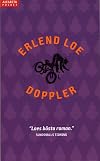
This is a brilliant book. Like Loe's other ones, this is also about an apocalypse in the mind, body and soul. A busy family father topples from his bike onto the ground which stuns him; as he lies in the grass, concussed and estranged from his hectic everyday existance, he starts unraveling and reaches two conclusions: 1) he dislikes people and 2) he must move to the forest.
So he does move into the forest, away from his wife and two kids, and befriends a deer (after slaughtering its mother). show more And that's just the start.
Radiant writing, quite in-tact with Loe's previous writings so if you've read him before I think you'll fairly soon find your way around this novel as well, and if you haven't, you're in for a treat.
A lot of humor, a bit of tragedy and a lot of everyday bliss. Paper-bag-from-American-Beauty-ish. Love it. show less
So he does move into the forest, away from his wife and two kids, and befriends a deer (after slaughtering its mother). show more And that's just the start.
Radiant writing, quite in-tact with Loe's previous writings so if you've read him before I think you'll fairly soon find your way around this novel as well, and if you haven't, you're in for a treat.
A lot of humor, a bit of tragedy and a lot of everyday bliss. Paper-bag-from-American-Beauty-ish. Love it. show less

I’m curious, did you hear about this book from 1996, in the same way I did? That would have been in the political coverage of presidential candidate Pete Buttigieg. Seems that Mayor Pete found the book while at Harvard, and when he discovered that the Norwegian author, Erlend Loe, didn’t have any other works that had been translated, he learned Norwegian. Mayor Pete was certainly an original politician in many ways.
Curiosity of discovery aside, this slim paperback is one very clever and show more original coming-of-age novel. The style is simple and tells of a young man who has dropped out of a MA program, isn’t working, has no obvious ambition, and is house sitting for his brother. He does have a compunction to make lists of all sorts of things, and to bounce a red ball off the wall for hours at a time. Oh, and he finds great comfort in one of the kids toys where you hammer the pegs through the bench, and then flip it over and pound them all right back. The simple things can many times be the most rewarding.
As little is expected of him, he does the simple things that bring him pleasure, the things that he can control, while all the major decisions of his life are currently over the horizon of this temporary phase of his life. He knows that they will come his way eventually, but he’s into the uncomplicated pleasures of life—while he can. [I can strongly relate to this situation, at his point in my own life.]
The writing reflects the simplicity of his life, as well as the self-controlled nature of his days. Many lives get complicated at this point—when one knows that the major decisions of life won’t be leaving you alone much longer. Many times those complications are drugs and other addictions. Another way is when someone start making a few or many of the myriad of self-destructive choices possible in life.
There are hoards of coming-of-age novels, stories in which characters feel that the time has come when they must grow up, must make all those major life decisions. However, just maybe, this stellar and slender novel is a grand example of the time in life before all that happens. Or, on the other hand, it may be not be showing what precedes, but what can supersede all that.
No matter how closely you feel to the life depicted within this story, this extremely funny and insightful book was a real treat to read and to relate to, and it is wonderfully original and fresh. show less
Curiosity of discovery aside, this slim paperback is one very clever and show more original coming-of-age novel. The style is simple and tells of a young man who has dropped out of a MA program, isn’t working, has no obvious ambition, and is house sitting for his brother. He does have a compunction to make lists of all sorts of things, and to bounce a red ball off the wall for hours at a time. Oh, and he finds great comfort in one of the kids toys where you hammer the pegs through the bench, and then flip it over and pound them all right back. The simple things can many times be the most rewarding.
As little is expected of him, he does the simple things that bring him pleasure, the things that he can control, while all the major decisions of his life are currently over the horizon of this temporary phase of his life. He knows that they will come his way eventually, but he’s into the uncomplicated pleasures of life—while he can. [I can strongly relate to this situation, at his point in my own life.]
The writing reflects the simplicity of his life, as well as the self-controlled nature of his days. Many lives get complicated at this point—when one knows that the major decisions of life won’t be leaving you alone much longer. Many times those complications are drugs and other addictions. Another way is when someone start making a few or many of the myriad of self-destructive choices possible in life.
There are hoards of coming-of-age novels, stories in which characters feel that the time has come when they must grow up, must make all those major life decisions. However, just maybe, this stellar and slender novel is a grand example of the time in life before all that happens. Or, on the other hand, it may be not be showing what precedes, but what can supersede all that.
No matter how closely you feel to the life depicted within this story, this extremely funny and insightful book was a real treat to read and to relate to, and it is wonderfully original and fresh. show less
Dopler by Erlend Loe

Doppler slår seg i hodet og skjønner at han må flytte fra kone og barn og ut i skogen. I skogen lever han alene, forsøksvis i en jeger/sankertilværelse, men diverse hensyn, primært behovet for skummet melk, gjør at han holder seg i nærheten av sivilisasjonen. Etter hvert får han også selskap av en elg og forskjellige mennesker. Doppler forfekter et nobelt syn om at naturen er for alle, men stjeler også uten hemninger fra både andre mennesker og butikker. Han får det for seg at show more "flinkheten" er den store samfunnsfienden, men her vil jeg si at han forveksler flinkhet med materialisme og statusjag. Dopplers tanker og tilværelse får en til å tenke seg og gir mye både å kjenne seg igjen i og ikke å kjenne seg igjen i. Ikke minst er boka også morsom. Anbefales. show less
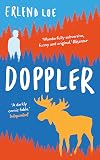
This book defies description, but I’ll have a go. It’s about Doppler, a Norwegian guy who after the death of his father has an accident on his bike and subsequently turns his back on civilization to live in the forest. His sole companion is Bongo, an elk calf which he feels responsible for having shot Bongo’s mother for food. The conversations with Bongo made me smile. It’s a tale about family, grief, alienation and a gradual warming towards civilization again, or so you think. No show more matter how much Doppler wants to be alone, he seems to attract people around him.
It’s a charming tale with a cutting edge. Doppler is happy in the forest but is a keen observer of the society he has rejected. Forced to communicate again with his pregnant wife and two children, he struggles to cope with modern society and his responsibilities, Teletubbies add Bob the Builder included. His teenage daughter Nora, named after an Ibsen character of course, insists on talking to him in elfish. His son Gregus forgets the television and instead helps him carve a totem pole, intended as a memorial to Doppler’s father but which comes to represent the three male generations of Dopplers and Bongo.
I read it quickly and wished it was longer, a book that will yield more for re-reading I think.
Read more of my book reviews at http://www.sandradanby.com/book-reviews-a-z/ show less
It’s a charming tale with a cutting edge. Doppler is happy in the forest but is a keen observer of the society he has rejected. Forced to communicate again with his pregnant wife and two children, he struggles to cope with modern society and his responsibilities, Teletubbies add Bob the Builder included. His teenage daughter Nora, named after an Ibsen character of course, insists on talking to him in elfish. His son Gregus forgets the television and instead helps him carve a totem pole, intended as a memorial to Doppler’s father but which comes to represent the three male generations of Dopplers and Bongo.
I read it quickly and wished it was longer, a book that will yield more for re-reading I think.
Read more of my book reviews at http://www.sandradanby.com/book-reviews-a-z/ show less
Lists
Awards


You May Also Like


Associated Authors
Statistics
- Works
- 59
- Also by
- 1
- Members
- 4,559
- Popularity
- #5,518
- Rating
- 4.0
- Reviews
- 117
- ISBNs
- 385
- Languages
- 26
- Favorited
- 26