
Per Petterson
Author of Out Stealing Horses
About the Author
Per Petterson was born in Norway on July 18, 1952. He is a trained librarian and before becoming a full-time writer, he worked as a bookstore clerk, translator and literary critic. His first work, Aske i munnen, sand i skoa (Ash in His Mouth, Sand in His Shoe), a volume of short stories, was show more published in 1987. His other works include These are Ekkoland (1989), Det er greit for meg (1992), and To Siberia (1996). He has won numerous awards including the prestigious Norwegian literary prize Brageprisen for In the Wake (2000) and the Independent Foreign Fiction Prize in the UK, the Norwegian Booksellers' Prize, and the Norwegian Critics' Award for best novel for Out Stealing Horses (2003). (Bowker Author Biography) show less
Image credit: Per Petterson, Norwegian author. Photo by Wikipedia user GAD.
Works by Per Petterson
Du er hjemme nå en roman 1 copy
Wheelgun Buffalo 1 copy
Associated Works
Tagged
Common Knowledge
- Birthdate
- 1952-07-18
- Gender
- male
- Occupations
- librarian
bookseller
translator
literary critic
novelist
unskilled labourer - Awards and honors
- Norwegian Booksellers' Prize (2003)
The Critics' Award (2003)
Brage Prize (2000 | 2008)
Nordic Council Literature Prize (2009)
Independent Foreign Fiction Prize (2006)
International Dublin Literary Award (2007) - Short biography
- Petterson's father, mother, brother and nephew died when a ferry caught fire on the overnight sailing from Oslo to Frederikshavn in northern Denmark (159 people lost their lives)....Sitting in the electricity-free extension to his white wooden house 60 miles south-east of Oslo, Petterson smiles at his last remark.The farmstead where Petterson and his wife Pia live with their sheep and chickens is reached by driving through a whitened landscape, across the Glomma river which, he tells visitors, separates the urban sphere from the "back bush". Asked the name of the area, he replies: "I say I live in the woods, near the Swedish border." The couple moved from the city a dozen years ago, with Pia's children from an earlier union. (It is also Petterson's second marriage.) "When we first came, it was so cold the duvet stuck to the wall." Now there is heating piped into each room and a cat or dog under every chair.
- Nationality
- Norway
- Birthplace
- Oslo, Norway
- Places of residence
- Oslo, Norway (birth)
- Map Location
- Norway
Members
Reviews
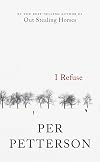
This is the fifth novel of Petterson's that I've read, and it maintains the very high standard of his oeuvre, from my perspective. "I Refuse" deals with growing up, friendship and its loss, family breakdown, social change and the emptiness of materialism, among other matters. It's familiar territory for Petterson, perhaps, but he approaches it differently in this novel. Through multiple narratives and time shifts, he shines new light on his material and delivers fresh insights that caused show more this reader to reflect upon his own life.
You don't read Petterson for the laughs, though there is a dark humour at work here. His purpose isn't to provide the reader with distraction, but I found the fragmented narrative compelling. It's a starkly realist story of life's hardships and disappointments. There are no neat endings here. Parts are oblique and defy interpretation - much like life. The storytelling, characterisation and prose - at least, in Don Bartlett's translation - are all executed beautifully. Highly recommended for those who enjoy writing that reflects the formlessness of lived experience, its resistance to meaning. show less
You don't read Petterson for the laughs, though there is a dark humour at work here. His purpose isn't to provide the reader with distraction, but I found the fragmented narrative compelling. It's a starkly realist story of life's hardships and disappointments. There are no neat endings here. Parts are oblique and defy interpretation - much like life. The storytelling, characterisation and prose - at least, in Don Bartlett's translation - are all executed beautifully. Highly recommended for those who enjoy writing that reflects the formlessness of lived experience, its resistance to meaning. show less
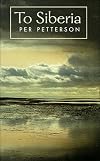
Petterson is a maestro of mood & the landscape of the north (Denmark, Sweden, Norway) lends itself well to a pervasiveness loneliness. Even the intense connection(if not for their difference in age one might suspect them of being twins) of the protagonist & her older brother Jesper can't save them from distance & the finality of separation. Set in the 1930s and 40s, before, during & just after WWII. A restrained & constrained universe of sky, sea, snow, war(both personal & political) & show more silence. The deepest silence of all--family. show less
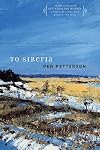
This is a wonderful loss of innocence book - after reading "Out Stealing Horses" I knew that I had to try Per Petterson again.
This book intrigued me. I felt the loneliness, aimlessness and lack of center of the main character from early on. What I love so much about Per's books is the introduction to a part of the world that I have very little knowledge of... and the inner struggles of people like I rarely see. With this book, I learned more about Denmark... and about the soul of a human show more being who really wanted to be happy but just couldn't get there.
Siberia, to me, was the symbol of the main character's yearning to escape. Her one anchor in life, her brother Jesper, held her from drifting away even when he wasn't nearby. I felt his presence throughout the book.
I was mesmerized by this story - it was spare, simple and beautiful. No huge dramas or crisis (although I suppose you can call a Nazi occupation a crisis - but even this was discussed in rather banal terms) - just simple events told in a powerful way.
I felt the destination reached at the end of the book in my heart. show less
This book intrigued me. I felt the loneliness, aimlessness and lack of center of the main character from early on. What I love so much about Per's books is the introduction to a part of the world that I have very little knowledge of... and the inner struggles of people like I rarely see. With this book, I learned more about Denmark... and about the soul of a human show more being who really wanted to be happy but just couldn't get there.
Siberia, to me, was the symbol of the main character's yearning to escape. Her one anchor in life, her brother Jesper, held her from drifting away even when he wasn't nearby. I felt his presence throughout the book.
I was mesmerized by this story - it was spare, simple and beautiful. No huge dramas or crisis (although I suppose you can call a Nazi occupation a crisis - but even this was discussed in rather banal terms) - just simple events told in a powerful way.
I felt the destination reached at the end of the book in my heart. show less
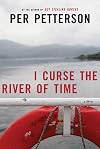
I wavered on this book for a bit. On the one hand the tone is decidedly minimalist, but the minimalism there on display is gorgeous, crossing the line into the poetic many times. And on the other hand there's relatively little to the story, much alluded too obliquely, if at all. To some, maybe, this would be a source of frustration. And I must admit that I was left wanting, desirous of just a little more. But out of genuine affection, even love, for the story and its characters and its show more setting.
Unlike the minimalism of someone like, say, Hemingway, the minimalism here is a softer variety of stoic, more emotionally frustrated and filled to the brim, just waiting to explosively burst under the surface.
And it never does, and that's beautiful. Why? Because it feels genuine, it feels real. Petterson is a master at delineating the cracks and fissures endemic to every familial relationship, and makes no attempt to 'save' his characters or give them the big emotional catharsis that so many Western audiences would be starving for in this kind of story.
That was where the wavering in my assessment of this story ceased. I realized I had been looking at the proceedings with a decidedly Western cultural mindset that just didn't jive with what was going on. And said cultural mindset, the artifice of it at least, is a fallacy. Western families go through the same emotional and almost literal wars that our friends in Europe do, but maybe we're just less inclined to write stories describing that kind of thing. I can speak from experience as regards this, where people just want 'to be entertained' and for their books (and movies, and songs, etc) to be 'simple' and predictably warm and cookie cutter.
Well, that, for lack of a better term, is bullshit. If you want pat simplistic pap to indulge in, it's there. But it's inferior, sorry. It's nowhere near as intellectually or emotionally nourishing and, in all honesty, nowhere near as relevant or important.
That is my roundabout way of saying: read this book. It's not transcendent, though in spots it troubles those waters. Gorgeously described and painfully human, this book will wend its way into your soul with the force of a gentle hammer or tidal wave, waking you from gentle dreams to the necessary harshness of life. show less
Unlike the minimalism of someone like, say, Hemingway, the minimalism here is a softer variety of stoic, more emotionally frustrated and filled to the brim, just waiting to explosively burst under the surface.
And it never does, and that's beautiful. Why? Because it feels genuine, it feels real. Petterson is a master at delineating the cracks and fissures endemic to every familial relationship, and makes no attempt to 'save' his characters or give them the big emotional catharsis that so many Western audiences would be starving for in this kind of story.
That was where the wavering in my assessment of this story ceased. I realized I had been looking at the proceedings with a decidedly Western cultural mindset that just didn't jive with what was going on. And said cultural mindset, the artifice of it at least, is a fallacy. Western families go through the same emotional and almost literal wars that our friends in Europe do, but maybe we're just less inclined to write stories describing that kind of thing. I can speak from experience as regards this, where people just want 'to be entertained' and for their books (and movies, and songs, etc) to be 'simple' and predictably warm and cookie cutter.
Well, that, for lack of a better term, is bullshit. If you want pat simplistic pap to indulge in, it's there. But it's inferior, sorry. It's nowhere near as intellectually or emotionally nourishing and, in all honesty, nowhere near as relevant or important.
That is my roundabout way of saying: read this book. It's not transcendent, though in spots it troubles those waters. Gorgeously described and painfully human, this book will wend its way into your soul with the force of a gentle hammer or tidal wave, waking you from gentle dreams to the necessary harshness of life. show less
Lists
Awards


You May Also Like


Associated Authors
Statistics
- Works
- 20
- Also by
- 1
- Members
- 7,605
- Popularity
- #3,211
- Rating
- 3.8
- Reviews
- 447
- ISBNs
- 317
- Languages
- 23
- Favorited
- 35

