
Gunnhild Øyehaug
Author of Knots: Stories
About the Author
Works by Gunnhild Øyehaug
Wait, Blink: A Novel 2 copies
Associated Works
Tagged
Common Knowledge
- Canonical name
- Øyehaug, Gunnhild
- Legal name
- Øyehaug, Gunnhild
- Birthdate
- 1975-01-09
- Gender
- female
- Education
- University of Bergen
- Occupations
- literary critic
writing teacher - Organizations
- Writing Academy in Hordaland
University of Bergen - Awards and honors
- Bjørnsonstipendet (2006)
Tanums kvinnestipend (2007)
Nynorsk litteraturpris (2008)
Doblougprisen (2009)
Sult-prisen (2009)
Prins Eugens Kulturpris (2010) - Nationality
- Norway
- Birthplace
- Volda, Norway
- Associated Place (for map)
- Volda, Norway
Members
Reviews
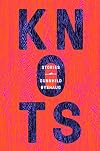
Gunnhild Øyehaug’s whimsical collection of short fiction charts the tangled bonds that link people together and the frequently fruitless attempts to undo those bonds. The collection starts with “Nice and Mild,” in which a husband and father, who apparently suffers from an extreme case of indecisiveness, finally gets his act together to go to Ikea to buy blinds for his son’s bedroom, after promising for the last six months to “sort it out.” But despite his determination to get show more the job done, he’s stymied yet again when he arrives at the store and realizes he can't avoid humiliation after all. “Small Knot” tells a surreal tale of a young man literally bound for life to his mother by an uncuttable umbilical cord, a story that takes a grimly comic turn after the mother’s death. In “Overtures,” Ragnhild holds in the pee for as long as she can before going downstairs to the bathroom because her grandpa is visiting, and she knows that if she draws attention to herself her parents will make her come into the living room and play the piano. But when the expected happens and she plays poorly even though she’s been practicing, she’s surprised by how happy she feels. And in “Two by Two,” the most dramatically realized story in the collection, Edel has cleared the snow from the driveway to make it easier for her husband Alvin to get the car into the garage when he arrives home. But Alvin is late, and as Edel waits she grows angrier by the minute because she knows that Alvin is with his lover, Susanne. Edel is right, Alvin has been fucking Susanne, but he immediately regrets his actions and ends the relationship. In the meantime, Edel tries phoning him, but Alvin’s left his phone at home. Edel sets out in her car to track him down, planning to surprise him at Susanne’s house, but instead finds him making snow angels on the snow-clogged road. The story ends with an unlikely reconciliation between husband and wife after Alvin claims he had to stop because his car broke down, and when he tries to start it, discovers (to his relief) that it really has broken down. Many of the 26 stories in Knots are very short, and a few seem underdeveloped and fragmentary. But in each one, Øyehaug’s characters come together and either stay together or separate, but in even the most starkly minimalist and blatantly experimental of these pieces they leave something of themselves with each other, and with the reader. These are bustling, playful, unpredictable fictions, written with a sure hand and filled with bracing wit and wry energy. Students of the contemporary short story who go to the trouble of checking out this volume will find their curiosity amply rewarded. show less
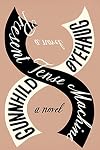
This is a delightfully odd book. It is about a woman who is reading a book, and misreads a word, thus inventing a new word that has never existed before. The sudden existence of this new word spawns a new alternate reality where she does not have a daughter. In the new daughterless reality, she feels like there is something missing, but she doesn't know what. In that other world, her daughter continues to exist, but lives a completely different life without her mother. The book alternates show more between the two realities, where both women grapple with the feeling that there is something wrong while negotiating relationships with mothers, daughters, and spouses.
The narrator intrudes often, in very delightful ways, sometimes even daring to knock on the doors of her characters.
As much as the book explores loss, it is also full of joy. It's a quirky and interesting read. show less
The narrator intrudes often, in very delightful ways, sometimes even daring to knock on the doors of her characters.
As much as the book explores loss, it is also full of joy. It's a quirky and interesting read. show less
'We can safely say there's little about Laura to indicate that she's living in a parallel universe created by a misreading. But, in fact, she is.'
This oddly compelling short novel is certainly one to give your brain some exercise. Whilst watching her daughter Laura on her bike in the back garden, Anna misreads a word in a book of poetry and bam!, suddenly a parallel world is created in which she does not have a daughter called Laura, although Laura continues to exist in another world, but show more without a mother called Anna.
The book explores the lives of the two women, often going back and forward in time, to explore the existential questions of this parallelity. Events mirror themselves, a set of emergency stairs in a block of flats is a parallel version of the main stairs, a music concert happens at the same time but in different universes....
And then there is the narrator, a character in their own right who comments and draws attention to themself throughout. We are always conscious that this is a construct, a work of art, made out of language - and this runs central to the core themes of the book. There are hints of creation myths (especially the Bible), and lots of references to high-brow philosophers and writers. It's deep - but is so in a very human way, as we watch the characters struggle with family, relationships and somehow just managing to exist, all the time with a niggling feeling in the back of your mind that something is off somehow, a little bit off kilter.
This will not be a book for everyone. There are no easy answers, no neat resolution. Indeed, there are always more questions than answers, and the narrative voice only adds to the quirky nature of the book. In tone and style it reminded me in some ways of Frederick Backman or Lars Saabye Christensen, two of my favourite Nordic writers. It is lyrical and the excellent translation by Kari Dickson stays true to the beauty of the language.
For me, this was a genuine pleasure to read and will be one to ponder long after I put it down. A joy and a beautifully crafted work of art. show less
This oddly compelling short novel is certainly one to give your brain some exercise. Whilst watching her daughter Laura on her bike in the back garden, Anna misreads a word in a book of poetry and bam!, suddenly a parallel world is created in which she does not have a daughter called Laura, although Laura continues to exist in another world, but show more without a mother called Anna.
The book explores the lives of the two women, often going back and forward in time, to explore the existential questions of this parallelity. Events mirror themselves, a set of emergency stairs in a block of flats is a parallel version of the main stairs, a music concert happens at the same time but in different universes....
And then there is the narrator, a character in their own right who comments and draws attention to themself throughout. We are always conscious that this is a construct, a work of art, made out of language - and this runs central to the core themes of the book. There are hints of creation myths (especially the Bible), and lots of references to high-brow philosophers and writers. It's deep - but is so in a very human way, as we watch the characters struggle with family, relationships and somehow just managing to exist, all the time with a niggling feeling in the back of your mind that something is off somehow, a little bit off kilter.
This will not be a book for everyone. There are no easy answers, no neat resolution. Indeed, there are always more questions than answers, and the narrative voice only adds to the quirky nature of the book. In tone and style it reminded me in some ways of Frederick Backman or Lars Saabye Christensen, two of my favourite Nordic writers. It is lyrical and the excellent translation by Kari Dickson stays true to the beauty of the language.
For me, this was a genuine pleasure to read and will be one to ponder long after I put it down. A joy and a beautifully crafted work of art. show less
I am frustrated, because I was blown away by Gunnhild Øyehaug's storytelling, Kari Dickson's translation and Heather Wild's reading, but the way the audiobook was formatted left much to be desired.
I can't easily tease out the difference in storytelling and translation here, but in particular appreciated the matter-of-fact narration style in all the stories, which I suspect is if not linguistically then culturally appropriate. It didn't pressure you into having an emotional reaction to a show more story but when you did have one it felt more genuine. I found the stories of "Knots" rich with symbolism, self-aware and painfully real. So many stories were full of people behaving exactly as I've seen myself and my friends behave, even though almost no character was at their best during the story. I was not initially sure I enjoyed these stories and I'm still not sure that's the word I'd use. However almost all of them made me uncomfortable. I kept asking myself "Why would she do that?" "Why does he want this?" "How can they be so unhappy?". Questions I found easy to ask about fictional characters but not often about the circumstances of my own life. That is why I am impressed by Øyehaug's work, and am going to check out any other English translations available.
On the downside, and this is stated better elsewhere, the weakest point was the audiobook formatting, which had no chapter titles and no pauses in between each chapter. This might have been less irritating in a novel, but when every story story packs a punch, I really needed a chance to breathe between them. I ended up pausing the book between most chapters to just sit and think, which was made difficult by the non-existent pauses.
In summary, I was strongly affected by these stories but found the audiobook formatting and to some extent the audiobook style interfering with my engagement with them. show less
I can't easily tease out the difference in storytelling and translation here, but in particular appreciated the matter-of-fact narration style in all the stories, which I suspect is if not linguistically then culturally appropriate. It didn't pressure you into having an emotional reaction to a show more story but when you did have one it felt more genuine. I found the stories of "Knots" rich with symbolism, self-aware and painfully real. So many stories were full of people behaving exactly as I've seen myself and my friends behave, even though almost no character was at their best during the story. I was not initially sure I enjoyed these stories and I'm still not sure that's the word I'd use. However almost all of them made me uncomfortable. I kept asking myself "Why would she do that?" "Why does he want this?" "How can they be so unhappy?". Questions I found easy to ask about fictional characters but not often about the circumstances of my own life. That is why I am impressed by Øyehaug's work, and am going to check out any other English translations available.
On the downside, and this is stated better elsewhere, the weakest point was the audiobook formatting, which had no chapter titles and no pauses in between each chapter. This might have been less irritating in a novel, but when every story story packs a punch, I really needed a chance to breathe between them. I ended up pausing the book between most chapters to just sit and think, which was made difficult by the non-existent pauses.
In summary, I was strongly affected by these stories but found the audiobook formatting and to some extent the audiobook style interfering with my engagement with them. show less
 This review was written for LibraryThing Early Reviewers.
Lists
Awards


You May Also Like


Associated Authors
Statistics
- Works
- 18
- Also by
- 5
- Members
- 422
- Popularity
- #57,803
- Rating
- 3.8
- Reviews
- 26
- ISBNs
- 54
- Languages
- 9
