
David Diop (2) (1966–)
Author of At Night All Blood Is Black
For other authors named David Diop, see the disambiguation page.
About the Author
Image credit: Hermance Triey
Works by David Diop
Tagged
Common Knowledge
- Birthdate
- 1966-02-24
- Gender
- male
- Education
- Sorbonne (PhD)
- Occupations
- professor
- Nationality
- France
- Birthplace
- Paris, France
- Places of residence
- Paris, France
Dakar, Senegal - Map Location
- France
Members
Reviews

The International Booker Prize-winning book by David Diop and translated from the French by Anna Moschovakis, is no heart-warming tale suitable for holiday reading. It's a hard, harsh read. The writing is lovely, the way the novel is structured is beautifully done and the story itself is grim.
Alfa is a soldier in the trenches fighting for France in the First World War. He and his best friend came from Senegal to fight with les Chocolats, African soldiers from Frances colonies. And when the show more worst happens, Alfa is compelled to seek revenge on the other side. His fellow soldiers at first applaud his exploits, but are soon terrified of him.
The story moves back and forth between Alfa's childhood and young adulthood, and his experiences in France, and the reader gets an ever more vivid look at what trench warfare did to the hearts and minds of the men who fought. This novel is brilliant, superbly written and absolutely devastating to read. show less
Alfa is a soldier in the trenches fighting for France in the First World War. He and his best friend came from Senegal to fight with les Chocolats, African soldiers from Frances colonies. And when the show more worst happens, Alfa is compelled to seek revenge on the other side. His fellow soldiers at first applaud his exploits, but are soon terrified of him.
The story moves back and forth between Alfa's childhood and young adulthood, and his experiences in France, and the reader gets an ever more vivid look at what trench warfare did to the hearts and minds of the men who fought. This novel is brilliant, superbly written and absolutely devastating to read. show less
When talking about WWI, most people think of the trenches and all the lives lost in the years of the conflict. What people may not always remember is that the big colonial empires are still out there and the men in those trenches were not just the youngsters of Europe.
Alfa Ndiaye is from a small village in Senegal and does not speak a word of French but still decided to join the war - because then he can come back and be an important man in a nearby town. He does not join alone - his best show more friend, Mademba Diop, is there with him - until the day when Mademba dies. Alfa is haunted by that death - he found his friend still alive friend and refused to kill him, to spare him the suffering from dying in pain. The reason for refusal was humanity - he cannot kill a friend but as soon as Mademba is dead, Alfa's brain flips over and he realizes that his ideas of humanity had been flawed. So he decides to pay for it, redeeming his humanity - by killing people from the other side and taking their hands.
Alfa narrates the story and as the novel progresses, he is less and less believable, we can see his mind unraveling from grief and guilt. While he narrates the story in the trenches, he also gives us the backstory - the small Senegalese village, the easy life before the war. People start to be afraid of him, even if he does not understand why (or is not ready to admit it). His mind finds correlations where they do not exist while it keeps getting less rational, all the way to the end of the novel where his mind simply breaks (even if some people may read these last chapters differently). The madness of war is finally fully reflected in the madness of a man.
The story is beautifully written. Diop uses a lot of repetitions of expressions and parts of sentences which creates a story-telling cadence that can lull you in (until something horrible happens). There are a lot of metaphors and myths in all of it and I am pretty sure I missed a lot of them (for example 7 shows up a lot (7 hands, 7 traitors, 7 enamel pots in the party when the boys were 16; it cannot be a coincidence but I am not sure what 7 means in this culture). But even when you do not know what they mean, they add to the tapestry of the short novel - as do all the myths and stories that are told in full.
The novel's journey is almost entirely in a man's mind - he may be reporting real events sometimes but trying to separate reality from imaginary may not be so easy, especially as the novel progresses. Guilt and shame and grief rob Alfa of everything that the war did not take from him. And we are right there to see how he unravels.
I am not surprised that the novel won the Man Booker International Prize and Anna Moschovakis translation probably helped with that. It is a bit hard to get into the novel at first, the repetition is almost bothersome - until it just start working and you cannot imagine the novel without it. It is a disturbing novel - but then a novel about a war will always be disturbing. It is the lack of hope at the end which almost gets you - all the way to the end I hoped that Alfa's journey is not one way. And yet, I knew that there is no path back.
Strongly recommended - although with a warning about its darkness and language. show less
Alfa Ndiaye is from a small village in Senegal and does not speak a word of French but still decided to join the war - because then he can come back and be an important man in a nearby town. He does not join alone - his best show more friend, Mademba Diop, is there with him - until the day when Mademba dies. Alfa is haunted by that death - he found his friend still alive friend and refused to kill him, to spare him the suffering from dying in pain. The reason for refusal was humanity - he cannot kill a friend but as soon as Mademba is dead, Alfa's brain flips over and he realizes that his ideas of humanity had been flawed. So he decides to pay for it, redeeming his humanity - by killing people from the other side and taking their hands.
Alfa narrates the story and as the novel progresses, he is less and less believable, we can see his mind unraveling from grief and guilt. While he narrates the story in the trenches, he also gives us the backstory - the small Senegalese village, the easy life before the war. People start to be afraid of him, even if he does not understand why (or is not ready to admit it). His mind finds correlations where they do not exist while it keeps getting less rational, all the way to the end of the novel where his mind simply breaks (even if some people may read these last chapters differently). The madness of war is finally fully reflected in the madness of a man.
The story is beautifully written. Diop uses a lot of repetitions of expressions and parts of sentences which creates a story-telling cadence that can lull you in (until something horrible happens). There are a lot of metaphors and myths in all of it and I am pretty sure I missed a lot of them (for example 7 shows up a lot (7 hands, 7 traitors, 7 enamel pots in the party when the boys were 16; it cannot be a coincidence but I am not sure what 7 means in this culture). But even when you do not know what they mean, they add to the tapestry of the short novel - as do all the myths and stories that are told in full.
The novel's journey is almost entirely in a man's mind - he may be reporting real events sometimes but trying to separate reality from imaginary may not be so easy, especially as the novel progresses. Guilt and shame and grief rob Alfa of everything that the war did not take from him. And we are right there to see how he unravels.
I am not surprised that the novel won the Man Booker International Prize and Anna Moschovakis translation probably helped with that. It is a bit hard to get into the novel at first, the repetition is almost bothersome - until it just start working and you cannot imagine the novel without it. It is a disturbing novel - but then a novel about a war will always be disturbing. It is the lack of hope at the end which almost gets you - all the way to the end I hoped that Alfa's journey is not one way. And yet, I knew that there is no path back.
Strongly recommended - although with a warning about its darkness and language. show less
But I, Alfa Ndiaye, I understand the true meaning of the captain's words. No one knows what I think. I am free to think whatever I want. And what I think is that people don't want me to think. The unthinkable is what is hidden behind the captain's words. The captain's France needs for us to play the savage when it suits them. They need for us to be savage because the enemy is afraid of our machetes. I know, I understand, it's no more complicated than that.
Alfa is a twenty-year-old Senegalese show more soldier fighting for the French colonizers in the trenches of World War I. The book opens with Alfa lying beside his dying brother-in-arms, Mademba. The two had been inseparable throughout childhood and on the battlefield, now Mademba is begging Alfa to "finish him off" rather than let him die in pain and indignity. Alfa refuses to kill his best friend, setting off a downward spiral of doubt, guilt, recrimination, vengeance, and madness. Told entirely from Alfa's point of view, the book is brutal and dark, portraying not only the horrors of war but of colonial racism.
Once I began reading, I could not put the book down, and finished it in a single sitting. I then went back and reread the ending twice more. There is so much to unpack in this small volume. It's also beautifully written, even descriptions of horrible acts read lyrically. It's easy to understand why it won the International Booker Prize in 2021. Although it will not be a book for everyone, if you are interested, I recommend it highly.
Yes, I understood, God's truth, that on the battlefield they wanted only fleeting madness. Madmen of rage, madmen of pain, furious madmen, but temporary ones. No continuous madmen. As soon as the fighting ends we're to file away our rage, our pain, and our fury. Pain is tolerated, we can bring our pain home on the condition that we keep it to ourselves. But rage and fury cannot be brought back to the trench. show less
Alfa is a twenty-year-old Senegalese show more soldier fighting for the French colonizers in the trenches of World War I. The book opens with Alfa lying beside his dying brother-in-arms, Mademba. The two had been inseparable throughout childhood and on the battlefield, now Mademba is begging Alfa to "finish him off" rather than let him die in pain and indignity. Alfa refuses to kill his best friend, setting off a downward spiral of doubt, guilt, recrimination, vengeance, and madness. Told entirely from Alfa's point of view, the book is brutal and dark, portraying not only the horrors of war but of colonial racism.
Once I began reading, I could not put the book down, and finished it in a single sitting. I then went back and reread the ending twice more. There is so much to unpack in this small volume. It's also beautifully written, even descriptions of horrible acts read lyrically. It's easy to understand why it won the International Booker Prize in 2021. Although it will not be a book for everyone, if you are interested, I recommend it highly.
Yes, I understood, God's truth, that on the battlefield they wanted only fleeting madness. Madmen of rage, madmen of pain, furious madmen, but temporary ones. No continuous madmen. As soon as the fighting ends we're to file away our rage, our pain, and our fury. Pain is tolerated, we can bring our pain home on the condition that we keep it to ourselves. But rage and fury cannot be brought back to the trench. show less
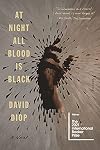
Alfa Ndiaye is a young Chocolat from Senegal, one of the approximately 450,000 young men from North and West Africa who were conscripted to fight for the French Army on the front lines against Germany during World War I. At least 30,000 of them died in battle, and very few of the 2.3 million Africans who were mobilized during the war gained anything from their participation, as they remained poorly treated subjects of the European colonial powers and would not gain their independence and show more freedom for nearly half a century.
As the novel begins, Alfa is traumatized by the protracted death of Mademba Diop, his childhood friend and fellow soldier, who suffered for days next to his brother-in-arms after he was ambushed by a German soldier while trying to prove his bravery to him. Alfa takes it upon himself to avenge Mademba’s death, by ambushing one German soldier after another and bringing grisly “trophies” back with him to the trenches where his infantrymen are stationed. They initially brand him a hero for his single minded bravery and successful missions, but they ultimately began to fear and shun him as he becomes more determined and more mentally unstable. His commanding officer takes Alfa off of the front lines and has him admitted to a military psychiatric hospital. However, instead of finding peace and internal stability Alfa descends slowly into madness, as he slowly unravels and is transformed into an unreliable and very disturbed narrator, up to the book’s unexpected ending.
‘At Night All Blood Is Black’ is a superbly written and translated analysis of the horrors and effects of warfare on one sensitive young man, who is tasked to mercilessly kill enemy soldiers by hand yet maintain his humanity, and a glimpse of a largely unknown piece of history of the essential roles that millions of Africans played in World War I, which is fully deserving of being named the winner of the 2021 International Booker Prize. show less
As the novel begins, Alfa is traumatized by the protracted death of Mademba Diop, his childhood friend and fellow soldier, who suffered for days next to his brother-in-arms after he was ambushed by a German soldier while trying to prove his bravery to him. Alfa takes it upon himself to avenge Mademba’s death, by ambushing one German soldier after another and bringing grisly “trophies” back with him to the trenches where his infantrymen are stationed. They initially brand him a hero for his single minded bravery and successful missions, but they ultimately began to fear and shun him as he becomes more determined and more mentally unstable. His commanding officer takes Alfa off of the front lines and has him admitted to a military psychiatric hospital. However, instead of finding peace and internal stability Alfa descends slowly into madness, as he slowly unravels and is transformed into an unreliable and very disturbed narrator, up to the book’s unexpected ending.
‘At Night All Blood Is Black’ is a superbly written and translated analysis of the horrors and effects of warfare on one sensitive young man, who is tasked to mercilessly kill enemy soldiers by hand yet maintain his humanity, and a glimpse of a largely unknown piece of history of the essential roles that millions of Africans played in World War I, which is fully deserving of being named the winner of the 2021 International Booker Prize. show less
Lists
Awards


You May Also Like


Associated Authors
Statistics
- Works
- 4
- Members
- 1,219
- Popularity
- #21,067
- Rating
- 3.7
- Reviews
- 58
- ISBNs
- 52
- Languages
- 11