
Mohamed Mbougar Sarr
Author of The Most Secret Memory of Men
About the Author
Image credit: Mohamed Mbougar Sarr
Works by Mohamed Mbougar Sarr
Terra Silenciada 1 copy
Associated Works
Lire et donner à lire les littératures francophones: outils critiques et stratégies éditoriales (2022) — Contributor — 1 copy
Tagged
Common Knowledge
- Canonical name
- Mbougar Sarr, Mohamed
- Birthdate
- 1990-06-20
- Gender
- male
- Education
- Prytanée militaire de Saint-Louis, Saint-Louis-du-Sénégal, Senegal
EHESS - Awards and honors
- Prix Goncourt (2021)
- Nationality
- Senegal
- Birthplace
- Dakar, Senegal
- Associated Place (for map)
- Dakar, Senegal
Members
Reviews

In the imaginary town of Kalep, somewhere on the Atlantic coast of the Sahel, the Islamists (here called "the Brotherhood") had taken over - despite the country's attempt to dislodge them. A group of friends decide to show that they are not ready to accept that - by publishing a journal.
That's the main premise of this novel. The author is from Senegal and this novel had won quite a lot of awards (both in French and in English). And even if awards are not always an indication of quality, show more they got it right here.
Mohamed Mbougar Sarr has a very distinctive way of introducing his characters - while most writers will immediately tell you if you had already met the spouse or the brother of a newly introduced character, he tells you the story as if they are unrelated until the relationship either becomes important for the story or they just end up in the same place and not spelling/showing it becomes hard. I don't think it is an attempt at secrecy - it is more of a "that could have happened to anyone, not just to the doctor's wife" kind of thing.
The story opens with an execution - a young couple is killed for daring to fall in love (and follow up on their love). That makes the circle of friends decide to publish their journal (and gives us one part of the narration). That also makes the two mothers who lost their children start sending each other letters - some of them very private, some of them discussing what they see in their towns (which often ties to the other narrative). Sarr adds yet another voice - the voice of the commander of the Islamist troops Abdel Karim Konaté (it is unclear if the name is randomly chosen - there is a Malian politician by that name who was in the government around that time). And then there are the inhabitants of Kalep - we meet quite a lot of them, and sometimes it takes awhile to find out who connects to whom and how. But the connections are there - even where you least expect - and by the end of the novel, it becomes obvious that there is no "we" and "them" - everyone is connected in one way or another. And yet, there is evil and there is good.
It is a brutal novel - that initial execution feels almost like an appetizer as the novel continues. The scariest part is that it can happen - there is nothing in it that is impossible. And I cannot even imagine how much more urgent and possible it sounded in 2015 when it was published, with ISIS at the height of their power a continent away. show less
That's the main premise of this novel. The author is from Senegal and this novel had won quite a lot of awards (both in French and in English). And even if awards are not always an indication of quality, show more they got it right here.
Mohamed Mbougar Sarr has a very distinctive way of introducing his characters - while most writers will immediately tell you if you had already met the spouse or the brother of a newly introduced character, he tells you the story as if they are unrelated until the relationship either becomes important for the story or they just end up in the same place and not spelling/showing it becomes hard. I don't think it is an attempt at secrecy - it is more of a "that could have happened to anyone, not just to the doctor's wife" kind of thing.
The story opens with an execution - a young couple is killed for daring to fall in love (and follow up on their love). That makes the circle of friends decide to publish their journal (and gives us one part of the narration). That also makes the two mothers who lost their children start sending each other letters - some of them very private, some of them discussing what they see in their towns (which often ties to the other narrative). Sarr adds yet another voice - the voice of the commander of the Islamist troops Abdel Karim Konaté (it is unclear if the name is randomly chosen - there is a Malian politician by that name who was in the government around that time). And then there are the inhabitants of Kalep - we meet quite a lot of them, and sometimes it takes awhile to find out who connects to whom and how. But the connections are there - even where you least expect - and by the end of the novel, it becomes obvious that there is no "we" and "them" - everyone is connected in one way or another. And yet, there is evil and there is good.
It is a brutal novel - that initial execution feels almost like an appetizer as the novel continues. The scariest part is that it can happen - there is nothing in it that is impossible. And I cannot even imagine how much more urgent and possible it sounded in 2015 when it was published, with ISIS at the height of their power a continent away. show less
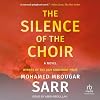
The Silence of the Choir tells the story of 72 African immigrants and a village in Sicily.
Born in Senegal and now based in Paris, Mohamed Sarr has given us an epic. An epic in the story itself and an epic in the examination of the problem of mass migration.
A Sicilian village has set up a transit center which houses and aids 72 refuges from various African countries. At first the reception of the refugees who have arrived in Sicily by boat is kindly. But as the weeks go by divisions between show more the villagers and the between the refugees themselves emerge.
The local attorney helps the refuges prepare for their interviews and some of the refugees form part of the local soccer team. It seems for a while that things will work out. But although the refugees are housed and given coupons for shopping, they get tired of waiting for their immigration papers to arrive. They cannot work. They become bored. Meanwhile a hostile anti-refugee group that exists in the village resents whatever the refuges are given.
Eventually opposition to the very existence of the refugees becomes physical. The relationship between the opponents, and the ragazzi, as they are called by the villagers, becomes openly hostile.
In their ignorance, the well-meaning locals who run the help center take the ragazzi to a modern art exhibition where they are forced to gaze upon post-modern art forms including a frame surrounding nothing. It’s a gilded frame with no canvas no paper, just the wall upon which it’s hung. The ragazzi snigger.
The only thing the two groups appear to have in common is soccer, and eventually even the soccer playing ragazzi refuse to play. Eventually the relationship with the aid center and the ragazzi breaks down. The ragazzi stop going to Italian class, soccer practice, and immigration interview role-play.
Several people try to hold the communities together, including the priest. He philosophisizes on the problem of mass migration. Meanwhile the refugees discuss how their countries were taken by Europeans and so what do these Italians expect?
The priest takes a wide view of mass migration, and what is to become of it in the future. He looks at the problem of who is to blame for the failure of the people to accept each other.
Don’t ask yourselves who is guilty. Everyone one is guilty in this matter- their countries of origin for a start, our countries, the migrants themselves, and us. The history, the system, the smugglers, geo-politics, global capitalism, colonialism. All of that has its share of truth and its share of culpability. But the fact remains that whoever the culprit may be, this is how it ends. They are here before us. It’s what we must do that matters so that we don’t just think that some day they’ll have to fear death simply to have a better life. There is no sea wide or deep enough to contain the determination and impulse for survival of these men.
The story is told in the voices of selected characters, the attorney, the mayor, the doctor, the interpreter, a poet, the priest, a lovelorn refugee, a militant one, a mute one. Various media are used to relate their stories. - newspaper article, diaries, written note and letters.
There’s a lot to think about while reading the book and long after putting it down. It’s dense in words, thoughts and emotion. It raises issue we may not always think about. The ennui of those in transit camps. The fact that they might not like us, might look down on us, ridicule us, not appreciate our help. It seems too often that it’s a one way street, that we in the West are being magnanimous in helping people who have been forced from their homes and risked their lives for a perceived dream of a better life.
The padre ponders the question of guilt.
A better word Even if they are still migrating for the moment, they are here among us. I refer to them as migrants, but I could also call them immigrants immigrants displayed or exiled persons refugees like all of us. I find it hard to name them and I think more over this is one of the reasons why there has been such controversy about them when you have difficulty giving a precise name to a human being. That is when misfortune begins
There was only one problem I had with the book and that was in the ending when all semblance of reconciliation fails and the violence erupts into warfare. There being no spoiler tags available, I cannot elaborate. show less
Born in Senegal and now based in Paris, Mohamed Sarr has given us an epic. An epic in the story itself and an epic in the examination of the problem of mass migration.
A Sicilian village has set up a transit center which houses and aids 72 refuges from various African countries. At first the reception of the refugees who have arrived in Sicily by boat is kindly. But as the weeks go by divisions between show more the villagers and the between the refugees themselves emerge.
The local attorney helps the refuges prepare for their interviews and some of the refugees form part of the local soccer team. It seems for a while that things will work out. But although the refugees are housed and given coupons for shopping, they get tired of waiting for their immigration papers to arrive. They cannot work. They become bored. Meanwhile a hostile anti-refugee group that exists in the village resents whatever the refuges are given.
Eventually opposition to the very existence of the refugees becomes physical. The relationship between the opponents, and the ragazzi, as they are called by the villagers, becomes openly hostile.
In their ignorance, the well-meaning locals who run the help center take the ragazzi to a modern art exhibition where they are forced to gaze upon post-modern art forms including a frame surrounding nothing. It’s a gilded frame with no canvas no paper, just the wall upon which it’s hung. The ragazzi snigger.
The only thing the two groups appear to have in common is soccer, and eventually even the soccer playing ragazzi refuse to play. Eventually the relationship with the aid center and the ragazzi breaks down. The ragazzi stop going to Italian class, soccer practice, and immigration interview role-play.
Several people try to hold the communities together, including the priest. He philosophisizes on the problem of mass migration. Meanwhile the refugees discuss how their countries were taken by Europeans and so what do these Italians expect?
The priest takes a wide view of mass migration, and what is to become of it in the future. He looks at the problem of who is to blame for the failure of the people to accept each other.
Don’t ask yourselves who is guilty. Everyone one is guilty in this matter- their countries of origin for a start, our countries, the migrants themselves, and us. The history, the system, the smugglers, geo-politics, global capitalism, colonialism. All of that has its share of truth and its share of culpability. But the fact remains that whoever the culprit may be, this is how it ends. They are here before us. It’s what we must do that matters so that we don’t just think that some day they’ll have to fear death simply to have a better life. There is no sea wide or deep enough to contain the determination and impulse for survival of these men.
The story is told in the voices of selected characters, the attorney, the mayor, the doctor, the interpreter, a poet, the priest, a lovelorn refugee, a militant one, a mute one. Various media are used to relate their stories. - newspaper article, diaries, written note and letters.
There’s a lot to think about while reading the book and long after putting it down. It’s dense in words, thoughts and emotion. It raises issue we may not always think about. The ennui of those in transit camps. The fact that they might not like us, might look down on us, ridicule us, not appreciate our help. It seems too often that it’s a one way street, that we in the West are being magnanimous in helping people who have been forced from their homes and risked their lives for a perceived dream of a better life.
The padre ponders the question of guilt.
A better word Even if they are still migrating for the moment, they are here among us. I refer to them as migrants, but I could also call them immigrants immigrants displayed or exiled persons refugees like all of us. I find it hard to name them and I think more over this is one of the reasons why there has been such controversy about them when you have difficulty giving a precise name to a human being. That is when misfortune begins
There was only one problem I had with the book and that was in the ending when all semblance of reconciliation fails and the violence erupts into warfare. There being no spoiler tags available, I cannot elaborate. show less
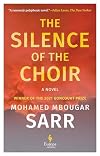
This is a story of African migrants arriving in Sicily where they are taken to a small town which has an organization to help them with seek asylum. The story is told through the eyes of several characters: a migrant who has learned Italian and works as a translator, a doctor in the community, a woman leading the settlement organization, the mayor of the town, a renowned poet, and a man violently opposed to the Africans.
The story presents the many complications; no one is perfect, each has show more doubts, makes bad decisions, and sometimes honorable ones. Joegoy, the African who works as a translator is caught between two worlds. The contrast, the expectations of the migrants, and the fear of the locals is so well portrayed.
I would have given the book 5 stars, but I felt the ending with the volcano erupting just as there is a terrible fight between the opposing sides was a bit overdramatic. Overall, very good writing. Short chapters often telling the same event from a different view point.
Very interesting. show less
The story presents the many complications; no one is perfect, each has show more doubts, makes bad decisions, and sometimes honorable ones. Joegoy, the African who works as a translator is caught between two worlds. The contrast, the expectations of the migrants, and the fear of the locals is so well portrayed.
I would have given the book 5 stars, but I felt the ending with the volcano erupting just as there is a terrible fight between the opposing sides was a bit overdramatic. Overall, very good writing. Short chapters often telling the same event from a different view point.
Very interesting. show less
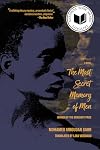
Looks like another one of my "yes, but" reviews. Sarr is undoubtedly a very talented writer. His prose, especially when describing inner dialog, is both powerful and touching.
My concerns with "The Most Secret Memory of Men" are more related to the novel as a whole. Probably reflective of my preferences, I found the work needlessly long and convoluted. Numerous subplots, characters, and timeframes detract from the continuity of the story.
We find the focus of the work to be a character who show more is, for the overwhelming majority of the story, offstage. The text typically hints at the central character's almost mythic qualities. Yet we rarely see what they actually are. This character "Elimane", is not developed to a sufficient degree to justify his quasi-mythic status.
As this is a work of fiction, I also felt the extended references to personal (and at times sexual) interactions with Sabato and Gombrowicz to be gratuitous. This fact contributes to what I felt to be a major drawback of the work. The author seems to attempt to "touch every base". Every potential hook is dropped seemingly to assure the novel's relevance. More is not always better.
I often felt the work would benefit exponentially from a good editor. The overabundance of elements detracts from what could have been a yet more powerful story. The work and this author are clearly worth reading. As I believe the author is yet young, my hope is that his future works better demonstrate his obvious talent. show less
My concerns with "The Most Secret Memory of Men" are more related to the novel as a whole. Probably reflective of my preferences, I found the work needlessly long and convoluted. Numerous subplots, characters, and timeframes detract from the continuity of the story.
We find the focus of the work to be a character who show more is, for the overwhelming majority of the story, offstage. The text typically hints at the central character's almost mythic qualities. Yet we rarely see what they actually are. This character "Elimane", is not developed to a sufficient degree to justify his quasi-mythic status.
As this is a work of fiction, I also felt the extended references to personal (and at times sexual) interactions with Sabato and Gombrowicz to be gratuitous. This fact contributes to what I felt to be a major drawback of the work. The author seems to attempt to "touch every base". Every potential hook is dropped seemingly to assure the novel's relevance. More is not always better.
I often felt the work would benefit exponentially from a good editor. The overabundance of elements detracts from what could have been a yet more powerful story. The work and this author are clearly worth reading. As I believe the author is yet young, my hope is that his future works better demonstrate his obvious talent. show less
Lists
Awards


You May Also Like


Associated Authors
Statistics
- Works
- 7
- Also by
- 1
- Members
- 713
- Popularity
- #35,569
- Rating
- 4.0
- Reviews
- 21
- ISBNs
- 56
- Languages
- 13
- Favorited
- 2